
Articles By

-
O&M
Oregon wind turbine loses its bearings
The generator bearings on a wind turbine located in Oregon (Figure 1) first failed in May 2006, only 11 months after the tower was brought on-line. The company that owns and operates the wind farm replaced the bearings and slip rings, but the new bearings failed only five months later. Once again, new bearings and […]
-
Wind
UK takes offshore wind capacity crown from Denmark
Opening of the 194-MW Lynn and Inner Dowsing wind farms built by UK energy company Centrica off the coast of Skegness, in Lincolnshire, this October made the UK the worldwide king of installed offshore wind capacity. The farms raise the total electricity generated from offshore wind in the UK to 590 MW, beating Denmark’s 423 […]
-
 Coal
CoalEnel to build first industrial-scale hydrogen power plant
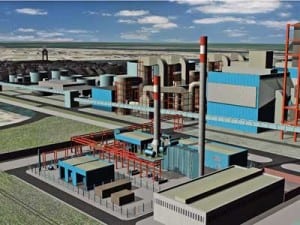
Italy’s largest energy company, Enel, is gearing up to build an innovative hydrogen-fueled combined-cycle power plant — the first of its kind in the world — in Fusina, near Venice, in the Veneto region of Italy. The €47 million plant is under construction at the site of Enel’s "Andrea Palladio" Fuina plant, a 960-MW coal-fired […]
-
Legal & Regulatory
Energy’s Articles of Confederation
An attendee at a recent industry conference made the cynical observation that the dysfunctionality of our national and state energy policies can be attributed to the fact that implementation of any program is subject to institutional limitations akin to those imposed by the "Articles of Confederation." Readers may recall that the Articles preceded the Constitution as the governing compact for the 13 original states.
-
 Gas
GasOntario turbine gets pressure from natural gas pipelines
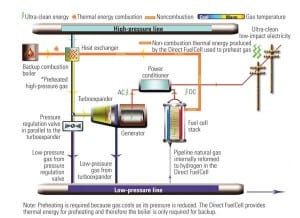
Enbridge Inc., a Canadian pipeline and energy distribution and services company, and FuelCell Energy Inc. opened what they say is the "world’s first" direct fuel cell – energy recovery generation (DFC-ERG) power plant in Toronto, Ontario, this October. The innovative 2.2-MW project harvests high pressure that is used to channel natural gas over long distances […]
-
 Waste to Energy
Top Plants: Covanta Onondaga Waste-to-Energy Plant, Jamesville, New York
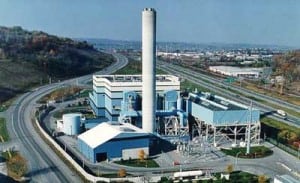
Covanta Energy Corp. doesn’t believe in wasting waste. Since 1995 the Covanta Onondaga waste-to-energy (WTE) plant has converted approximately 4 million tons of solid waste into 3 million MWh of clean electricity. Additionally, unlike power plants that use wind or solar energy, this 39-MW WTE facility operates 24/7, making it and similar WTE plants among the most continuously reliable sources of renewable electricity generation currently in operation.
-
News
India prepares for frenzied growth of power demand
India is aggressively pursuing plans to expand — dramatically — its power generation capacity. In September and October, the nation inked lucrative deals to obtain nuclear technology from France and the U.S. Indian media speculated that the country was poised to increase its nuclear power capacity 15 times, to over 60,000 MW from the existing […]
-
 Solar
SolarTop Plants: Far West Rice Mill with solar electric system, Nelson, California
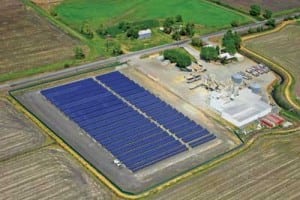
Many companies are finding that with solar energy, the sky’s the limit. As costs fall and mandates for renewable energy rise, solar energy is becoming an increasingly competitive source of power generation. Far West Rice Mill is a forward-thinking business that is taking advantage of this economic opportunity by powering its operations with a 1-MW photovoltaic system.
-
 Nuclear
Bulgaria officially launches construction of Belene nuke
The Bulgarian government this September announced the official launch of the Belene Nuclear Power Plant, a project it has billed one as of the largest in the European Union (EU). Valued at €4 billion, Belene is now facing funding issues — though the government, which deems the plant vital to the country’s energy and economic […]
-
 Wind
WindTop Plants: La Collada Wind Farm, Tarragona Province, Spain
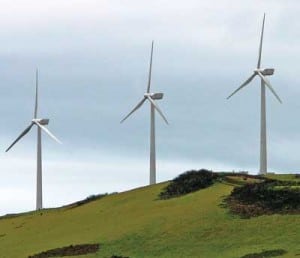
Ironically, the Spanish province of Tarragona — well known for its many Roman and Medieval ruins, archeological digs, and multiple World Heritage Sites — now has one of the most cutting-edge wind farms in the world. This wind farm recently added an innovative 3-MW wind turbine, which stands 140 meters (459 feet) high and is the largest nationally manufactured wind turbine installed in Spain to date.
-
 Coal
CoalGAO finds impediments to CCS deployment
An underdeveloped and costly CO2 capture technology, as well as regulatory and legal uncertainties over CO2 capture, injection, and storage, are the some of the more critical factors that impede carbon capture and storage (CCS) deployment in the U.S., the Government Accountability Office (GAO) — a congressional investigative arm — has reported. In its report, […]
-
 Wind
WindTop Plants: San Cristobal Wind Project, Galapagos Islands, Ecuador
The Galapagos Islands, home of the unusual flora and fauna that inspired naturalist Charles Darwin’s groundbreaking work on evolution, are striving to promote clean energy that protects the area’s unique biodiversity. Part of that effort is the 2.4-MW San Cristobal Wind Project, which displaces diesel-powered electricity generation. This new energy source will cut greenhouse gas emissions and reduce the risk of devastating diesel-fuel tanker spills in a highly protected environment.
-
 Nuclear
AREVA inches closer to U.S. EPR construction
UniStar Nuclear Energy announced on Oct. 8 that it had awarded an AREVA-Bechtel Power Corp. consortium a multi-year contract to complete detailed design engineering for a proposed AREVA U.S. Evolutionary Power Reactor (U.S. EPR) adjacent to Constellation Energy’s Calvert Cliffs Nuclear Power plant in Lusby, Md. The scope of work includes full plant specifications and […]
-
 Geothermal
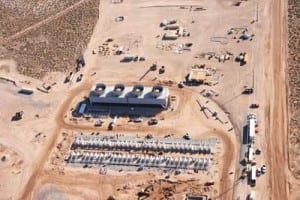
Top Plants: Thermo Plant, Beaver County, Utah
Geothermal energy projects are gaining steam in many parts of the western U.S., in large part because geothermal power has the advantage of being a renewable energy source that provides baseload power with no emissions and no waste by-products. One example of the latest developments in geothermal power generation is the recently completed 10-MW geothermal plant in rural Utah, which uses innovative modular power generation units.
-
Business
POWER digest (December 2008)
News items of interest to power industry professionals. Economic slowdown delays Canadian IGCC plant, kills W.Va. coal-to-liquids plant. Canadian firm Alter NRG announced in late October that it would shift its corporate focus from internally led project development to technology sales, in response to the global economic slowdown and turbulent capital markets. Among the projects […]
-
 Wind
WindPrevailing winds: Trends in U.S. wind energy
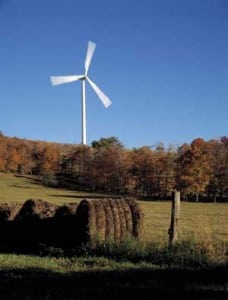
Wind power is becoming a mainstream energy source that U.S. utilities are tapping into nationwide as a means of adding clean, domestically sourced energy to balance their generating portfolios. To identify where wind will take us,POWER’s senior editor talked to experts from diverse industry stakeholders about current and future developments.
-
O&M
Advanced batteries supply ancillary services
For the power engineer, delivering an instantaneous and consistent power supply can be an elusive goal. Yet without it, grid frequency regulation is impossible. Today, frequency regulation is an ancillary service bought by the hour, the day prior to utilization, and dispensed on an as-needed basis by dispatch communiqués and provided by the ancillary service […]
-
 Wind
WindThe return of the Clipper Liberty wind turbine
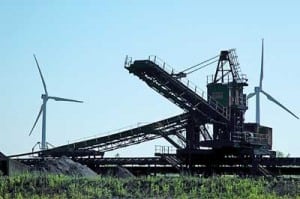
The Steel Winds project in Lackawanna, New York, was selected as a POWER 2007 Top Plant because of its unusual location (a former steel mill and Superfund site) and because it was the first commercial deployment of the Clipper Windpower 2.5-MW turbine. That report was written just as the project entered commercial service but before a major gearbox problem was identified. For many new designs, it isn’t a question of if problems will occur but of how the manufacturer responds when problems inevitably do occur. For its handling of Liberty’s problem, Clipper Windpower gets an "A."
-
 Wind
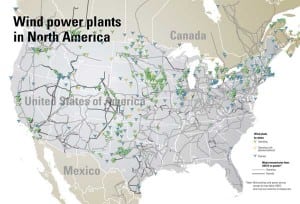
WindMap of wind power plants in North America
Courtesy: Platts Data source: Platts Energy Advantage and POWERmap. All rights reserved.
-
News
EPA’s Deseret decision could widely impact coal plant construction
A recent ruling by the Environmental Protection Agency’s Environmental Appeals Board to block a permit that the agency last year granted the Deseret Power Electric Cooperative for a new coal-fired unit could have far-reaching implications for as many as 100 coal-fired power plants seeking air permits in the U.S. The Sierra Club had asked the […]
-
News
Exelon’s bid for NRG turns hostile
Two days after NRG Energy flatly rejected Exelon Corp.’s acquisition offer, saying the $6.2 billion proposal “grossly” undervalued the company, Exelon launched a hostile bid for the Princeton, N.J., company, taking its offer directly to NRG shareholders. The U.S. power giant has also filed suit against NRG’s directors, and it has reportedly threatened to expand […]
-
News
California agencies ordered to prepare for 33% renewable power target
California’s Gov. Arnold Schwarzenegger on Monday signed an executive order to clear the red tape for renewable projects and streamline permitting and siting of new plants and transmission lines. The order will speed up that state’s adoption of a mandate to supply 33% of its power from renewable sources by 2020, Schwarzenegger said. California already […]
-
News
Pennsylvania PUC OKs key portion of interstate transmission line
The Pennsylvania Public Utility Commission (PUC) on Thursday approved an agreement that allows a 1.2-mile portion of the controversial 37.2-mile transmission line proposed in that state by the Trans-Allegheny Interstate Line Co. (TrAILCo). The commission stayed the rest of Allegheny’s proposal for further consideration. The regulatory body voted 4-1 to adopt a motion (PDF) that […]
-
News
DOE announces final large-scale sequestration project award
The Department of Energy (DOE) has granted the last of seven large-scale carbon sequestration project awards to the Big Sky Regional Carbon Sequestration Partnership, an effort led by Montana State University-Bozeman. The $66.9 million award will allow the partnership to conduct a large-volume test in a Wyoming sandstone formation to demonstrate if it is possible […]
-
News
Wisconsin PSC rejects Alliant’s proposed coal plant
Citing high construction costs and carbon dioxide emissions, the Public Service Commission (PSC) of Wisconsin last week denied a plan by Alliant Energy Corp.’s Wisconsin Power and Light (WP&L) to build a new 300-MW coal-fired electric generation facility. The PSC unanimously decided that the $1.26 billion project was too costly when weighing it against other […]
-
General
Methane hydrates: Gold’s predictions vindicated
By Kennedy Maize Shades of Tommy Gold. The U.S. Geological Survey this week said it has concluded that there are vast “technically recoverable” methane hydrate reserves trapped in the Arctic coastal plain that could provide some 85.4 trillion cubic feet of natural gas, a significant addition to U.S. natural gas reserves. Gas hydrates, also known […]
-
News
BP Alternative drops UK renewable projects to focus on U.S.
British Petroleum (BP) has reportedly withdrawn all plans to build wind farms and other renewable projects in the UK, and it has dropped out of a government competition to build a carbon capture and storage plant. The Guardian reports that the company will instead concentrate its $8 billion renewable program on the U.S., attracted to […]
-
News
NERC: Efforts to mitigate climate change could strain North American grids
Widespread efforts aimed at reducing carbon emissions and increasing the use of renewables for the generation of electricity will fundamentally determine the future course of electric reliability across North America, the North American Electric Reliability Corp. (NERC) said in a recently released report. “We are concerned that, when viewed from a continent-wide perspective, current climate […]
-
News
SWEPCO gets final green light to build ultrasupercritical coal plant in Ark.
After two years of review, the Arkansas Department of Environmental Quality (ADEQ) last week approved a final air permit for the Southwest Electric Power Co.’s (SWEPCO) John W. Turk, Jr. Power Plant. With the permit, construction on the 600-MW coal-fired facility—one of the first U.S. coal plants to use ultrasupercritical technology—will begin immediately in Fulton, […]
-
News
Recommended 33% renewable standard could cost California $60 billion
If California adopts requirements recommended last month by state agencies to generate at least 33% of its electricity from renewable sources by 2020, it may cost the state $60 billion, the California Public Utilities Commission (CPUC) said in a report released Thursday. The regulatory agency, which had advocated the 33% renewable standard along with the […]