
Articles By

-
 News
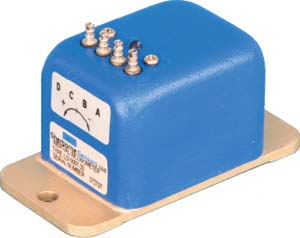
NewsRugged Servo Inclinometer
UK-based Sherborne Sensors has introduced the LSI series of closed-loop gravity-referenced servo inclinometers to the North American market. The family of inclinometers is specially designed to withstand severe shock and vibration inputs for precise measurements in demanding environments. The series incorporates a unique, flexure-supported torque-balancing system that is rugged enough to withstand shock inputs of […]
-
O&M
The Unique Challenge of Controlling Biomass-Fired Boilers
Biomass has many advantages as a fuel for boilers: It’s inexpensive, readily available in many regions, CO2 neutral, and its use warrants government subsidies. The fuel also presents unique concerns to the designers, owners, and operators of biomass plants, especially in the design of the control system.
-
Business
POWER Digest (April 2010)
Siemens Hands Over 870-MW Dutch Gas Plant. Siemens Energy on Feb. 12 handed over the 870-MW Sloecentrale combined-cycle power plant to the joint venture of Dutch company Delta Energy and Electricité de France. The natural gas – fired plant in the Dutch town of Vlissingen-Oost reportedly has an efficiency of 59% and uses a state-of-the-art […]
-
 News
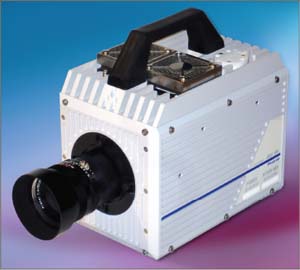
NewsEncased High-Speed Imaging Cameras
High-speed imaging systems manufacturer Photron introduced hardware to extend the normal operating temperature range of the Fastcam SA5 and Fastcam SA2 high-speed cameras. The Range Version (RV) is a new sealed case design that makes the camera models impervious to dirt, dust, and sand. Photron’s RV option includes two serviceable external fans that direct cooling […]
-
O&M
Competitive Maintenance Strategies, Part II
Nearly every combined-cycle operator recognizes that cycling reduces the life expectancy of hot-gas-path components in combustion turbines. Often overlooked, however, is that the same phenomenon affects the heat-recovery steam generator (HRSG).
-
Legal & Regulatory
Gridlock Continues for Grid Policy
Early last year, there were promising signs that electric transmission line construction would be facilitated by the convergence of the new administration’s emphasis on developing remote renewable generation resources, proposed legislative provisions expanding federal siting authority, and the granting by the Federal Energy Regulatory Commission (FERC) of generous cost-of-service returns on such investments. However, the stars did not align for transmission policy in 2009 as had been hoped, and the forecast is cloudy.
-
 Wind
WindWind Destroyed and Now Powers Greensburg, Kansas
Greensburg was destroyed by an EF5 tornado on May 4, 2007. Instead of abandoning the Kansas town, the community quickly embraced the task of rebuilding it from the ground up, maximizing the use of renewable energy sources and energy efficient building techniques. Rebuilding continues, but the future of Greensburg has never been stronger.
-
 Coal
CoalOPG Charts Move from Coal to Biomass
In response to Ontario’s provincial regulatory mandates to phase out the use of coal by the end of 2014, Ontario Power Generation (OPG) is exploring its capability to employ biomass feedstocks to displace coal in some units within the OPG thermal fleet. The primary fuels employed during the respective trials at its Nanticoke and Atikokan Generating Stations have been agricultural by-products and commercial grade wood pellets. The Canadian utility has learned valuable lessons about fuel supply and logistics, and the technical challenges of safely handling and firing high levels of biomass.
-
 Nuclear
U.S. Spins Nuclear Wheels as Other Nations Roll Out New Plants
President Barack Obama’s January State of the Union speech called for incentives to make clean energy profitable — mainly through the construction of a new generation of nuclear power plants. That comment, an apparent effort to reach out to Republican members of Congress, drew furious applause. Within three weeks, the president’s backing of nuclear power had already made a significant impact on the U.S. nuclear sector.
-
 Nuclear
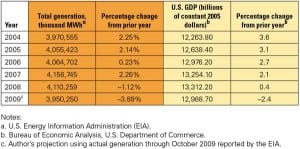
Benchmarking Nuclear Plant Staffing
The EUCG Nuclear Committee has collected benchmarking data of U.S. nuclear plant staffing for many years. A summary of this highly desirable data was gleaned from EUCG databases and is now, for the first time, made public through an exclusive agreement with POWER.
-
 Nuclear
Initial Experiments Meet Requirements for Fusion Ignition
Scientists at Lawrence Livermore National Laboratory’s National Ignition Facility (NIF) in California speculate that a prototype nuclear fusion power plant could be operational within a decade, thanks to a test of the world’s largest laser array that confirmed a technique called inertial fusion ignition is feasible. Their first experiments have demonstrated a unique physics effect that bodes well for NIF’s success in generating a self-sustaining nuclear fusion reaction. Fusion energy is what powers the sun and stars.
-
 O&M
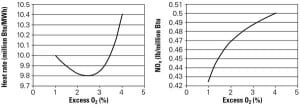
O&MA Primer on Optimizing Fleet Operations
The power industry needs a straightforward definition of "fleet optimization" and a game plan to achieve the promised economic gains of optimizing. This need has become more urgent because integrating nondispatchable renewable resources requires more complex optimization strategies. The bottom-up approach presented here applies well-understood optimization principles and techniques that will help power producers minimize their fleetwide cost of production, independent of the technologies used to generate electricity.
-
 Coal
CoalFrom GHG to Useful Materials
Could the transformation of carbon dioxide (CO2) into carbonates and oxides solve the problem of greenhouse gas emissions (GHG) from fossil-fired power plants? Some companies are betting that such processes could make everyone happy and even create new profits. Buzz has been growing about this approach, though the concept has been around for many years.
-
 O&M
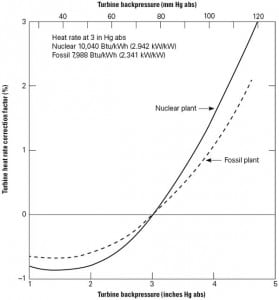
O&MEnhanced Condenser Tube Designs Improve Plant Performance
Enhanced condenser tube designs can significantly improve the heat rate and performance of fossil and nuclear plants. Using the optimum number of tubes and replacement tube sheets will cost more than simply replacing plain tubes. However, the investment’s simple payback is measured in only weeks, which builds a strong case for using an enhanced tube design as part of your next condenser overhaul.
-
 Hydro
HydroMarines Get Power from Waves
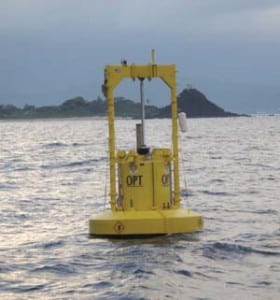
Ocean Power Technologies Inc. (OPT) announced on Feb. 1 that it had successfully deployed one of its PowerBuoy wave energy devices about a mile offshore from a U.S. Marine Corps Base on the island of Oahu in Hawaii. The device generates up to 40 kW of power from the rise and fall of waves, and since its deployment in December 2009, it has been generating power within specifications.
-
Commentary
Radioactive Corporate Welfare
A good default proposition regarding the government’s role in the economy would state that the government should not loan money to an enterprise if the enterprise in question cannot find one single market actor anywhere in the universe to loan said enterprise a single red cent. It might suggest—I don’t know—that the investment is rather … dubious.
-
 Water
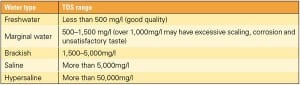
WaterSub-Sea Water Treatment System Provides Reliable Supply for the Huarun Power Plant
River deltas experience extreme seasonal changes in water quality that perplex conventional water treatment systems. Industrial development in China, including new power plants, has spurred the development of desalination processes that have tamed these brackish water sources to provide a virtually unlimited supply of boiler-quality water.
-
Geothermal
Permeable UK Granite Is Good News for Geothermal Energy
In mid-February, the Geological Society of London raised the hopes of those promoting geothermal energy when results of exploratory drilling in Weardale, County Durham, revealed record levels of permeability in granite. Although the results are promising for the development of geothermal energy, they may have less welcome implications for the safe disposal of radioactive waste in deep repositories.
-
Commentary
Climate Change: Developing Countries Control the Thermostat
In December 2009, representatives of nearly 200 governments met in Copenhagen, Denmark, to hammer out the details of a new climate change treaty. Treaty drafts indicated that industrialized countries would be required to reduce their greenhouse gas emissions—primarily carbon dioxide (CO2)—up to 80% by 2050. Developing countries would not be required to reduce emissions much, […]
-
 Smart Grid
Smart Grid: On the Money
How much will a smart grid cost? It’s a question that has gained importance in light of massive cost overruns for one highly touted U.S. project.
-
 Solar
SolarDish Stirling Solar Plant Debuts
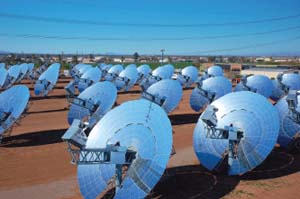
In late January, a 1.5-MW concentrating solar power (CSP) plant began providing power to Salt River Project customers in Greater Phoenix, Ariz. Though small, the plant, developed by Tessera Solar and Stirling Energy Systems (SES), is seen as a prelude to 1,500-MW projects that are due to break ground in California and Texas later this year.
-
 O&M
O&MThe Role of Fireside Corrosion on Boiler Tube Failures, Part I
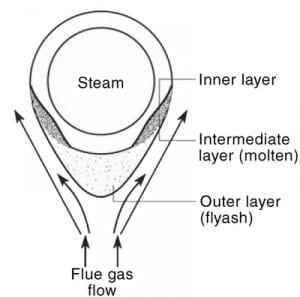
One of the primary challenges of reliably burning coal is managing the corrosion experienced by the furnace heat transfer surfaces. Fireside corrosion remains a leading cause of failure in superheater and reheater tubes. Three case studies examine the different failure modes experienced by tubes located throughout the furnace.
-
Commentary
Rethinking the Power Industry’s Dash to Gas
During a recent meeting of state utility commissioners, the CEO of a Fortune 500 electric power company said natural gas prices promise reliability but "always break your heart." What breaks my heart is the electric power industry’s ongoing love affair with natural gas. Using natural gas for generating electricity is not the best or highest use for this clean, green, and domestically abundant resource.
-
O&M
Deciphering Desuperheater Failures
The "combined" portion of a combined-cycle plant is the heat-recovery steam generator (HRSG) that generates high-pressure and high-temperature steam and the steam turbine generator that expands the steam to produce electricity. Integrating the HRSG and steam turbine with the combustion turbine is a key challenge for plant designers, as each system has differing operating profiles, operational constraints, and design requirements.
-
 O&M
O&MPower 101: Flue Gas Heat Recovery in Power Plants, Part I
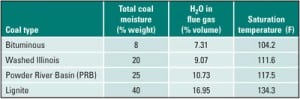
Every power engineer must have a firm grasp of the rudiments of how fuel is processed to produce electricity in a power generation facility. With this article, we begin a series of Power 101 tutorials that present these fundamentals in a clear and concise way. First up are the essentials of recovering heat from flue gas.
-
General
Greenpeace Flies Under the Cloud
By Kennedy Maize Washington, April 2, 2010 — Greenpeace doesn’t like cloud computing. The out-on-the-edge environmental group also doesn’t much care for Apple’s upcoming IPad computer platform, which adds to the data content of the cloud. Why is this? Because the data cloud, and its associated applications such as the IPad, dwell on server islands […]
-
News
EPA Formally Announces Phase-in of Clean Air Act Permitting for GHGs
Under a final decision issued Monday by the U.S. Environmental Protection Agency (EPA), no stationary sources, including power plants, will be required to get Clean Air Act permits that cover greenhouse gases (GHGs) before January 2011.
-
News
China Leads G-20 in Clean Energy Finance and Investment
For the first time, China led the U.S. and other G-20 members in 2009 clean energy investments and finance, according to data released Thursday by The Pew Charitable Trusts. Last year, China invested $34.6 billion in the clean energy economy—nearly double the U.S. total of $18.6 billion. Over the past five years, the U.S. also […]
-
News
Calif. Peaker to Go Combined Cycle, Perhaps with a Side of Solar
The California Energy Commission has approved converting a San Joaquin County peaker plant to a combined-cycle plant. The 169-MW Tracy Peaker Plant would become the 314-MW Tracy Combined Cycle Power Plant. The decision last Wednesday was seen as opening the possibility of integrating solar photovoltaic (PV) power generation—to be built on city land—with the plant, […]
-
News
More DOE Money for Nuclear Energy Education
Roughly two weeks after announcing that it would provide approximately $5 million in scholarships and fellowships for students enrolled in nuclear energy–related engineering and science programs at accredited U.S. universities and colleges, the U.S. Department of Energy announced two new funding opportunity announcements (FOAs) to support university and college efforts to build or expand their school’s nuclear science and engineering basic research or education capabilities.