A special report from Global Business Reports and POWER
At the same time as Peru struggles to extend transmission and distribution lines to all of its people, its neighbors are eager to buy electricity. And although gas has been fueling many of the most recent additions to Peru’s power generation fleet, the future appears brighter for traditional hydro and wind power. Setting priorities will be important in a country that has suffered from a lack of long-term planning.
After 2008’s economic boom and the significant pressures that this placed on energy supplies, Peru was able in 2009 to catch up with investments in new power generation facilities. Now the country is having to choose between settling for self-sufficiency and exploiting its enormous resources — especially for hydropower generation — in order to become a key exporter of energy to countries with a high demand, such as Brazil.
This dilemma is not a trifling one, as it will shape the country’s energy position for the next several decades. At stake are environmental and social considerations that are inevitable when you project several GW worth of hydro plants in the middle of the Amazon jungle. Nevertheless, many believe that Peru would be foolish not to take advantage of its privileged richness in energy sources. The question is, can the country afford to start exporting large amounts of electricity in the near future?
Considering 2008’s energy shortages, which caused spot electricity prices to skyrocket, some industry leaders believe that Peru needs to secure its own supplies first, for a simple reason: With natural gas reserves already looking insufficient to serve the phenomenal growth in demand (Peru is already at gas consumption levels initially foreseen for 2016), the country will need to increasingly shift back toward hydropower projects, which take many years to build. Some even anticipate energy shortages in two to three years’ time.
"The economic crisis has indeed affected the demand for energy, which has grown by less than 1% in 2009," explains César Raúl Tengan, general manager of Electroperú, Peru’s second-largest generator, which is state-owned. "For the next 24 months, we will cope with the current capacity. The problem will start in 2012, because hydro plants cannot be built in three years."
Alejandro Ormeño, general manager of SN Power, a generator owned by the Norwegian state, expects "dramatic changes" after 2011: "The current situation will have to alter. Gas prices will probably more than double, with a commensurate effect on energy costs."
Other managers, though, believe energy supplies are guaranteed for the next five years, thanks to the recently added capacity: "Demand is growing in the good years by 400 MW, but in 2009 not at all. Between 2008 and 2009 1,300 MW were added to the system. That is enough new capacity to last until 2013/14; then the combined cycle in our Kallpa plant will provide an extra year," claims Javier García-Burgos, CEO of Inkia Energy, headquartered in Lima and owned by Israeli investors.
A Bit of History
The 1992 Electricity Concessions law set up the basis of the current power regime and opened the door to investors other than the state. "The new law included concepts from Chile, Argentina, and England. It was a challenge to adapt all this new knowledge to the Peruvian system. Moreover, it included enormous tariff hikes (from less than 1 cent per kWh to 6 to 7 cents per kWh). It was a major restructuring," explains Carlos A. García, managing director of Summa Asesores Financieros, a firm that acted as a consultant for the Peruvian government during the process.
Alfredo Dammert, president of Osinergmin, the main governmental regulator in the industry, acknowledges that the privatization of the distribution sector faced a number of problems but argues that in the case of generation and transmission it was very successful. Today, the state maintains some assets in power generation, but the transmission lines are 100% in private hands.
The current picture shows a significant proportion of natural gas – fired power generation in the energy mix, but this is a recent phenomenon. Indeed, it was only in 2004 that Camisea’s Block 88 was put into production, thus beginning a revolution in the country’s electricity sector. The use of natural gas for power generation grew by 54% annually between 2004 and 2008, according to government sources.
Market Imbalances
The push for gas-fired generation had two main drivers, seen by many today as unfortunate. First, very cheap gas prices made open-cycle (simple-cycle) gas-fired plants very profitable and discouraged the construction of combined cycles. Second, a five-year moratorium on new hydro plants was passed by the Paniagua transition administration in 2001, with the intention of promoting gas consumption. This stopped the development of a number of projects, such as Celepsa’s 220-MW hydro plant, El Platanal. "The project was conceived in 1996, and all the basic engineering was done between 1996 and 1998. Due to the moratorium, however, we could only start construction in 2006," explains Pedro Lerner, general manager, Celepsa. The plant was finally put into operation in late 2009.
Mark Hoffmann, general manager of Duke Energy, remarks on the situation created by the arrival of natural gas: "By simple mathematics it is easy to demonstrate that the price of gas here makes otherwise attractive technologies unviable. We are talking hydro, which this country is particularly well suited to, and combined-cycle gas plants. It is an inefficient use of natural resources, but in the end if you are investing money, returns drive your decisions."
Mark Hoffmann, General Manager of Duke Energy Egenor
Now the industry is finally moving toward combined cycles, but traditional generators in Peru are not betting on any large hydro project. Celepsa, promoter of El Platanal, is actually the subsidiary of a large cement group that wants to ensure its own power supplies, whereas the plans for large hydro facilities in the Amazon jungle are being designed with the sale of energy to Brazil in mind (Figure 1). (See the Brazil country report in our Jan. 2010 issue, p. 48.) [Ed.: Print version incorrectly listed Jan. 2009.]
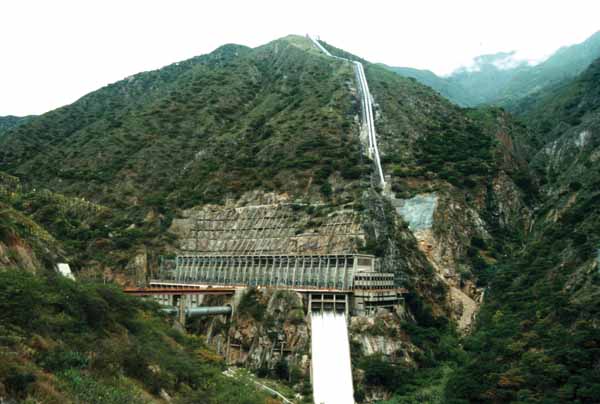
1. Mantaro, owned by state company Electroperú, is the country’s largest power generation complex, with a total of 1 GW. Brazilian investors, with the support of the Peruvian and Brazilian governments, are now evaluating large hydro projects in the Amazon jungle for a total of approximately 6 GW.
In Peru, many industry leaders argue that tariffs are too low to make new hydro projects feasible. When Proinversión, Peru’s investment promotion agency, launched an auction in 2009 for the purchase of 500 MW from new hydro facilities, only one bidder (SN Power) turned up, and just 109 MW were allocated at a price of $47.50 per MWh plus $5.99 per kW-month. Jorge León, executive director of Proinversión, defends the terms of the process: "We intended to give an incentive to investors through the purchase of up to 90% of their energy at the price they offered. This way they would ensure their revenues. The maximum monomial price, established at nearly $60 per MWh, is higher than in previous tenders and implies a big effort from consumers."
Patrick Eeckelers, general manager of Enersur, a fast-growing generator belonging to the GDF Suez group, states that this price does not provide for an adequate return. "One thing is clear: at $47.50 per MWh we will not be able to make our Quitaracsa hydro project economically viable. We need prices of $60 to $70 per MWh." For his part, Jorge Barata, managing director of Odebrecht, a large Brazilian constructor of hydro plants says, "We know that some mining companies today are paying $90 per MWh, so the market conditions will definitely offer room for new projects; $47.50 per MWh is too low for investors to take the risk."

Patrick Eeckelers, General Manager of Enersur (GDF Suez)
The Brazil Factor
Although Peru expects the development of large mining and petrochemical projects in the medium term, anticipated demand for electricity does not justify the construction of very large projects for national consumption only. Yet neighboring countries are electricity-thirsty. Indeed, Peru has already exported electricity to Ecuador during dry periods, when that country’s hydro resources were limited. Meanwhile, Chile (see our Nov. 2009 issue, p. 45) has suffered from shortages and expensive power after its gas supplies from Argentina were cut off. And Brazil needs to grow its installed capacity by the equivalent of Peru’s national demand every year. Under these circumstances, and given its rich resources, Peru suddenly becomes a potential key partner as power supplier.
Following the model of Itaipú, South America’s largest hydro plant (on the Paraguay-Brazil border), Brazil is aggressively promoting large binational hydro projects sitting on Peruvian soil. The flagship is Inambari, a 2.2-GW venture in the Amazon jungle, already at the final stages of environmental and feasibility studies. The main shareholders of the project are Brazilian construction firm OAS, with 51%, and Electrobras.
The project has provoked claims that Brazil will be compromising Peru’s energy future without bearing any of the environmental or social costs. The project’s promoters, aware of the sensibilities that export ventures can raise (as is happening with the Peruvian liquefied natural gas project, see sidebar), try to make it clear that Inambari would serve Peruvian demand first: "The power generated by these projects will go to the Peruvian market, considering its current demand and growth projections, and the surpluses will be able to be exported to neighboring countries such as Brazil," says Edgar F. de Oliveira, Electrobras’ manager of foreign assets. The surpluses would initially amount to over 75% of the plant’s output.
Minister of Energy and Mines Anticipates Hydro Projects with Brazil
In October 2009, Peruvian Minister of Energy and Mines Pedro Sánchez talked with Global Business Reports about the energy sector’s main issues.

Pedro Sánchez, Peruvian Minister of Energy and Mines
GBR: You were appointed minister in late 2008. What were your aims for the energy sector when you accepted the position?
PS: By the time I began my work as minister, the global crisis had already started, and yet Peru finished that year with GDP growth of 9.8% and virtually nonexistent power generation reserves for 2009. This issue was the priority for us: to ensure that power supply can meet the growth in demand. We have worked in that direction, and the problem is solved now, although we are also undertaking significant long-term initiatives to prevent the 2008 situation from occurring again.
GBR: How important is the energy sector within the governmental agenda?
PS: It is an essential item, as most of the investments that Peru attracts, such as in the mining sector, require the assurance that power will be available.
GBR: It is expected that the demand for electricity will grow between 6% and 8.5% over the next eight years. What particular initiatives is the government implementing to ensure that supply will meet this growth?
PS: Among them we can mention the following: 1) Auction for the purchase of 500 MW in new hydro electrical plants [Ed. note: a process finished in Q4 2009 with just one bidder, SN Power, which signed a contract for the sale of 109 MW to the government]; 2) installation and/or conversion of plants as emergency facilities for up to 160 MW; 3) implementation of a new 500-kV transmission system in the country, through BOOT-type tenders [build, own, operate, and transfer]; 4) recuperation of the cold reserve [plants that only enter into operation in case of emergency, normally within 10 minutes] for up to 400 MW in two thermal plants; and, finally, 5) the renegotiation of the gas contracts with the Camisea consortium, that will allow for the construction of new plants in the short term.
GBR: For the last decade, the government has focused on gas-fired generation. However, Peru still has an enviable hydro potential to be exploited. Is the current administration willing to promote new large-scale hydro projects?
PS: Hydro is the best renewable resource Peru has, with a potential of 60,000 MW. The government is already promoting hydro energy because it allows the country to ensure its power supply while it also helps to solve the problems of global warming and water supply security, with the construction of reservoirs of different sizes. Together with Brazil, we are evaluating potential projects of roughly 6,000 MW that could be in operation from 2014.
GBR: Initiatives for interconnection within Latin America traditionally have been undermined by political battles among the different countries. How strong is your government’s belief in regional integration?
PS: Energy integration in Latin America, and particularly in South America, has been an objective for many years, yet specific cases of cooperation in this matter have been rare. We still do not have a regional framework that allows for this. Our biggest venture in this respect, as I said, is the 6,000 MW in hydro plants that we are evaluating with Brazil.
GBR: There has been major controversy about the promotion of a liquefied natural gas terminal to export Camisea’s gas, and more specifically about the role of block 88’s resources. Is Peru compromising its energy security to obtain export revenues in the short term?
PS: This government does not support the exportation of gas from block 88. What happens is that the previous administration modified the license contract for block 88 and guaranteed that 4.2 trillion cubic feet would be exported [between block 56 and block 88]. We did not participate in this contract, but it is guaranteed by the existing framework. What we did as soon as we took over this ministry was to raise the need to discuss this problem with the Camisea consortium, as there are political and social issues there, and we need to solve them.
GBR: Peru has unique biodiversity, and recent infrastructure projects have been under attack for their environmental impact. How do you ensure new large projects are developed in a responsible manner?
PS: The Peruvian legal framework is very advanced in the preservation of the environment and involves all the affected parties during the environmental impact studies, so all the norms are strictly complied with. The government does not make any exception, as environmental care comes before the development of projects, which are done where they are feasible in this respect.
GBR: In 2006 only 79% of the Peruvian population had access to electricity. What are the targets of the government in rural electrification?
PS: Peru is a vast country and with a low population density, which makes any project to extend the network very costly for the government. Having said this, our aim is to reach 10,500 new localities with an $800 million investment, bringing electricity to nearly 3 million people. This will mean an increase of 12% of the national coverage.
GBR: Some areas in southern Peru have among the highest solar energy concentrations in the world, and it is estimated that Peru has 19 GW of wind power potential. In which ways is the government changing the legal framework to promote the development of these resources?
PS: In 2008, within the frame of the free-trade agreement with the U.S., we passed new norms. Legislative Decree 1002 sets up the framework to promote the development of nonconventional renewable resources such as mini hydro, wind, geothermal, biomass, and solar among others. In the specific case of solar, we are working on the electrification of rural areas that would be not connected to the national grid in the short term.
GBR: What would be your final message to the readers and potential investors who have an interest in Peru?
PS: For over 15 years, Peru has been highly respectful with private investment and has a legal framework that guarantees great security. Political stability has allowed Peru to become a major destination for foreign investment, and we hope that this continues to be the case in the years to come. What we expect from the private sector is strict compliance with the Peruvian regulations, respect for the environment, and high standards in social responsibility.
The environmental issue seems more controversial. Some, like OAS’s country manager, Valfredo Ribeiro, point out that these arguments are being raised both by politicians, who want any government-supported project to fail, and by irregular coca growers and informal miners operating in the area who would see their illegal businesses disappear should the plant be built there. Yet, it is undeniable that a project of Inambari’s size in such a sensitive location as the Amazon jungle needs to take all possible precautions.
According to Gonzalo Morante, general manager of Walsh, a large environmental consultancy, "Hydroelectric power is a renewable source, but it has important environmental impacts. The first one is the change in land use, as you need large areas and sometimes you even need to move population to create the reservoir. So you have less forest, and you have a social impact. There is also an impact of carbon emissions when inundation causes plants to die. But as a whole, when you have a good project, the benefits should outsize these impacts."
Sustainability and Planning Concerns
José Enrique Millones, general manager of ECSA Ingenieros, in charge of the environmental studies for Inambari, points out: "Rather than just defining zones that you cannot even touch, the authorities should be looking at sustainable development in these areas, promoting energy, agriculture, and tourism, because the country has many rivers that are not contributing to the national economy. I truly believe in development, and we are a privileged country, sitting on very rich resources."
The governments over the past decade have each shown a clear commitment to development, yet the energy sector has suffered from a lack of long-term planning. The way it looks now, gas will continue to play an essential role in supplying power to the internal market, while hydro will certainly gain new momentum, overcoming the 2001 – 2005 stalemate. With potentially dozens of GW untouched, the country seems to be leaning toward becoming a regional energy hub. Interconnection, sometimes seen as a distant dream in Latin America due to political differences among the countries, could be a reality very soon.
Generation: Catching Up
For Peru’s power generation industry 2009 was a year of inaugurations. For a country with maximum demand figures of around 4,250 MW in the interconnected system (December 2009 data) there have recently been significant additions to the total installed capacity, namely the new hydroelectric plant of El Platanal (220 MW), the second gas turbine at Inkia Energy’s Kallpa plant (adding 192 MW), the third gas turbine (200 MW) at Enersur’s ChilcaUno facility (Figure 2), and a new 193-MW gas turbine at Edegel’s Santa Rosa dual thermal plant (Figure 3).

2. Enersur’s third turbine in ChilcaUno was one of the recent additions to Peru’s thermal power generation capacity, expanding the plant to 545 MW. Now Enersur is evaluating the construction of a combined cycle at the site.

3. Edegel, part of Endesa, is Peru’s largest generator with total installed capacity of 1,660 MW. The 183-MW TG8 at the company’s Santa Rosa plant (pictured) was inaugurated in November 2009.
The country’s largest generator is Endesa-owned Edegel, with a total installed capacity of 1,660 MW (55% thermal and 45% hydro). Edegel is the only company so far in Peru to have a combined-cycle facility in operation, at its Ventanilla unit in Callao (492 MW). Mother company Endesa also controls a separate generation firm, EEPSA and Edelnor, the country’s largest distributor, with nearly 1.1 million customers.
Second in the generation ranking is Electroperú, the principle Peruvian state-owned generation company, which operates the Mantaro hydro complex — the largest power facility in the country, with a total installed capacity of 1,008 MW — as well as a small thermal unit in Tumbes. The company would like to grow its hydro capacity and invest in a midsize thermal facility to offset the risks represented by droughts.
However, with the government favoring private investment in the sector, this aim faces a number of obstacles, as Raúl Tengan, general manager of Electroperú, explains: "The system for hydro projects in Peru allows several players to work on the same concession at the same time, so even though we may start the process before anyone else, the long approval process (which normally ends at the Finance Ministry) puts us in a disadvantaged position in front of private competitors. In the case of thermal projects the problem is the uncertainty about the future availability of natural gas."
Within the private sector, the company that has invested more heavily over the last years is Enersur, doubling its installed capacity since 2005 to the current 1,030 MW. Now, with three turbines in open cycle at its biggest plant, ChilcaUno (545 MW), plans for the near future include its transformation to a combined-cycle plant, thereby adding 230 MW of capacity, and the development of the Quitaracsa hydro plant (114 MW). If the company decides to go ahead with both, that would entail an investment of $500 million.
Patrick Eeckelers, the firm’s general manager, defends the need of these aggressive expansion plans: "We need to keep growing; otherwise we will lose our market share. We face new competition from small and ambitious players." He explains the importance that diversification has for Enersur: "We are the only player in coal; then we have diesel, hydro, and gas. Plus, our client portfolio is also very balanced. During the crisis, free customers’ consumption has decreased, but demand from regulated customers has kept on rising. With this balance you are hedged, and you can maintain your cash flow."
Duke Energy Egenor, the third-largest private generator with an installed capacity of 501 MW, is also balancing its portfolio, which is currently biased toward hydro (with the Cañón del Pato and Carhuaquero plants). The company is currently investing in an open-cycle gas-fired plant in the area of Chilca, a locality 60 km south of Lima that has become the country’s gas-fired generation hub. The new plant, called Las Flores, is due to start operating in March 2010, adding an extra 197 MW.
Duke Energy is the only American-owned generator operating in Peru. Its general manager, Mark Hoffmann, gave us some background about the firm: "In the late 1990s the mentality was: U.S. utilities would not see substantial growth in their local markets, so you need to start looking elsewhere to drive stock values. For a while things worked very well, but [foreign exchange] fluctuations can wipe out your returns in an instant. Many of those utilities have recoiled and drawn back to the U.S. It is of note that Duke Energy didn’t. If you make an investment decision in a capital-intensive industry such as power, it needs to be long term."
Together with other industry leaders, Hoffmann believes electricity tariffs are a challenge in Peru: "If you look at the data for the last five years, it is clear that the gap between the regulated and spot prices widens every year, to the detriment of the generators. The regulator has consistently shown a bias to the consumer and is under heavy political pressure to keep tariffs low."
Gas Issues
Low tariffs and cheap gas supplies from Camisea (Figure 4) have delayed the development of combined-cycle plants, but these will become more common in just a few years. After Edegel’s Ventanilla, the next to come online is Kallpa, Inkia Energy’s facility, also located in Chilca. With two turbines and a third one about to start operating, the next step will be starting construction of the $400 million combined cycle this year.
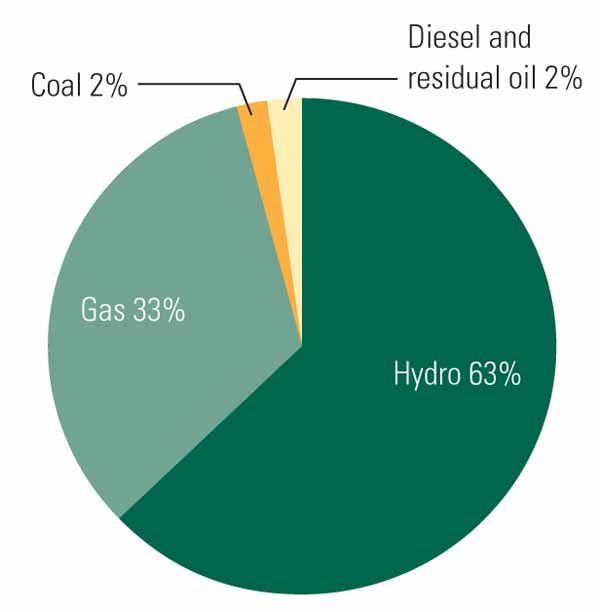
4. The exploitation of natural gas from the Camisea fields has dramatically changed the country’s energy mix, as the use of gas for power generation grew by 54% annually between 2004 and 2008. Last year it represented 33% of the total.
"Once Kallpa III will be up and running, we will have 568 MW of single-cycle capacity. It will be the largest thermal plant in Peru. Kallpa IV is a single steam turbine, which will bring Kallpa up to about 850 MW gross," explains Javier García-Burgos of Inkia Energy.
Considering all of these projects in gas-fired power generation, it is no surprise that gas supply is strained. The problem is not only a matter of the country’s total reserves (a subject of some controversy) but also of production levels at the wellhead and the pipeline infrastructure in place to take the gas from Camisea to the coast. A number of newcomers to the industry are struggling to secure the gas supplies needed to develop their projects. Termochilca, for instance, has had to reduce the size of its project, as Tatiana Alegre, its general manager, recounts: "After a long negotiation, we finally signed an agreement with Pluspetrol [Camisea’s operator] in September 2009, for 45 million cubic feet per day from Block 88. Due to the enormous demand from other consumers, we decided to redefine our initial plan and go for just one turbine."
Termochilca expects its plant to be online by December 2011 when the "take or pay" enters into force (requiring Termochilca to pay for the agreed upon amount of gas even if it cannot produce power), although this time frame could be delayed for a few months, depending on the pipeline capacity to take the gas to Chilca. The project will have two phases (single and combined cycle); and even if it will be smaller than initially expected, the owners will probably be happy to see it go ahead, as the promoters of other thermal projects will not be able to achieve the same — at least, not for now.
Lack of Gas? Hydro Aplenty
Though fossil-fired generation currently faces a gas supply shortage, hydro presents a different picture. The country is very rich in freshwater and has lots of heads, which allow for the construction of hydro power generation facilities without the need for huge reservoirs. Yet, hydro faces other challenges. First, high development costs make it difficult to achieve adequate return on investment at the current tariff scheme, and second, far longer development timelines are required compared with thermal. Last but not least, community relations are an increasingly tricky subject: A failure in establishing good relationships with the locals can result in the complete abandonment of a project, as has been seen in the past in the mining industry.
After many years of hard work, El Platanal — the $320 million, 220-MW hydro plant promoted by Cementos Lima (the country’s largest cement firm) through Celepsa, a subsidiary generation company — was finally operational at the end of 2009. Pedro Lerner, Celepsa’s general manager, acknowledges that making El Platanal a reality was a tough process: "The main challenge has been the lack of continuity in hydro power development in Peru. There is only one project every five to six years, so it is hard to gather enough experience from previous projects. Plus, each hydro project is unique in many ways."
This point is stressed by Roberto Santiváñez, partner at the Lema, Solari & Santiváñez law firm, and one of the country’s main experts in Peru’s legal framework for power: "El Platanal is the largest hydro project promoted by the private sector in Peru in more than 40 years, and the largest overall in almost 30 years. The machinery of the state is very rusty as to how to manage all the different procedures."
Hydro power, responsible for 63% of the electricity generated in Peru in 2009, should keep playing an indispensable role, but investors need to see it as a profitable investment. One of the companies that is decidedly moving into this area is SN Power, a firm with a mission to invest in "renewable energy assets located in developing markets, where long-term growth in demand is identified," in the words of Alejandro Ormeño, the company’s general manager in Peru, where the company already controls assets acquired from Cahua (in 2003) and Electroandes (in 2007).
As was mentioned earlier, SN Power was the only bidder in the last Proinversión auction for 500 MW of new hydro power facilities. The company agreed to sell to the government the production from 109 MW of installed capacity at its new Cheves plant, a $300 million, 168-MW unit that should be in operation by 2014. The price agreed upon with Proinversión was $47.50 per MWh — a price that has been the focus of much debate in the industry. Some argue that because it is owned by the Norwegian state, SN Power has the financial muscle to go for lower returns and gain a strategic position in the market for the future. Others retort that the country still presents interesting opportunities at that tariff.
José Angulo, general manager of Egemsa, a Peruvian state-owned generator that operates the Machu Picchu plant in the area of Cuzco, gave us more details on his company’s Santa Teresa project: "Santa Teresa is very interesting from a point of view of feasibility because it is profitable at tariffs below $50/MWh. It is a 90-MW project that takes advantage of the reservoir and the existing water intake and other facilities from the Machu Picchu plant." In 2009, Egemsa started the construction of the second phase of Machu Picchu, a $148 million expansion aimed at producing an extra 99 MW. Meanwhile, for Santa Teresa it expects to find a private partner.
The Jungle’s Potential
Speaking of El Platanal, Pedro Lerner says: "During the construction phase we had to be very careful not to upset the local population. And during the operation people need to perceive that they are better off having us there than not having us there. It is a big challenge. Community relations are increasingly important in hydro projects, and these types of ventures are going to become more difficult and expensive to develop on the grounds of social issues."
If this is the case for a 220-MW plant, it is easy to imagine that the social challenge will be far more difficult to solve with a plant 10 times the size of El Platanal, which is what is projected for Inambari in the Amazon jungle. Promoted by Brazilian investors (OAS and Electrobras) and supported by the governments in both Peru and Brazil, the project is currently looking at 2,200 MW of installed capacity with four generation units of 550 MW each. The inundation area would be 377 square km, and the number of people directly affected would be 3,250, according to Electrobras data (other sources speak of 8,000 people living in the area).
Although the impact is undeniable for such a large project, it also offers a number of advantages. To start with, hydro is a clean energy source; any thermal project of the same size would multiply the impact in carbon emissions. Furthermore, the plant would be a great boost to Peru’s energy security, even if most of the energy will be initially exported to Brazil. And finally, it will create thousands of jobs, as points out Edgar de Oliveira, manager of foreign assets at Electrobras: "During construction, which will last for six years, we will need up to 4,600 workers. And once in operation, the permanent staff will be around 100 people, 80% of which will be skilled professionals."
Inambari may be the most advanced export project Brazilians have, but it is not the only one. Indeed, Electrobras is evaluating another four ventures (Paquitzapango, Tambo 40, Tambo 60, and Manique 1) that together could have a total capacity of 4.5 GW. Peru’s estimated untapped hydro potential is actually in the area of 55 GW to 60 GW — definitely worth having a look at.
Small Hydro and Other Renewables
"The country’s total capacity needs to grow by between 200 and 500 MW per annum going forward. The nature of Peru means that the majority of new capacity has to be hydro, yet very few feasibility studies have been undertaken," explains Jesús Vidalón, senior consultant at Hatch, a multinational consultancy and engineering, procurement, and construction (EPC) firm.
For those looking at smaller hydro projects, however, a new window has opened thanks to governmental decree 1002, passed in 2008. Pablo Ferradas, managing director of Lahmeyer Agua y Energía, a consultancy specialized in hydro, gives more details: "For medium-sized and big plants the market situation is perhaps not ideal yet because of the pricing, but small hydro plants under 20 MW are very attractive, because they can benefit from additional incentives from the government and the electricity generated is automatically bought by the state."
After evaluating different countries in the Andean region, Aluz Clean Energy, a company created to develop small hydro projects, decided Peru was the ideal starting point. "The country has 2,000 MW of potential for plants under 20 MW," maintains Enrique Herrera, managing director. The company has acquired Langui, a small hydro plant; it has developed Pizarras, a concession where the plant is ready for construction; and it has a pipeline of other projects for a total of 120 MW to 140 MW.
Herrera elaborates on what he believes are the main pillars of the company’s strategy: "Firstly, you need volumes — that is seven to 10 projects to keep the company working. Secondly, you need competitive services. In Peru we can take advantage of the low prices of local engineering, for instance. Then, smaller plants are easier to develop than larger plants from a permitting point of view. And finally, the government is promoting renewables, so we can benefit from the incentives given to small hydro plants." Aluz will invest $15 million to $20 million during 2010 and plans to be listed in London’s AIM stock exchange.
Although the incentives of decree 1002 (like priority in dispatch, tax returns, and fixed tariffs with a premium) also apply to nonconventional renewables such as wind power, the situation in this field looks much more challenging right now. At the time of writing this report, a governmental tender for 500 MW from renewable sources was awaiting an outcome, expected in Q1 2010, but the leaders consulted were not very optimistic about it and, due to the numerous difficulties encountered, they felt that the administration does not really believe in wind or solar power.
Alfredo Novoa, president of the Peruvian Association of Renewable Energies (APEGER), argues that traditional generators are lobbying against the development of wind power: "The last thing that companies in thermal generation want is the arrival of windmills. This resistance to change has already been seen in other countries."
Those unconvinced by the development of wind power claim it is too expensive for Peru. Their point is, why eat caviar when you can have potatoes? Opposing this argument are those who emphasize that gas is a finite resource and that global warming and the El Niño phenomenon will make production from hydro plants increasingly volatile. Having good wind, they say, it makes complete sense to use it; and, with regard to economic feasibility, in the end it is up to private investors to decide.
"Wind power is not there to replace hydro, but to complement it," says Juan Coronado, general manager of Energía Eólica and vice-president of APEGER. "Peru’s wind is one of the best in the world for energy generation. With 7.5 meters/second you produce more energy than with 9 m/s in other locations, because it is very stable and there are no gusts. Farms in Peru can be productive 95% of the year," he adds.
Many believe that the current tender could be a complete failure, but others believe that just the allocation of a few megawatts will trigger the necessary change in mindsets. "In Chile, the first tender only awarded 30 MW, but now there are projects for more than 1,500 MW in the next five years. Once the doors will be open, growth will be exponential," concludes Coronado.
Potential Power Exporter
As is often said about its mining sector, Peru’s power industry has only scratched the surface. Right now the country is suffering constraints on its gas deposits, but exploration and production firms are very actively engaged in new exploration, which should result in new reserves. Also, the country is only using 5% of its enormous hydro potential and 0% of its high-quality wind.
Being a small market, Peru is in a position to push its power industry to the next level should it develop projects for foreign buyers. Becoming a large electricity exporter could give the country a very valuable geopolitical card, as well as sizable revenues. It also would encourage the investment of more private capital and strengthen the country’s current image as one of the best destinations in Latin America for foreign investment.
T&D Needs Investment
If Peru’s generation industry has been recovering during 2009 by taking advantage of the lack of demand growth due to the global crisis, the same has applied to the transmission and distribution (T&D) sectors, where the problems created by the absence of long-term planning have been visible over the past years. Concerning transmission, the government is busy tendering new BOOT (build, own, operate, and transfer) contracts for private players, while distribution has also been expanding, reducing the number of Peruvians who still do not have access to electricity 10 years into the 21st century.
One of the main milestones in the Peruvian transmission sector was the construction of the Mantaro-Socabaya line, operational since 2000, which allows for the connection of the centre-north and south interconnected systems (SICN and SIS, respectively) and the creation of the current National Interconnected Electric System (SEIN).
In 2000, investments in transmission infrastructure were scarce, and the administration had to call for the participation of private players by tendering BOOT contracts, which were developed on a case-by-case basis. "Between 1995 and 2005 no one invested, and the government had to make special laws for each project," explains Carlos Ariel Naranjo, until very recently general manager of ISA, a Colombia-based company that is the main operator of transmission lines in Peru. "Fortunately, we have a new law in force since 2006 which facilitates all new transmission schemes in Peru. If a new generation plant is built, the system for developing the required transmission infrastructure is automatic: The state designs the line and Proinversión runs the tendering process."
In other words: "After the modification of the law, BOOT contracts became the normal procedure for new investments in transmission lines," says Luis Velasco, financial manager at Redesur, a transmission company controlled by Spanish investors.
Although the sector is becoming far more dynamic than before, there is still much work ahead, according to Ignacio Baena, president of Abengoa Perú: "Peru still needs a lot of new electrical infrastructure. The country is growing, industrial and mining projects are being developed, and in this context transmission is essential."
Besides a transmission line for mining company Southern Copper, Abengoa, a Spanish diversified firm that works as an EPC contractor and transmission line operator, among other competencies, is currently developing the Carhuamayo-Carhuaquero line, the longest concession line under construction, with nearly 700 km running at high altitudes. It is expected to be in commercial operation in late 2010.
"The transmission lines we are developing will reduce the cost of electricity where generation is more expensive, and will also reduce the risk of energy shortages. Users will benefit from more security and cheaper tariffs," says Jorge León, executive director of Proinversión. Luis Ortigas, head of electricity projects at Proinversión, notes that for the first time the country is promoting 500-kV lines. These are Chilca-Zapallal and Zapallal-Trujillo, both granted to ISA and scheduled to be operational in 2011 and 2013, respectively; Chilca-Caravelí, still to be tendered; and Mantaro-Caravelí-Montalvo, granted in 2008 to a Spanish consortium that has recently seen its contract with the government cancelled due to noncompliance with the construction timelines due to financing issues.
The latter case, a failure in a BOOT contract, is something quite new for a system that has been running smoothly over the past years. As Baena from Abengoa points out: "The BOOT contracts have been very successful in bringing costs down and increasing competitiveness." Isonor Transmisión, the Spanish consortium that initially won the Mantaro-Caravelí-Montalvo project, perhaps offered too-aggressive prices and failed to anticipate the economic crisis that hit the world in late 2008.
In any case, the sector continues to move ahead, not only looking at the needs of the national system but also thinking of the opportunities that regional interconnection may bring. "Do you know that the electrical and gas interconnection of all of South America would cost just $1 billion and that the payback would be one year?" asks Carlos Ariel Naranjo, formerly of ISA. "Regional interconnection between the South American countries would be good for everybody," he adds.
Distribution: Toward Total Coverage
Of the three power subsectors, distribution is the one where the Peruvian state still has more assets under control than the private sector. In 2008 state-owned companies accounted for 55% of Peru’s electricity clients, according to government data. The two largest private distribution companies are Edelnor, part of Endesa, with nearly 1.1 million clients, and Luz del Sur, with more than 800,000 clients. The biggest state player is Distriluz holding — comprising Hidrandina, Electrocentro, Electronorte, and Electronoroeste — with an approximate total of 1.7 million clients.
Within the context of governmental decree 1001 (known as "Electricity for Everyone"), Distriluz is actively involved in rural electrification projects (Figure 5), enjoying the financial backing of both the Peruvian government and the World Bank. Genaro Vélez, president of Distriluz, emphasizes the impact of rural electrification: "In remote areas where we have invested, people were in tears at the inauguration events, as they were previously convinced that electricity would never reach their homes. They had lost hope. It is thrilling to see the impact electricity has. For instance, farmers in dry areas are using electricity instead of diesel to pump water up, saving thousands of dollars in energy bills."

Genaro Vélez, President of the Board of Distriluz

5. Through governmental decree 1001, known as “Electricity for Everyone,” the current Peruvian administration expects to improve the country’s electrification rate to cover 91% of the total population by 2011.
During 2009, Distriluz invested $140 million in electrification projects and network maintenance. For the future it plans to grow in the generation area, although, as a distributor, there are legal limitations to doing so (the company already has 70 MW of installed capacity in a number of hydro and thermal small plants). In the short term it is also in the process of placing 10% of its shares on the Lima Stock Exchange: "The idea is to have new investors within the company structure and have more liquidity to invest in new projects. Besides, this will be good for our corporate governance, as having external investors will help us be more efficient and transparent," Vélez says.
The issue of public or private ownership in the distribution sector is the center of dispute due to the unprofitable nature of rural electrification in Peru, but also because of the failed privatization of one distributor in the 1990s: Electro Sur Medio (Electro Dunas today). Ismael Rodríguez, the company’s CEO, gave us a bit of history: "Electro Sur Medio/Electro Dunas was founded in 1912 and has gone through many ups and downs in its history. Perhaps the most difficult period was between 1997 and 2007, when the company was ‘sold’ rather than privatized. It was not run properly and ended up going bankrupt. The current management bought the company in July 2007, 15 days before the big earthquake hit our area of operations. Now, 30 months after, we are seen as a success story, going from basket case to showcase, in spite of two major events: the earthquake and the global crisis." According to Rodríguez, the company, which currently serves 167,000 customers, still has 15% to 20% of its potential value to be maximized, taking advantage of working in a concession area where demand is growing rapidly. By 2012 he expects Electro Dunas to have more than 200,000 customers.
Infrastructure Deficit
The T&D sectors in Peru have changed rapidly over the past decade, but the country displays an obvious infrastructure deficit in these areas, as well as in roads, ports, water treatment plants, and others.
Bringing electricity to all Peruvians is a goal that needs to be reached sooner rather than later. And improving existing T&D networks is a must to avoid blackouts (a number of which affected the capital in 2008 and 2009) and to allow for new investments, such as in mining, to be operational as soon as possible. In this respect, the private sector will have a key role to play in Peru in the years to come.
A World of Services
As the power sector offers new and varied opportunities for development, a range of contractors from Peru and elsewhere are eagerly participating in this fast-growing business. From engineering and environmental consultancy to construction, project funding, and electrical automation, providers are present to support its expansion.
Engineering is one of the essential aspects for project development. Peru, being a large mining country, already has a number of specialized firms with sizable operational offices in Lima. Although many of these companies still see most of their revenues coming from mining activities, they are now turning their eyes to the opportunities that the power industry can offer. Vector Engineering, for instance, claims that its environmental expertise could very well be used in the energy sector; Knight Piésold has extensive experience in hydro in Canada, so it could leverage that for the Peruvian operation; and Buenaventura Ingenieros (BISA) insists that it intends to undertake work in hydro power generation facilities and transmission lines in the future.
The attractiveness of Peru is not unnoticed worldwide, and the engineering and construction business is witnessing the arrival of new entrants. Hatch, a multinational, is transforming its Lima office, previously a commercial branch, into a fully operational office. In the words of Jesús Vidalón, "Hatch is a global leader in energy and is a well-known company throughout the world, if not in Peru yet. We were an unknown company in Chile, but because of the high quality of our services, we have built a reputation there. I think that with this experience it will be possible to offer services to our global clients in Peru." Indeed, such is the excitement surrounding Peru that Doris Hiam, head of Hatch in Peru, states, "Peru is our new focus area for growth in South America, and we intend to grow by targeting complex projects and hiring top talent."
For its part, Posco E&C, a Korean firm, has recently set up shop in the country after winning the tender for Kallpa’s combined-cycle turnkey contract. The firm knew about this new project while working in Chile, where it is in charge of four coal-fired plants at the moment. "Ten years ago, North American and European companies grabbed most of these contracts. Now, however, we feel we have the skills to beat them in a tender process. Kallpa is indeed a very good example of this," explains Koo-Dong Shin, general manager. "Our advantages are delivery (Koreans work very hard) and we can offer very competitive prices." While the engineering will be done from Korea, Posco E&C will have to hire hundreds from the local labor force for the construction phase. The challenge here, said Shin, will be the language barriers and the different working cultures of Peru and Korea.

Koo-Dong Shin, General Manager of Posco E&C
Engineering: A Global Market
Duilio Ayaipoma, managing director at Cesel Ingenieros, says, "30% of our revenues are generated abroad. In Peru, competition is increasing with the arrival of consultancy players from neighboring countries, especially Colombia." Engineering, as with many other businesses, is not local anymore, because much of the work does not need to be done on-site.
"Engineering is a universal skill — there are no borders nowadays. Today there are many companies from Europe and North America taking advantage of Peru’s growth climate. The challenge to compete with them is huge, but we are happy to take it," affirms Walter Silva, general manager of GMI, an engineering firm part of the Graña y Montero group, Peru’s largest construction company. "The world is increasingly global, so the importance of local knowledge is not as essential as before. What clients want is a project completed on time, with quality engineering, and within the agreed costs."

Walter Silva, General Manager of GMI, part of the Graña y Montero group
In spite of increased competition, Silva believes that the very favorable business climate is creating opportunities for everyone: "As a result of recent political and economic stability, growth has been phenomenal. In 2008, for the first time in my career, GMI had to reject offers of work because we did not have enough resources to do some projects." GMI’s sales in 2008 were $36 million, and 2009 saw similar figures.
One thing seems clear: Undertaking projects abroad looks like a must for engineering firms in order to diversify and to cope with increasing competition locally. Humberto Palma, president of Haug, a firm specialized in electromechanical works, says, "We have engineers in Chicago and in Santiago, because many decisions about projects in Peru are actually taken in other locations, where the large engineering companies have their headquarters." The firm is also active in Cuba, Argentina, and the Dominican Republic.
The energy sector is not Haug’s biggest revenue source, but it will amount to approximately $20 million in 2010. "We can do all of the engineering, construction, and erection of all the electromechanical works related to power generation plants. Our main difference with our competitors is that we can take care of the whole process and develop EPC contracts," Palma says.
Gas and Hydro: Competitors
The boom the country has seen in gas-fired power generation has engendered a great business opportunity for turbine providers such as Siemens. The Germany-based multinational has managed to claim 100% of the pie so far, while competitor General Electric is trying to enter the market. "For the big thermo-power plants, 100% of the gas turbines have been supplied by Siemens, and in the next months that will represent an installed capacity of 1,900 MW. EPC competitors are very aggressive, yet we are very optimistic for the near future," declares Francisco Necas, manager for power generation and oil and gas, Siemens.
Yet it is hydro that reappears as the area of focus for the longer term (Figure 6). The fact that the country has not been very active in hydro over the past decade makes the services of specialized hydro consultants much more valuable. "The future of Peru is hydro; we have great expectations. Eighty-five percent of our engineers have hydro power backgrounds, while we also have environmental expertise. So we will definitely be there to support the growth of the industry," says Pablo Ferradas of Lahmeyer Agua y Energía.
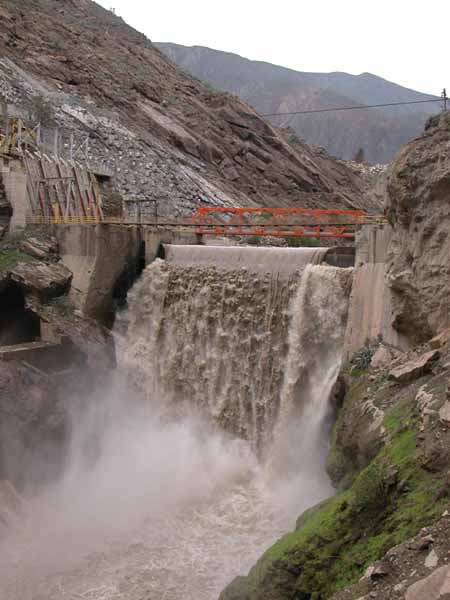
6. Due to a governmental moratorium on the construction of new hydro plants between 2001 and 2005, Peru has not built strong experience in hydro in the past decade. In this context, the support of specialized services providers becomes essential for new developments. Courtesy: Duke Energy Cañón del Pato plant
Environmental studies have become one of the most challenging aspects of a project. Magnifying this problem in Peru are its rich biodiversity, the presence of local communities, and the existence of many archeological remains. "Our vision is to be highly diversified, because any project has an environmental side; this is why we have a multidisciplinary team. We do not just do environmental studies as such, but we also take care of community relations, archeology… all of these areas need to be considered," explains José Enrique Millones. His company, ECSA Ingenieros, an environmental consultancy, is very active in the power sector, as are Walsh and ERM.
Hydro plants also require tunneling experience. In the case of El Platanal, the country’s largest new hydro venture, tunneling was done by Mas Errázuriz, a Chilean firm specialized in underground works. Guillermo Swett, general manager, gave us more details: "At El Platanal we did several tunnels (conduction, access, discharge) with a total length of 15 km; a 545-meter shaft (the longest one in South America), and a cavern. We had about 750 people working on the project 24 hours a day for 28 months. We completed it in October 2009."
Electrical Infrastructure
New T&D projects also need the support of local providers. Ingeniería IEB, a subsidiary of Ingeniería Especializada of Colombia, has entered the market through collaborations with ISA (a "natural client," in the words of Mauricio Correa, general manager of IEB). The country’s electrical infrastructure being relatively underdeveloped, one of the key challenges for the company is to find highly specialized staff: "We have a very strong engineering background in Colombia, and we feel that for the highly specialized area where we operate there is a lack of engineers in Peru," Correa says.
He added that if IEB finds the right people to achieve its goals, Peru will become the main market for the mother company: "I believe 70% of our operations will be in Peru in the medium term, because Colombia is a more mature market and there are many opportunities here. The shift towards Peru is going to be very fast." Plans are thus ambitious, considering IEB only opened up its Lima office a few months ago, but in this time the company has already secured contracts worth $1 million. Indeed, Peru is attracting service providers from across the continent. Pablo Bosch, managing director of the leading Chilean transmission infrastructure fabricator and contractor, BBosch, has identified Peru as a key market in their strategy to become "a global player," sighting the country’s massive economic growth rates and a rash of new transmission concessions as key to their decision to reenter the market.
A company that has been in Peru for longer is Dessau. Since 1998, the Canada-based company has worked on at least 10 rural electrification projects, where it continues to be active, while it is also developing transmission lines. Sergio Guzmán, vice-president of operations in Peru, emphasizes Dessau’s engineering strengths (the company employs 4,000 people worldwide) and comments on the challenges faced in Peru: "There are a number of obstacles to rural electrification. For example, a large and skilled workforce is required in order to develop these projects. The biggest problem is not technical; it is that you should source your workforce and subcontractors from the local community. In small rural communities it is unlikely that there will be sufficient, well-equipped subcontractors or enough skilled workers. A lot of local input is required, and one needs to train many people."
As the country’s electrical infrastructure increases in size and complexity, operators require increasingly sophisticated solutions in electrical management, metering, and automation. Soltec, a distributor of General Electric automation equipment, sees a bright future in this area: "In 2010 the country is spending hundreds of millions in transmission lines. After this, in the medium term, the modernization of the grid will mean new opportunities. And in the future renewable energies such as wind power will bring in changes in the way the automation of the system works," declares Patricio Bracamonte, managing director of Soltec.
With regard to Schneider Electric, its general manager, Jean Charles Vanier, describes his vision for the mid-term future: "One of the areas we want to develop is the provision of solutions for energy management, based on our metering capabilities, but also thinking of communication between meters and software for electrical management and automation within the network. We do not want to be a product provider but a turnkey solution provider with engineering capacity. There are many opportunities for growth in the power industry."
Fund-Raising
Investors willing to develop large projects will need assistance finding adequate funding. Peru’s allure for potential investors is a wealth of cash acquired from the dramatic growth in the country’s private pension funds over recent years. There is a great deal of money sitting in the banks, waiting for good opportunities to be spent.
"Every year pension funds have $1.2 billion of fresh cash, and on top of that there are redemptions, coupons, dividends…. So there is not a problem of liquidity; there is plenty of cash to invest," maintains Christian Laub, manager corporate banking at BCP, the country’s largest bank and the main provider of project funding in the power sector. Its most recent project has been the financing of Kallpa’s combined cycle, with $400 million raised through a combination of bonds, loans, and equity.
Due to the country’s financial regulations, most of the money from pension funds cannot be invested overseas, nor can it be used to directly finance many types of projects, explains Carlos A. García, managing director of Summa, an investment bank that has raised a $200 million energy fund: "There are tremendous opportunities for investment banking transactions and services in the country, but the government needs to speed up the approval of new investment vehicles that allow for the money held by the private institutional market, estimated at $40 billion, to be spent."
An investor’s paradise? Peru is a vast country, rich in resources with plenty of money to fund large projects, coupled with the support of a wide scope of service providers ready to carry the industry’s significant growth as the economy continues to develop. With these favorable conditions, it would not be hard for Peru to become a key exporter of electricity in the next decades, should the country decide to go in that direction.
— By Alfonso Tejerina (alfonso@gbreports.com), Ramona Tarta (ramona@gbreports.com), Sharon Saylor (ssaylor@gbreports.com), and Oliver Cushing (oliver@gbreports.com), Global Business Reports.