New-generation nuclear plants may be having trouble getting out of the gate, but that doesn’t mean that nuclear capacity additions are at a standstill. In fact, the 104 operating nuclear units in the U.S. have added substantial new capacity in the form of reactor and plant uprates over the past 20 years. Power uprates alone have added more than 5,600 MW since 1998 — the equivalent of five new nuclear plants.
The World Association of Nuclear Operators released the power industry’s 2008 report card in late March, proclaiming that safety and operating performance remained "Top Notch" with the year’s average capability factor of 91.1%. We’ve come to expect nothing less, as this is the ninth consecutive year that the U.S. fleet’s capability factor — a measure of a plant’s online time — has exceeded 90%, continuing to mark nuclear power as the most reliable source of electricity in the U.S.
Not content to merely improve and maintain these outstanding operating statistics, the industry also embarked years ago on a path of upgrading U.S. plants to produce additional power. The Nuclear Regulatory Commission (NRC), which is responsible for the regulation of all commercial nuclear power plants in the U.S., classifies power uprates into the following three categories: measurement uncertainty recapture, stretch power, and extended power uprates.
Measurement Uncertainty Recapture (MUR) Power Uprates. MURs entail improvements to feedwater mass flow measurement technology, through use of ultrasonic flow metering, to significantly reduce the uncertainty in core calorimetric computations. The NRC has updated regulations that now permit licensing using an uncertainty in the safety analysis allowance consistent with that determined in these improved calculations. Lowering the uncertainty can result in uprates up to 2%. MUR activity remains sporadic. Only Calvert Cliffs Units 1 and 2 are in the NRC’s pending approval queue for a 1.4% reactor thermal uprate.
Stretch Power Uprates (SPU). SPUs are typically up to around 7% of the original licensed power levels, as they typically take advantage of conservative measures built into the plant that previously were not included in design and licensing activities. These involve, at best, modest equipment replacement and little or no change to either the nuclear steam supply system (NSSS) or turbine by limiting increase in pressure (2% to 3%) to allow sufficient mass flow margin in the high-pressure (HP) turbine. Modifications for stretch uprates concentrate on procedures and equipment setpoints, making the uprate capability plant-dependent.
Extended Power Uprate (EPU). An EPU increases the original licensed thermal power output by up to 20% but requires significant modifications to the plant. The focus of this article is a review of the requirements for an EPU and estimates of the amount of power past, current, and future EPUs add to our nuclear inventory.
Early EPU Activity
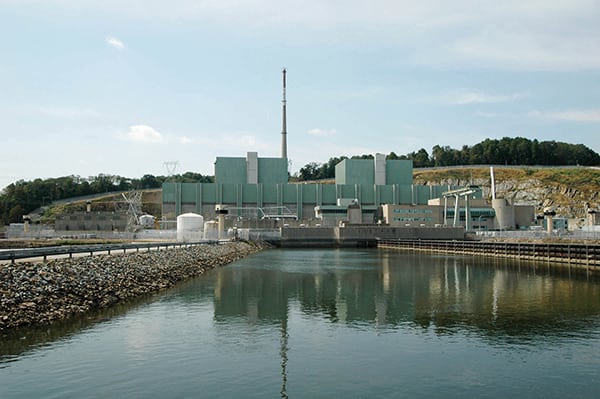
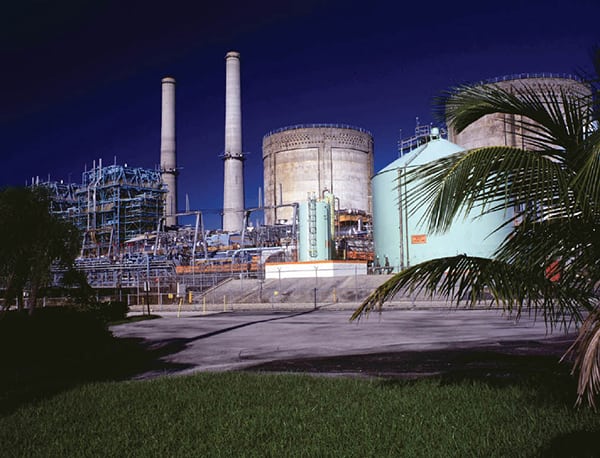
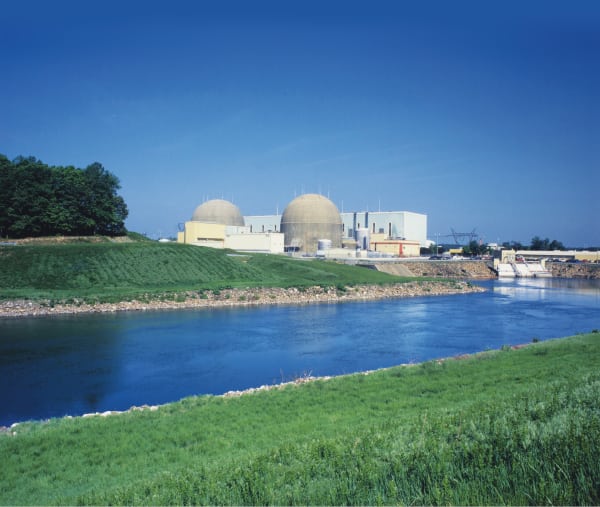
Most of the early EPUs were performed on boiling water reactor (BWR) plants. Table 1 (p. 76) provides a list of NRC-approved EPUs. Fifteen BWRs have been approved to date, and nine were approved before the first pressurized water reactor (PWR) EPUs received approval from the NRC. A total of five PWRs received approval. Four of them requested rather modest increases. Constellation Energy’s Robert E. Ginna Nuclear Power Plant is the exception among the PWRs, having NRC approval for a 16.8 % power uprate increase (Figure 1). Table 2 identifies those plants expected to be approved this year for EPUs (Figure 2).
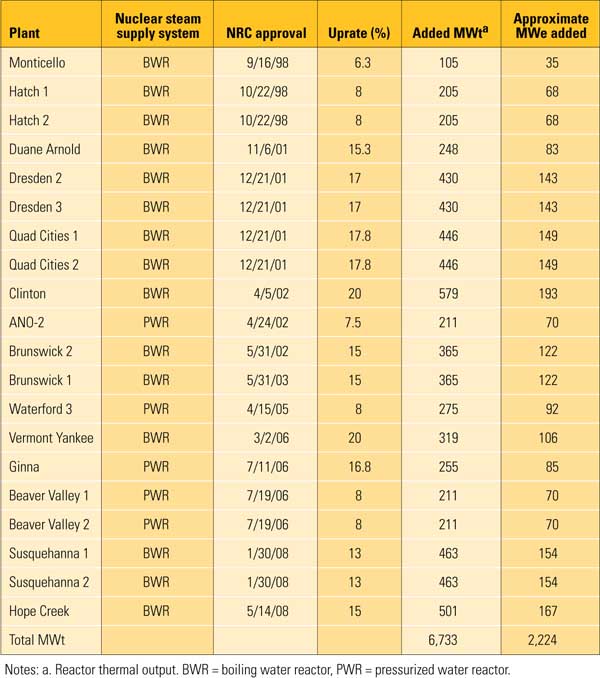
Table 1. Extended power uprates approved by the U.S. NRC. Source: NRC

1. New lease on life. Constellation Energy’s Robert E. Ginna Nuclear Power Plant, located along the south shore of Lake Ontario, in Ontario, N.Y., is one of the oldest nuclear power plants still in operation in the U.S., having begun operation in 1970. The plant is a single-unit Westinghouse two-loop PWR. The original steam generators were replaced in 1996, enabling an almost 17% EPU to be approved by the NRC two years later. Courtesy: NRC
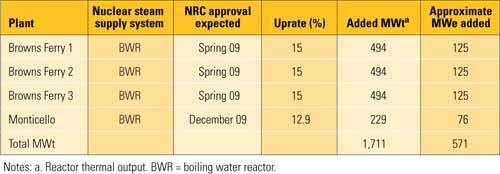
Table 2. Extended power uprates pending NRC approval. Source: NRC
2. Triple play. Each of the three units at Tennessee Valley Authority’s Browns Ferry Nuclear Plant is expecting NRC approval of a 15% EPU in 2009. The NRC operating licenses for Units 1, 2, and 3 were renewed in May 2006, which will allow continued operation of the units until 2033, 2034, and 2036. Courtesy: TVA
PWR Upgrades Emerge
Table 3 lists the number of plants where the owners have already contacted the NRC about an EPU, but the real number of prospective uprates is far larger. At least 60 nuclear units are most likely candidates for an EPU program in the near future, and about 50 of those units are PWRs, which represent 6 to 12 new plant equivalents. The increased interest by PWR owners has been prompted, in part, by advances in technology and, perhaps more importantly, improvements in available fuels. Fuels with slightly higher enrichments, improved cladding, low noncondensable gas releases, and improvements to burnable poisons and better structural stiffness that make the fuel less vulnerable to vibration and fretting have become available over the past couple of decades.

Table 3. Expected applications for extended power uprates. Source: NRC
Also, improved manufacturing processes result in better process control, which leads to less statistical variation design margin. With less design margin required, an uprate in output is possible. Additionally, engineers have found ways to safely place more fuel in existing reactor vessels, all of which leads to greater thermal power output. Improvement to neutron fluence through the use of low-leakage cores has provided additional margin in NSSS components and helps to accommodate higher power levels over the long term.
The added thermal power output can be achieved with little to no increase in output steam pressures (based on redesign and replacement of the HP turbine rotor) through increasing steam mass flow. In some cases, an increase of 2% to 3% pressure has been adopted for increased fuel margins.
Many Economic Advantages
The economic incentive of an EPU is to increase power output at competitive costs while avoiding the long lead times for constructing new generation. Information provided in a June 2008 Nuclear Energy Institute Seminar, based on a small number of plants currently involved in EPU programs, indicates that the capital cost of this incremental power ranges from about 15% to 50% on a cost per kilowatt basis, compared with the cost of a new nuclear plant. Of course, these costs are very site dependent and tend to increase on a per kilowatt basis with larger uprates, so it is difficult to generalize other than to suggest that on a capital cost per kilowatt, EPU uprates are very competitive with constructing new power plants.
There are also other intangible benefits associated with an EPU. Many of the plants have been operating for 30 years or more and require some major replacement of equipment. These and other plants either have already completed, or are contemplating, license renewal. Combining an EPU with a maintenance upgrade and/or a license extension allows some of the cost and cost recovery to be shared among programs. Integrating the total project would minimize future outage risks because upgraded/modified equipment would be used that had already considered the new life-extension requirements.
The added power from uprated units is also effective in reducing greenhouse gas emissions for the entire utility fleet of plants in a timely fashion. It can also reduce utility costs.
Although not necessarily an economic advantage, a utility doesn’t have to wait as long to reap the benefits of an EPU. An EPU can be brought into operation in about one-half the time required to license and build a new plant.
More Than Replacing Parts
This isn’t to say that an EPU can be completed by merely making a few simple plant modifications. Increased thermal output requires greater thermal input into many of the plant systems and components, causing a potential reduction of required margins through lowered material properties and added burden on pumps, bearings, and seals. Increased flow accentuates flow accelerated corrosion (FAC) in pipes and other components. Increased mass flow has the potential of raising flow-induced vibration levels in systems and components to unacceptable levels, or changing the frequency of the exciting forces causing vibration where it previously did not exist.
The Electric Power Research Institute (EPRI) maintains a Lessons Learned database that identifies issues observed and resolved in previous power uprates and serves as an excellent information base for future uprates.
It is difficult to generalize about the perfect plan to complete an optimum EPU for a given plant. Differences between plants in initial regulatory approaches, past response to regulatory issues, and previous modifications and equipment change-outs to maintain plant operation all combine to make the EPU program for each plant unique. Even side-by-side "identical plants" frequently require separate plans to accomplish an equivalent EPU. For this reason, detailed studies are required for each plant. However, some general trends have been observed.
Design duty for overpressure protection and required relief capacity in the reactor coolant pressure boundary from normal operating and transient design conditions typically increase with increased power. This may require modification to primary and/or secondary side safety valves and safety relief valves. Otherwise, modifications to the reactor coolant pressure boundary have not been a major concern. Industry experience with power uprates to date has shown that the installed capacity of emergency core coolant systems is nearly always sufficient without modification. Auxiliary feedwater systems and emergency service water systems may require modification.
Major upgrades to the balance of plant (BOP) have been the focus of most EPUs. The turbine, main generator, main power transformer, and power train pumps often require replacement or modification. Components such as feedwater heaters, moisture separator reheaters, and heat exchangers are frequently replaced with larger units. Feedwater, condensate, and heater drain pumps, along with supporting components, typically require replacement or modification. This increases the demands of ISO phase bus duct cooling. Increased steam and feedwater mass flow often require replacement of piping to accommodate greater mass flow or to counteract the effect of FAC. The design must also consider any increased demand for demineralized water.
For each EPU, a high-pressure turbine retrofit (at least) is required, and because throttle margin can be achieved through the retrofit without an attendant increase in operating reactor pressure, the uprate can be analyzed and performed at constant pressure. Depending upon existing margins, the magnitude of the uprate and the condition of the turbines, it may be necessary to replace, repower, or modify the low-pressure and/or high-pressure portion of the turbine. In many cases, the condenser is either replaced or retubed. Plants with closed-loop cooling may also have to consider cooling tower upgrades, and plants with open cycles will need to evaluate thermal effects from the condenser outfall. Major modification to the generator and stator (rewinding) are expected. This may also require increased cooling for the generator. Transformers may also require replacement with larger units.
Replacement components are generally larger and heavier, which means that structures supporting these components are challenged and frequently require strengthening by way of modifications to the building structure and other foundations.
Managing Margins
An EPU is a major undertaking for an operating plant that requires the combined expertise of the plant staff, NSSS, turbine contractors, and, in most cases, nuclear EPC contractors. An initial but important step is to establish a margin management program (if the plant does not already have one) to ensure that adequate margins are available in systems, structures, and components (SSCs). Developing or updating the margin management program may be done in parallel with other EPU preparation steps.
Several "margins" are of interest in a margin management program. The Institute of Nuclear Power Operations (INPO) identifies three different ones for nuclear plant design: operating margin, design margin, and analytical margin (Figure 3).

3. Managing margins. Relative nuclear plant margins as defined by the Institute of Nuclear Power Operations. Source: INPO
Operating margin is the difference between operating limits and the range of normal operation. The operating limit is analogous to design values in engineering terms. It accounts for, and envelops, all the potential operating conditions of the plant. Design codes and licensing criteria all include a certain margin, or safety factor, beyond the design limit, which address uncertainties in design, fabrication durability, reliability, and other issues. The difference between the analyzed design limit and the operating limit is this conservatism, which INPO calls the design margin.
Normal aging and plant operation can eat into each of these margins and requires constant attention by owners. Increased thermal output by an EPU imposes further demands on the operating limit. Even systems or components not directly affected by the power increases may not function as efficiently as intended following an EPU. For all of these reasons the margin management program becomes an important tool in performing an EPU.
The margin management program has two basic parts. One is analytical: ensuring that the design documents are current, correct, and consistent with the plant design features. The second part is more complex in that it requires a systemic assessment of the current condition of the physical plant thorough engineering walkdowns, review of condition reports, and other operational data. A through review of EPRI’s generic Lesson Learned databases is also important for identifying potential future issues.
Assuming that all the necessary studies have been performed and the decision has been made to consider an EPU, the next step is to conduct a feasibility study. Typically, an experienced architectural engineering firm, with support from an NSSS supplier and the turbine manufacturer, performs the study. Alternately, the NSSS supplier may take the lead with assistance by the turbine manufacturer and an architectural engineering firm.
Assuming that a decision has been made to consider an EPU, the next step is to conduct a feasibility study. An integrated team consisting of the owner’s plant staff, an experienced architectural/engineering firm, NSSS supplier, and the turbine/generator supplier should perform the feasibility study. This would minimize interface issues between the current operating experience at the nuclear plant, the NSSS, BOP, and turbine/generator equipment.
Potential modifications to the NSSS, the nuclear systems, the turbine and cooling system, and the BOP are studied. Initial evaluations are conducted to identify the potential power increases available through modifications of the NSSS, as discussed above. The turbine/generator is also evaluated to determine modifications required to meet the proposed uprated power needs. And finally, all the potentially affected nuclear and BOP systems and components are evaluated to determine the pinchpoints — those items that have suffered margin erosion due to the EPU modifications or other preexisting factors.
Included, or in parallel, with the feasibility study is a cost/benefit analysis. Typically, the greater the uprate, the greater the cost of the last kilowatt added. Most utilities are finding that, compared to other available alternatives, it is cost-effective to implement the greatest amount of added power possible from the EPU, provided that other outside factors demonstrate the need exists.
The next phase of the feasibility study is to identify modifications that are required to meet the EPU’s requirements and ensure that the modifications reestablish required margins. In some cases margin can be restored solely through more sophisticated analysis. In other cases hardware changes or plant modification are required. Preparation of equipment specifications and purchase orders are then placed for long-lead-time components. Typical long-lead elements include:
-
High-pressure and low-pressure turbine replacement
-
Main generator and auxiliary upgrades
-
Transformer replacement
-
Feedwater heater(s) replacement
-
Pumps and motors (feedwater, condensate, heater drains, component cooling water)
-
Spent fuel pool cooling heat exchangers
-
Main steam reheaters
-
Condenser and/or cooling tower upgrades
-
Water treatment system upgrades
Based on the feasibility study, including the cost-benefit analysis, the owner will decide on the final upgrades/modifications required to meet the EPU goals. With this final list, a more detailed evaluation is performed that supports a Licensing Amendment Report (LAR) for NRC review and approval. The requirements of the LAR are provided in the NRC document RS-001, Review Standard for Extended Power Uprates. The LAR incorporates all the analytical results completed along with additional detailed evaluations of SSCs directly or indirectly affected.
The NRC Reviews the Package
The process for amending commercial nuclear power plant licenses and technical specifications for power uprates is the same as the process used for other license amendments. Therefore, EPU requests are submitted to the NRC as a License Amendment Request. This process is governed by 10 CFR 50.4, 10 CFR 50.90, 10 CFR 50.91, and 10 CRF 50.92.
After a licensee submits an application to change the power level at which it operates its plant, the NRC notifies the public by issuing a public notice in the Federal Register, stating that the NRC is considering the application. The public has 30 days to comment on the licensee’s request and 60 days to request a hearing.
The NRC thoroughly reviews the application, any public comments, and any requests for hearings received from the public. Additional information will surely be requested on the application through the NRC Request for Additional Information process.
After the NRC accepts the owner’s application, the NRC issues a public notice in the Federal Register stating that the NRC is considering the application. The public has 30 days to comment on the licensee’s request and 60 days to request a hearing.
Additional information for the LAR is expected to be requested through the NRC Request for Additional Information process. All EPU submittals will then require an Advisory Committee on Reactor Safety (ACRS) meeting. After the NRC and ACRS complete their review, and consider and address any public comments and requests for hearings related to the application, the NRC will issue its findings in a safety evaluation report. The NRC may approve or deny the power uprate request. A notice will then be placed in the Federal Register regarding the NRC decision.
The LAR for an EPU is an extensive evaluation of virtually every aspect of a plant’s operating experience, and it could expose the licensee to questions about the current licensing basis, including public hearings. The licensee has to manage the risk that its LAR may bring attention to unique features that may be reevaluated by the NRC and be subject to public hearings.
The LAR for an EPU is extensive, involves evaluating virtually every aspect of a plant’s operating experience, and exposes the licensee to questions about the current licensing basis, including public hearings. The licensee has to manage the risk that its LAR may bring attention to unique features that may be reevaluated by the NRC and be subject to public hearings. NRC commitments to review the LAR include a 12-month review cycle for acceptance of the EPU submittal.
Perform the Uprates
Implementation of the modifications requires extremely focused management planning and execution processes that are more complex than those of typical maintenance outage activities. Modifications are typically prepared in the form of design change packages. Some EPU programs require more than 50 major design change packages, all under the purview of a strict quality assurance program. These packages include detailed design documents and a step-by-step process for field implementation.
Engineers, procurement staff, and construction experts work hand-in-hand to provide the design details to ensure that the configuration management and design control process required by the utility are maintained. Equally important, they ensure that the modification can be completed in a safe and efficient manner that results in a quality product, often in very confined quarters. Care must be taken to ensure that no damage occurs to adjacent equipment outside the boundaries of the modification.
INPO guidance suggests that each design package is completed and approved by designated plant personnel one year in advance of the planned outage, and utilities typically work toward this goal. Actual hardware implementation is generally performed over two or more refueling outages to minimize plant downtime. Because major portions of the plant, particularly the BOP, will be subject to major rework, execution of the outage plays a major role in the overall success of the EPU.
Work in an operating plant introduces a whole new set of complexities, compared to new construction. During each plant outage the utility must purchase replacement power. Outages are performed during off-peak periods, when electrical demand is low. Based on weather conditions and what other units the utility may own (for example, less-efficient coal plants or gas turbines), there may either not be a need for replacement power, or the utility may operate less-efficient assets (and purchase replacement power). To keep the costs of replacement power as low as possible, it is important to keep outage time to a minimum.
The success of an EPU program relies heavily on the quality of the management team and their ability to develop an effective integrated implementation plan, to schedule the work effectively, and to provide controls to ensure that those schedules are carried out.
The scheduling effort is a critical component in controlling implementation costs. Minute details are included in the schedule, identifying construction installation activities that occur on each outage shift. Each of the work packages is integrated with all of the other packages, as well as with other unrelated but required outage activities, so that the availability of cranes, access to space, and the availability of critical tools and other resources are met for all of the required tasks. It is also critical that the necessary trained human resources are available on a 24/7 basis during all of the implementation outages.
A detailed power ascension testing and monitoring program needs to be developed early in the process to allow its implementation following completion of the outage, ensuring that each system and component performs its intended functions.
—Eugene W. Thomas (ewthomas@bechtel.com) is an engineering manager for Bechtel Power Corp.