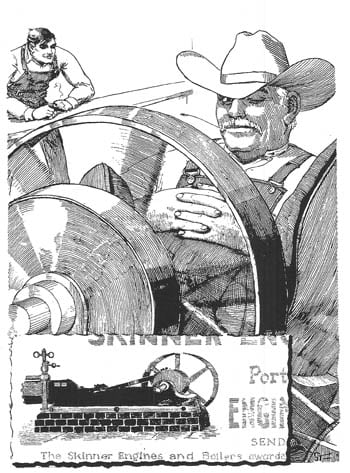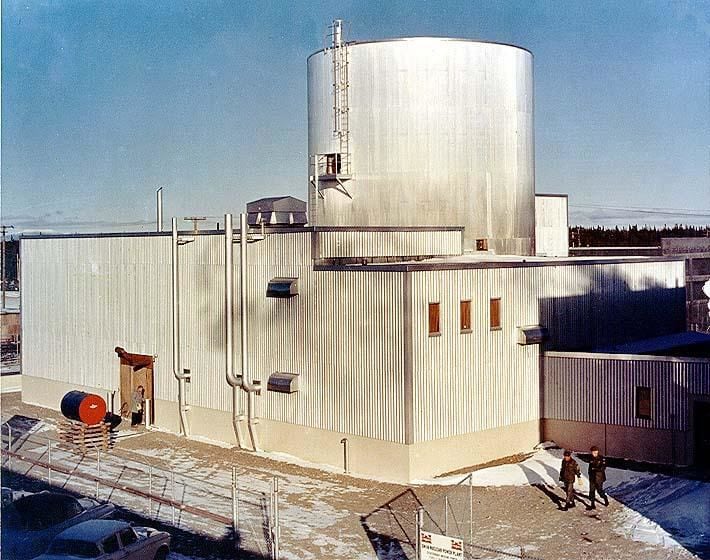
Steve Elonka began chronicling the exploits of Marmaduke Surfaceblow — a six-foot-four marine engineer with a steel brush mustache and a foghorn voice — in POWER in 1948, when he raised the wooden mast of the SS Asia Sun with the help of two cobras and a case of Sandpaper Gin. Marmy’s simple solutions to seemingly intractable plant problems remain timeless. This Classic Marmaduke story, published 50 years ago, takes place during the Cold War at an Air Force Base in northern Greenland, where under-ice tunnels were constructed to move nuclear rockets around the facility unobserved. The miniature nuclear reactor was operated for almost three years before it was shut down and returned to the U.S., ending the Army’s nuclear program. Greenland officially became a separate county within the Kingdom of Denmark in 1953, and home rule was introduced in 1979.
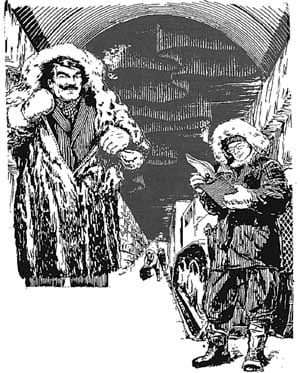
Marmaduke arrives at Greenland’s Camp Century, the city under ice. Source: POWER
Few people know that Greenland resembles an ice-filled bowl, rimmed by coastal ranges. The greatest known ice thickness is over two miles (11,190 feet), and its tremendous weight has depressed the ground surface to 1,200 feet below sea level. This gigantic ice cap covers 700,000 square miles and, if melted, would raise the level of the oceans by 20 ft.
On Greenland, and only 886 miles from the North Pole, is Camp Century, the city under ice. This camp, occupied by 100 to 200 men, was constructed 40 ft below the ice cap surface and has 21 tunnels, including a Main Street that is 1,100 ft long.
Camp Century was built by the Corps of Engineers and is operated by the U.S. Army Arctic Research Support Group. The camp is located 138 miles inland, which is slightly farther from Thule Airbase on Baffin Bay. Obviously, logistic support in such an environment is difficult, especially during the winter months. That’s why the Army decided a nuclear power plant would serve Camp Century’s needs especially well. For example, based on experience in the Antarctic, 60% of the cargo lift is fuel. So the fuel oil the Army buys for 12¢ a gallon ends up costing up to $6 a gallon by the time it’s in the storage tanks at our frozen bases. That’s pretty steep.
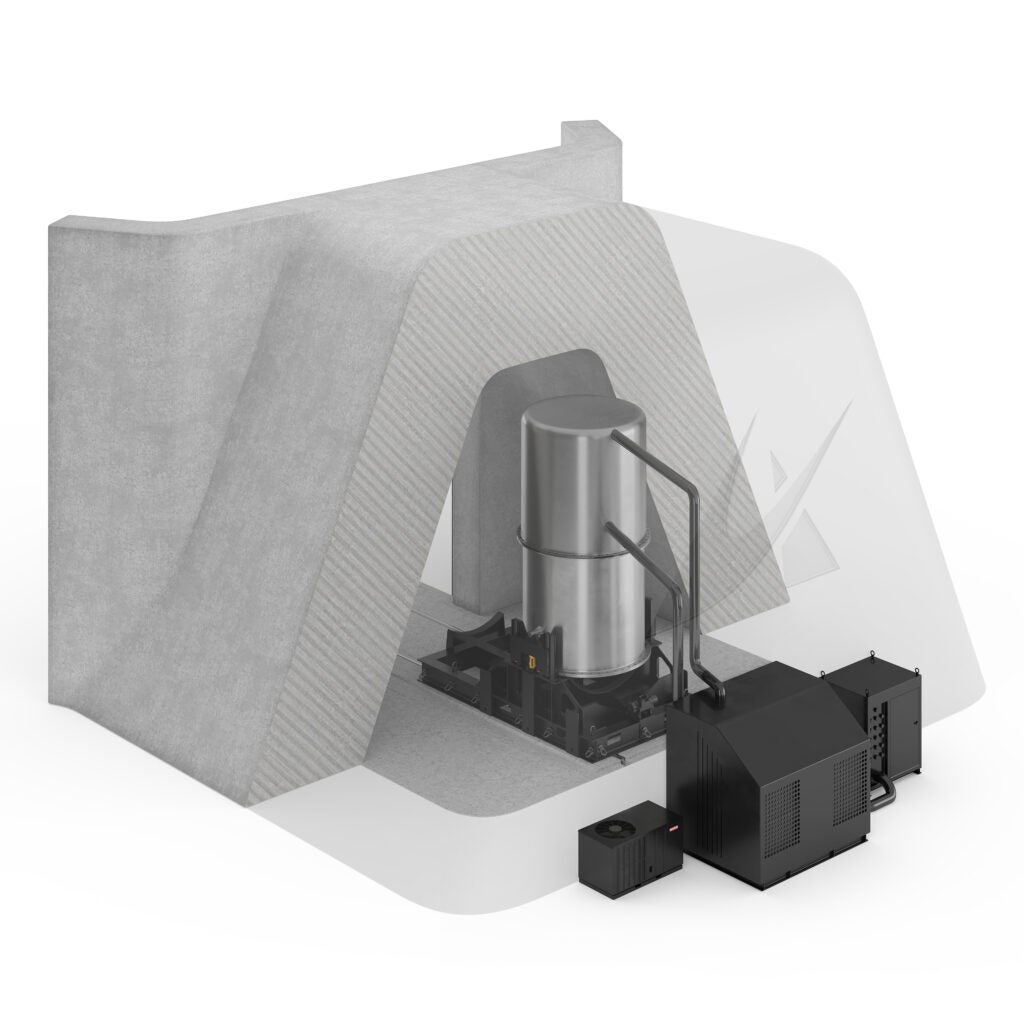
The answer was the PM-2A pre-packaged nuclear power plant to provide the needed electricity and steam from nuclear fuel instead of oil. The reactor would need less than 50 lb of uranium-235 every year, compared to over one-half million gallons of diesel fuel. The plant was constructed on skids, then loaded aboard the USNS Marine Fiddler for Thule, Greenland. There she was unloaded for the truck trip to the ice cap, where began the sled trip to Camp Century. Criticality was reached only 78 days after arrival at the site. This included tying the various skids together, checking out the systems, and getting the reactor core loaded. And there had been no field welding.
One unusual feature is the method of providing water for the camp. Steam from the nuclear plant supplies a steam jet, which descends slowly into the ice and melts a bell-shaped chamber. An attached pump sends up water as required. Over 10,000 gallons daily have been supplied thus.
Fond Recollections
"Our portable medium-powered nuclear plant up in the Arctic is being reshielded right now, Marmaduke old buddy," said Colonel Hanel to his cantankerous old shipmate, "after only three months of operation. I must say she has no resemblance to the power plant we had on the SS Nightingale in World War II, remember?"
"I’ll drink to that also," rumbled Marmaduke, refilling his glass from the bottle of Sandpaper Gin and expertly ballasting his double bottoms.
The scene of this friendly dialogue which occurred in 1959 was the Bent Propeller Bar in the Hell’s Kitchen section of New York City. The Colonel and the tall marine engineer with the steel brush mustache had run into each other by accident. After both men drank a toast to the Nightingale’s main engine, then in turn to her boilers and to most of her equipment, down to her lowly bilge pumps, they started all over again, toasting their old ship’s crew — one by one. Suddenly Marmaduke asked in his gravelly voice, "What’s this NPFO you keep jawboning about, Colonel? Some new kind of ship I haven’t heard of?"
"You’d never guess, Marmy," answered the Colonel. "I’m with the Army’s Nuclear Power Field Office in Fort Belvoir, Virginia. And come to think of it, if you have never been shipmates with one of these prepackaged power plants, I just might work a deal to let you fly up there with me tomorrow. What say? Besides, our old shipmate SFC Tom Cruse is up there now."
"Fire away," crackled the marine engineer, in his foghorn voice. ‘‘I’m for eyeballing that deep-freeze plant, so heave me a line and take me in tow. Where did you say that reactor is?"
"This one’s at Camp Century," informed the Colonel. "She has a 2,000 kW steam turbine electric generating unit for heat, light and exhaust steam for melting ice for the camp’s water supply. And you’ll see a lot of other ingenious devices up there that might be new to you. Of course three diesel engines back up the reactor when it’s shut down. I don’t have to tell you that every source of heat and light must be assured to support human life under the ice cap."
World’s Largest Island
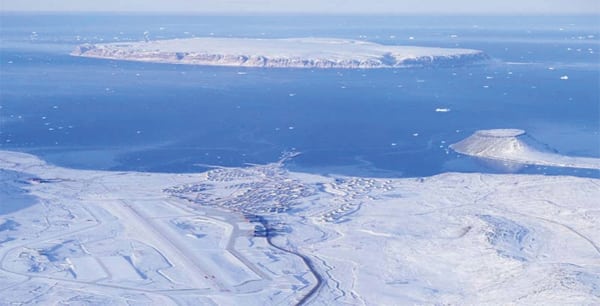
Next morning the two men were aboard an Air Force C-134, headed for frozen Thule in Greenland. After a short stopover at Goose Bay in Labrador, the C-134 set down on the long, ice-covered runway at Thule, where 7,000 Americans operate the largest U.S. installation in the Arctic.
Marmaduke and the Colonel were no sooner off the plane, after landing in a blizzard, than they were met by an Army sergeant. The sergeant told them that a heavy swing, which is a snow train made up of a Cat pulling two or three 20-ton sleds, was ready to shove off from Camp Tuto as soon as they arrived there. Eight or nine of these trains make up a heavy swing. After all, there is safety in numbers. It was midwinter, and the thermometer had sunk to minus 48F. Not only that, but a 30-knot wind was mercilessly blasting without letup.
At first Marmy and the Colonel had some trouble getting used to the midnight darkness at midday. But by the time they arrived at Camp Tuto, they had acquired their night vision. Two days later, after crawling along at three miles an hour in dark subzero cold and howling Arctic winds, the heavy swing pulled into the welcome protection of the maintenance tunnel at Camp Century.
After they had paid their respects to the camp commander and thawed out a bit, Marmaduke spent the afternoon eyeballing the camp. He was especially interested in the unique power plant. Besides the reshielding work going on, he saw that No. 3 diesel was also down for major overhaul. She had a broken crankshaft, and a new one had been ordered from the States. But No. 1 and 2 engines were on the line and producing 600 kW of power, on which the camp seemed to live comfortably enough. The normal load was about 900 kW.
By evening, Marmaduke had met most of the camp personnel. He couldn’t remember more congenial shipmates anywhere. They were alert, had good senses of humor, and were eager to answer his questions and make him feel at home. Several of them had even heard of his reputation as an ingenious troubleshooter both on land and sea.
That evening Marmaduke sat down to a steak dinner, which, to everyone’s surprise, he washed down with Sandpaper Gin. "Keeps my heating system from congealing and it also loosens up the barnacles," he explained.
After dinner he visited the Non Com Club, which invitation he had accepted that afternoon from the noncommissioned officer, MSG Buteau, in charge of the nuclear plant. Marmaduke was right at home, for there was a Navy chief aboard and several Army men who had been in the Navy as well as the merchant marine.
Electricity Is Life
As with seafaring men the world over, conversation soon got around to the ships on which they’d sailed, the ports they’d visited, and their exciting experiences around the globe. The hours passed so pleasantly, it was half past midnight before Marmaduke realized it and bade his host good night. As he started back to his bunk in the commissioned officers’ quarters, the lights dimmed, then flickered and went out. For an instant it was deathly quiet in the club.
In seconds, flashlights winked on, for the men stationed in the sub-surface camp, like marine engineers on watch aboard ship, always had flashlights on their persons. Someone immediately shoved a flashlight into Marmaduke’s hand.
"There’s trouble at the diesel plant," exclaimed one of the men, rushing for the door. As Marmy hurriedly followed his new shipmates along Main Street and entered the diesel plant, he saw Lee McNeil, the watch operator, busily adjusting the one remaining diesel engine.
"What’s wrong, Mac?" rumbled Marmaduke, who had shortly before said good night to McNeil in the Non Com Club when he left to take over the 12-to-8 watch.
"Number one was running rough, then started knocking," explained McNeil, noticeably preoccupied. "That’s why I had to open several camp feeders and take the engine off the line a few minutes ago. But No. 2 can carry 300 kW and she seems to be holding her own."
As Marmaduke watched, the utility crew pitched in like a well-drilled team. They trimmed every watt that wasn’t absolutely essential from the camp’s load.
Instantly, the camp commander was on the intercom. He gave orders to close several living quarters and told the men to double up. Heat was now priceless, and there was none to waste. Some of the men were asked to sleep in the mess hall. Beams of light flashed in the dark as the men busied themselves doubling up and again settling down for the night. The diesel technicians immediately turned on No. 1 engine.
About 2:30 a.m., the improbable happened. No. 2 diesel coughed a few times, then died. Now Camp Century was in blackness, save for a few strategic areas where emergency lights were powered with nickel cadmium batteries. But more serious, the camp was now completely without heat.
Again, the camp commander’s solemn voice came over the intercom. Speaking calmly, he informed his crew of this latest catastrophe. The men knew that, without electricity for heat, there would be no area within the camp warmer than 30 F below zero in only about 20 minutes. So unless the engineers could learn quickly why No. 2 diesel had stopped and then could get her started and back on the line, the camp was doomed. And so perhaps were all of them.
Working by flashlights, the engineers first got their heads together. They were sure of only one thing: that No. 2 engine had worn rings and for that reason was next on the list for overhaul; in fact, a full set of replacement parts was near the engine, ready to install. But why did she stop? A quick check of the crankcase oil confirmed their suspicion: the lube oil had become diluted with diesel fuel oil leaking past the rings, and so the crankcase oil’s lubricity was drastically reduced. That caused seizure of No. 2 crankshaft journal, as it had been recently overhauled and had the least clearance in its bearing.
Marmaduke watched the engineers open the crankcase drains to remove the contaminated oil. One gang got busy opening her main bearings to file the welded metal from the scored crankshaft journal, replace the top, and roll out the bottom bearing insert. Another group started replacing her pistons with spare ones that were already ringed and ready to install.
A third crew hurried out to find a drum of lubricating oil. But to their utter dismay, they learned that the only crankcase oil available was in drums stored out in the tunnel. And out there the temperature was 30F below zero.
A drum was quickly rolled into the diesel room. But they could tell that the oil inside had congealed into a solid mass. Marmaduke, like the camp crew, took this latest kick in the teeth with silence. They were all in the same boat, and they’d sink or swim together. And there was no one answer to their complex problems. They’d have to take one hurdle at a time.
Now the tall muscular visitor pitched in and helped the boys hoist the heavy oil drum up on the metal rack. The drum’s filling plug was unscrewed, but no oil would flow out. McNeil poked his finger against the solid mass inside. "Like taffy," he said simply. By then, the situation looked hopeless.
Temperatures Go Negative
The temperature in the diesel plant was now down to 22F below zero. The men had noticed that the battery powered lights had begun to dim. While no one mentioned it, they all realized that their working time was nearing the end unless something drastic was done. But what? A black gloom overtook several of the men.
The diesel technicians were about to give up on the congealed oil. Then Marmaduke suddenly roared. "Bilgewater on stubborn oil. I’ll make it move. Get me a blanket we can cut into strips and saturate with that warm crankcase oil you just drained. Then we’ll light it under this drum and you’ll see some action."
"Hold everything," excitedly erupted one of the crew, coming to life at Marmaduke’s suggestion. "How about those smudge-type burners stored in the motor maintenance shop?"
"That’s right," shouted another.
"We use them in early winter to mark the landing zone for the helicopter when there’s still some daylight." Now there was new hope, and the effect on everyone was electric.
Two pots were quickly brought into the diesel room and placed under the oil drum. Four men stood by with fire extinguishers. A fire under ice is dreaded as much as at sea. Within ten minutes the oil began to ooze from the bung. By then the temperature had also climbed in the diesel room, and the newly ringed pistons and crankshaft bearing liners were back in place.
It took another three-quarters of an hour to heat the oil sufficiently, fill the crankcase to the proper level, close up the engine, and have it ready for cranking. During this time, several smudge pots kept the engine room warm.
The battery used for cranking the little pony diesel, which in turn cranked the big engines, was not only cold, but also old — a very bad combination. Leston McNeil wondered out loud how many times the battery might turn over the cold pony engine before it gave up the ghost.
Liquid Gold Rush
By then, two full hours had passed since the total loss of power at Camp Century. And the camp commander himself had all but given up hope of saving the camp. Now his chief concern was saving his men. While the engineers were busy trying to breathe life into their ailing machinery, the commander had already given word to prepare for evacuation to the surface.
His plan was to move the men, with whatever personal gear they needed and could carry, to the small Jamesway type huts up on the surface. Those small huts had been set up for the men who had built Camp Century. Each contained a built-in camp stove which burned diesel fuel oil. At least the men would have some hope for survival. But the sub-surface camp, for the time being, would become a frozen tomb.
The first detail of men returned crestfallen. They reported that the Jamesway huts were buried under a mountain of drift snow. So a second detail of men with one piece of large snow-removing equipment was quickly dispatched to open up the huts.
It was at this point that the plant operators were ready to start No. 2 diesel. But the engine must start on the first try. There was no second chance. After attempting to take the chill off the unit with a smudge pot, it was carefully primed with ether as a starting fuel. All eyes were on McNeil, who offered up a silent prayer and then punched the starting button.
Suddenly, the loud metallic roar of the tiny unmuffled pony engine rumbled through the quiet frozen tomb like the eruption of Mount Vesuvius during the last days of Pompeii. But that ear-splitting noise was the sweetest music ever heard by most of the men in the diesel room.
In only a few minutes, No. 2 diesel was thundering out her welcome explosions of life and warmth. And after only a few minutes of warm-up, McNeil closed the breaker. The utility crew quickly threw the various switches that energized the tunnel’s lights and heaters, and vital sustaining life was again flowing back into Camp Century. Marmaduke and the men in the diesel room heard wild shouts of joy from tunnel after tunnel as their lights went on. And by noon next day, No. 1 diesel also was cranking away.
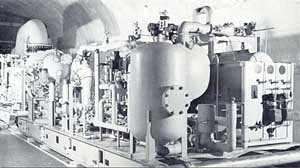
The nuclear reactor used at Camp Century was the first of eight portable nuclear reactors made by the Army to produce power in remote regions. This modular plant was assembled at Camp Century in 27 days and began making electricity just nine hours after 43 pounds of enriched uranium-235 were loaded in the reactor. The plant was rated at 2 MW and was configured to also produce steam to operate the water well. The plant operated reliably for 33 months until it was shut down and removed in 1963. Source: U.S. Army
Comparing Notes
Two days later, Marmaduke and Colonel Hanel were back at the Bent Propeller Bar in Manhattan for a drink before parting company.
"Sure glad the reshielding work was completed in time to get the nuclear plant going again," began the Colonel, lifting his glass. "Those boys won’t get the crankshaft for No. 3 diesel for some time. But with the reactor going now, that type of emergency won’t happen again soon."
‘‘I’m with you," rumbled Marmaduke as he ballasted his bottoms.
"You’ve been in some hellish emergencies all over the world, Marmy," began the Colonel again. "Do any of them shape up with what we went through at Camp Century last week?"
Marmaduke lit a long black cigar and blew a few smoke rings towards the ceiling. He then worked up a vacuum and took on more fuel.
"Not since the time the old SS Trade Horn suddenly broke her rudder during a storm and was within minutes of piling up on the treacherous coral beach in Makassar Straits off Borneo," rumbled Marmaduke in his foghorn voice.
"What’s so unusual about that?" asked the Colonel, looking uncertainly at his friend. "All you had to do was reverse the engine, wasn’t it?"
"That’s all," agreed Marmy, blowing a few more smoke rings. "But one of Bring-’em-Back-Alive Frank Buck’s black panthers was frightened by the storm and had broken out of his bamboo cage on No. 2 hatch and ran below. And there he was, parked in front of the main engine throttle."