As director of public policy analysis in my last seven years at Enron, I participated in many legislative and regulatory debates involving electricity, although the public policy thrust of the company was the opposite of what I believed. While I favored free markets, the business model of Ken Lay (a PhD economist with years of Washington regulatory experience) centered on special government favor. Enron, for example, had seven profit centers geared to government pricing/rationing of carbon dioxide (CO 2) emissions. And in the 1990s, the company was squarely behind a Btu tax. Today, Enron would be pushing cap and trade.
Backing Gas
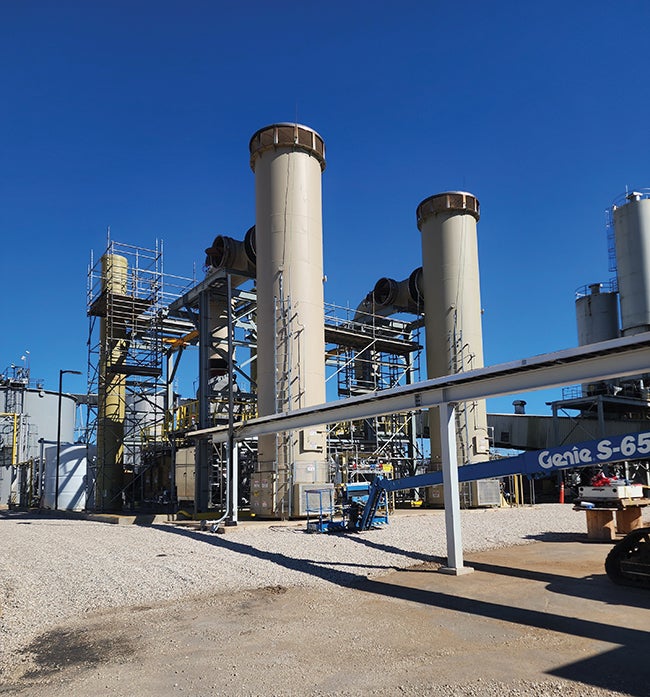
Ken Lay’s political niche began innocently enough with a unique, highly focused natural gas strategy, one that would culminate in Enron’s 1995 self-description as "the world’s first natural gas major." In pursuit of that goal, Lay promoted gas-fired power generation relative to coal. He countered the coal lobby’s contention that the 1970s shortages were the inevitable result of a tiring North American gas resource base. "We had a surplus of regulation, not a shortage of gas," Lay would say, and Enron backed up its claim by offering utilities long-term fixed-priced gas contracts.
Enron also challenged the tendency of electric utilities to opt for coal plants over gas plants because, under public-utility regulation, the former’s higher capital cost created more rate base and thus more profits. Citing new combined-cycle technology, Enron made the case that gas was economically and environmentally superior to coal for new capacity. For example, in March 1992, Enron unveiled "the natural gas standard" in letters, press releases, and speeches. The standard, set forth under Lay’s signature, declared:
The advantages of generating power from a gas fired combined cycle plant are overwhelming: It is cleaner, cheaper, and more reliable than the coal and nuclear options. I propose that electric utilities and state [public utility commissions] adopt the "Natural Gas Standard" for power generation capacity additions. The standard should be applied in the following way — no new coal or nuclear power generating stations should be built unless they:
-
produce electricity cleaner than gas combined cycle plants;
-
produce electricity cheaper, per [kWh], than gas combined cycle plants;
-
produce electricity more reliably than gas combined cycle plants.
I am obviously confident natural gas combined cycle generation will win when all three of these standards are considered.
This challenge was intended for public utility commissioners as much as for electric utilities and was less an attack on fuel-neutral free markets as on perverse regulatory incentives. Lay wanted "a fair field and no favor" for natural gas when competing with coal plants and nuclear power.
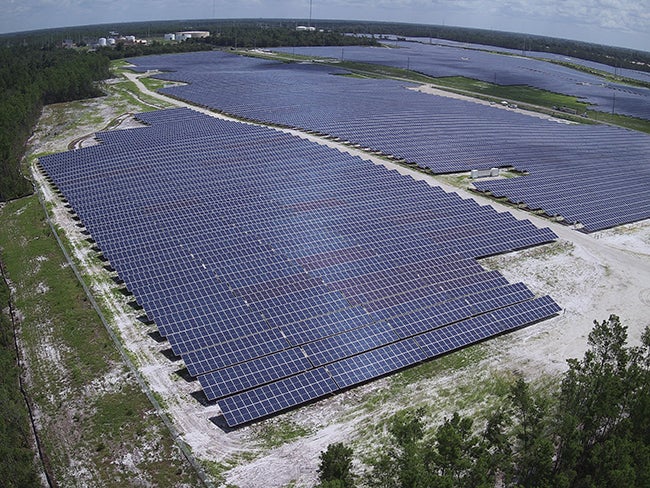
But Lay was no free marketeer. He was a pragmatist, searching for first-mover profits from regulatory change. And sure enough, Enron entered into the (government-dependent) solar market in 1994 and the wind market in 1997. Solarex and Enron Wind Corp. would not be profitable, despite a raft of government subsidies. But Enron wanted to be the world’s progressive, "green" company, a hubris that was part of a wider problem that brought down the company. (Ironically, renewables would later tend to replace natural gas as the swing fuel in electric generation.)
Cap and Trade = More Corporate Welfare
Fast forward to today. Aubrey McClendon and the U.S. Natural Gas Alliance have grabbed the mantle of Ken Lay and Enron by embracing climate legislation with a pro-gas flavor. Like T. Boone Pickens, McClendon wants special government favor — differentiated tax incentives and/or mandates for natural gas as a transportation fuel (at the expense of oil) and as an electricity generator (at the expense of coal). Increasingly, it is becoming clear that climate legislation is more about corporate welfare and political capitalism than about meaningfully reversing the human influence on climate.
President Obama’s energy/climate policy is all about the two things that Enron wanted most in its lifetime — cap and trade and a federal renewable standard. (Enron did secure a renewables mandate for Texas back in 1999 — the single most important reason for the U.S. wind power boom.) This is why I have referred to the Waxman-Markey climate bill as the Enron Revitalization Act of 2009.
Historians will document the role of Ken Lay as the grandfather of Waxman-Markey. But who is the father of cap and trade, you might ask? That title goes to a former Enron executive and Ken Lay protégé who took his get-out-in-front political model to the electric utility industry and was instrumental in the U.S. Climate Alliance Coalition’s drafting of what became HR 2454. But that is a story that must wait for another time.
Enron Lives!
—Robert L. Bradley is CEO of the Institute for Energy Research and a blogger at Master-Resource.org. His new book, Capitalism at Work: Business, Government, and Energy is inspired by the rise and fall of Enron.