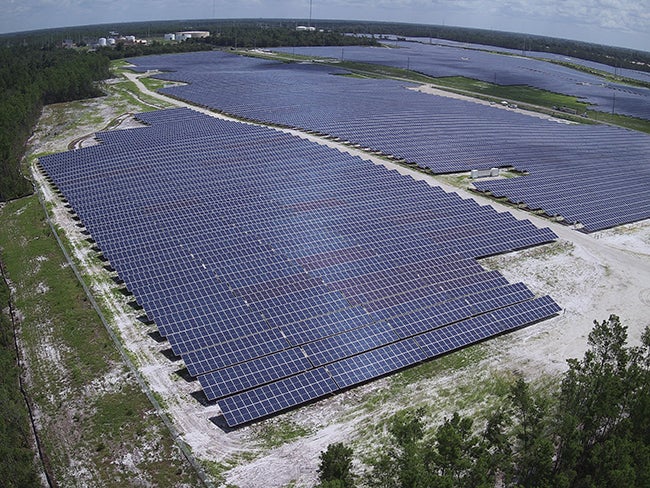
As rental boiler programs expand across the industry, suppliers describe a shift from emergency-only stopgaps to planned capacity and redundancy strategy.
When the U.S. Department of Veterans Affairs (VA) outlined its second-quarter fiscal 2026 infrastructure spending for the VA San Diego Healthcare System, one line item stood out alongside operating-room renovations and water-damage repairs: a project titled “Temporary boiler construction project site preparation.” The project will prepare a site and connection for a rental/mobile boiler to help the Jennifer Moreno VA Medical Center meet required backup standards during planned central utility plant improvements, according to David Zajac, engineering service chief with the VA San Diego Healthcare System.
The project is a small piece of a much larger commitment—the VA has obligated more than $1 billion of a record $4.8 billion in nationwide facility spending for the fiscal year, including $13 million earmarked for major building upgrades such as elevators, electrical systems, and boiler plants. But its inclusion is telling. A boiler—or the temporary capacity to replace one—has become enough of a compliance and reliability concern that it warrants its own funded line item at a major hospital system.
That’s consistent with what boiler suppliers are describing across the industry: temporary and rental boilers have moved well past their old role as an emergency-only stopgap. They’re increasingly treated as a planned piece of how plants, hospitals, and industrial facilities manage capacity, redundancy, and risk.
A Widening List of Use Cases
Cleaver-Brooks and Indeck, two of the industry’s established boiler manufacturers, both now market dedicated temporary and rental boiler programs—and their stated use cases overlap heavily. Cleaver-Brooks positions its rental fleet as a fit for capacity increases, peak demand, plant or steam outages, equipment shutdowns for inspection, retrofit or repair, and redundancy or disaster-response contingency planning, according to the company. Indeck describes a similar range of applications: periodic capacity increases, operational redundancy, scheduled maintenance, unexpected outages, and added coverage during equipment installation, the company says.
Both companies also emphasize speed of response. Cleaver-Brooks says its rental program draws on the Cleaver-Brooks Representatives Association network to provide 24/7 emergency boiler support across the U.S. and Canada, with a stated goal of getting a plant or boiler room back online as quickly as possible. Indeck, meanwhile, points to its “single-source” model—bundling temporary boiler rental with start-up service, on-site consultation, original equipment manufacturer (OEM) part replacement, boiler tuning, and operator training—along with supporting equipment such as trailer-mounted emergency deaerators for use with rented boiler systems.
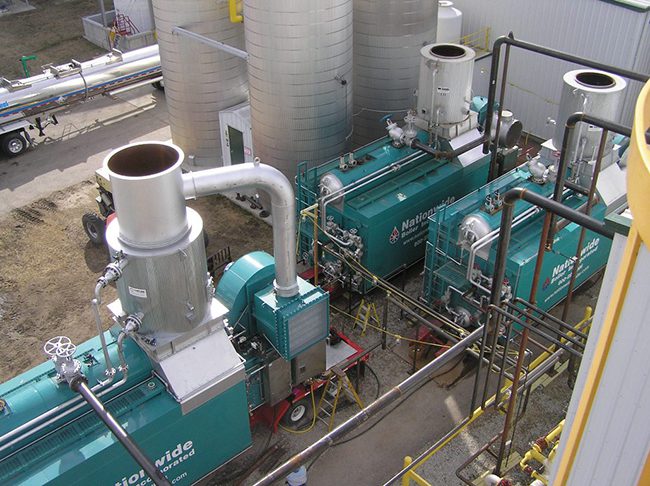
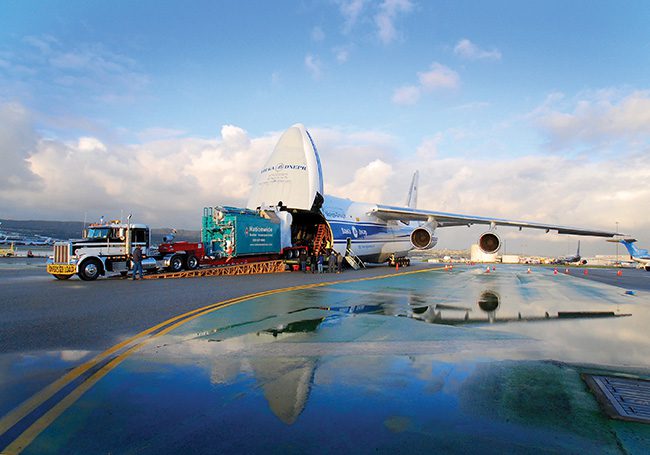
Nationwide Boiler makes the same case with hardware. The company’s rental fleet includes what it calls the world’s largest trailer-mounted mobile steam boilers: a 150,000-lb/hr saturated steam unit rated for 650 psig design pressure, and a 110,000-lb/hr superheated steam unit rated for 750 psig and 750F, according to Nationwide Boiler. Both are built on removable-gooseneck, highway-legal trailers for rapid site placement, and both ship fully piped, wired, and tested, with programmable logic controller (PLC)–based combustion controls, variable frequency driver (VFD)–controlled forced-draft fans, and an optional CataStak selective catalytic reduction system rated for NOx emissions as low as 2.5 parts per million (ppm). The company also stocks a 200,000-lb/hr, 750-psig skid-mounted unit it has nicknamed the “World Boiler” for its role as a standardized, quickly deployable solution.
When Speed Is the Whole Job
Nationwide Boiler’s own case histories illustrate the kind of urgency that drives demand for fast steam solutions—even when the equipment involved isn’t a rental (see sidebar). In September 2025, the company arranged the sale of a new, in-stock 200,000-lb/hr Babcock & Wilcox package boiler to a refinery in Israel after existing equipment failed catastrophically. Nationwide Boiler moved quickly to ship the unit from the Port of Houston. “This was a highly urgent and sensitive project, and we knew there was no room for delay,” Nick LeJeune, Nationwide Boiler’s business development manager, said in a company release. “Our team worked around the clock to evaluate multiple options and identify the best, most immediate solution for our customer.”
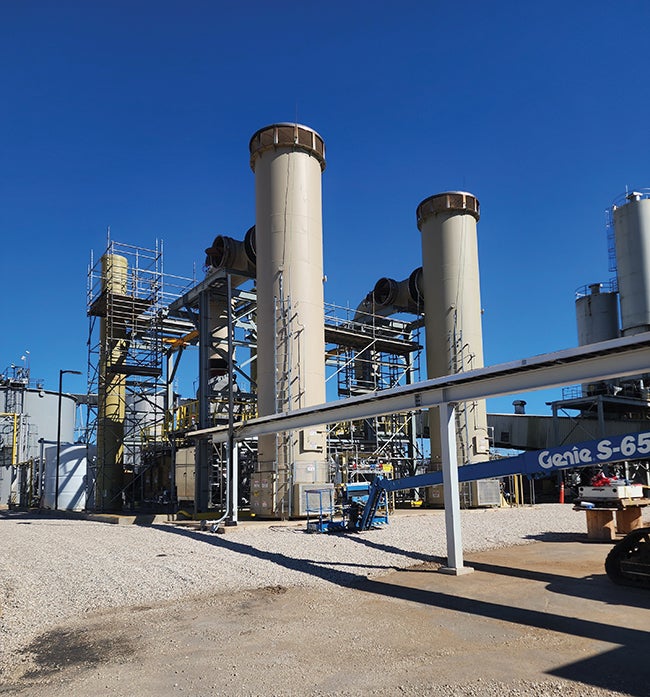
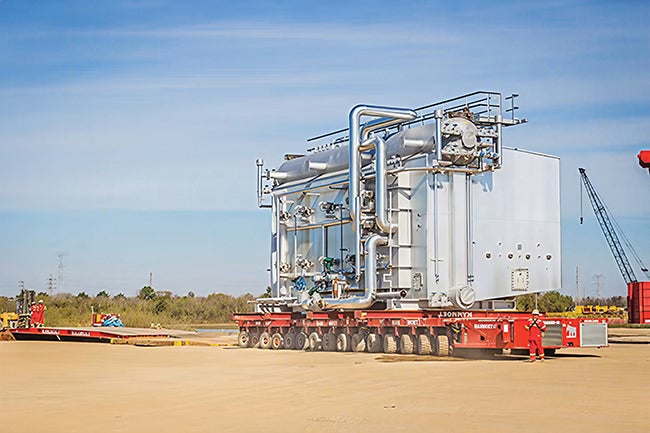
When Renting Isn’t EnoughFor Rentech Boiler Systems Inc., a manufacturer of custom-engineered watertube boilers, the rental boiler business isn’t competition so much as a preview of future work. The company says it regularly fields calls from customers who started with a temporary or rental unit and are now weighing a permanent, custom-built replacement (Figure 1).
According to Gerardo Lara, Rentech’s vice president of fired boiler sales, the decision to make that switch is rarely just about equipment—it’s about budgeting. “Temporary steam can be very expensive,” Lara said. “However, many times customers will decide to stick with rentals in lieu of permanent equipment due to budget allocations”—rentals are typically covered under maintenance budgets, he explained, while permanent equipment has to clear a more rigorous capital-expenditure approval process. In his experience, the shift toward a custom-engineered permanent boiler tends to happen once a plant’s operations, maintenance, and upper-management stakeholders align around building a long-term, reliable solution. That alignment often comes after a customer has already spent significant money on rentals, Lara said, and is frequently tied to an optimistic outlook on the plant’s future production. “It depends on the customer’s arriving to the conclusion that a long-term decision needs to be made,” he said. What a custom-built boiler offers that a rental typically can’t, according to Lara, comes down to reliability, responsiveness, and fuel flexibility. “Rentals are very limited in fuel options, and they are not designed to be very responsive,” he said. “They are designed to be dispatched quickly and move swiftly over the road, get installed quickly and in tight spaces.” The tradeoff is time. A custom Rentech boiler typically takes 44 to 60 weeks to build after an order is placed, Lara said, depending on market conditions and project requirements—compared with the days or weeks a rental unit can be on-site. |
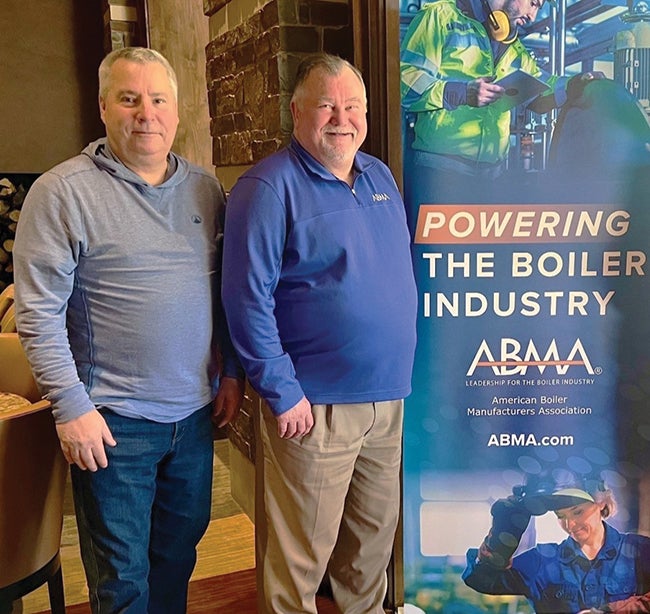
Jim Lieskovan, Nationwide Boiler’s president (Figure 2), who was vice president of sales at the time, framed the deal as evidence of the company’s broader capacity to respond fast. “This project is a testament to the strength of our global boiler program and our ability to respond quickly to customer needs—even in the most challenging of circumstances,” Lieskovan said. “It demonstrates how Nationwide Boiler’s experience, resources, and partnerships allow us to deliver when reliability and speed are essential.”
 |
|
2. Jim Lieskovan (left) was appointed president of Nationwide Boiler effective Aug. 1, 2026. Larry Day (right) will continue in his role as CEO of the company through his retirement in January 2027, after which Lieskovan will assume full responsibility as president and CEO. Courtesy: Nationwide Boiler |
That refinery deal was a permanent equipment sale, not a rental—but it reflects the same underlying pressure that pushes many customers toward a temporary boiler instead: when steam capacity fails, the timeline for a fix is measured in days, not months.
Rental as a Bridge, Not Just a Patch
Where the three companies differ is less in what problems they say they solve and more in how they package the solution. Nationwide Boiler leans on scale and standardization—its “World Boiler” concept and record-setting mobile units are built to be stocked and dispatched with minimal customization. Indeck leans on service depth, wrapping the physical rental in engineering support, parts inventory, and training. Cleaver-Brooks leans on its representative network, positioning rapid local response and disaster preparedness planning as the differentiator.
All three, notably, also describe rental as a way to buy time while a more permanent decision gets made—not just a fix for a single emergency. Cleaver-Brooks specifically markets “flexible rental or leasing options to bridge capacity needs while planning new equipment purchases, retrofits, or repair,” according to the company.
The VA’s project confirms what boiler suppliers describe as a broader industry shift: steam capacity redundancy is no longer something plants scramble to arrange only after equipment fails. Increasingly, it’s something they budget and plan for in advance—renting the mobile capacity needed to keep a facility compliant while permanent infrastructure work gets done.
—Aaron Larson is POWER’s executive editor.