Ore Energy, the Netherlands-based iron-air multi-day energy storage company, on June 22 announced an agreement with Budget Thuis, one of the largest Dutch energy suppliers, to deploy 1 GWh of iron-air long-duration energy storage (LDES).
The agreement represents the largest iron-air energy storage offtake in continental Europe to date and the first with a European energy supplier. The agreement begins with a committed 400-MWh first phase planned for delivery in 2028. For Budget Thuis, the agreement is a strategic move to provide customers with more stable, affordable, and increasingly clean electricity as the Dutch power system becomes more dependent on wind energy.
Ore Energy’s multi-day storage technology is designed to store renewable electricity when it is abundant and dispatch it across extended low-renewable periods, when power is scarcest, most expensive, and most likely to come from fossil fuels. Ore Energy’s battery technology uses iron, water, and air to store energy for up to 100 hours. It is designed to address one of the central reliability challenges facing European grids: multi-day gaps in renewable generation that short-duration batteries cannot cost-effectively cover. By storing excess renewable power for longer and dispatching it when the grid would otherwise fall back on fossil fuel generation, iron-air batteries can reduce reliance on gas-fired backup and help make clean electricity available when it is needed most.
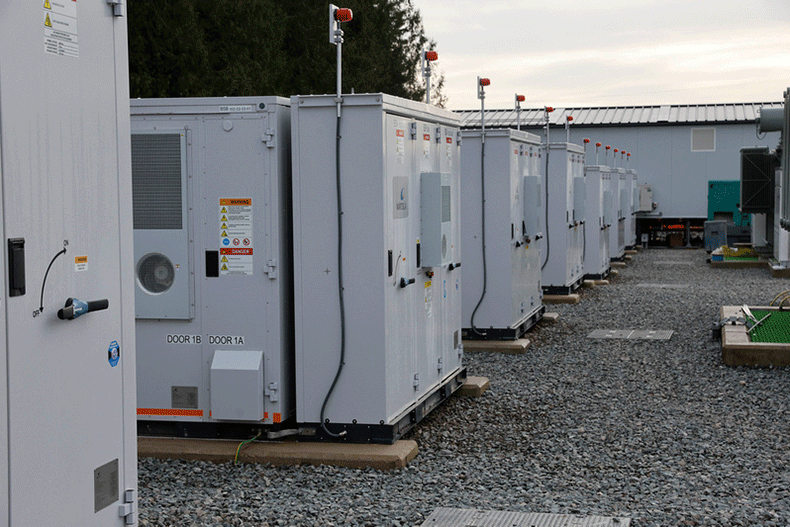
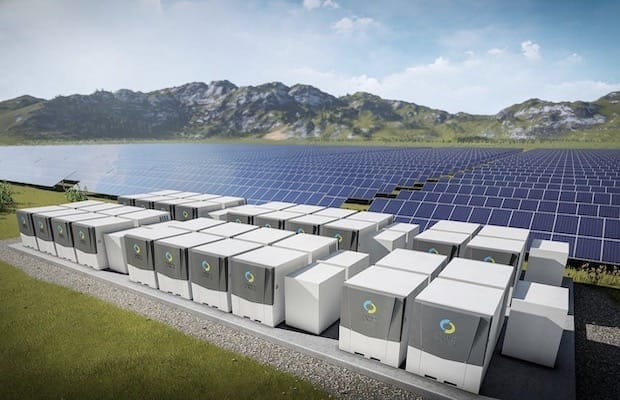
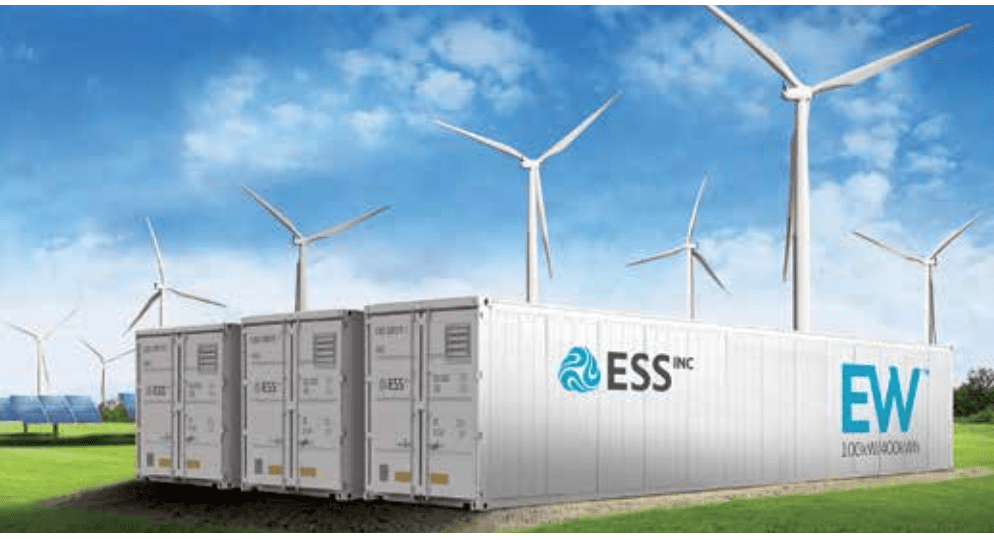
Once deployed, the Budget Thuis system will operate as a multi-day storage asset integrated into the Dutch electricity grid. It is built around Ore Energy’s 40-foot containerized iron-air architecture, configurable for durations from 24 to 100 hours. Because the system uses only iron, water and air—no lithium or cobalt—it is non-flammable by design and can be built using a fully-European supply chain, which reduces dependence on imported critical materials and supports European energy sovereignty.
“European grids are already curtailing clean power at scale, wasting electricity that costs billions to generate, while we stay dependent on fossil fuels to cover the gaps. Short-duration batteries alone can’t fix this. They shift solar by a few hours, but wind-heavy European grids need storage that works across days, not hours. Our long-duration iron-air batteries are built for exactly that: they capture wind when it blows and make it available when it doesn’t, displacing the gas plants that fi ll those multi-day gaps today and using a supply chain that Europe controls,” said Aytaç Yilmaz, co-founder and CEO of Ore Energy.
Yilmaz added, “We’ve shown our iron-air chemistry works in a European utility setting, and this deployment is the next step in commercialiation: meaningful volume, tied to a real project, with an energy supplier that understands what multi-day storage means for its business. We believe iron-air will become as important for wind as lithium-ion has been for solar.”
For energy suppliers, multi-day storage is becoming a strategic asset. Short-duration batteries play an
important role in balancing the grid over hours, but as more are deployed, they increasingly compete for the same intraday arbitrage windows, putting pressure on marginal revenues. As renewable penetration rises, the multi-day reliability gap becomes more important, while short-duration storage becomes increasingly commoditised.
y shifting renewable electricity across days rather than hours, iron-air storage can reduce exposure to volatile wholesale electricity and gas markets and help reduce the grid’s dependence on gas-fired backup.
“Delivering affordable, reliable energy to our customers is at the core of what we do, and multi-day storage gives us a way to store clean electricity when it is abundant and deliver it when it is most valuable,” said Annemarie Buitelaar, CEO of Budget Thuis. “Iron-air is especially compelling because it is designed for the long-duration use cases that conventional batteries are not built to cover, with a cost structure suited to multi-day storage. For us, this is about reducing exposure to volatile fossil fuel prices while giving customers access to cleaner and more predictable electricity over time. Ore Energy has demonstrated the technology and has the expertise to deploy it, which is why we are committing to 1 GWh across our portfolio, starting with a 400-MWh first phase.”
The agreement follows two grid-connected deployments of Ore Energy’s technology. In February, Ore Energy announced the completion of a grid-connected pilot of its iron-air system at EDF in France, the first iron-air long-duration storage pilot of its kind in Europe. Conducted between August and November 2025, the pilot demonstrated that the system can store and discharge energy for up to four days under real-world utility conditions. The company had previously deployed a grid-connected installation in Delft, the Netherlands, validating integration into existing European distribution infrastructure.
Iron-air batteries store energy by reversing the rusting process. During charging, surplus renewable electricity converts iron oxide (rust) back into metallic iron. During discharge, the iron rusts in a controlled oxidation that releases electrical energy. The inputs are iron, water, and air.
Ore Energy’s system is designed to store energy for up to 100 hours at significantly lower cost per MWh than lithium-ion for multi-day durations. The chemistry is non-flammable by design and produces no thermal runaway risk. There is no dependency on lithium, cobalt, or any other material on the EU’s Critical Raw Materials list. The full-scale architecture uses modular 40-foot containers that can be daisy-chained to scale capacity across a range of project sizes and placed in close proximity, reducing total footprint.
Systems are configurable from 24 to 100 hours of storage duration, depending on the customer’s grid application. The design is intended to be compatible with standard utility infrastructure, reducing integration complexity for grid operators evaluating long-duration storage for the fi rst time.
Ore Energy’s iron-air system is not positioned as a replacement for lithium-ion in short-duration, fast-response applications. It is designed for the portion of the storage portfolio where lithium-ion’s economics and duration limits stop making sense: storage measured in days, not hours.
Ore Energy’s multi-day iron-air energy storage systems are designed to replace fossil fuel backup (e.g. gas peaker plants)—which is still very common, even in renewables-heavy European grids—by saving more of the renewable energy that Europe produces. European grids are adding renewable generation at an accelerating pace. But output does not always match demand, and the mismatches increasingly span multiple days. Short-duration lithium-ion storage, optimised for intraday cycling (ie. less than 8 hours), is not designed to bridge extended low-output periods. The result is renewable “curtailment”—clean power generated and then discarded because there is nowhere to store it—and continued reliance on fossil fuel backup generation. The continued mismatch in renewable generation, demand, and storage, undermines grid decarbonization as well as energy sovereignty.
The European Commission’s Joint Research Centre projects that, without sufficient grid investment, up to 310 TWh of renewable electricity could be curtailed annually by 2040 due to grid congestion, equivalent to half the EU’s 2022 wind and solar output, with congestion-management costs rising to as much as €103 billion a year.
Grid congestion data from European TSOs already shows the early stages of this structural imbalance in high-renewable regions. According to Aurora Energy Research, in 2024, about 72 TWh of mostly renewable electricity was curtailed across Europe because of grid bottlenecks, at a cost of roughly €8.9 billion. Scenario analysis using the PyPSA-Eur modeling framework, conducted by TU Berlin, found that a
zero-carbon German power system optimized with iron-air long-duration storage at scale could require around 32% less wind and solar capacity, curtail about 44% less renewable output, and deliver substantially lower annual system costs compared with a scenario without long-duration storage. These are scenario-based modelling outcomes; results will vary by grid configuration and deployment assumptions.
—This content was contributed by Ore Energy.