The Department of Energy’s (DOE’s) National Reactor Innovation Center (NRIC) has selected 13 new projects across 12 companies for its Nuclear Energy Launch Pad initiative in a significant expansion of the DOE-authorization pathway that channels advanced reactor and fuel-cycle developers toward demonstration on federal and non-federal sites.
The selections—spanning microreactor developers, enrichment startups, fuel fabrication firms, and isotope producers—add the first major round since NRIC opened the program to broader industry applications in late April and set a July 8 deadline for its initial competitive round.
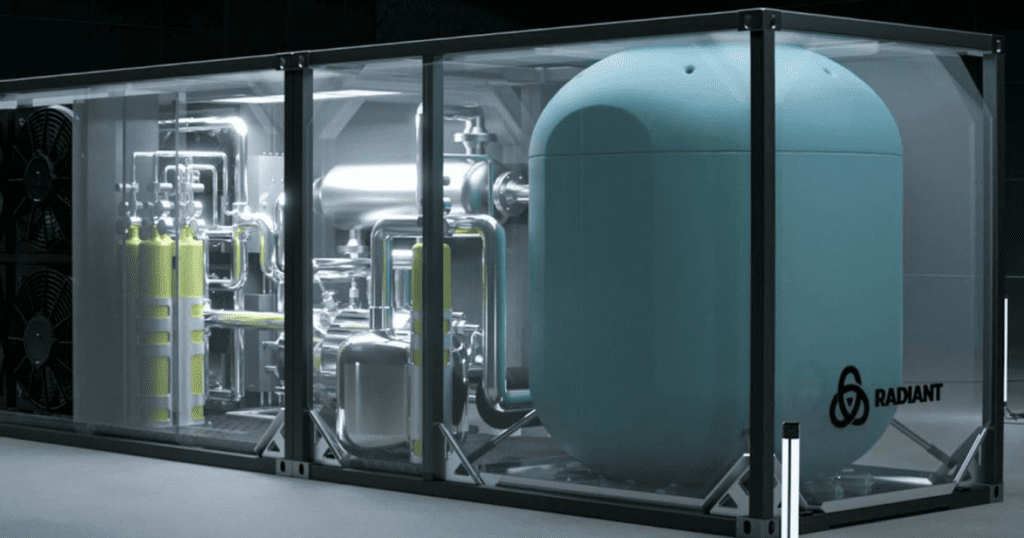
NRIC’s Nuclear Energy Launch Pad, unveiled in March as a successor to the DOE’s Reactor Pilot Program and Fuel Line Pilot Program, is designed to expand federal support for advanced nuclear deployment beyond testbeds to include siting, infrastructure, and regulatory pathways across the full nuclear technology stack. The DOE on April 27 named four initial participants—Deployable Energy, General Matter, NuCube Energy in partnership with Idaho State University, and Radiant Nuclear—which it said were drawn from the existing pilot program applicant pool.
The Aug. 24 selections include:
- Antares Nuclear—Redondo Beach, California–based developer of the R1, a 100-kWe to 1-MWe transportable microreactor using tri-structural isotropic (TRISO) coated-particle fuel, passive sodium heat pipes, and nitrogen Brayton-cycle power conversion. Its Mark-0 demonstration achieved zero-power criticality at INL in June; Antares has received a DOE high-assay low-enriched uranium (HALEU) allocation, begun fuel fabrication, and signed a long-term HALEU supply agreement with Urenco.
- Atlas Atomics—CEO Kevin Gan has said the company is developing advanced heavy-water reactor technology for baseload power and medical and industrial isotope production, and potential spent-fuel recycling and utilization. The company has backed Utah’s Nuclear Lifecycle Innovation Campus, which emerged as a DOE finalist for that initiative in July.
- Deployable Energy—Houston-based developer of Unity, a transportable 1-MWe microreactor that uses conventional uranium fuel enriched to 5%, avoiding a HALEU requirement. Its first demonstration reactor achieved zero-power criticality at INL on June 30. The two Launch Pad selections cover a full-power demonstration at Idaho National Laboratory (INL) and a maritime demonstration. Deployable Energy has separately partnered with Hornbeck Offshore to pursue Unity deployments across maritime, defense, offshore-power, and floating-data-center applications. Additional project details are expected this week.
- Forge Atomics—El Segundo, California–based developer of Ember, a factory-built, 25-MWe pressurized water reactor (PWR) with natural-circulation passive safety systems and components designed for transport by road. Ember will use uranium dioxide fuel enriched below 5% in shortened standard 17-by-17 assemblies, avoiding a HALEU requirement and drawing on the existing PWR fuel supply chain.
- Hexium Inc.—Austin, Texas–based isotope technology company modernizing atomic vapor laser isotope separation (AVLIS) for industrial-scale production. Its process uses lasers to selectively ionize isotopes in vaporized metal, then separates them through electric fields. Hexium is initially targeting domestic production of lithium-6 and lithium-7 for advanced fission and fusion systems and plans to expand into other constrained isotopes. It has not announced commercial uranium-enrichment production.
- Lightbridge Corporation—Reston, Virginia–based developer of Lightbridge Fuel, a helically twisted, multi-lobed metallic fuel rod for existing and new water-cooled reactors. The design uses a uranium-zirconium alloy core enriched between 15% and 19.75%. Lightbridge plans irradiation testing at INL’s Advanced Test Reactor. Commercial deployment still depends on a domestic supply of metallic HALEU and commercial-scale fuel production capacity.
- Nusano Inc.—West Valley City, Utah–based radioisotope producer developing a proprietary HALEU production process that avoids gas centrifuges and uranium hexafluoride. The Nusano HALEU platform uses metallic uranium feedstock instead of fluorinated uranium gas. The system is designed to produce HALEU in a single enrichment pass while reducing costs, enabling modular scalability, and eliminating hazardous fluorine chemistry. Nusano told POWER it expects each modular system to produce 5.9 metric tons of HALEU annually, with the first unit expected to become operational in 2031. A single unit occupies a 1,200-square-foot footprint.
- Oklo—Santa Clara, California–based developer whose portfolio spans sodium-cooled fast reactors, metallic HALEU fuel fabrication, used-fuel recycling, and radioisotope production. Its first planned commercial Aurora powerhouse is under construction at INL. The company is also developing fuel fabrication at INL and a commercial-scale electrochemical recycling facility in Tennessee. Oklo’s low-power Groves Isotope Test Reactor achieved criticality in Texas in August.
- Raven-Flint Nuclear—Idaho Falls, Idaho–based developer of a uranium-conversion process that converts uranium oxide concentrate into specification-grade uranium hexafluoride (UF₆) without elemental fluorine. Its Match bench-scale unit is intended to demonstrate the conversion pathway. Raven-Flint is designing the larger Torch pilot plant for annual production of 500 metric tons of uranium. The company has not selected a site, though it reports a letter of intent covering the plant’s full output.
- Scaled Atomics—Oak Ridge, Tennessee–based developer of the MN-350, a 350-kW mobile microreactor designed to fit inside a 20-foot shipping container. The company is targeting defense missions and other remote applications, rapid deployment by air, land, or sea, and a planned 10-year refueling interval.
- Sublime Nuclear—Los Angeles–based startup developing a modularized process intended to expand domestic uranium-conversion capacity. Founded in 2026, the company says its team includes veterans of reactor, aerospace, and energy-technology firms.
- Valar Atomics—Los Angeles–based developer of high-temperature gas reactor (HTGR) technology for electricity, industrial heat, hydrogen, and synthetic-fuel production. Its helium-cooled, graphite-moderated Ward 250 test reactor uses tri-structural isotropic (TRISO) fuel and is rated at 100 kW thermal for initial testing. The reactor achieved zero-power criticality in Utah in June. Valar is also developing the co-located Valarin facility to fabricate TRISO fuel particles and graphite compacts.
Specific project scopes, host sites, technology categories, and target authorization milestones for each selectee were not disclosed in the NRIC announcement. Additional details are forthcoming, and POWER will update this reporting as they become available.
INL said the new selections were based “on a wide range of criteria published in the initiative’s Request for Applications.” Selected projects “include reactor development and nuclear fuel cycle advancements, including fabrication, enrichment, and conversion technologies.” The selected companies “can begin working with NRIC to execute the enhanced technical, regulatory and deployment support available through the Launch Pad initiative,” the lab noted.
“These selections show a strong and growing interest from developers ready to move their technologies forward,” NRIC Director Brad Tomer said in a statement. “Nuclear Energy Launch Pad gives these developers a prioritized pathway to the DOE authorization process, and access to subject matter experts, facilities, and regulatory support tailored to their needs. We’re helping bridge the gap between concept and commercialization—and these selections show that pipeline is only getting stronger.”
For now, NRIC plans to continue accepting Launch Pad applications and may unveil additional selections “on a rolling basis as resources allow.” It noted that projects “not chosen in this review cycle are welcome to revise their submissions and reapply in future rounds.”
A Prioritized Authorization Path, Not a Federal Award
The Nuclear Launch Pad Request for Application, issued on April 29 and required responses by June 19, invited private developers of nuclear reactors, enrichment facilities, fuel fabrication plants, reprocessing and recycling operations, and other supporting nuclear infrastructure to apply for one of two pathways under the program. These include Launch Pad INL, which provides access to approximately 2,000 acres of federal land near INL’s Central Facilities Area, parceled into multiple plots; and Launch Pad USA, which extends DOE authorization to other DOE sites, national laboratories, and non-federal locations across the country.
Launch Pad offers access to DOE authorization, national laboratory expertise, infrastructure, and regulatory support, but developers remain responsible for financing their projects. As Jess Gehin, INL’s associate laboratory director for nuclear science and technology, explained during the Nuclear Energy Launch Pad Industry Day on May 19, “The scope is DOE authorization, with that potentially being a transition to NRC licensing. We’re looking at advanced nuclear technologies—nuclear in the broadest sense here, meaning reactors, fuel cycle facilities, as an example—located on federal and non-federal sites. Requirements are the applicants bear the cost of the project. So DOE is not providing funding, cost share, or any other form for these projects, and the projects must be based in the U.S.—again, at INL or throughout the U.S.”
The DOE’s authorization process is intended to allow developers to construct and operate research, development, and demonstration facilities under DOE oversight while generating technical and safety information that may support a later Nuclear Regulatory Commission (NRC) application. Significantly, it does not eliminate the NRC’s authority over commercial facilities.
“We have the ability to provide authorization for test reactors and test nuclear facilities—use that to allow companies to quickly get through technical and regulatory milestones to prove the commercial viability of their concepts,” Rian Bahran, DOE’s former deputy assistant secretary for nuclear reactors (and now chief nuclear officer at Antares), explained during the industry day event. “So, building out and testing prototypical representations of an ultimately commercial variant for a reactor or a part of the fuel cycle. And if you’re able to do that at a pace that is needed to meet the moment, still with the highest standards of safety and security, you’ll get two benefits. Number one, you’ll unlock the private capital needed to be able to continue to progress through further variants. And number two, it’s a fast track to a commercial NRC license.”
NRIC officials have noted evaluators were looking for applicants that could demonstrate design maturity, nuclear material and waste-disposition planning, financial capacity, execution readiness, and a credible route beyond demonstration. “We want to find sufficiently mature designs. We need you to show that you’ve established nuclear material plans that include disposition or life-cycle pathways, adequate financial resources to accomplish your project, and execution readiness from the standpoint of your materials, your systems, components, and design. And then, as some of our previous guests have already talked through, we really want to see a developed commercialization plan to ensure that we have a pathway from your DOE authorization to commercialization or NRC licensing,” said NRIC Technical Program Manager Chris Turner.
Authorization, notably, begins with an Other Transaction Authority Agreement (OTAA) between DOE and the developer. The parties typically establish a Nuclear Safety Design Agreement (NSDA), which defines the requirements, safety-analysis approach, and regulatory engagement process before advancing to preliminary and final safety reviews ahead of startup.
A Broader Slate Than the First Round
While the first Nuclear Launch Pad round of four projects focused heavily on reactor demonstrations and one anchor enrichment project, the second round explicitly widens the aperture across the nuclear fuel cycle. NRIC said the 13 projects include “reactor development and nuclear fuel cycle advancements, including fabrication, enrichment and conversion technologies.”
Several of the named companies already participate in DOE’s fast-track advanced-reactor pipeline. Antares Nuclear, Oklo, and Valar Atomics had all been previously accepted into the Reactor Pilot Program (RPP), which the DOE launched under Executive Order 14301 in June 2025, and which helped feed the initial Launch Pad round.
Antares’ Mark-0 reactor reached zero-power criticality at INL on June 4, becoming the first advanced reactor to achieve the milestone under the pilot program. Valar Atomics followed on June 18, when its Ward 250 reactor reached criticality at the Utah San Rafael Energy Lab, becoming the second RPP reactor and the first DOE-authorized reactor built and operated outside the national laboratory system. Oklo held two projects in that predecessor pool, including the Groves Isotope Test Reactor, which later became the fifth DOE-authorized pilot reactor to reach criticality and the first on private land. Deployable Energy, which was already among the first four Launch Pad participants, reached zero-power criticality for its 1-MWe Unity Nuclear Battery at INL on June 30. The Houston-based company added two additional projects in the new round.
Josh Jarrell, DOE deputy assistant secretary for the nuclear fuel cycle, suggested the fuel-side selections were intentional. “A resilient nuclear fuel supply chain is essential to America’s energy future, and the projects selected today reflect real progress on fabrication, enrichment and conversion technologies,” Jarrell said. “DOE is committed to working alongside these companies to strengthen domestic fuel availability and reduce our reliance on foreign sources.”
Acting Deputy Assistant Secretary for Nuclear Reactors Chimi Zacot said the round validates DOE’s early pilot work. “Building on the early momentum of DOE’s Reactor Pilot Program and Fuel Line Pilot Program, this round of selections proves those efforts weren’t a one-time success,” Zacot said. “The progress we’re seeing is the start of a lasting pipeline of advanced nuclear projects moving toward deployment.”
INL Director John Wagner linked the announcement to the lab’s infrastructure and operating history. “One of Idaho National Laboratory’s greatest strengths is the combination of world-class infrastructure, technical expertise and decades of operational experience we’ve built to support the nation’s nuclear mission,” Wagner said. “The Nuclear Energy Launch Pad initiative makes those capabilities available to developers, helping them move technologies from design to deployment safely and efficiently.”
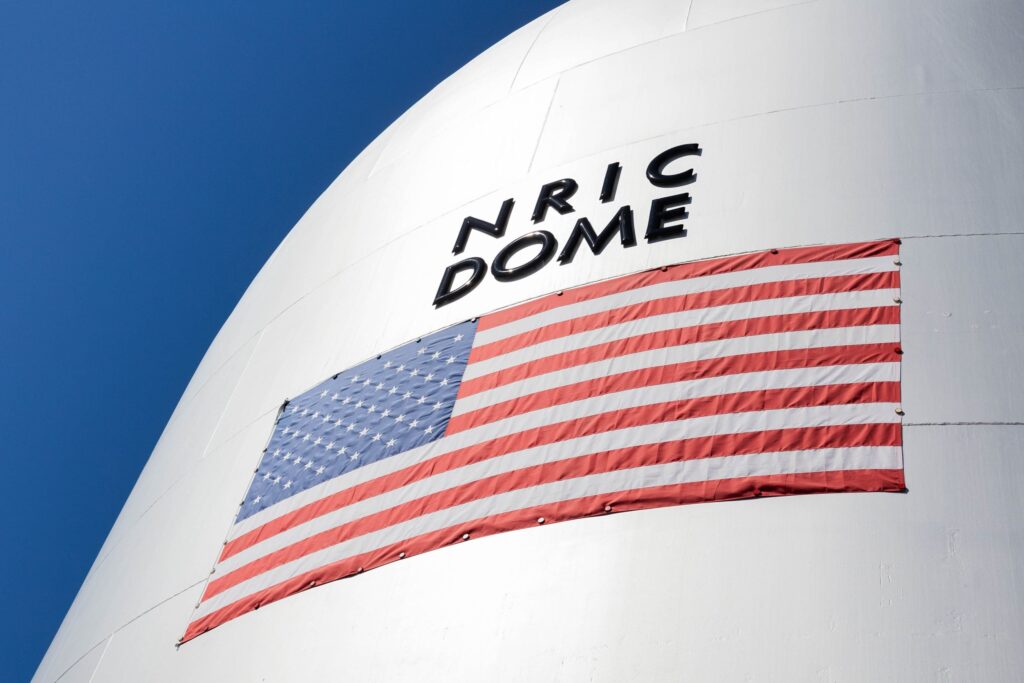
The lab already hosts the first Launch Pad-affiliated fueled experiment. Radiant Nuclear formally took possession of NRIC’s Demonstration of Microreactor Experiments (DOME) testbed on April 1, 2026, for a year of testing of its 1-MWe, HALEU-fueled Kaleidos high-temperature gas-cooled reactor. NRIC has said reactor installation at DOME is now anticipated in December 2026, following supply-chain delays and construction acceleration measures.
—Sonal C. Patel is senior editor at POWER magazine (@sonalcpatel, @POWERmagazine).
Correction, Aug. 27, 2026: An earlier version of this article incorrectly attributed production dates from Nusano’s radioisotope program to its HALEU program and included outdated HALEU production projections. The article has been corrected to reflect the company’s current expected production capacity and schedule. POWER regrets the oversight.