
Proxima Fusion, a Munich, Germany-based group that is considered among the leading European companies working on fusion energy, said it completed a €411 million ($468 million) funding round. Proxima on July 7 said investors included technology giant Google along with global energy company RWE.
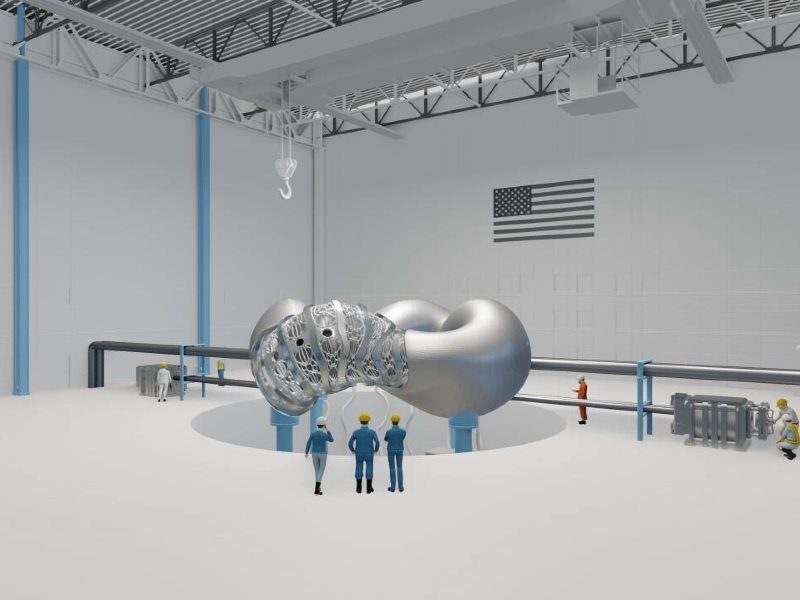
Proxima on Tuesday said the latest funding, which was led by XTX Ventures and East X Ventures, brings the company’s valuation to €2.4 billion ($2.7 billion) and establishes it as the best-financed fusion company in Europe. Proxima was founded in April 2023, and spun out of the well-known Max Planck Institute for Plasma Physics. The company develops Quasi-Isodynamic (QI) stellarators, a type of magnetic confinement reactor, that builds on decades of research from the Wendelstein 7-X program.
RWE’s investment of €25 million ($28.6 million) comes a few months after the German energy company signed a partnership agreement with Proxima to build a stellarator fusion power plant at the site of a former nuclear fission power plant in Gundremmingen, Bavaria. Google’s investment continues that company’s interest in fusion and nuclear energy in general as a source of long-term carbon-free energy.
“Thanks to strong research and innovative start-ups such as Proxima Fusion, Germany can become a key player in nuclear fusion,” said Dr. Markus Krebber, CEO of RWE AG. “It is now crucial that the federal and state governments shape the framework conditions in such a way as to specifically accelerate the development towards a commercial fusion reactor in Germany. RWE is contributing to this by investing in both magnetic and laser fusion companies and by making available our decommissioning sites, with their existing nuclear infrastructure, and our expertise in regulatory approvals. In doing so, we are creating significant time and cost advantages in the international race for fusion.”
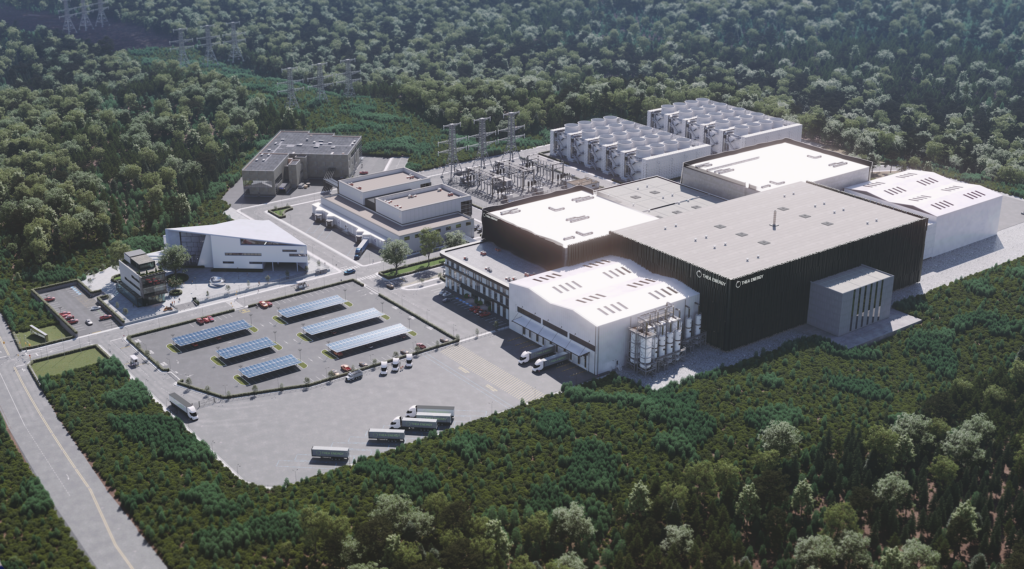
Proxima said the financing is part of the support needed to build what it calls Alpha, the company’s net-energy stellarator demonstrator near Munich, Germany. Alpha is being developed by Proxima in partnership with the state of Bavaria, the Max Planck Institute for Plasma Physics, and RWE.
“Europe is racing with the United States and China to get to the first fusion power plant,” said Dr. Francesco Sciortino, co-founder and CEO of Proxima Fusion. “Proxima’s financing demonstrates that Europe can not only invent breakthrough technologies, but also build globally competitive companies around them. Investors recognize both the urgency and the opportunity of what we’re doing and are backing us to develop a generational energy technology company,”
Secured Funding
Proxima said it has secured more than €650 million ($740 million), including €95 million ($108 million) in public grants, since its founding in 2023. The company said the funding announced Tuesday exceeded its target of matching Bavaria’s commitment for a €400 million ($457 million) public funding contribution to the company’s strategy. Proxima said the financing will put its focus will be on completion of the Stellarator Model Coil, expansion of high-temperature superconducting (HTS) cable and magnet production, and continued development of the engineering and manufacturing systems required for stellarators. Proxima said it will hire workers across engineering, manufacturing and operations to accelerate progress.
To learn more about the companies leading the global race to commercialize fusion energy, read “Research Brings Results in Search for ‘Holy Grail’ of Clean Energy” in POWER’s February 2026 Special Report on groundbreaking power generation technologies.
Fusion is the process of combining two atoms to form a single atom to release energy. It has long been referred to as the “Holy Grail” of clean and abundant energy production, as it has the potential to produce power from hydrogen, the most common element in the universe. It also produces no carbon emissions and does not have the highly radioactive output of nuclear fission processes. The technology has proven difficult, though, as researchers work to get more energy out of a fusion reaction that it takes to create the reaction.
Proxima has said it is targeting completion of Alpha in the early 2030s, which would support the company’s plan for its first commercial stellarator fusion power plant, called Stellaris, later that decade.
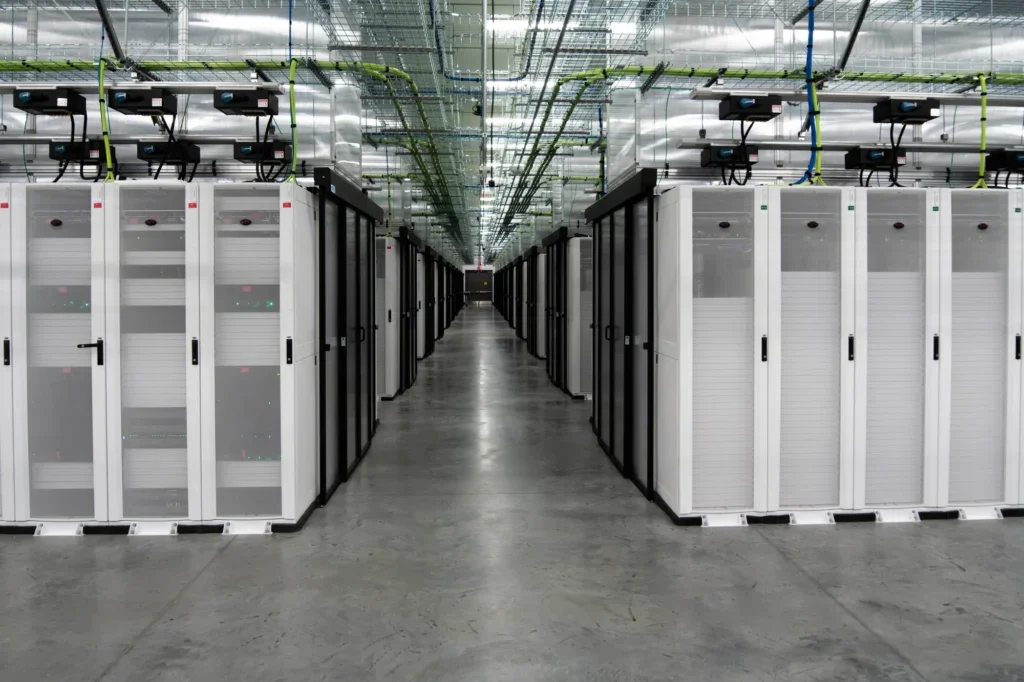
Google has said its support of Proxima is among a series of fusion-focused investments by the company as it looks for ways to power its energy-intensive data center and AI infrastructure operations. The company has said it has a goal to run its operations totally on carbon-free energy, while acknowledging those climate goals have become more difficult to attain as growth of its AI infrastructure outpaces decarbonization of the power grid.
Other investors in the latest funding for Proxima include KfW Capital, SPRIND, and Burda Principal Investments. Returing investors include Plural, UVC Partners, Balderton, Cherry Ventures, DST Global Partners, Brevan Howard Macro Venture, Lightspeed, DTCF, redalpine, Leitmotif, Elaia, CDP Venture Capital, Bayern Kapital, and the EIC Fund.
—Darrell Proctor is a senior editor for POWER.