After the encouraging developments from last year and the news from fusion startups receiving funding, a familiar pattern is emerging across energy policy discussions in emerging and developing economies. Nuclear fission is increasingly framed as politically difficult, institutionally burdensome, or out of step with “modern” energy transitions. Fusion, by contrast, is often held up as a future alternative that will be cleaner, cheaper, and easier to deploy, sidestepping the regulatory and political challenges associated with today’s nuclear sector.
The appeal is understandable. Fusion promises abundant energy with no long-lived waste and no meltdown risk. For countries seeking to leapfrog legacy infrastructure and avoid decades of nuclear controversy, the narrative is attractive.
But it rests on a fundamental misunderstanding: one with serious implications for nuclear deployment, investment, and long-term energy security. Even if fusion instantly became commercially mature today, it would not eliminate the need for robust energy policy, public financing mechanisms, or market support structures. On the contrary, fusion would require many of the same institutional tools now being debated for advanced nuclear fission. The idea that better physics can substitute for policy is not just incorrect; it is strategically dangerous.
Energy Systems Are Built on Institutions, Not Breakthroughs
Energy technologies do not succeed or fail on physics alone. They succeed (or stall) based on economics, infrastructure, regulation, public perception, and policy design. This is not a theoretical point; it is the defining reality of large-scale power systems.
Fusion is often imagined as a future in which energy becomes cheap simply because fuel is abundant. But for all large, centralized power technologies, electricity costs are dominated by capital, not fuel. Uranium, for instance, is a small percentage of the cost of fission plants. This has been true for decades, and fusion would not be an exception.
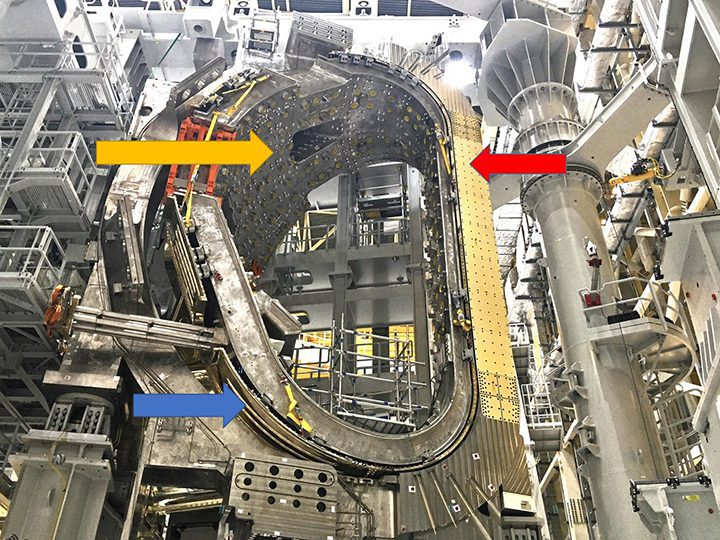
A commercially viable fusion plant, no matter how elegant the plasma physics, would still be a complex industrial facility. It would require advanced materials, precision manufacturing, long construction timelines, highly skilled operators, security against terrorist attacks focusing on infrastructure, and deep integration into national grids. These characteristics translate directly into high upfront capital costs and long investment horizons. Those are precisely the conditions under which energy policy matters most.

In This Issue
Full issueThe Myth of ‘Policy-Free’ Fusion
There is a persistent assumption that fusion, once technically proven, will deploy easily because it avoids the political challenges associated with fission. This assumption does not withstand scrutiny.
Policymakers should also be cautious about assuming that fusion’s favorable public perception is durable. History suggests that technologies often enjoy a “honeymoon period” that fades as deployment raises questions about cost, governance, equity, or control. Designing policy as if political acceptance were guaranteed is a fragile strategy for any capital-intensive energy system. A fusion-based power system would still depend on positive public perception, long-term revenue certainty, de-risked capital stacks, predictable regulatory frameworks, and public or quasi-public financing mechanisms.
Carbon credits, long-term power purchase agreements, contracts for difference, concessional lending, and multilateral development bank participation are not artifacts of a flawed fission era. They are responses to the structural realities of capital-intensive energy infrastructure. Fusion would need these tools just as much as any other firm, low-carbon power source.
Why Today’s Fission Policy Work Is Foundational
This is why current efforts to improve the policy environment for nuclear fission are not a detour from the future: they are a prerequisite for it. Mechanisms such as clean energy credits, capacity payments, contracts for difference, and development bank participation are not “fission-specific.” They are, or should be, technology-agnostic instruments designed to value attributes that electricity markets routinely fail to price: reliability, energy density, system adequacy, and long-term emissions avoidance.
Abandoning this policy work in favor of waiting for fusion does not create a smoother transition. It would create a policy vacuum, one that future fusion technologies would inherit, not escape.
By contrast, building durable, predictable policy frameworks for advanced fission today—particularly in emerging economies—creates an institutional pathway that future technologies, including fusion, can immediately use. Policy continuity lowers risk, stabilizes supply chains, supports workforce development, and signals seriousness to capital markets.
A False Choice with Real Consequences
Framing the energy transition as a choice between fission now and fusion later is a false and costly dichotomy. The real choice is between building durable, sensible policy institutions today, or hopefully assuming that future breakthroughs will somehow make governance unnecessary.
Fusion may well become part of the global energy system. If and when it does, it will arrive into a world shaped by the policies we design now. The question is whether those policies will recognize the value of firm, low-emissions, clean power—or continue to reward intermittency while penalizing reliability.
For the nuclear sector, the lesson is clear: institutional readiness, not technical optimism, will determine whether future technologies succeed. The work of building those institutions has already started, because it cannot be postponed.
—Guido Núñez-Mujica is director of Data Science at the Anthropocene Institute.