
Plant Design
-
 Environmental
Save Power with Natural Cooling for Building Ventilation
With the final Clean Power Plan rule covering existing power plants scheduled for release this summer, and the amount of flexibility that has been afforded to the states to meet emissions targets, states have
-
 Gas
GasProtecting Steam Cycle Components During Low-Load Operation of Combined Cycle Gas Turbine Plants
Originally, the modern combined cycle gas turbine (CCGT) unit was developed to act as a largely baseload source of generation due to its high thermal efficiency and low initial capital cost. But as markets
-
 Renewables
New Zealand’s Geothermal Industry Is Poised for the Future
Contact Energy fully commissioned New Zealand’s largest geothermal power plant last year, nudging installed geothermal capacity to a shade over 1 GW. Nearly 80% of the country’s electricity is sourced from
-
 Renewables
ARPA-E Summit Takes the Pulse of Energy Technology Innovation
“The coolest thing on Earth” is, according to its new director, a young federal agency that has a unique focus on pushing technology frontiers and an “unblinking attention” to market realities. One thing you can say for sure about the energy world, said Dr. Ellen Williams (Figure 1), incoming director of ARPA-E (Advanced Research Projects […]
-
 Renewables
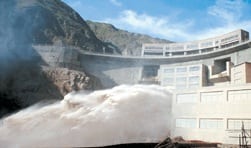
The Outlook for Small Hydropower in China
As the global electric power industry continues to develop clean, high-quality energy capacity for sustainable development, the position of small hydropower has changed. In the past few decades, small hydropower development in China has experienced positive momentum, but there are still problems to be solved. To solve these problems, various relationships within the small hydropower […]
-
Gas
Labor Crunch Complicates the Gas Turbine Arms Race
The rate of introduction of new gas turbine products has accelerated, and the speed of change creates challenges for engineering, procurement, and construction (EPC) contractors who are also coping with a
-
 Nuclear
Small Modular Reactors Speaking in Foreign Tongues
Almost a year ago, workers began pouring concrete for the basemat of the first small modular reactor (SMR) in the western hemisphere. Despite the hype over SMRs in the U.S., with hundreds of millions of
-
 Instrumentation & Controls
Utilizing 3-D Virtual Reality Visualization for Efficient Power Projects and Training
The global power industry is becoming increasingly complex. Trends toward greater amounts of variable renewable energy are changing the requirements for conventional power plants. Energy market policies are
-
 Coal
CoalAlstom Reports Major Boost for Advanced Ultrasupercritical Technology
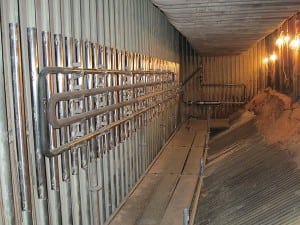
The trial operation of a steam loop for more than 17,000 hours at temperatures exceeding 760C (1,400F)—the highest ever tested at a pulverized coal plant—have wrapped up at Plant Barry Unit 4 in Alabama
-
 O&M
O&MPoint Level Capacitance Switch for Fly Ash Hopper Measurement
If you’re the person tasked with controlling the level of fly ash in collection hoppers, you know how difficult the application can be. What at first looks like a simple measurement quickly proves to be much more demanding in actual execution. The first problem is the environment inside the collection hoppers, which is extremely challenging […]
-
 O&M
O&MGaining Control with Electraulic Actuators
Plant engineers at Eskom’s Majuba Power Station in South Africa have been continuously looking for ways to improve efficiency and reliability. The six-unit, 4,000-MW, supercritical coal-fired plant was experiencing an efficiency decrease of 5% to 7%, which plant engineers determined was caused by poor performance of the actuators on their condensate level control valves (CLCVs). […]
-
 Legal & Regulatory
World’s First Post-Combustion CCS Coal Unit Online in Canada
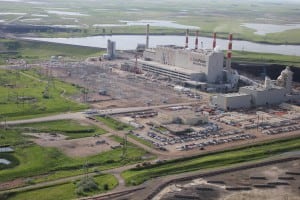
The first full-scale commercial post-combustion carbon capture and sequestration (CCS) project at an operating coal-fired power plant is now online in Estevan, Saskatchewan, roughly 10 miles north of the U.S. border. The heart of the $1.4 billion project at Boundary Dam Power Station is the rebuilt 110-MW Unit 3, originally commissioned in 1970. The project, […]
-
 Coal
CoalHitachinaka Thermal Power Station Unit 2, Tokai, Ibaraki Prefecture, Japan
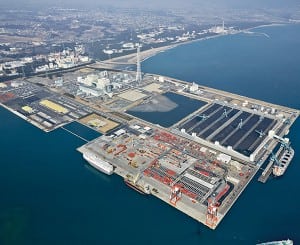
Bad weather, unforeseen setbacks, and even natural disasters are far from unheard of during power plant construction. But there may be no plant that experienced the sort of construction hardships that Tokyo
-
 Legal & Regulatory
EPA: Malfunctions Will No Longer Shield Plants from Emissions Penalties
Affirmative defense provisions can no longer insulate generators from monetary penalties for Clean Air Act violations that result from facility startup, shutdown, and equipment malfunction, the Environmental Protection Agency (EPA) has proposed. In a supplemental notice of proposed rulemaking (SNPR) published on Sept. 17 in the Federal Register, the agency proposes to revise its February […]
-
Plant Design
How to Design the Collector Pipe for Condensate Return Lines
While several methods exist for sizing collector pipes on steam lines, the results obtained from the various approaches can be quite different. This article will show how design parameters can be used to calculate the dimensions much more accurately. In the steam lines of thermal and nuclear power plants, condensed steam is usually discharged from […]
-
 Coal
CoalWATER AWARD: Jeffrey Energy Center’s Constructed Wetland Treatment System
U.S. coal power plants are finding that they need to comply with an increasing number of stringent environmental regulations, and while nobody in any industry looks forward to additional regulatory burdens
-
 Nuclear
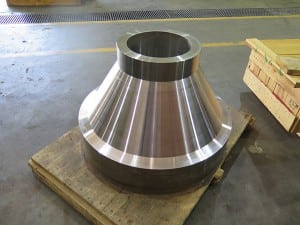
Welding and Fabrication Innovations Mitigate Reactor Pressure Vessel Embrittlement in Nuclear Plant Construction
Reactor pressure vessel (RPV) shells in the existing U.S. fleet of nuclear power plants were typically constructed by forging ring segments from ingots of low-alloy steel offering sufficient fracture toughness
-
 Gas
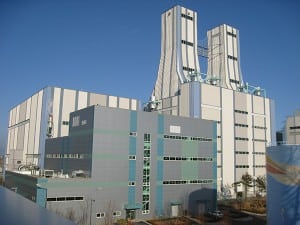
GasMARMADUKE AWARD: KOMIPO Relocates an Entire Combined Cycle Power Plant
Power plants are, with good reason, almost universally regarded as fixed assets to be operated, maintained, and retired on the spot where they were built. The idea of relocating something as large and
-
 O&M
O&MSite-Specific Factors Are Critical for Compliance with Final 316(b) Existing Facilities Rule
On May 16, 2014, the Environmental Protection Agency (EPA) is scheduled to release its long-delayed final 316(b) rule for existing facilities. The rule—which was supposed to have been issued Apr. 17 after
-
 Gas
GasRecent Innovations from Gas Turbine and HRSG OEMs
There is no hotter market in power generation than gas. According to the Energy Information Administration (EIA), the U.S. is projected to add just under 60 GW of new generating capacity between 2013 and 2017
-
 Renewables
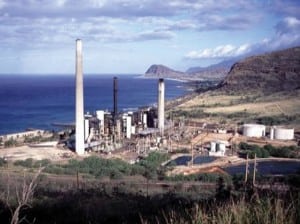
HECO Successfully Cofires Biofuel as No. 6 Oil Substitute
All states were not created equal, particularly when it comes to indigenous reserves of fossil fuels. North Dakota is experiencing a boom in oil production, which has increased almost 10-fold since 2005, and
-
Coal
Fuel-Flexible CFBs Add Flexibility to Resource Plans
The downward trend in solid fuel quality has negatively affected many power generators that rely on imported fuels. For others, this represents a market opportunity. A quick survey of recent installations found that fuel-flexible circulating fluidized bed (CFB) boilers addressed owners’ fuel source concerns by efficiently burning low-quality, high-moisture coals, even when mixed with biomass and […]
-
T&D
Federal Cybersecurity Framework Calls for Increased Vigilance
The energy industry, already familiar with the latest iteration of the North American Electric Reliability Corp. (NERC) Critical Infrastructure Protection (CIP) reliability standards, should take note: Meeting
-
 Coal
CoalDrones Promise Faster, Easier Inspection of Boilers, Stacks, Towers, and More
Mention the word “drone,” and most people will have a mental picture of what a drone is and does. They likely will think first of military drones carrying missiles and other weapons that could malfunction
-
 Legal & Regulatory
GE Executive Markhoff Talks About the Water/Energy Nexus
Source: POWER During IHS CERAWeek in Houston in early March, POWER Editor Gail Reitenbach sat down with Heiner Markhoff, president and CEO of GE Power & Water’s Water & Process Technologies, to ask him about several issues of concern to power plants. Though the “water/energy nexus” theme has gained prominence recently, Heiner Markhoff’s comments underscored […]
-
 Coal
CoalRemote Monitoring and Diagnostics Within a Smart Integrated Infrastructure
It seems as if each week brings further bad news for coal power plants. Recently, Consumer’s Energy sought relief to close three power plants, South Carolina Electric & Gas announced it would cease
-
O&M
Upgraded Control Room Consoles Improve Ergonomics
Great River Energy (GRE) is a not-for-profit electric cooperative that generates and transmits power for 28 member cooperatives throughout southern, central, and northern Minnesota and northwestern Wisconsin
-
Coal
Establishing Proper Pressure Drop for Feedwater Flow Control Valves
In power plants with drum-type boilers and constant-speed main boiler feed pumps, the feedwater control valve (also referred to as the drum level control valve) provides the means for controlling flow to the
-
 Commentary
How U.S. Power Generators Are Preparing for 2014
The business environment for generating companies worldwide continues to become increasingly complex, and not just as a result of regulations. Even in the U.S., the concerns and constraints faced by generators
-
 Gas
GasKorean Utility Plans First Underground Combined Cycle Power Plant
The oldest power plant in South Korea is making way for something so new that no one has even attempted it before. Korea Midland Power Corp. (KOMIPO) announced earlier this year that Seoul Thermal Power Station, built in the 1930s, would be replaced with a new 800-MW two-unit combined cycle power plant—one that will be built […]