
Plant Design
-
 Commentary
Why Battery Storage’s Next Failure Point Isn’t the Battery
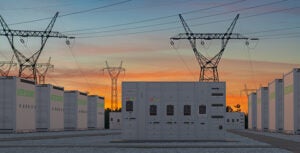
Battery energy storage systems are becoming essential infrastructure for a grid that increasingly depends on variable renewable generation. Their ability to respond quickly to changes in supply and demand makes storage uniquely valuable: batteries absorb excess generation, discharge when demand rises, and provide balancing services that help keep the grid stable. But as storage takes […]
-
 Power
Building a Stronger Grid with American-Made Steel
About 70% of U.S. transmission lines are more than 25 years old, and utilities are now replacing aging assets while building new capacity for data centers, advanced manufacturing and transportation electrification. Steel transmission and distribution poles can offer longer service life, greater durability and lower maintenance requirements than wood. A domestic supply chain also […]
-
 Pumps
On-demand webinar: Modeling Pump Transients With Reverse Flow
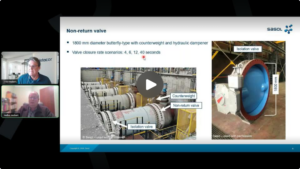
Modeling Pump Transients with Reverse Flow is a Datacor webinar with two speakers: Trey Walters, P.E., founder of of Impulse, and Nelius Hubert, principal process engineer at Sasol. Walters explains what causes pump transients, including pump trips, startups and valve-driven system changes, and why reverse flow and reverse rotation happen in uphill and parallel-pump […]
-
 Plant Design
Executive brief: The State of the Energy Industry
Refine Before You Rebuild: How Simulation Keeps Refiners Ahead of Disruption is an executive brief on the forces reshaping global refining in 2026. These include U.S. and European refinery closures, crude mismatch, record biofuel mandates, and the ongoing disruption to Middle East supply. It looks at the U.S., Europe, Asia-Pacific and the Middle East, […]
-
 Nuclear
Advancing the Safe Transport of Activated Metallic Waste
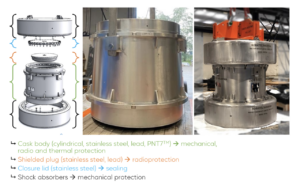
Activated metallic components generated during reactor operation, maintenance, and decommissioning rarely present a uniform packaging challenge. They can vary widely in shape, mass, dose rate, and radiation profile, and may include thimble plug assemblies (TPA), poison rod assemblies (PRA), reactor control cluster assemblies (RCCA), rod segments, and cut portions of vessel internals. Managing these materials […]
-
 Data Centers
Why Flat Performance Matters More Than Peak Efficiency in Data Center Design
Artificial intelligence (AI) is reshaping the power requirements of modern data centers. At this point in the timeline of AI’s continued evolution, this statement should not be controversial. The deployment of increasingly large GPU clusters for training and inference purposes, such as NVIDIA’s 72-GPU Vera Rubin model, is causing rack power densities to climb from […]
-
 Nuclear
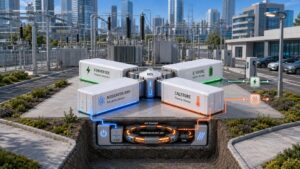
Austrian Start-Up Pitches Container-Sized Thorium Reactor, With Storage Coming First
Emerald Horizon plans to sell a hybrid battery and molten-salt storage system now and add an accelerator-driven thorium generator later. The generator remains at an early stage of development. Austria decided against nuclear power in the late 1970s and has not revisited the question since, according to Mario Müller, vice president of research and development […]
-
 O&M
5 Critical Factors That Determine Condensate Polishing Performance
An Ecolab executive brief for fossil power plant operators, engineers, and specifiers focused on condensate polishing performance. The document argues that condensate polishing resin selection should be viewed as a turbine-life and asset-protection decision, not a commodity purchase. It identifies five critical resin characteristics that influence water quality, equipment protection, resin longevity, operating efficiency, […]
-
 Gas
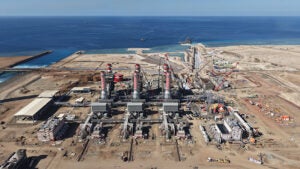
Beyond the Contract: How Rabigh Reinforcement Reached First Fire 14 Months After Award
When no suitable vessel was available to carry its gas turbine generators from the U.S. to Saudi Arabia’s Red Sea coast, the Rabigh Reinforcement project team turned to the heavy-lift charter market at a time when shipping conditions were already challenging. Drawing on its logistics experience and global agreements, the consortium engaged one of the […]
-
 O&M
Between the Assets and Past the Fence
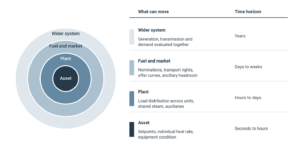
Power plants have largely optimized individual assets. The next opportunity lies in how assets, resources, and operating decisions work together. Power producers are experts at optimizing equipment. Decades of advancement in engineering and operating practices have improved the performance of gas turbines, pumps, steam systems and other critical assets. Operators can measure unit-level performance in […]
-
 Nuclear
How Advanced Nuclear Can Expand Utility Options
Over 2,060 gigawatts. That is the staggering volume of generation and storage capacity currently trapped waiting in U.S. interconnection queues. According to data from RMI, the typical project now takes almost five years—stuck in administrative and transmission review before a single watt can be delivered to the grid. In 2008, it was only two years. For […]
-
 Gas
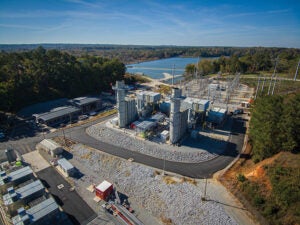
Parr Station Modernization Writes the Next Chapter in a Century of Reinvention
POWER’s 2026 Reinvention Award goes to Dominion Energy South Carolina’s Parr Station, where new dual-fuel turbines replace decades-old peaking units and extend a century-long pattern of reinvention at one
-
 T&D
The Blackout Behind the Blackout: What Sarnia’s 2003 Outages Reveal About Restart Risk
Restoring customer supply is not the same event as restoring a process plant. Sarnia’s 2003 outages show why power-system resilience has to be carried through safe shutdown, utilities, environmental controls, and staged restart. The Grid Event Was Only the First Failure State At 4:11 p.m. on Aug. 14, 2003, the Northeast blackout began to pull […]
-
 O&M
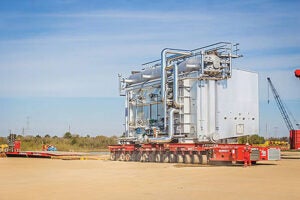
Temporary Boilers, Permanent Strategy: How Rental Fleets Are Reshaping Reliability Planning
As rental boiler programs expand across the industry, suppliers describe a shift from emergency-only stopgaps to planned capacity and redundancy strategy. When the U.S. Department of Veterans Affairs (VA)
-
 Data Centers
The Rise of Low-Power Instrument Transformers in Data Center and Industrial Applications
Traditional magnetic induction-based instrument transformers have served the power industry reliably for decades, but a new generation of low-power alternatives is gaining ground — particularly in data centers and industrial facilities where accuracy, size, and integration with digital secondary systems matter. This paper reports on LPIT history, standardization, and some of the applications in […]
-
Data Centers
On-Demand Podcast – The Data Center Challenge: Build Faster, Be Efficient, and Keep the Data Flowing
Data centers face big challenges, from processing trillions of search queries, storing billions of emails and photos and serving countless hours of video every day while at the same time developing ways of decreasing their energy and carbon footprints and increasing data security. In this episode, Angad Sandhu, CTO of Giga Energy (director of […]
-
Data Centers
Keeping the Lights On — Smarter Fault Management for Data Center Power Systems
Data centers commonly deploy looped medium-voltage (MV) distribution systems with automated protection and control schemes to deliver exceptionally high levels of power availability. However, these automation schemes rely on communications infrastructures where latency and scalability can affect fault-response performance. This paper presents a robust, hybrid FLISR strategy that integrates centralized and decentralized control to […]
-
 Data Centers
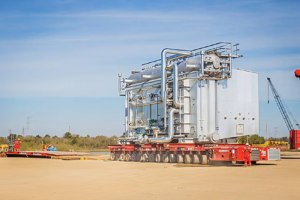
AI Data Centers Turn to Industrial Boilers and Steam Turbines for Power
Artificial intelligence (AI) data centers are being built at an unprecedented pace. There are more than 12,000 active projects in the U.S. currently seeking grid interconnection representing 1,570 GW of generator capacity and 1,030 GW of energy storage. Analyst firm Omdia predicts that AI will drive more than 50% of installed power generation capacity over […]
-
 Technology
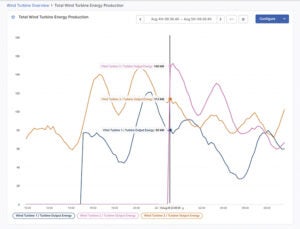
Making Energy Intensity a Controlled Variable
Rising power costs and load increases have elevated energy monitoring and analysis on plant agendas, but consumption only becomes controllable once it is reliably measured per unit produced and modeled
-
 Data Centers
AI Data Centers Demand a New Model for Power Infrastructure
Unprecedented scale and load volatility are pushing developers beyond traditional generation strategies toward integrated, digitally orchestrated power systems built for speed, stability, and resilience. As
-
 Gas
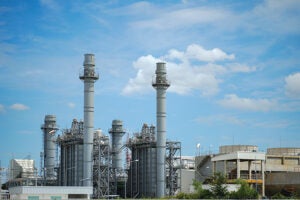
Cleaner Gas, Smarter Design: A Practical Path to Lower-Emissions Power
Lower-emissions gas sourcing, efficient combined-cycle generation, and carbon capture-ready construction offer hyperscalers a way to meet data center power demands without compromising on emissions. As
-
 Gas
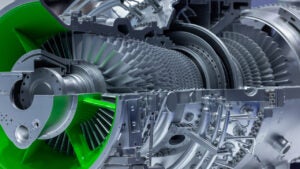
Supercritical CO2 for Gas Turbines: Accelerating Speed to Power
Many simple-cycle gas turbines are running harder than they were ever intended to—yet steam retrofits have never penciled out for most of that fleet. Supercritical CO 2 bottoming cycles change the economics
-
 Supply Chains
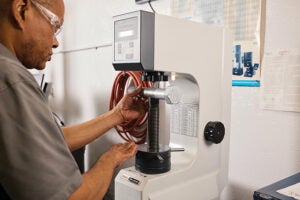
Matching Fasteners to the Application: Five Quality Controls
According to the U.S. Department of Energy, the domestic power system is facing mounting pressure from growing electricity demand, a backlog of generation interconnection requests, and an aging transmission
-
 Engineering
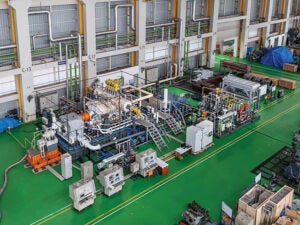
How Full-Train Validation Is Raising the Reliability Benchmark for High-Power Steam Turbines
Triveni Turbine validated a complete 60-MW turbine-generator train—not just the turbine—inside its own factory, using a dynamometer to simulate real load conditions before the package ever reached its
-
 Press Releases
Mesa Power Solutions Expands With $70 Million Wyoming Manufacturing Campus
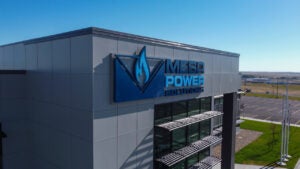
Mesa Power Solutions has opened a new $70 million manufacturing and administrative campus in Evansville, Wyoming, consolidating 300 employees and expanding the company’s capacity to produce natural gas power generation equipment for utilities, data centers, and other commercial and industrial customers. The 220,000-square-foot facility at One Mesa Way (Figure 1) will serve as a hub […]
-
 Gas
Nebraska Public Power District Breaks Ground on 694-MW Princeton Road Station
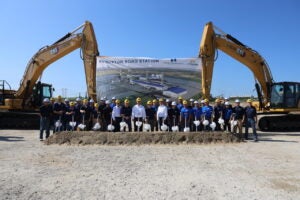
Nebraska Public Power District (NPPD) marked the start of construction on Princeton Road Station with a groundbreaking ceremony the morning of July 17, drawing state and local officials, community stakeholders, and NPPD staff to the site just north of Hallam, Nebraska. The 694-MW dual-fuel facility will be the largest natural gas generation plant in NPPD’s […]
-
 Gas
A Pioneering Approach to Building New Generation Resources
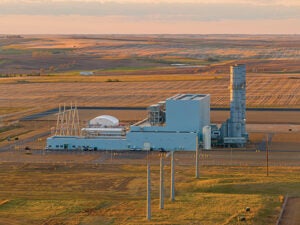
A North Dakota–based membership cooperative teamed with a major infrastructure engineering and construction group to build a new natural gas–fired power station, supporting an urgent need for power generation capacity in the region.
-
 O&M
From 18 Forced Outages to Zero Missed Starts: How CPS Energy’s Arthur von Rosenberg Plant Rebuilt Its Reliability
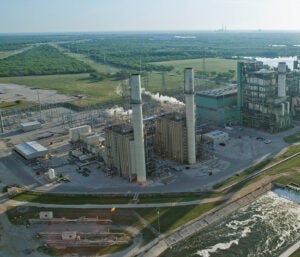
A deliberate shift from reactive maintenance to a reliability-centered operating culture cut the 500-MW combined cycle plant’s forced outage rate by 90%—and delivered perfect availability through Texas’s
-
 Gas
Innovation Powers a Country’s Energy Transition
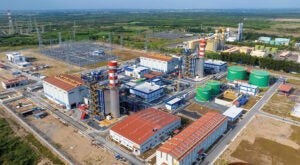
Vietnam’s growing economy and need for more electricity is being served by the country’s first power plant to be powered by liquefied natural gas (LNG). The Nhon Trach 3 and 4 expansion project is a finalist for a POWER Top Plant award for gas-fired generation.
-
Energy Security
Speed as Strategy: Rabigh Reinforcement Delivers 1,179 MW on an Accelerated Timeline
Facing potential supply constraints along the Makkah-Jeddah corridor, Saudi Arabia’s power sector compressed a combined cycle schedule by months driven by early alignment, staged authorization, and