
Nuclear
-
 Nuclear
Top Plants: Oconee Nuclear Station Oconee County, South Carolina
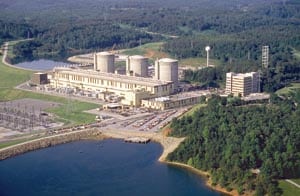
Duke Energy’s nuclear fleet provides electricity to approximately half of the utility’s customers in the Carolinas. The 2,538-MW Oconee Nuclear Station is part of that fleet and has been a pacesetter among U.S. nuclear plants since it began operation in 1973. In order to maintain the plant’s productivity and reliability, its staff implemented a comprehensive controls modernization project that spanned a decade. With its new state-of-the-art upgrades, the facility has become a leader in applying digital electronic technology in the nuclear power industry.
-
 O&M
O&MBenchmarking Nuclear Plant Operating Costs
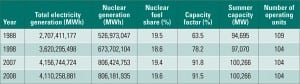
In an exclusive agreement with the EUCG Nuclear Committee, POWER was provided access to some key, high-level performance and operational data from the group’s nuclear industry benchmarking database. All U.S., and many international, nuclear power plants are members of the committee and have contributed to its database for many years. This month we introduce you to the EUCG Nuclear Committee and share sample nuclear operating costs. Look for future reports on other key performance benchmarking metrics during 2010.
-
Nuclear
New Nuclear Plants Are on the Horizon
Most of the big utilities, with an eye to ensuring a good mix of future generation resources, have a new nuclear plant in development. Even though federal loan guarantees are slow to materialize and financing these multi-billion-dollar projects has become a bet-the-company investment, the NRC has more than 40 applications from generators that continue to believe in the future of nuclear power.
-
 Nuclear
Plant Vogtle Leads the Next Nuclear Generation
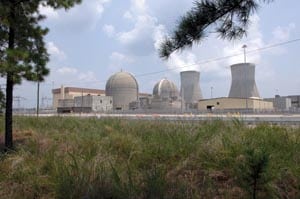
In August 2009, the Nuclear Regulatory Commission (NRC) issued its fourth Early Site Permit for two new units at Southern Nuclear’s Vogtle site and its first for the Westinghouse AP1000 pressurized water reactor design. The two new units planned for Vogtle also became the reference plant for the AP1000 under NuStart in June 2009. This means Vogtle Units 3 and 4 will be the first licensed installations of the new AP1000 reactor design in the U.S. Plant Vogtle is expected to get the NRC’s approval to begin construction in 2011.
-
 Nuclear
Modularizing Containment Vessels in New Nuclear Power Plants
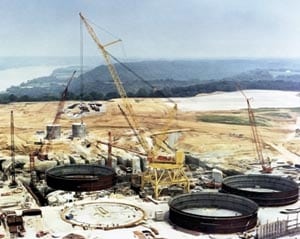
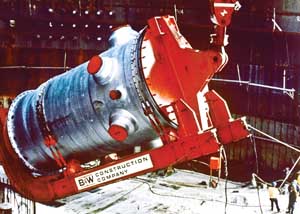
Using modularization in the construction of nuclear containment vessels can be one way to control both cost and schedule when building the next generation of U.S. nuclear power plants. Although the advantages of modularization can be significant, each new reactor design and plant site poses unique construction challenges and must be individually analyzed to determine the benefits of this approach.
-
 Nuclear
World’s First EPR Gets a Roof
Olkiluoto 3, the world’s first EPR whose construction in Finland has been plagued by major delays, in September reached a significant milestone as its 200 – metric ton, 47-meter-diameter steel dome was hoisted into position 44 meters above the ground.
-
 Nuclear
India Designs Thorium-Fueled Reactor for Export
While the global spotlight is fixed on India’s massive coal-fired power capacity expansion, the country with meager uranium reserves has been pressing on with a unique long-term program that pushes for research and development of nuclear reactors using all three main fissionable materials.
-
 O&M
O&MHDPE Replaces Carbon Steel in Safety-Related Pipe System
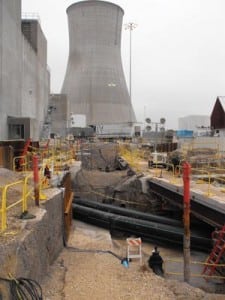
Corrosion of steel water pipes in the safety-related piping systems of aging U.S. nuclear power plants is fast becoming a safety concern and a significant operational cost, not to mention an indication of potential future liability for nuclear utilities currently constructing new plants or retrofitting existing sites.
-
 Nuclear
Using the Sterling Engine for Solar and Lunar Power
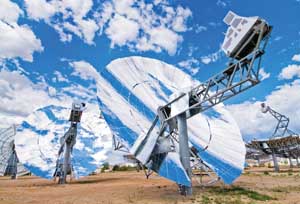
Since Robert Stirling invented the Stirling engine in 1816, it has been used in an array of specialized applications. That trend continues today. Its compatibility with clean energy sources is becoming apparent: It is an external combustion engine that can utilize almost any heat source, it encloses a fixed amount of a gaseous working fluid, and it doesn’t require any water — unlike a steam engine.
-
 Nuclear
Africa Looks to Nuclear for Future Generation
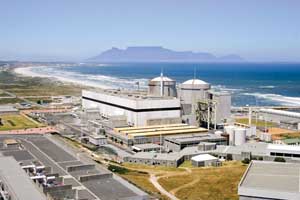
Africa is emerging as a prominent voice in calling for a global nuclear renaissance. Driven by chronic shortages from population explosions, decades of drought, and dependence on hydropower — and spurred by discoveries of significant uranium reserves on the continent — several countries are considering nuclear power as a viable option.
-
 Nuclear
Nuclear Developments in Europe
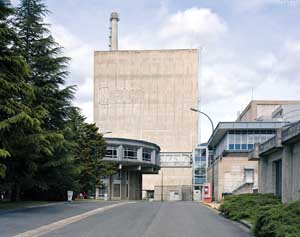
Recent months brought several developments in Europe’s much-touted "nuclear renaissance." Spain Extends Life of Nation’s Oldest Reactor Spain’s government on July 2 granted a four-year extension to the operating permit of the 466-MW Santa María de Garoña nuclear power plant (Figure 3). The decision follows a nonbinding recommendation by Spain’s nuclear regulator in June to […]
-
 Nuclear
Sweden Selects Site of First Permanent Spent Nuclear Fuel Repository
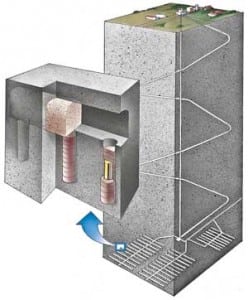
In early June, as U.S. Energy Secretary Steven Chu confirmed to a House Subcommittee that Yucca Mountain repository was, without doubt, "off the table" and that a blue ribbon panel would further advise the government on what it should do with its high-level nuclear waste, Sweden announced the site of what could be the world’s first permanent spent fuel repository.
-
-
 O&M
O&MNuclear: Realistic Simulation Assists in Nuclear Power Plant Certification
From the onset of the civilian nuclear era (marked by President Dwight Eisenhower’s "Atoms for Peace" speech to the United Nations in 1953), there has been a strong awareness of the importance of safety within the nuclear energy industry. Western experts have devoted much time and effort to ensuring the integrity of reactor cores and […]
-
 O&M
O&MSteam Turbines: San Onofre Nuclear Generating Station Gets Upgraded Generator Rotors
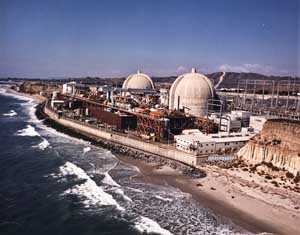
Southern California Edison’s (SCE) 2,250-MWe San Onofre Nuclear Generating Station (SONGS) recently took receipt of a new and upgraded generator rotor for one of its two Alstom steam turbine generator units (Figure 1). Following the successful installation and flawless start-up of this new rotor in the Unit 2 generator, the former Unit 2 rotor was […]
-
 Coal
CoalCanada Moves to Rebalance Its Energy Portfolio
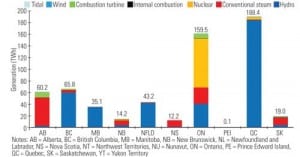
Though Canada is rich in fossil fuels, nuclear power may fuel a significant portion of the nation’s future electrical generation needs, especially in provinces that have traditionally relied on hydropower and fossil fuels.
-
 O&M
O&MTurkey Opens Electricity Markets as Demand Grows
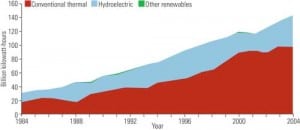
Turkey’s growing power market has attracted investors and project developers for over a decade, yet their plans have been dashed by unexpected political or financial crises or, worse, obstructed by a lengthy bureaucratic approval process. Now, with a more transparent retail electricity market, government regulators and investors are bullish on Turkey. Is Turkey ready to turn the power on?
-
 Coal
CoalRecession Reduces Demand for Electricity
When roving Contributing Editor Mark Axford attended several recent energy conferences, he found the same questions asked at each one about new U.S. generation sources and consumption patterns. Unfortunately, the experts had few good answers to those questions.
-
Commentary
U.S. Being Passed by Other Nuclear Nations
The U.S. may have created the roadmap for the next generation of nuclear reactors, but other countries are farther down the road to development. The U.S. Department of Energy initiated the Generation IV Roadmap development project in January 2000. Soon, nine other countries joined, including some of the largest commercial nuclear powers, such as France, […]
-
 Nuclear
China Begins Construction of World’s First AP1000 Reactor
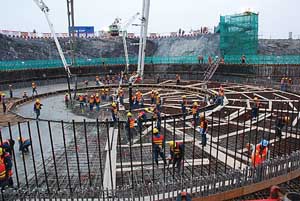
Construction of the world’s first nuclear power plant to use U.S.-based Westinghouse Electric’s AP1000 reactor technology commenced this April in China, with the pouring of 5,200 cubic meters of concrete at the nuclear island at Sanmen in Zhejiang province (Figure 3). The two-unit Sanmen plant will be built in three phases, with the first reactor […]
-
 Coal
CoalPowering the People: India’s Capacity Expansion Plans
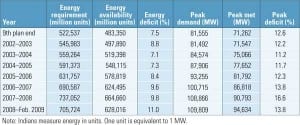
India has become a global business power even though hundreds of millions of its citizens still live in poverty. To sustain economic growth and lift its people out of poverty, India needs more — and more reliable — power. Details of government plans for achieving those goals demonstrate that pragmatism may be in shorter supply than ambition and political will.
-
 Nuclear
Nuclear Uprates Add Critical Capacity
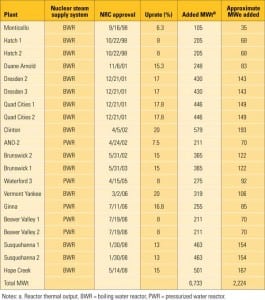
New-generation nuclear plants may be having trouble getting out of the gate, but that doesn’t mean that nuclear capacity additions are at a standstill. In fact, the 104 operating nuclear units in the U.S. have added substantial new capacity in the form of reactor and plant uprates over the past 20 years. Power uprates alone have added more than 5,600 MW since 1998 — the equivalent of five new nuclear plants.
-
 Nuclear
Birth Pangs of the Nuclear Renaissance
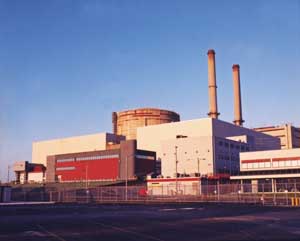
The much-ballyhooed U.S. nuclear renaissance, with a few exceptions, is running late, thanks to the usual Washington bureaucratic quagmire plus the added risk resulting from crumbling financial markets. The future doesn’t look much brighter. The poor outlook for Yucca Mountain and the new administration’s general indifference to nuclear power have made a rebirth of the nuclear industry an even higher-risk proposition than before.
-
 Coal
CoalCERAWeek 2009: Floundering Economy Eclipses Renewable, Carbon Plans
For the past 26 years, Cambridge Energy Research Associates (CERA) has hosted an annual conference in Houston that is world-renowned for its high-profile speakers and attendees’ willingness to exchange ideas and share industry forecasts. The consensus this year was that the power industry remains strong but market and political forces, often working at cross-purposes, make bringing any new power generation to market more problematic than ever.
-
 Nuclear
Toshiba Completes EPC Negotiations for STP
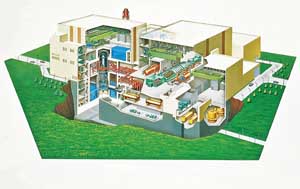
The pace at which next-generation nuclear power is developing in the U.S. accelerated this February as the U.S. arm of Toshiba inked an engineering, procurement, and construction (EPC) agreement with an advanced boiling water reactor (ABWR) nuclear development company jointly owned by NRG Energy and Japan’s Toshiba Corp. The agreement seeks to ensure that the two ABWRs planned to expand the South Texas Project (STP) in Bay City, Texas, will be constructed on time, on budget, and to exacting standards.
-
 Nuclear
Problems Plague Russia’s Nuclear Power Ambitions
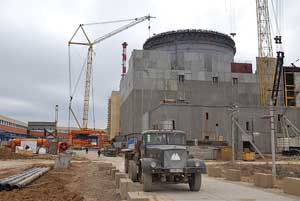
"The Russian Nuclear Industry: Status and Prospects," a February report from a Canadian-based think tank, Centre for International Governance Innovation, examines a revival of Russia’s Soviet-era plans for a massive nuclear expansion within the current state of the country’s nuclear power industry. It concludes that although the industry has been greeted with renewed funding and enthusiasm, achieving its ambitious plans will require the federation to overcome considerable problems and limitations.
-
 O&M
O&MReducing Millirem Exposure
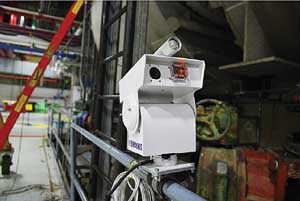
Radioactive materials are clinging to the inside walls of reactor system components because of a noble metals injection process error some years ago at Cooper Nuclear Station (CNS). CNS has launched an aggressive, long-term program to remove the materials, but until the work is successfully completed, the station is also taking extensive measures to protect employees and reduce higher source term dose.
-
Nuclear
900 U.S. Reactors by 2035?
A professor and consultant who has experience and connections with just about every part of the nuclear power world concludes that the U.S. will need to add 900 nuclear reactors in the next quarter century.
-
 Nuclear
China’s Nuke Power Boom
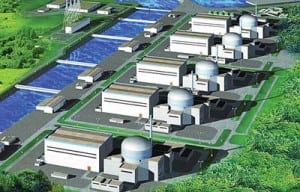
China has put its nuclear power plans on a fast track, kicking off a construction frenzy worth billions of dollars. In the latter months of 2008, the nation inaugurated construction of seven reactors, and in 2009, work will begin on another 10.
-
 Nuclear
Eastern Europe Prepares for Nuclear Revival
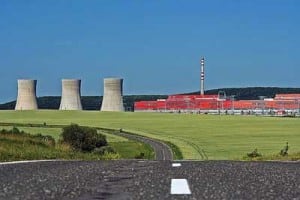
Despite hostilities that linger as a result of the 1986 nuclear nightmare at Chernobyl, Ukraine, and pressure from the European Union to shut down older-generation plants, Eastern European countries from the Baltic to Bulgaria are renovating existing nuclear plants or building new ones. If these projects become reality, the region will be able to secure its power supplies as well as cover the ongoing shortages in countries such as Greece, Macedonia, and Albania.