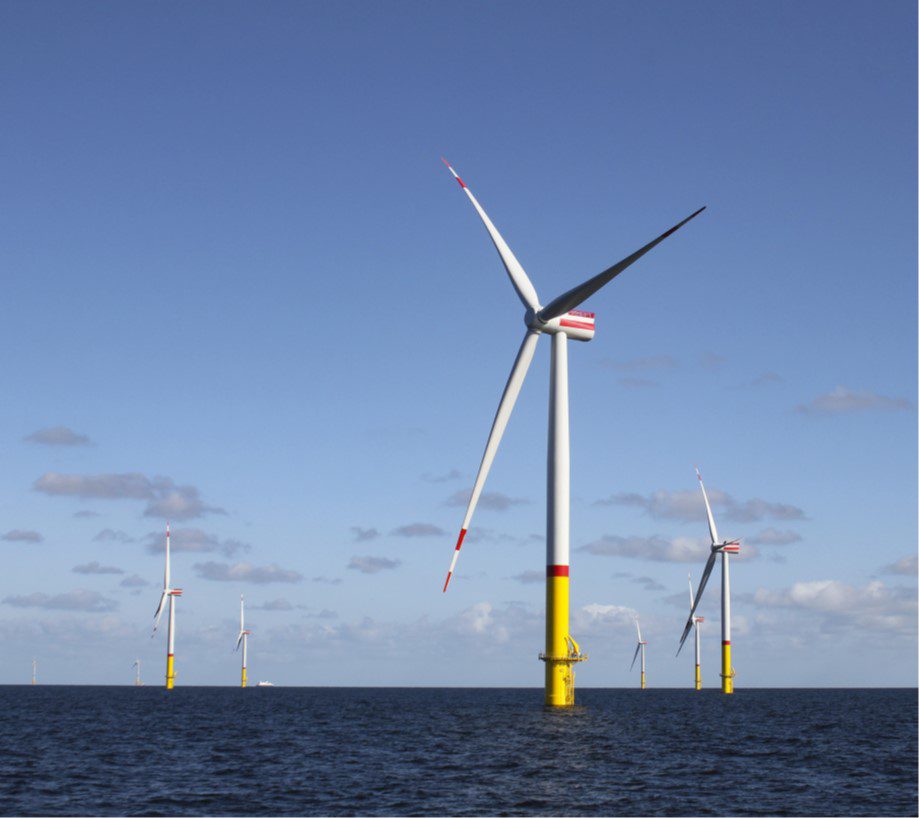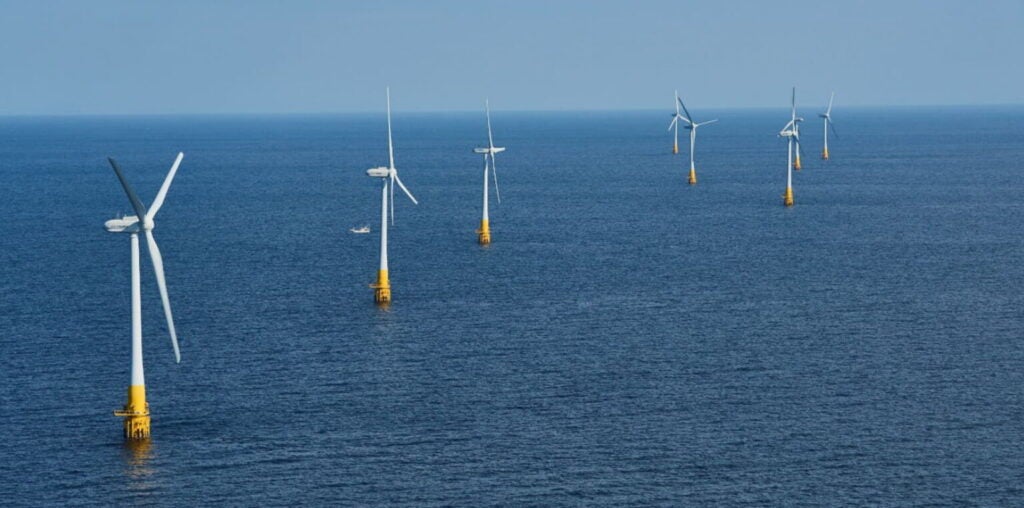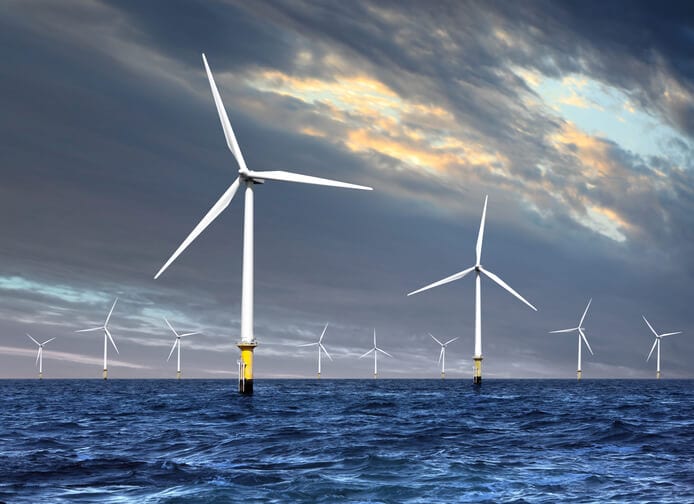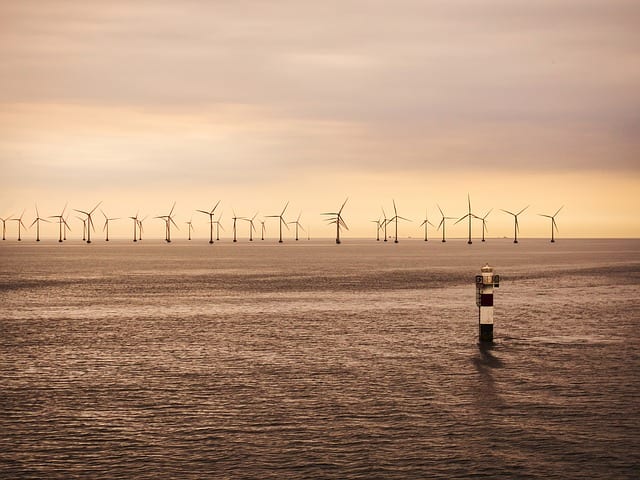
Floating offshore wind farms represent a small but growing sector of global wind power. With the energy producing potential of stronger winds over deeper waters, floating offshore wind is gaining recognition as a key player in meeting increasing energy demands. According to the Global Offshore Wind Alliance, 27 countries have established offshore wind targets for renewable power generation, with at least seven including specific goals for floating offshore wind.
Japan achieved a major milestone earlier this year with its 16.8-MW Goto Floating Wind Farm, which will contribute to the country’s goal of scaling its floating offshore wind capacity to 15-GW by 2040. France’s pilot floating offshore wind project, Éoliennes Flottantes du Golfe du Lion (EFGL), began supplying power in May with three 10-MW turbines. It is intended to lay the groundwork for larger developments in the Gulf of Lion in the Mediterranean Sea. The UK, Portugal, Norway and Korea have also set floating wind targets for the coming decade.
COMMENTARY
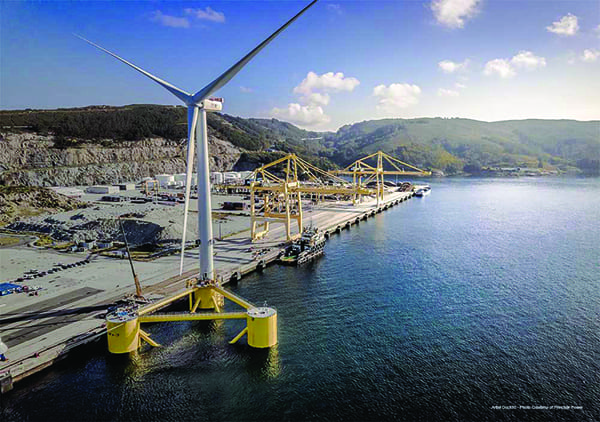
As the technology moves from pilot projects to commercial scale deployments, turbine designs are still developing. Unlike fixed-bottom towers anchored directly to the seabed, floating platforms must include stabilizing solutions to reduce pitch motion. Coupled with the large size of turbine and floating platform components, these hybrid structures combine characteristics of offshore energy platforms and marine vessels in a single asset.
Protection strategies must adapt to the performance, cost and sustainability requirements of the wind power industry. Floating offshore wind projects face intense pressure to reduce levelized cost of electricity (LCOE). Rising capital costs and supply chain disruptions have already delayed or restructured multiple floating wind contracts.
The unique demands of floating offshore wind turbines require a blend of specialized coating systems engineered to help prevent corrosion and extend asset service life in some of the world’s harshest environments. As developers seek to improve project economics, application efficiency and durability through transportation and installation are essential for on-time deliveries. Once installed, coating systems can help minimize maintenance requirements and reduce operating costs.
Floating Turbine Design
Research from the Global Wind Energy Council suggests that 80% of the world’s offshore wind potential is located in waters deeper than 60 meters. While fixed-platform wind turbines become prohibitively expensive at that depth, floating turbines can unlock access to vast new sources of consistent winds.
Early floating turbine concepts borrowed from offshore oil and gas platforms. As floating wind technology has evolved, platform design options have expanded to address the dynamic forces generated by wind turbines and ocean waves. Dozens of platform designs have been researched, and more than 20 have been tested in the field.
Some designs utilize moorings for stabilization, such as the tension leg platform, while others rely on ballast tanks to stabilize the structure. Ballast helps lower the center of gravity to reduce pitching. Semi-submersibles use columns connected by braces, and spar-buoy designs use a long ballasted draft to resist wave forces. These structures add complexity for the application and performance of protective coatings, which begin to face demanding conditions before they are even installed.
Production Logistics
Many floating wind turbine components require wet storage during staging and assembly. Unlike monopiles that can be stored on land until installation, floating tanks and platforms may spend weeks or months in staging or integration ports while waiting for other components or fair weather conditions. Completed structures are then towed out to wind farm sites by anchor handling tug supply (AHTS) vessels.
During wet storage, submerged components are vulnerable to marine fouling, just like marine vessels during idling. Throughout transportation and installation, coatings face abrasion, mechanical impact and seawater exposure.
Marine Technologies
To address these challenges that marine vessels face every day, floating wind turbines can employ proven marine coating technologies.
Fouling from marine organisms such as algae or barnacles can damage coating integrity, leading to corrosion on steel substrates. It can also affect transportation efficiency. Increased drag during tow-out operations requires greater vessel power and fuel consumption, contributing to higher operational costs and GHG emissions.
As a result, anti-fouling coatings used on marine vessel hulls provide valuable benefits for floating wind turbines. These coatings are designed to prevent the attachment of marine fouling and reduce drag while also providing a durable finish for reduced maintenance.
Ballast tanks are another critical area that can take advantage of marine coatings. These internal compartments experience continuous seawater exposure and are difficult to access for inspection and maintenance. Water ballast tank coatings for vessels are designed to meet IMO Performance Standard for Protective Coatings (PSPC) requirements for corrosion protection.
Reinforced Epoxy Coatings
Epoxy coatings have served as the foundation of offshore corrosion protection systems because of their strong adhesion and durability. In offshore wind applications, glass-flake reinforced systems are commonly specified to protect turbine components in the splash zone.
New formulations of high-build epoxies provide comparable abrasion resistance to traditional glass flake coatings with improved application properties, including better sprayability and extended pot life. Versions made without solvents have also been developed to offer low-VOC content while complying with NORSOK and ISO standards for protective coatings used in offshore structures, and have been selected for use in certain floating wind prototypes expected to go online later in 2026.
Corrosion Protection Strategy
As floating offshore wind scales globally, asset protection strategies are evolving into a multidisciplinary challenge that draws from both marine and energy sector experience. Developers are pursuing integrated approaches that combine antifouling technologies, ballast tank protection and high-performance epoxies into coordinated corrosion management strategies.
With floating wind expected to play a major role in future offshore renewable energy deployment, the long-term reliability of these protective systems will become an increasingly important factor in controlling lifecycle costs for the offshore wind industry.
—Kahina Ouchaou is Global Product Manager at PPG. For more information, visit ppg.com/pmc.