
Articles By

-
-
Poor priorities
I couldn’t help but marvel at the synchronicity of two unrelated events over the past few weeks. The first, on January 12, was the rare cancellation of a major military acquisition program with problems called "too expensive to fix." It takes an Act of Congress to kill most military contracts due to the pork flowing […]
-
-
 Gas
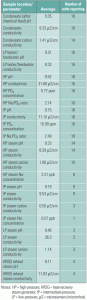
GasFleetwide standardization of steam cycle chemistry
Nearly five years ago, a major IPP began standardizing steam cycle chemistry feed, control, and monitoring across its combined-cycle fleet. This article discusses the steps taken, the costs incurred, and the technical and financial benefits achieved. Although the project focused on non-cogeneration plants, the findings detailed below are broadly applicable to other kinds of plants. However, the specific implementations (especially of the chemistry standards) described may have to be modified slightly for application to cogen plants.
-

-
 Coal
CoalGas turbine "refueling" via IGCC
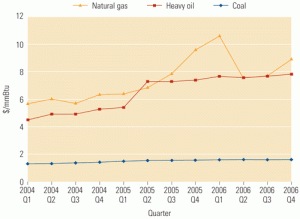
The jury is still out on the economic and technical feasibility of burning gasified coal to generate electricity. Gasification technology has yet to be proven on a utility scale, especially with Powder River Basin coal as the feedstock. And on the generation side, there are more questions than answers about the capital cost and availability of integrated gasification combined-cycle (IGCC) plants. But with natural gas prices high and rising, it’s definitely worth examining whether it would be economically and technically feasible to convert the existing U.S. fleet of gas-fired combined-cycle plants to burn gasified coal.
-
 Coal
CoalConstant and sliding-pressure options for new supercritical plants
Sliding-pressure, supercritical plants are all the rage. They generally include certain design features developed for markets and operating environments outside the U.S., where new coal-fired plants have been built in recent decades. U.S. market conditions are different, and considerable capital cost savings—with negligible operating cost differences—are possible if technology options are considered for the next wave of supercritical and ultra-supercritical steam plants.
-
 Coal
CoalCCPI bears first fruit
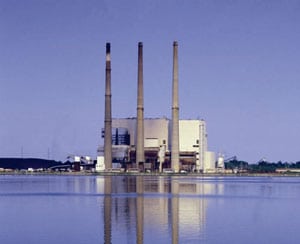
In 2002, the Bush administration launched the Clean Coal Power Initiative in the hope that it would develop the missing technology piece of the cleaner energy puzzle. Four years and two rounds later, the U.S. electric power industry is seeing the first usable clean coal technologies emerge before its eyes.
-
 Instrumentation & Controls
Understanding refractory failures
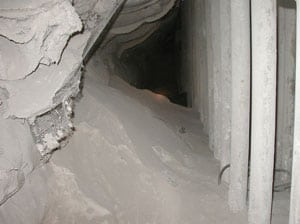
Compared to most pieces of a power plant, refractory costs very little to install. Yet, if improperly manufactured, specified, stored, mixed, installed, cured, or dried, refractory may cause problems that can significantly decrease a plant’s operating efficiency and flexibility. Like Rodney Dangerfield, refractory design and installation deserve more respect.
-
Environmental
The power of one
The 35th birthday of the Environmental Protection Agency (EPA) passed last December 2 with little fanfare. EPA Administrator Stephen L. Johnson noted at the time that, "Over the last three and a half decades, through the use of innovative and collaborative approaches to environmental protection and a commitment to responsible stewardship, we have made remarkable […]
-
 Gas
GasFrame 6C debuts in Turkey
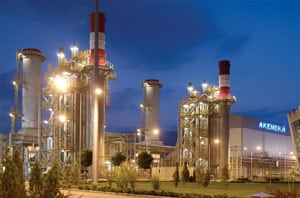
GE Energy’s latest "first" is in Turkey, where the Frame 6C gas turbine-generator—a younger cousin of the popular Frame 6B—has made its commercial debut. The turnkey 130-MW combined-cycle plant, called the GE206C, comprises two 40-MW Frame 6Cs, one GE steam turbine-generator, two heat-recovery steam generators, and a distributed control system. The gas-fired plant (Figure 1), […]
-
 Wind
WindAtlantic City bets on renewables
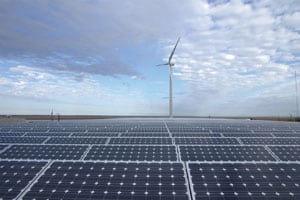
New Jersey’s gaming mecca is hosting one of the largest hybrid (solar-wind) power plants in the world (Figure 3). The Jersey-Atlantic Wind Farm, with 7.5 MW of wind capacity and 0.5 MW from photovoltaic (PV) cells, is expected to generate 20,000 MWh annually. That should be enough to power an adjacent wastewater treatment plant operated […]
-
 Hydro
HydroPeru commissions hydro plant
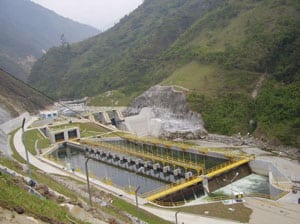
The 130-MW Yuncán hydroelectric plant (Figure 4) has come online in Peru about 210 miles northeast of Lima. To show his support for the project, Peruvian President Alejandro Toledo Manrique attended the inauguration ceremony. Yuncán was commissioned just 21 months after the Peruvian government awarded a 30-year contract to operate the plant to EnerSur, the […]
-
 Business
New edition of steam plant bible
The long-awaited 41st edition of Babcock & Wilcox Co.’s (B&W’s) Steam: Its Generation and Use (Figure 5) is now available for ordering on the company’s web site, www.babcock.com. The release of the book is worth noting by power plant engineers for two reasons: The tome is the world’s longest continually published (since 1875) engineering text, […]
-
Business
Correction
In "U.S. utilities driving for a license" (November/December 2005), we wrote that Bechtel Corp. is part of the UniStar consortium. Bechtel Corp. is not a member but is working for UniStar as a contractor.
-
 Instrumentation & Controls
Long-term catalyst health care
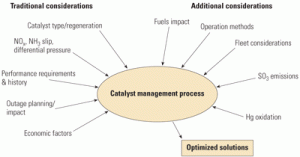
Now that many U.S. selective catalytic reduction (SCR) systems are in their fifth or sixth year of operation, a number of utilities are shifting their attention from implementing the technology to operating and maintaining it. Catalyst management and performance are key to the successful operation of any SCR system.
-
 Business
Catalyst regeneration: The business case
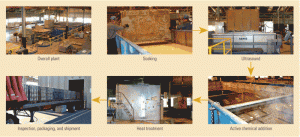
As an alternative to purchasing new catalyst, technological and economic advantages make a compelling case for regenerating rather than replacing the metal or ceramic that enables selective catalytic reduction systems to capture NOx.
-
 Business
The 2005 Global Energy Awards
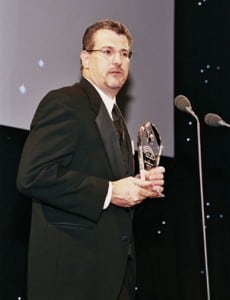
The Roosevelt Hotel in New York City was the site of the 2005 Platts Global Energy Awards (GEA). The seventh annual black-tie soiree was the most global ever. Some 400 top executives from more than two dozen countries on five continents gathered at the Roosevelt on December 1, 2005, to honor the energy industry’s "Best […]
-
 Coal
CoalEstimating SCR installation costs
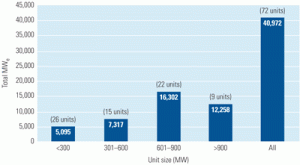
The EUCG surveyed 72 separate installations of selective catalytic reduction (SCR) systems at coal-fired units totaling 41 GW of capacity to identify the systems’ major cost drivers. The results, summarized in this article, provide excellent first-order estimates and guidance for utilities considering installing the downstream emissions-control technology.
-
 Legal & Regulatory
Gas storage investment stymied
The U.S. needs to add 600 to 800 billion cubic feet (Bcf) of natural gas storage capacity ASAP. Independent storage providers (ISPs) are the entities best equipped to build this needed infrastructure, but they continue to be restrained by anachronistic regulatory policies. The Federal Energy Regulatory Commission’s (FERC’s) December 2005 rule-making to modify its […]
-
O&M
Focus on O&M (February 2006)
CFB refractory repair; Upgrading conductivity monitoring; Low-cost maintenance of spinning reserve
-
O&M
Duck and cover!
FACILITIES MAINTENANCE Duck and cover! Tippi Hedren learned the hard way—in Alfred Hitchcock’s 1963 classic, "The Birds"—the damage that a flock of angry seagulls can do. But what do you do when 6,000 starlings suddenly invade your power plant? Hide the birdseed and run for cover! Like any conscientious company, PacifiCorp works hard at keeping its […]
-
 Environmental
New edition of Steam Plant Operation
For more than 70 years, Steam Plant Operation (Figure 3), published by McGraw-Hill Professional (like Platts, the publisher of POWER, a division of The McGraw-Hill Companies Inc.), has been the bible of steam plant system design, installation, operation, maintenance, and repair. The new eighth edition of this classic reference book is now available. 3. […]
-
 Business
Cascadia’s newest highway
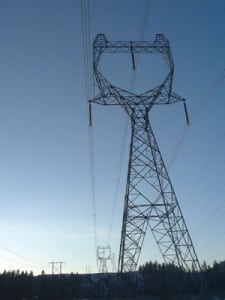
The reliability of service to millions of electricity consumers from Puget Sound to Portland improved significantly with the completion of the 84-mile-long, 500-kV Grand Coulee–Bell transmission line (Figure 4). The new path removes a major bottleneck between Spokane and Grand Coulee Dam and points west. 4. Breaking the bottleneck. The Bonneville Power Administration’s 84-mile, […]
-
Business
Bay Area T&D upgrade
In early December 2004, the Portrero substation received an early Christmas present. It was a shiny new static VAR compensator (SVC) from ABB (Raleigh, N.C.) that will improve the stability of the grid serving the San Francisco Bay Area. The SVC, which was commissioned on December 10, will help stabilize the grid’s voltage during peak […]
-
 Waste to Energy
Gas-fired tomatoes
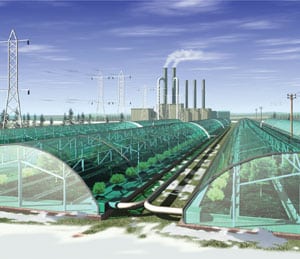
Abating the emissions of power plants is a very hot topic these days. So it’s not surprising that people are coming up with innovative ways to not only cut emissions but also make money from them. The latest brainstorm comes from—where else—the Massachusetts Institute of Technology, where Moshe Alamaro, an atmospheric scientist, has come up […]
-
Solar
Tapping the western sun
In an effort to tap the significant solar energy resources of New Mexico, Arizona, Nevada, California, Utah, Texas, and Colorado, the U.S. DOE will support efforts to install a total of 1,000 MW of concentrating solar power (CSP) systems over the next five years. "This initiative will provide a substantial engine for economic development, job […]
-
 Business
Correction
In our January/February 2005 story "The 2004 Global Energy Awards" we incorrectly identified the award received by Constellation Energy. The correct caption follows. The 2004 Energy Company of the Year Award went to Constellation Energy. Constellation is one of the largest wholesalers of electricity in the U.S. and a leading supplier of power to large […]
-
Environmental
Politics plagues pollution plans
Enforcement and (re)interpretation of the Clean Air Act’s new source review (NSR) rules will likely come into focus later this year as many of the key lawsuits against electric utilities are resolved. "It’s going to be a big year for NSR whether you’re a litigator, regulator, lawmaker, or member of the industry," says Tom Sansonetti, […]
-
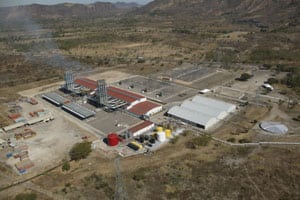 Coal
CoalHonduras’ big new oil-fired plant
The 267-MW Pavana III power plant (Figure 1) was officially inaugurated on January 28 by Honduran President Ricardo Maduro. It was built by Helsinki-based Wärtsilä Corp. for Tegucigalpa-based independent power producer (IPP) Luz y Fuerza de San Lorenzo S.A. (Lufussa). 1. From Finland to Central America. The new 267-MW Pavana III power plant […]