
Articles By

-
 Commentary
The electricity challenge of the 21st century
When tackling a problem, engineers bring both skepticism and optimism to the task. As the nation’s electric power engineers look to fill America’s looming capacity gap, they will need to apply healthy doses of both. The U.S. Department of Energy’s Energy Information Administration (EIA) projects a 50% increase in electricity demand over the next 25 […]
-
 Business
A rearview mirror and bright headlights
This month’s issue of POWER commemorates 125 years of continuous publishing for the power generation business. The anniversary gives us all a chance to assess where we’ve been and where we’re going as a publication and as an industry. As power industry professionals, we all know the value of a rearview mirror—of remembering lessons […]
-
 Coal
CoalGlobal Monitor (May 2007)
World’s largest PV plant now in Portugal; latan 2 construction may resume; Allegheny to scrub Fort Martin plant; TVA will clean up big Dutch CC plant; Connecticut blesses six fuel cell projects; DOE approves IGCC plant in Florida; FERC relicenses Osage hydro plant; A nanotech perpetual motion machine?; POWER digest
-
 O&M
O&MFocus on O&M (May 2007)
Cyber security and the grid; Harnessing the Yangtze;
Hydraulic system overhaul;
O&M problems not caused by cycling;
-
 Legal & Regulatory
States should cede control of renewable power to regional markets
State policy makers are characteristically reluctant to recognize that they have advanced a policy as far as they can, and that they must cede some control to fully realize its ultimate benefits. Ceding control often runs counter to policy makers’ political instinct to serve their constituents. Doing so is even harder when a new […]
-
 Business
The history of POWER is the history of power
This month we officially commemorate the 125th anniversary of the magazine that has been essential reading for owners and operators of power generating plants. As you read this brief history, you’ll see that—although we’re looking back at an illustrious past—the secret of POWER’s success has been its commitment to the future. As we look forward to the next milestone anniversary, we anticipate covering the latest developments in a new generation of power technologies. As always, our mission is to provide the best information and advice in the service of safely and efficiently powering the global energy industry.
-
 Waste to Energy
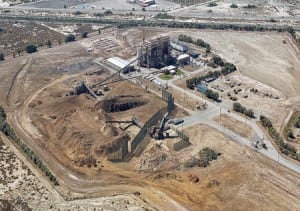
Experts ponder future of biomass industry
This month we officially commemorate the 125th anniversary of the magazine that has been essential reading for owners and operators of power generating plants. As you read this brief history, you’ll see that—although we’re looking back at an illustrious past—the secret of POWER’s success has been its commitment to the future. As we look forward to the next milestone anniversary, we anticipate covering the latest developments in a new generation of power technologies. As always, our mission is to provide the best information and advice in the service of safely and efficiently powering the global energy industry.
-
 Nuclear
Transfer ABWR construction techniques to U.S. shores
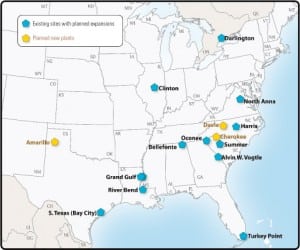
Advanced boiling water reactor (ABWR) construction practices honed in Japan aren’t just impressive, they’re also eminently suitable for the fleet of new units planned for the U.S. Conceptually, these techniques show the transition from "construction" to "manufacturing" that has already taken place in other industries.
-
 Instrumentation & Controls
Reduce stress with proper on-line rotor temperature monitoring
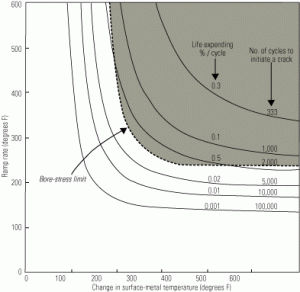
On-line temperature monitoring of steam turbine rotors must be based on modeling thermodynamic processes—not direct temperature measurements. Good operating decisions can significantly extend the life of aging turbines, particularly those that are routinely cycled or operated at their maximum ramp rates.
-
 Instrumentation & Controls
Water chemistry an important factor to consider for cycling HRSGs
Operators of combined-cycle plants that have been pressed into cycling service should make sure that the aqueous diet of their steam generators—especially heat-recovery steam generators—fits the plants’ more active lifestyle. Following are some tips for keeping your HRSGs’ water treatment regimen in tip-top shape. These prescriptions can keep the units vital longer and make them subject to fewer unexpected failures.
-
 Instrumentation & Controls
DG interconnection standards remain elusive
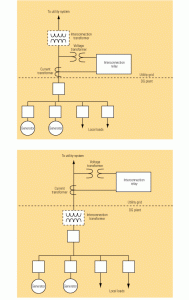
The state of interconnection standards for distributed generation plants remains disconcerting to many prospective owners of such plants. IEEE 1547 has been in place for several years and appears to be the best option in a field of competing standards. But IEEE 1547 is an imperfect standard; it holds at least six holes. Here are some suggestions for filling them.
-
 Instrumentation & Controls
Controlling shaft voltages
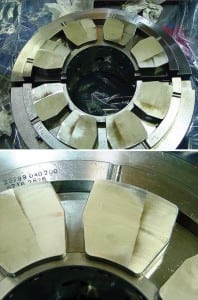
Contrary to public belief, the most common electrical phenomenon produced by a power plant’s steam turbines, turbine-driven compressors, and pumps isn’t sparks or lightning bolts. It’s static electricity. The physical effects of static electricity—greater vibration and higher temperatures—can damage bearings, shaft journals, couplings, and gears enough to cause a forced outage. A few inexpensive instruments in the hands of a well-trained technician can prevent "frosting" and "worm tracks" in your babbitt bearings. We’ll start the training right now.
-
 Business
Could SuperCables deliver both hydrogen and electricity via a SuperGrid?
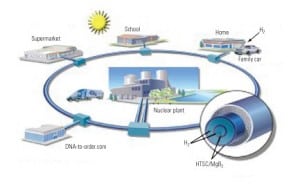
Transporting large quantities of electric power over long distances via superconducting DC cables was first considered more than 40 years ago by two IBM scientists. With the recent advent of long-length commercial high-temperature superconductors (HTSCs) and the desire to move the U.S. to a hydrogen-based economy, SuperCables could revolutionize the marketing of electricity. Using HTSCs cooled by hydrogen, a SuperCable could simultaneously deliver electricity and hydrogen to end users for domestic and industrial consumption and to power fuel cell cars.
-
 Marmaduke
Marmy’s Egyptian nightmare
Steve Elonka began chronicling the exploits of Marmaduke Surfaceblow—a six-foot-four marine engineer with a steel-brush mustache and a foghorn voice—in POWER in 1948, when he raised the wooden mast of the SS Asia Sun with the help of two cobras and a case of Sandpaper Gin. Marmy’s simple solutions to seemingly intractable plant problems remain timeless. This story originally appeared in 1950. Two years later, one of its key characters, King Farouk, abdicated the Egyptian throne to his infant son following a military coup.
-
 Business
This month in POWER…
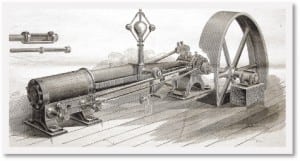
May 1885 POWER reported on the latest Twist Automatic Engine (Figure 1) in its cover story for the May 1885 issue. The editor explained that "each end of the cylinder has one main valve, for admission and exhaust, and one cut-off valve; all being plugs with partial rotary movement; and the cut-off valves being within […]
-
 Commentary
Keep grid modernization a national priority
As the possibility of national climate change legislation increases on Capitol Hill and captures the attention of the electric power community, I am concerned that regulators, legislators, and utility executives will forget the urgency of modernizing the U.S. electricity delivery infrastructure. On the surface, the issues of reducing greenhouse gas emissions and upgrading and […]
-
 News
NewsNot your grandfather’s power industry
In 1882, Americans talked of John L. Sullivan, the bare-knuckles boxing heavyweight champion of the world, as horse-drawn carriages jingled along city streets. The spidery cables of the Brooklyn Bridge spanned the East River and hundreds of workmen scrambled to complete the great project. Railroads crossed the continent, but sporadic Indian warfare still plagued […]
-
Coal
Speaking of Coal Power: Illinois Coal Poised for Comeback
Sylvester Stallone, as Rocky Balboa, staged another magical comeback earlier this year — in the ring and at the box office. Just when you think Rocky is down and out for good, the sixth release of the Rocky franchise just may be the best of the lot. "Down but not out" is also an apt […]
-
 Coal
CoalThe Coal Patrol: Coal-to-Liquids Resurfaces after 20 Years
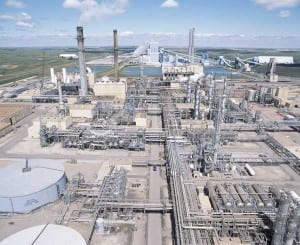
It’s déjà synfuels all over again. With crude oil prices seemingly interminably pegged at over $60 a barrel, the old, beguiling notion of turning coal into liquid fuel — a task accomplished by the Nazis in the 1940s and the South Africans in the 1970s and 1980s — is once again front-page political news in […]
-
Coal
PRB Tech Notes: Pay Me Now or Pay Me Later
Money is always spent with the best intentions. We look for the best deal, often identifying it by the lowest price. Sometimes, our choice works out and we save money and get a great product. When it doesn’t work out, however, we find ourselves spending more and more money to repair or replace our "great […]
-
 O&M
O&MCoal Plant O&M: River Locks and Barges Are an Aging Workforce, Too
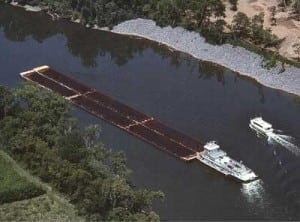
During 2005, about 150 million tons of coal were transported to power plants by hopper barges plying U.S. inland waterways. With coal-fired plants expected to continue producing 50% of America’s electricity, coal barge traffic is not likely to fall off. In fact, it may increase, for two reasons. One is cost. Shipping coal by barge […]
-
 O&M
O&MPollution Control: LCRA Fayette Lowers NOx Below 0.10 lb/mmBtu
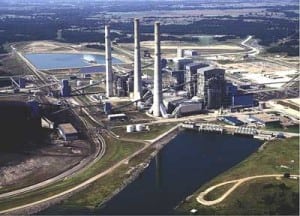
The Fayette Power Project (FPP, aka the Sam K. Seymour Power Station) is a three-unit, coal-fired generating plant sited near La Grange, Texas (Figure 1). Units 1 and 2, each with a nominal rating of 600 MW, are co-owned by the Lower Colorado River Authority (LCRA) and Austin Energy (AE). LCRA is a conservation and […]
-
 O&M
O&MPollution Control: Low-NOx Combustion Retrofit Options
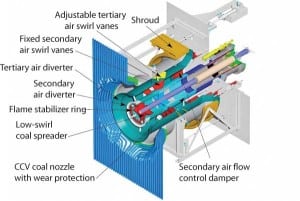
Reducing NOx emissions from large utility coal-fired boilers has been a primary focus of the U.S. power generation industry since passage of the 1970 Clean Air Act and subsequent legislation. By the early 1990s, nearly all such boilers had installed some form of low-NOx burner (LNB) technology and/or overfire air (OFA) — the least expensive […]
-
Coal
The Coal Pile
Ninety years ago America was at war, and producers of coal (principally anthracite) were struggling to meet demand. It’s hard now to conceive of coal as the universal fuel, but there was a time when it was used in the U.S. to heat homes, schools, and libraries as well as to make steel and manufacture […]
-
 News
NewsThis month in POWER…
April 1884 POWER reported on the latest offering from Philadelphia-based Southwark Foundry and Machine Co. (Figure 1) as its lead story. "This is a self-contained, high speed automatic cut-off engine. It has been designed with special reference to simplicity, and solidity of parts, and to heavy and continuous work. 1. The Southwark engine was the […]
-
 Commentary
Full-service utilities prove their value
During the past year, the debate over the structure of the nation’s electricity systems has continued at a steady clip. It seems that almost every month a new study or report is issued that proclaims the advantages or disadvantages of one market structure over another. Although a report or study may have value, the Community […]
-
 O&M
O&MFocus on O&M (April 2007)
Control pollution and slagging on a shoestring / Keeping HRSGs young, cool, and clean / Natural air conditioning
-
 Legal & Regulatory
How direct access would improve electricity supply
The debate over retail choice has resurfaced, triggering in the minds of many consumer advocates California’s failed deregulation attempt and its fallout—rolling blackouts, bankrupt utilities, and government bailouts with crippling long-term consequences. Before allowing a chorus of "oh no, not again" to cloud the debate, state policy makers should realize that allowing generators to […]
-
 Nuclear
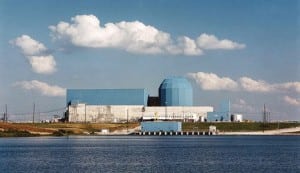
Charlie Brown, nukes, and the football
The term "nuclear renaissance" is on the lips of many in the nuclear power industry today, for good reason. The federal executive branch is friendly to nukes; a nationwide shortage of baseload generation looms; the nuclear industry has vastly improved its performance in running its 20th-century plants; and a new generation of plant designs is ready for the road.
-
 Coal
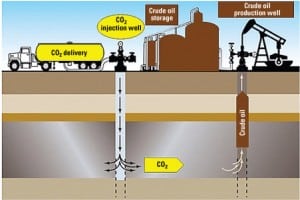
CoalExploring the many carbon capture options
Carbon capture and sequestration have many technical hurdles to leap in coming years. The capture and reuse of CO2 to enhance oil recovery preceded the current clamor over climate change, and that experience is often used as an example that the process is a viable way to handle this greenhouse gas. This article explores options for the first part of the process: CO2 separation and capture.