
Articles By

-
Coal
Fourth Circuit Scuttles NC Air “Nuisance” Suit
Scuttling a high-profile “public nuisance” lawsuit, a federal appeals court has reversed a lower court ruling that required the Tennessee Valley Authority to accelerate plans to install pollution controls at four TVA coal-fired power plants to reduce the amount of pollution blowing into western North Carolina, saying the lower court decision could lead to other public nuisance suits that would wreak havoc on federal and state regulatory regimes for combating air pollution.
-
Coal
House Members Warn EPA on Coal Ash
Saying they have “grave concerns” about the agency’s two-option proposal to regulate coal combustion ash, 31 members of the House Energy and Commerce Committee have urged the Environmental Protection Agency to continue to regulate coal ash as a non-hazardous waste, saying an EPA proposal to designate it as a “special” hazardous waste eligible for reuse would lead to costly and unnecessary management and disposal requirements.
-
Coal
AEP Blasts EPA Transport Rule; PSEG Supports It
An Environmental Protection Agency proposal to tighten sulfur dioxide and nitrogen oxides limits in 31 states and the District of Columbia to address transported air pollution fails to give utilities and state air regulators sufficient time to develop rules and install controls, according to American Electric Power Co. Officials from the EPA and New Jersey-based Public Service Enterprise Group said utilities already had begun making investments to cut emissions and they believed the agency’s compliance schedule could be met.
-
 O&M
O&MWind Integration: Does It Reduce Pollution and Greenhouse Gas Emissions?
Many claim that wind generation is beneficial because it reduces pollution emissions and does not emit carbon dioxide. This isn’t necessarily the case. When wind is introduced into a generation system that uses carbon technologies to back up the wind, it actually reduces the energy efficiency of the carbon technologies.
-
O&M
Power 101: Flue Gas Heat Recovery in Power Plants, Part III
Every power engineer must have a firm grasp of the rudiments of how fuel is processed to produce electricity in a power generation facility. With this article, we conclude our three-part series on the essentials of recovering heat from flue gas to dry and process coal, with the goal of improving overall plant operating efficiency.
-
 O&M
O&MImprove Furnace Reducing Atmosphere Using Fuel/Air Ratio Control
Progress Energy has incorporated online combustion optimization/tuning to eliminate furnace reducing atmospheres at its Asheville Plant. The optimization project utilized individual burner airflow measurement and continuous burner coal flow measurement to adjust burner air/fuel ratios. The result: significantly improved boiler combustion.
-
Commentary
Texas to EPA: Follow the Law
The EPA, determined to regulate U.S. carbon dioxide emissions under the Clean Air Act, found that the low limits set by the Act for any “regulated pollutant” led to, in the EPA’s words, “absurd” results. Undeterred, the EPA developed the “Tailoring Rule,” which reinterprets the Act to apply to only larger emissions sources. Texas eloquently rejected the EPA’s legal gymnastics.
-
News
WCI Releases Comprehensive Plan for Regional Cap-and-Trade Program
California, New Mexico, and three Canadian provinces—partners of the Western Climate Initiative (WCI)—last week released a detailed plan for a regional cap-and-trade program to curb greenhouse gases (GHG) starting in January 2012. If the plan reaches fruition, it would be three times larger than a program under way in 10 eastern states.
-
Smart Grid
Hawaii PUC Rejects Smart Grid Proposal
Hawaii’s Public Utilities Commission (PUC) last week denied a request by Hawaiian Electric Co. (HECO) to extend pilot testing for its advanced metering infrastructure (AMI) project to 5,000 more smart meter because of cost concerns. The move poses a major hurdle for the utility’s overall smart grid initiative.
-
News
AWEA: New Wind Capacity Additions Plunge in 2010, Outlook Dismal
Only 700 MW of wind power were added in the U.S. during the second quarter of 2010—a drop of 57% and 71% when compared to second quarter numbers from 2008 and 2009, respectively, the American Wind Energy Association (AWEA) reported last week.
-
News
N.Y. and Penn. to Sue Coal Power Plant for Drifting Air Pollution
New York state and Pennsylvania’s Department of Environmental Protection (PADEP) plan to sue Homer City Station, a 1,884-MW coal-fired power plant in Pennsylvania, for its alleged contributions of the region’s sulfur dioxide emissions.
-
News
DOE Finalizes Hawaii Wind Guarantee, Offers $17 M to N.Y. Energy Storage Project
The Department of Energy last week finalized a $117 million loan guarantee for a 30-MW Hawaiian wind power plant, and this week it said it would offer a $17.1 million loan guarantee to support construction of a 20-MW energy storage system using lithium-ion batteries.
-
 Coal
CoalCleco’s Madison Unit 3 Uses CFB Technology to Burn Petcoke and Balance the Fleet’s Fuel Portfolio
With commercial operation of Madison Unit 3, Cleco Power now claims bragging rights for owning the largest 100% petroleum coke–fired circulating fluidized bed power plant in North America. For using readily available fuel in an environmentally attractive manner, adopting fuel-flexible combustion technology, balancing the utility’s generation portfolio, and adopting an innovative fuel-handling system design, Madison Unit 3 is the winner of POWER’s 2010 Marmaduke Award for excellence in operation and maintenance. The award is named for Marmaduke Surfaceblow, the fictional marine engineer and plant troubleshooter par excellence.
-
News
Evaluating Materials Technology for Advanced Ultrasupercritical Coal-Fired Plants
A national R&D program has been under way to develop materials technology for constructing boilers and turbines capable of operating at advanced ultrasupercritical steam conditions in pulverized coal plants. The large-scale, multiyear, joint government/industry project seeks to increase the efficiency of power plants by increasing their steam conditions up to 1,400F (760C) at 5,000 psi (35 MPa). The ongoing project has already identified the materials and processes for successful operation at these higher steam conditions.
-
 O&M
O&MReal-Time Monitoring System Measures Air In-Leakage
The amount of air leaking into the boiler envelope is difficult to estimate. Traditional methods of measuring oxygen at the furnace exit and economizer exit do not account for all types of air leakage. By using molar calculations and total airflow measurement, a good approximation of the total air in-leakage rates of a boiler can be quickly determined using station instruments.
-
News
The Edison of 1879
The cover of the July 5 special History Issue of TIME magazine features Thomas Edison holding a glowing bulb. A series of articles celebrate Edison’s many inventions and closes with this: “Edison’s laboratories were the forerunners of the interactive technological think tanks of Apple, Google, and Microsoft.” Though the sentiment lauds Edison, I think it’s an overstatement.
-
Coal
Advanced SCR Catalysts Tune Oxidized Mercury Removal
Catalysts used in selective catalytic reduction (SCR) systems in utility boilers provide high NOx removal efficiencies that routinely exceed 90%. A major co-benefit of applying SCR to coal-fired power plants is that the SCR catalyst also oxidizes the vapor phase mercury from an elemental form to a soluble ionic form, which can be readily captured in a downstream flue gas desulfurization process. Mitsubishi Heavy Industries and Cormetech have developed an advanced SCR catalyst technology with high mercury oxidation activity capable of achieving 95% oxidized mercury over a wide range of operating conditions.
-
News
Corrections (August 2010)
In “Dry Injection of Trona for SO3 Control” (May 2010), NH4HSO4 is ammonium bisulfite. In the June “Focus on O&M,” the engines shown in Figure 6 each have eight cylinders. June’s “Competition for Offshore Turbine Market Heats Up” stated that drive or gearless turbines accounted for 14% of the world’s installed offshore capacity in 2009. […]
-
 Gas
GasHigh-Efficiency Gas Turbines Go to Market
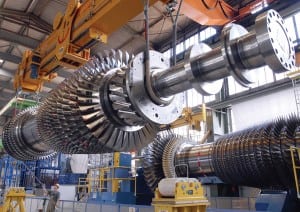
This May, following two years of construction, Siemens Energy put into operation Irsching 5, an 847-MW advanced combined-cycle power plant near Ingolstadt, Germany. The plant’s owner, Gemeinschaftskraftwerke Irsching GmbH—a joint venture of E.ON, Mainova, and HEAG Südhessische Energie—features two SGT5-4000F gas turbines, one SST5-5000 steam turbine, three hydrogen-cooled generators, electrical systems, and Siemens’ SPPA-T3000 instrumentation and control system.
-
O&M
Work Process Optimization: Meeting the Challenge of Change
The competitive push for more efficient power generation prompted the management of East Kentucky Power Cooperative’s Spurlock Station to provide training and to implement standardized work processes in order to achieve higher productivity. To that end, Spurlock’s management collaborated with salaried and hourly personnel to design and implement work process optimization. Two years later, their proactive, operations-driven culture is promoting continuous improvement at this facility.
-
 Nuclear
Russia’s Nuclear Mission
Nearly a quarter-century after the Chernobyl nuclear power station disaster in Soviet Ukraine, Russia has been making deals with energy-starved nations all over the globe to help them build new nuclear power plants using Russian second-generation reactor technology.
-
Marmaduke
Marmy, a Horse, and Compressors
Steve Elonka began chronicling the exploits of Marmaduke Surfaceblow—a six-foot-four marine engineer with a steel brush mustache and a foghorn voice—in POWER in 1948, when Marmaduke raised the wooden mast of the SS Asia Sun with the help of two cobras and a case of Sandpaper Gin. Marmy’s simple solutions to seemingly intractable plant problems remain timeless. This Classic Marmaduke story, originally published more than 50 years ago, illustrates that although solutions may be easy to identify, the challenge is often in the implementation. Sometimes a little horse sense is all that is necessary.
-
 Coal
CoalCanada to Shutter Older Coal Plants
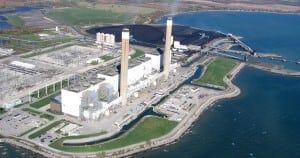
While the U.S. awaits congressional action on a cap-and-trade program that could possibly be limited to just the utility sector, Canada is moving, starting in 2011, to phase out older coal power plants and replace them with natural gas–fired plants. The announcement, made this June by Environment Minister Jim Prentice prior to the G8 and G20 summits, could have serious implications for coal-fired generators in the country.
-
 Coal
CoalLean Construction Principles Eliminate Waste
Eliminate waste in coal, gas, or nuclear power plant construction through a holistic application of lean principles.
-
 Nuclear
AREVA Installs Finnish EPR Reactor Vessel
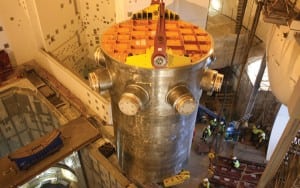
This June, AREVA installed the reactor pressure vessel (Figure 6)—the core of the unit—at the world’s first EPR project, which is under construction in Finland. Now the company will engage in a flurry of installation activities for heavy nuclear components, including lifting into the reactor the first of the four steam generators. Most of the work is expected to be completed by the end of 2012, with power production beginning in 2013.
-
 News
NewsOptimized Pressure Transmitter
ABB’s new 266 series is an optimized pressure transmitter family that combines modern electronic pressure measurement with the company’s unique human machine interface (HMI) in one common product series, providing base accuracy from ±0.025% to ±0.06%. The series offers the industry’s best draft range, ABB claims. For combustion airflows, this means exceptional resolution with tighter […]
-
 Hydro
HydroWave Energy Device to Tap Marine Energy in Gulf of Mexico
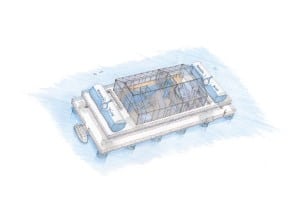
The U.S. Army Corps of Engineers earlier this year awarded its first Section 10 permit ever to a commercial wave-powered demonstration facility planned for installation in the Gulf of Mexico. The novel offshore platform, dubbed the SEADOG, will use a buoy and piston mechanism combined with a water wheel to generate electricity and desalinate water.
-
 News
NewsPhase Rotation Meter
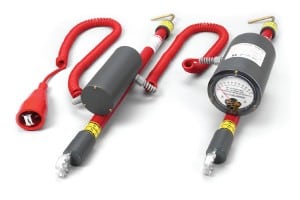
HD Electric Co.’s Phase Rotation Meter (PRM) is used to determine the leading phase of any two phases in a three-phase conductor system. The PRM is a dual-range 0 to 5 kV and 0 to 15 kV device that can be used as high as 45 kV when optional resistor sticks are added. It consists of two […]
-
News
POWER Digest (August 2010)
Sweden Reverses Ban, Approves Nuclear Reactor Replacements Sweden’s parliament on June 18 reversed an earlier decision and passed the center-right coalition government’s landmark proposal, made last year, that allows for the replacement of the country’s nuclear reactors at the end of their life span. The country had voted in 1980 to phase out its 12 […]
-
 News
NewsPortable Power Quality Monitoring
The SEL-734P Portable PQ Meter is a new metering solution from Schweitzer Engineering Laboratories (SEL) that addresses the need for complete and portable power quality monitoring. In addition to the meter, the kit includes three-phase voltage and current inputs, voltage leads, and split-core CTs, all secured in a ruggedized case. ACSELerator QuickSet SEL-5030 software, included […]