
Articles By

-
 News
NewsProfessional Grade Emergency Spill Kits
The new Oil Eater all-in-one professional grade emergency spill kits are designed to contain and clean up hazardous spills as required by the U.S. Occupational Safety and Health Administration and the Environmental Protection Agency. Each kit contains absorbent pads, pillows, universal snakes, booms, protective gloves, oil-resistant and high-temperature disposal bags, and an emergency response instruction […]
-
 News
NewsIndependent and Highly Dynamic Linear Axis
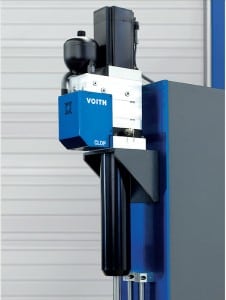
Voith Turbo H + L Hydraulic’s hydraulic Closed Loop Differential Pump (CLDP) linear axis can be used for all direct linear movements—especially for applications that rely on dynamics, reproducibility, overload protection, and reliability. Compact, highly dynamic, and precise, the linear drive offers overload protection, high power density, and virtually wear-free operation. At its heart is an integrated […]
-
 News
NewsProgressing Cavity Pump with Unique Gear Joint
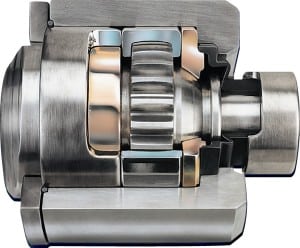
Moyno Inc. launched its Moyno 2000 Progressing Cavity Pump with a unique gear joint that allows the versatile pump to handle a wide range of applications, from shear-sensitive chemicals to difficult-to-process slurries and sludges. The crowned gear universal joint drive train configuration provides exceptional torque and thrust control, and the patented joint seals effectively protect […]
-
Commentary
Anticipating the New Utility MACT Rules
It’s been almost three years since the U.S. Court of Appeals for the D.C. Circuit issued its decision vacating the Environmental Protection Agency’s (EPA) Revision Rule and the Clean Air Mercury Rule. Since then, the utility industry has been in a holding pattern with respect to the control of hazardous air pollutant (HAP) emissions.
-
 Business
Strong Technology Portfolio Positions Alstom for a Strong 2011
Timothy Curran, head of power for Alstom Power, USA, recently shared his company’s view of 2011 and beyond with POWER’s editor-in-chief.
-
 O&M
O&MEPRI Identifies Four Breakthrough Technologies for 2011
The Electric Power Research Institute (EPRI) has identified four breakthrough technologies and funded them through its Strategic Research and Development Portfolio. EPRI expects to accelerate development of these innovations because they are likely to have significant effects on how electricity is generated and delivered.
-
News
My Top 10 Predictions for 2011
It’s time to pull my crystal ball out of storage, polish it up, and give you another round of U.S. industry predictions for 2011. I graded last year’s predictions B+ (for a complete rundown of how I graded each prediction, see page 32), but I’m convinced I’ll do better in 2011.
-
 Coal
CoalIEA: Global Power Demand to Surge 2.2% Annually Through 2035
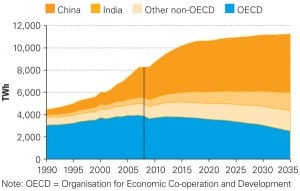
Though electricity generation has entered a key period of transition—as investment shifts to low-carbon technologies—world electricity demand is set to grow faster than any other “final form of energy,” the International Energy Agency (IEA) says in its latest annual World Energy Outlook.
-
 Hydro
HydroConstruction of Tibetan Dam Sets Off Cross-Border Tensions
China in mid-November embarked upon building the first massive hydropower project in Tibet, a 6 x 85-MW plant straddling the middle reaches of the mighty Yarlung Tsangpo River (Figure 2). According to the Hunan Daily, a Chinese state-owned enterprise, Sinohydro began damming the river in Shannan Prefecture, Tibet, on Nov. 8, kicking off the 7.9 billion yuan ($1.2 billion) “run of the river” project that is estimated to generate electricity for the surrounding region by 2014.
-
 Business
GE Leverages Leading-Edge Technology and a Balanced Product Portfolio in 2011
Paul Browning, vice president, thermal products for GE Power & Water, sees the greatest short-term business opportunities beyond the U.S., in “high-speed” countries.
-
 Gas
GasMHI Prepares to Test J-Series in Japan
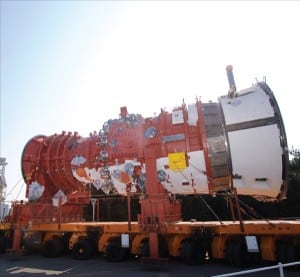
Mitsubishi Heavy Industries (MHI) has begun converting a combined-cycle plant in Japan to prepare for verification testing of its long-anticipated J-Series gas turbine in February 2011—a system that the company claims has the most power generation capacity and highest thermal efficiency in the 1,600C turbine inlet temperature class (Figure 3). The work being carried out at the Takasago Machinery Works facility in Hyogo Prefecture (where the company’s G-Series gas turbines were tested) includes installation of the J-Series turbine, and it marks another major milestone in the technology’s development.
-
 Smart Grid
Which Side of the Meter Are You On?
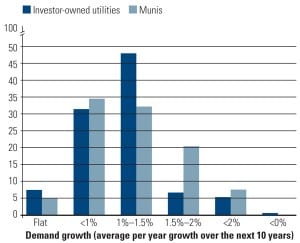
Utilities have achieved success by supplying electricity from central station plants (the supply side) to a grid that carries electricity to customers (the demand side). One way to improve the efficiency of this supply chain is by adopting smart grid technology. The weak link in that chain is convincing customers to use, and regulators to invest in, the smart grid.
-
 Gas
GasTransCanada Opens 683-MW Halton Hills Combined-Cycle Plant
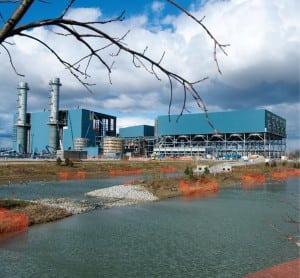
TransCanada Corp. on Oct. 28 officially opened its C$700 million Halton Hills Generating Station. The 683-MW 2 x 1 combined-cycle plant on a greenfield site in Ontario (Figure 5) will operate under a 20-year power purchase agreement with the Ontario Power Authority (OPA). Construction of the peaker plant started in December 2007 and was completed on time and on budget, TransCanada said.
-
 Business
Mitsubishi Looks to High-Efficiency Combustion and Wind Turbines in 2011
Bill Newsom—vice president, sales & marketing, Mitsubishi Power Systems Americas Inc.—talks about taking the long view with the company’s U.S. investments.
-
Distributed Energy
Smart Grid 2011: More than Meters
The concept of a smart grid may have been born in the U.S.A., but it’s hitting an adolescent growth spurt just about everywhere else first. Meanwhile, in the U.S., both the regulators and companies that see great potential in a smarter grid are realizing that making substantial smart grid progress will first require making both people and policies smarter. There’s one exception, one piece of the smart grid, that could face fewer obstacles to adoption, and that’s because it offers more obvious and visible benefits to its users: electric vehicles (EVs).
-
 O&M
O&MExelon Enjoys Benefits of Online Transformer Monitoring
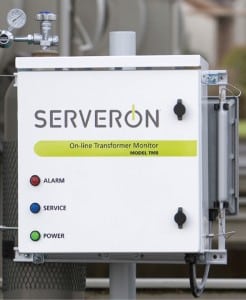
In all of these cases, frequent oil analysis monitoring and preestablished action plans were able to allow for transformer replacement before the occurrence of a catastrophic failure. Exelon’s experience, as well as that of other power utilities across the grid, has spawned a report by the Institute of Nuclear Power Operations (INPO) of Atlanta, Georgia, that recommends that performance monitoring and trending be applied to all large transformers in order to establish a baseline for transformer maintenance strategies.
-
Business
POWER Digest (Jan. 2011)
TANE and Shaw to Provide EPC Services for South Texas Expansion. Nuclear Innovation North America LLC (NINA), the nuclear development company jointly owned by NRG Energy and Toshiba Corp., on Nov. 29 announced that it awarded the engineering, procurement, and construction (EPC) contract for South Texas Projects Units 3 and 4 to a restructured EPC […]
-
 O&M
O&MSelecting a Specialty Accumulator
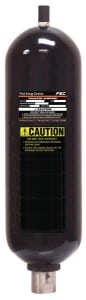
Sudden bumps and shocks are great fun when you are off-roading or are riding on a rollercoaster. But when you are operating a piece of equipment, you want it to be running as smoothly as a Cadillac rolling down the interstate. Sudden changes in pressure produce vibration, cavitation, and water hammer and generally lower the lifespan and reliability of fluid systems.
-
 Coal
CoalCoal Plants Challenged as Gas Plants Surge
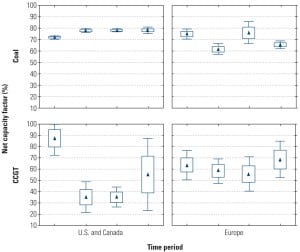
European carbon trading is gradually pushing down coal-fired capacity factors, and operating costs are rising. The U.S. may not have a carbon market, but increasing regulatory requirements are having the same effect on coal-fired generation capacity factors and operating costs. In the meantime, gas-fired assets are enjoying increased usage and lower unit costs.
-
News
EPA to Set "Modest Pace" for GHG Standards
The U.S. Environmental Protection Agency has issued its plan for establishing greenhouse gas (GHG) pollution standards under the Clean Air Act in 2011. The agency looked at a number of sectors and is moving forward on GHG standards for fossil fuel power plants and petroleum refineries—two of the largest industrial sources, representing nearly 40% of the GHG pollution in the U.S.
-
News
GE Agrees to Complete Cleanup of Hudson River PCB-Contaminated Sediment
The General Electric Co. (GE) agreed last week to requirements established by the U.S. Environmental Protection Agency (EPA) for final cleanup of PCB-contaminated sediment in the Hudson River. The second phase of the cleanup is to begin in late spring.
-
News
$17M DOE Loan Guarantee for NY Energy Storage
U.S. Energy Secretary Steven Chu announced on Dec. 23 that a $17.1 million loan guarantee has been finalized for the AES Westover facility. The loan guarantee will support the construction of a 20- MW energy storage system using advanced lithium-ion batteries.
-
News
DOE Announces up to $74 Million for Fuel Cell Research and Development
The U.S. Department of Energy (DOE) announced last Wednesday that it is accepting applications for a total of up to $74 million to support the research and development (R&D) of clean, reliable fuel cells for stationary and transportation applications.
-
News
Challenges to Data Used in EPA’s Coal Ash Regulation Cost-Benefit Analysis
In a news conference hosted today by the Environmental Integrity Project (EIP), presenters argued that the Environmental Protection Agency (EPA) has overstated the economic benefits of recycling coal ash by more than 20 times and exaggerated the potential stigma on recycled fly ash that could result from tougher coal ash regulations. At the same time, the EPA is vastly underemphasizing the costs to human and environmental health of not regulating the substance, presenters said.
-
News
Renewables Win Relief from Middle Class Tax Relief Act of 2010
Advocates and developers of renewable power in the U.S. got an early Christmas present late Dec. 16 when the U.S. House of Representatives joined the Senate in passing a one-year extension of the Department of Treasury Section 1603 tax grant program (TGP) as part of the Middle Class Tax Relief Act of 2010.
-
News
DOE Finalizes Loan Guarantee to Support World’s Largest Wind Project
Last Thursday, U.S. Energy Secretary Steven Chu announced that a partial loan guarantee for a $1.3 billion loan has been finalized to support the world’s largest wind farm. The loan will finance the Caithness Shepherds Flat project, an 845-MW wind generation facility located in eastern Oregon sponsored by Caithness Energy LLC and GE Energy Financial Services.
-
News
Kansas Approves Air Permit for Sunflower’s Coal-Fired Power Plant
Sunflower Electric Power Corp. on Dec. 16 was notified that the Prevention of Significant Deterioration air quality construction permit for its 895-MW Holcomb expansion project was approved by Acting Secretary of the Kansas Department of Health and Environment (KDHE) John Mitchell. The permit is expected to be issued by the end of the year. The […]
-
News
Basin Electric CO2 Capture Project on Indefinite Hold
Basin Electric’s directors decided last week that a proposed demonstration project to capture emissions of carbon dioxide (CO2) at the Antelope Valley Station (AVS) in Beulah, N.D., will remain on hold until the economic viability of such a venture can be further developed.
-
News
Abengoa Solar Gets $1.45B Loan Guarantee for World’s Largest CSP Plant
The U.S. Department of Energy announced yesterday that it had finalized a $1.45 billion loan guarantee for building Abengoa Solar’s Solana, the world’s largest parabolic trough concentrating solar plant (CSP). The 250-MW project in Arizona will require a total investment of around $2 billion.
-
News
Iowa Nuclear Plant Gets License Extension While Mass. Plant Remains in Line
Following a 26-month environmental and safety review, the Nuclear Regulatory Commission (NRC) last week approved a 20-year license extension for the NextEra Energy Duane Arnold Energy Center (DAEC) near Cedar Rapids, Iowa.