
Articles By

-
News
States Sue NRC over Temporary Nuclear Waste Rules
Connecticut, New York, and Vermont are suing the Nuclear Regulatory Commission (NRC), challenging a recently effected rule that makes it legal to store used nuclear fuel on-site for up to 60 years after a plant shutdown.
-
News
Ontario Bans Offshore Wind Projects
Ontario on Friday said it would not approve or accept any new offshore wind projects until more scientific research has been done on the installation of turbines in freshwater lakes.
-
News
Texas Blackout Hearings Begin
No initial evidence had been found that the Texas power market had been manipulated when grid operator the Electric Reliability Council of Texas (ERCOT) on Feb. 2 ordered rolling blackouts, but investigations would continue, Texas regulators told legislators on Tuesday. The blackouts were necessary as some 82 power plants—out of 550 on the grid—went down for various reasons while freezing temperatures caused a record-breaking demand spike, ERCOT said.
-
News
JEA Signs Option to Buy Power from Duke’s Proposed Lee Nuclear Plant
Jacksonville, Fla., municipal utility JEA last week signed an agreement with Duke Energy that gives it the option to buy up to 20% of the power generated by Duke Energy’s planned 2,234-MW Lee Nuclear Station when it becomes operational in 2021.
-
News
Steam Pipe Rupture at Pa. Power Plant Injures 6
The rupture of a 6-inch steam pipe at Unit 1 of the 1,884-MW coal-fired Homer City Generating Station in Indiana County, Pa., last week tripped the unit and sent six workers to area hospitals with burns.
-
News
PwC: Power Sector Mergers and Acquisition Increase Steadily in Q4 2010
The power sector saw steady, modest growth of merger and acquisition activity during the last three months of 2010, recently released analysis from PricewaterhouseCoopers (PwC) shows. The largest 25 announced deals decreased 37% in value, to $19.3 billion, compared to $30.8 billion in the fourth quarter of 2009, but financial buyers maintained investments in power deals in 2010 while corporate buyers continue to lead deal activity due to large amounts of cash to invest, PwC said.
-
General
Can Steven Chu Lobby?
By Kennedy Maize Washington, D.C., February 15, 2011 – Can Energy Secretary Steven Chu learn to lobby? The fate of the Obama administration’s budget for his department hangs in the answer to that question. So does the fate of the tattered remnants of the strategy the administration brought to Washington to deal with its apocalyptic […]
-
News
Inhofe, Jackson Testify on Bill to Strip EPA of Power to Regulate GHGs
Sen. James Inhofe (R-Okla.) and Environmental Protection Agency (EPA) Administrator Lisa Jackson were questioned by panels of the House’s Subcommittee on Energy and Power this morning as part of a discussion on draft legislation that seeks to strip the EPA of its authority to regulate greenhouse gases (GHGs). The legislative hearing’s witnesses also included other major players in the climate change regulatory debate, such as Texas Attorney General Greg Abbott.
-
News
Conflict Brews for TransAlta, TransCanada over Sundance Unit Closures
Canadian companies TransAlta Corp. and TransCanada Corp. are at odds over TransAlta’s abrupt notice on Tuesday that it will close and destroy its Sundance 1 and 2 coal-fired units near Edmonton, Alberta. TransCanada, which buys power from the units under a power purchase agreement (PPA) agreement, said today it had not received validation of TransAlta’s determination that the plants were so corroded that they could not be economically restored to service.
-
News
DOJ, Power Companies File Briefs in High-Profile Public Nuisance Case
Four investor-owned utilities and the U.S. Department of Justice (DOJ) have filed briefs with the U.S. Supreme Court in a high-profile “public nuisance” case in which states and environmental groups allege that greenhouse gas (GHG) emissions from four investor-owned utilities and the Tennessee Valley Authority (TVA) have contributed to climate change.
-
News
Senators in Minnesota, Kentucky Vote to Lift New Nuclear Bans
State senators in Minnesota and Kentucky passed crucial legislation that could end longstanding bans in those states on the construction of new nuclear plants.
-
News
UK Government to Introduce New Nuclear Regulatory Body
The UK government on Tuesday said it would push forward with legislation to create a new independent statutory body to regulate the country’s nuclear power industry. The new agency, the “Office for Nuclear Regulation” (OCR), will carry out regulatory functions performed currently by the Health and Safety Executive (HSE) and the Department for Transport.
-
News
DOE, DOI Release Strategic Plan to Accelerate Offshore Wind in the U.S.
A strategic plan to accelerate development of offshore wind energy, released by the Departments of Energy (DOE) and Interior (DOI) on Monday, focuses on overcoming the relatively high cost of offshore wind energy; the technical challenges surrounding installation, operation, and grid interconnection; and the lack of site data and experience with project permitting processes.
-
News
DOE Details Initiative to Reduce PV Costs by 75% by 2020
The Department of Energy (DOE) last week released additional details of its “SunShot Initiative,” a program that seeks to reduce the total costs of photovoltaic (PV) solar energy systems by about 75% before 2020 so that costs for PV systems can compete with other forms of energy without subsidies.
-
News
USDA Grants Loan Guarantee to South Dakota Wind Project
Agriculture Secretary Tom Vilsack today announced the selection of Basin Electric Power Cooperative to receive a loan guarantee to construct more than 100 wind turbines to produce 151.5 MW of electricity. The loan guarantee will provide financing for engineering, procurement, construction, and commissioning of the PrairieWinds wind farm energy project in central South Dakota.
-
General
Book Review: Scott Hempling on Regulators
By Kennedy Maize Washington, D.C., February 5, 2011 – We are all familiar, sometimes too much so, with utility regulation. As customers, we encounter the results regulation every day. Many of us, in our business lives, work with (or against), ponder, and praise (or damn) utility regulation. But none of us has given more thought, […]
-
News
Mississippi Power Names Kemper County IGCC Plant
Mississippi Power last week announced that its new integrated gasification combined cycle (IGCC) plant under construction in Kemper County, Miss., will be named in honor of David M. Ratcliffe, recently retired chairman, president, and CEO of its parent company, Southern Co.
-
News
EPA Facing Opposition to GHG Regulation on Multiple Fronts
The past week brought a flurry of news from across the nation about challenges to the Environmental Protection Agency’s (EPA’s) measures to curb greenhouse gases (GHGs). Sens. Jay Rockefeller (D-W.Va.) and James Inhofe (R-Okla.) are spearheading separate measures to delay or block the EPA’s authority, and Arizona withdrew its support for the EPA in a massive legal challenge concerning its “endangerment finding.”
-
News
Power Groups Turn to FERC as New Jersey Power Plant Bill Becomes Law
New Jersey’s Governor Chris Christie (R) on Friday made effective controversial state legislation that promotes the construction of new power plants with a total capacity of up to 2,000 MW by offering developers long-term, ratepayer-subsidized energy contracts. On Monday, in response to the measure, a group of major utilities asked the Federal Energy Regulatory Commission (FERC) to protect “the integrity of competitive power markets.”
-
News
TCEQ Approves Air Permit for Texas Coke–Fired Project, Despite EPA Objections
The Texas Commission on Environmental Quality (TCEQ) last week voted 2-0 to approve an air permit for the 1,300-MW Las Brisas Energy Center. The approval for the $3.2 billion petroleum coke–fired project planned for Corpus Christi, Texas, comes despite objections from the federal Environmental Protection Agency (EPA) and recommendations by two administrative law judges against the permit’s issuance.
-
News
Judge Bars Implementation of Calif. Cap-and-Trade Plan, Orders Further Review
A California Superior Court judge in San Francisco has provisionally ruled that the California Air Resources Board (CARB) did not adequately comply with requirements from the California Environmental Quality Act (CEQA). The tentative decision could prevent implementation of a statewide cap-and-trade program due to start next year until CARB addresses those requirements.
-
News
Canada Completes Design Review for Advanced CANDU Reactor
Canada’s Nuclear Safety Commission (CNSC) last week completed the third and final phase of the pre-project design review for the Advanced CANDU Reactor (ACR-1000), making it the first third-generation reactor in the world to have passed that milestone in Canada. The CNSC’s findings mean there are no fundamental barriers to licensing the reactor design from the crown-owned Atomic Energy of Canada Limited (AECL), a company whose future ownership is ambiguous.
-
News
Cold Snap Puts Out Lights Across the U.S.; Texas Institutes Rolling Blackouts
A massive winter storm on Wednesday that blustered over more than 30 U.S. states, from New Mexico to Maine, shut off the lights for millions around the country. Regional grid operator the Electric Reliability Council of Texas (ERCOT) instituted an energy emergency and instructed utilities to begin rotating blackouts throughout Texas to compensate for 7,000 MW of power plants that were shut down as a result of the cold snap.
-
 Business
The Great Solar Storm of 2012?
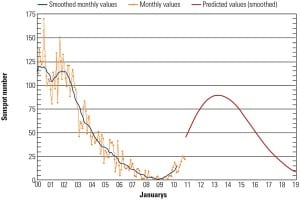
The 2009 blockbuster movie 2012 about a global cataclysm combined Hollywood special effects with supposed predictions by Nostradamus; a Mayan calendar that ends on December 21, 2012; and a very rare planetary alignment that supposedly occurs on the same day. Hollywood producers seldom let technical accuracy get in the way of a good story, but suppose, this one time, the story has an element of truth.
-
Water
Readers Write
In the September and October 2010 issues, POWER Contributing Editor David Daniels explored the causes and damage mechanisms of condenser tube leaks (“Taming Condenser Tube Leaks,” Part I and Part II). Dennis J. Schumerth, Valtimet’s director of business development, took issue with several of Daniels’ statements regarding the proper use of titanium condenser tubes. We have given Schumerth the opportunity to express his concerns and for Daniels to reply.
-
Commentary
EPA Expands Climate Agenda to the Current Fleet of Power Plants and Refineries
On December 23, 2010, one day before the Yuletide season, when members of Congress, the media, and Tea Party activists are least likely to watchdog the federal bureaucracy, the U.S. Environmental Protection Agency (EPA) announced rulemakings to establish New Source Performance Standards (NSPS) for greenhouse gas (GHG) emissions from power plants and refineries. Or maybe "whispered" would be more accurate.
-
 O&M
O&MIncreasing Generation Ramp Rate at Morgantown Generating Station’s Coal-Fired Units
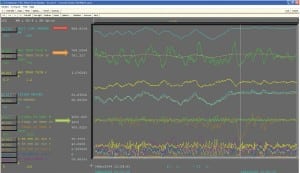
At Morgantown Generating Station, plant personnel used innovative methods to combine model predictive control with distributed control system–based process control algorithms to improve waterwall temperature control and main steam temperature control and to enhance unit ramp rate capability. The previous heat rate and NOx optimization performance gains were retained. Focusing beyond basic loops of feedwater, air, and O2, the project considered issues such as PID controller override configuration and limitations. The techniques used to overcome these challenges improved unit ramp rate capability beyond any previous unit performance.
-
Business
POWER Digest (Feb. 2011)
MHI to Continue Pre-Construction Work for North Anna Unit. Mitsubishi Heavy Industries Ltd. (MHI), through Mitsubishi Nuclear Energy Systems Inc., and Dominion subsidiary Virginia Electric and Power Co. on Dec. 27 said they had reached an agreement to continue pre-construction, engineering, and planning work in preparation for a third unit at Dominion’s North Anna Nuclear […]
-
 O&M
O&MContinuous SO3 Monitoring Can Reduce Sorbent Consumption
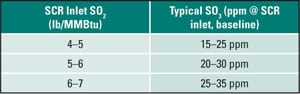
An unintended consequence of employing selective catalytic reduction and wet flue gas desulfurization to reduce nitrogen oxide and sulfur dioxide levels at coal-fired power plants has been unwanted sulfur trioxide (SO3) emissions. Picking the right sorbent in the right amount can eliminate that problem.
-
 Nuclear
I&C Update on Plant Vogtle Units 3 and 4
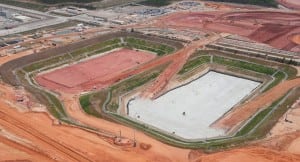
Development of Vogtle Electric Generating Station Units 3 and 4—the first new nuclear power plant units in the U.S. in decades—has generated considerable excitement. The next generation of nuclear plants, represented by these units, includes at least two major improvements: the use of passive safety systems and a reliance on digital control systems. The latter represents a gigantic leap in modernization and a fundamental change in control of the plant.