
Articles By

-
News
DOE’s Inspector General Critical of Clean Energy Loan Guarantee Program Recordkeeping
An audit of the Department of Energy’s (DOE’s) loan guarantee program for clean energy technologies completed last week by the agency’s inspector general found that the program could not always “readily demonstrate, through systematically organized records, including contemporaneous notes, how it resolved or mitigated relevant risks prior to granting loan guarantees.”
-
News
NRC Panel Deals Final Blow to Comanche Peak Expansion’s Opponents
The Nuclear Regulatory Commission’s (NRC’s) Atomic Safety and Licensing Board panel dismissed the last objection filed by anti-nuclear groups and a Texas lawmaker to block expansion of Luminant Energy’s Comanche Peak nuclear plant.
-
News
Judge Orders Immediate Suspension of 11.2-GW Brazilian Hydro Project
A federal judge in Brazil on Friday ordered immediate suspension of a license permitting construction of the controversial 11,233-MW Belo Monte dam complex. The license was recently issued by Brazil’s environmental agency, IBAMA, and it would have allowed dam-building consortium Norte Energia to begin clearing forestland on the margins of the Amazon’s Xingu River.
-
News
DOE Grants First Geothermal Loan Guarantee
The U.S. Department of Energy on Thursday finalized a $96.8 million Recovery Act–supported loan guarantee to Neal Hot Springs, a project sponsored by U.S. Geothermal, to construct a 23-MW geothermal project in Oregon’s Malheur County.
-
News
EPA Extends Mandatory Greenhouse Gas Reporting Deadline
The Environmental Protection Agency (EPA), which has finished developing greenhouse gas (GHG) emissions requirements for several industries as mandated by Congress, on Tuesday said it would extend the reporting deadline for companies reporting 2010 GHG data under the Mandatory Greenhouse Gas Reporting Rule from March 31, 2011, to an unspecified date in late summer.
-
News
AEP, FirstEnergy Withdraw State Applications for High-Voltage Line
American Electric Power (AEP) and First Energy Corp. will withdraw applications for state regulatory approval of the $2 billion high-voltage Potomac-Appalachian Transmission Highline (PATH) project following an announcement by regional grid operator PJM Interconnection that the project has been shelved.
-
News
California Senate Approves 33% RPS Measure
California’s Senate on Thursday voted 26-11 to require the state’s investor-owned utilities (IOUs) to get 33% of their power from renewable energy sources by 2020—up from the 20% currently required. The bill, whose increased renewable portfolio standard (RPS) was set by former Gov. Arnold Schwarzenegger in a 2009 executive order, now goes to the Assembly, where it is expected to pass.
-
News
New Hampshire House Votes to Withdraw State from RGGI
The New Hampshire House last week approved, by a veto-proof vote of 246-104, legislation that would withdraw the state from the Regional Greenhouse Gas Initiative (RGGI), a cap-and-trade program established in the Northeast. The bill is now headed to the Senate, where it is expected to pass.
-
News
Utility Pulls Out of North Anna Nuclear Expansion
Old Dominion Electric Cooperative’s (ODEC’s) announcement on Monday that it will withdraw participation in and ownership of a third-generation reactor planned for construction by Dominion Virginia Power at its North Anna Nuclear Power Station in Louisa County, Va., will not change its plans to build the potential project, Dominion said.
-
News
Explain Redactions in Yucca Mountain Safety Report, NRC Panel Tells Agency
The three-judge panel of the Nuclear Regulatory Commission’s (NRC’s) Atomic Safety and Licensing Board on Friday threw out a motion to shelve proceedings for the Yucca Mountain license case through May 20. The judges also asked the NRC to explain why it whited-out portions of a report assessing the safety of the Nevada nuclear waste repository that was released last week.
-
News
Morgan Country to Host FutureGen 2.0’s Sequestration Site
Morgan County, Illinois will host a sequestration site for carbon dioxide captured by the Department of Energy’s revamped $1.3 billion FutureGen pilot project. The FutureGen Alliance said on Monday that site best supported the overall mission of the project cost-effectively.
-
Legal & Regulatory
Will Critical Materials Become a Green Roadblock?
Critical minerals—such as rare earth metals—are important to many new energy technologies. However, the U.S. Department of Energy is concerned that foreign control of supply, particularly by China, could limit the ability of these technologies to develop fully, so the DOE is developing a strategy to keep the supply chain open. Meanwhile, some analysts say China is playing a losing game with its hold on the minerals.
-
 O&M
O&MImprove ACC Performance with Automated Pressure Washing
Beginning each spring and continuing through the fall, backpressure readings at Rosebud Operating Services Inc. indicated substantial drops in the condenser’s efficiency. Increased backpressure results in higher net plant heat rate and a corresponding measurable decrease in power generation.
-
 Business
Training Tomorrow’s Power Industry Workers
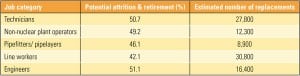
As U.S. electric utilities watch increasing numbers of older workers leave the workforce, they are left with a shrinking pool of experienced personnel. To meet this growing challenge, a number of educational programs are being offered to help younger workers take advantage of career opportunities in the electric power industry.
-
Supply Chains
Is Peak Coal the Latest Supply Threat?
We’ve heard—endlessly, it seems at times—about "peak oil," the idea that the world is rapidly running out of oil and will face catastrophic consequences. Now talk is emerging about "peak coal."
-
 O&M
O&MPlant Safety: Learn from the Mistakes of Others
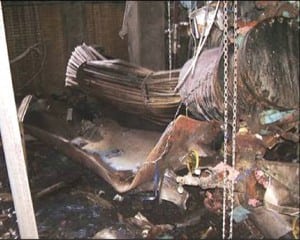
On January 27, the U.S. Chemical Safety Board (CSB) released a case study examining the causes of a heat exchanger rupture and ammonia release at the Goodyear Tire and Rubber Plant in Houston in 2008. Use these lessons learned to check your employee tracking system and to determine whether your plant has installed valves that […]
-
 News
NewsGas-Weighing Scale for Water Treatment Applications
Scale-manufacturer Scaletron Industries added the Model 2305 Digital Single Cylinder Eco-Scale to its product lineup. Designed to provide a more versatile solution for weighing ammonia, carbon dioxide, hydrogen chloride, liquefied chlorine, sulfur dioxide, and other liquid gases used in water and wastewater treatment applications, the scale can weigh cylinders of up 10.5 inches in diameter and […]
-
 Commentary
Why Most Published Research Findings Are False
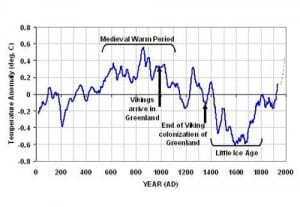
Those aren’t my words—it’s the title of a 2005 article, brought to my attention by Cal Beisner, which uses probability theory to "prove" that "…most claimed research findings are false." While the article comes from the medical research field, it is sufficiently general that some of what it discusses can be applied to global warming research as well.
-
Legal & Regulatory
Proposed Combustible Dust Rule Sparks Debate
A high-stakes dustup is shaping up in connection with the U.S. Occupational Safety & Health Administration’s (OSHA’s) proposed new standard to regulate combustible dust. When and if enacted, this new OSHA regulation will definitely affect the way personnel handle coal at power plants that use it for fuel.
-
 News
NewsIndustrial Vacuum for Combustible Dusts
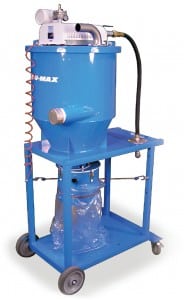
The new VAC-U-MAX Model 860/02 is suited for operators who want to eliminate drum handling and who need to collect and discharge powders in a safe, dust-free, and convenient way. The Model 860/02 uses the field-proven VAC-U-MAX Air-Powered Vacuum cover with manual pulse-jet filter cleaning and nonstick filtration that captures 99.9% of particles as small […]
-
Commentary
Got Remedies? NLRB Acting General Counsel Does, and Employers Should Beware
National Labor Relations Board Acting General Counsel Lafe Solomon is continuing his focus on remedies in unfair labor practice cases involving union organizing campaigns. On September 30, 2010, he issued a memorandum on Section 10(j) injunctions for discriminatory discharges during such campaigns. Now he has released another memorandum, this one targeting remedies regional offices should seek when they issue complaints in ULP cases involving campaign activity.
-
 O&M
O&MTECO’s San José Plant Models Safe and Sustainable Practices
In operation since 2000, TECO Energy Inc.’s 132-MW San José Power Station was the first coal-fired power plant built in Central America and is still the largest one. Used as a baseload plant, the facility successfully combines high availability with a business model that promotes sustainable environmental practices and a safe workplace.
-
 News
NewsMultiparameter Transmitter for Water Purity Monitoring
Mettler-Toledo Process Analytics Division introduced the Thornton model M800 multiparameter transmitter for monitoring water purity. Multiparameter measurement is ideally suited for facilities where precise measurement of conductivity/resistivity, pH, dissolved oxygen, dissolved ozone, flow, and temperature of ultrapure water is critical. As displayed on the device’s full-color, high-resolution touch screen, the M800’s exclusive integral predictive maintenance […]
-
Commentary
Chill Out
Chill out, relax, enjoy the ride, and take the real road to success. It’s the journey that counts and you can’t get to the end of the road without traveling along it.
-
 Coal
CoalCanada’s “Clean” Image Extends to Clean Power
Canada’s extensive natural resources are the driver of its powerful economy, and energy is Canada’s single most important export. Yet policy makers across the nation are currently dealing with the consequences of a generation of under-investment in the electricity system and deciding what the new grid and supply mix should look like. Several provinces are competing to lead the charge in renewable energy and grid intelligence. Policy makers hope that such efforts will not only provide for Canada’s electricity needs but also create the green economy jobs that will drive the nation’s next generation of economic development.
-
 News
NewsMetal Seat Ball Valves for High-Temperature, Abrasive Surfaces
The new M-series metal seat ball valves from A-T Controls are engineered with specially coated matched balls and seats to stand up to high temperatures, high pressures, and abrasive materials encountered in the power generation industry. Valves in the M-series have a temperature range of –20F to 661F and a pressure rating up to ANSI […]
-
 Hydro
HydroTransmission and Distribution in Canada
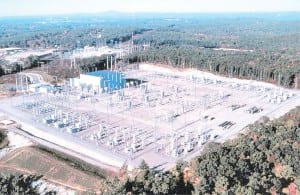
Like its neighbor to the south, Canada faces enormous costs to upgrade and expand its transmission and distribution system. The desire to integrate more renewable power into the grid, build a smarter grid, and export more power are providing the rationale for action, but capital and political will lag behind.
-
 News
NewsTube Fabrication Tools Package
Parker Hannifin Corp. has assembled a comprehensive and complementary package of heavy duty hand-operated tube fabrication tools for small-bore tube assembly. Parker’s new tube fabrication equipment package provides all the equipment necessary to successfully install tube fittings—both CP and A-LOK—in various system applications. Available for a broad spectrum of instrumentation tubing sizes, the tools include […]
-
 Coal
CoalCanada’s Provincial Power Strategies
In Canada, as in the U.S., where you live determines the type of generation technology that provides your power. Here’s how the four most energy-intensive provinces in Canada are responding to the challenge of providing reliable and cheap power in a sustainable way.
-
 News
NewsClamp Meters for Technician Safety
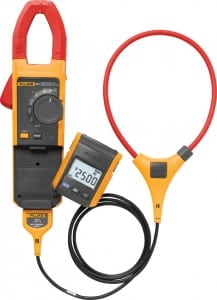
Fluke introduced a new family of clamp meters that is engineered to give electricians and maintenance technicians new ways to ways to work safely and reduce their exposure to electrical shock. The new Fluke 381 (shown here), 376, 375, and 374 current clamps and iFlex current probes are rated for use in measurement category IV […]