
Articles By

-
News
Supreme Court to Hear Pivotal Climate Change Public Nuisance Case
The U.S. Supreme Court on Monday agreed to hear challenges from five major power companies on a federal appeals court decision that ruled they could be sued, under a federal “public nuisance” law, to curb greenhouse gas emissions, which allegedly cause entity-harming climate changes. Industry experts say the case will likely be heard by the high court next April, and a decision could be made as early as June.
-
News
Black & Veatch: 16% of U.S. Coal Fleet to Be Retired by 2020
More than 52 GW—16%—of the existing U.S. coal-fired generation fleet will be retired rather than face the cost of compliance with pending air quality regulations between 2015 and 2020, engineering and consulting firm Black & Veatch predicted in its end-of-year Energy Market Forecast.
-
News
AREVA to Provide Two EPRS to India, Signs Key Agreement
India’s Atomic Energy Commission and its state-owned Nuclear Power Corp. of India Limited (NPCIL) on Monday signed major agreements with France’s AREVA for the construction of two EPR reactors—the first of a series of 6—at Jaitapur in the western state of Maharashtra.
-
News
Dominion to Close Coal Plant as Part of Deal to Build New Gas Plant
Dominion Virginia Power last week struck a deal with the National Park Service and the Virginia Department of Environmental Quality to close a 74-MW West Virginia coal-fired plant as part of plans to build a new 1,300-MW natural gas–fired power station in northwestern Virginia.
-
General
Alaskanfusion in Senate Seat
By Kennedy Maize Washington, D.C., December 1, 2010 – At this point, probably only one person in America believes that Lisa Murkowski did not win Alaska’s November election to the U.S. Senate. Unfortunately, that one person is defeated Republican nominee Joe Miller, who refuses to drop what has become an entirely quixotic effort to stave […]
-
Coal
Efficiency Favored in EPA Greenhouse Guidance To States
A long-awaited Clean Air Act regulatory guidance document released by the Environmental Protection Agency recommends that state air regulators strongly emphasize energy efficiency in determining the most cost-effective and technically feasible greenhouse gas control technologies that must be used by utilities and other major industrial emitters when expanding existing facilities or building new ones.
-
 O&M
O&MExpanding the Use of Predictive Maintenance as a Business Strategy
The Linde Group is a world-leading gases and engineering company operating in more than 100 countries. It’s no surprise that the company uses a variety of advanced monitoring techniques and equipment to keep its plants operating reliably. In the U.S. and UK particularly, Linde plants have used online machine condition monitoring for a number of years. At its Shanghai headquarters, Linde has formed a large and impressive remote operations center where it monitors and tracks the process operations of all its major gas plants in China 24 hours a day.
-
 News
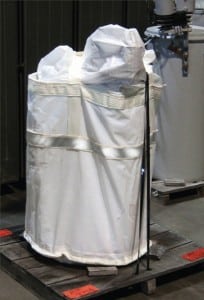
NewsContainment Bags for Safe Transformer Transport
New Pig Corp. recently introduced PIG Transformer Containment Bags, carriers designed exclusively for the safe transport of polychlorinated biphenyls (PCBs) and mineral oils. The bags feature high-capacity straps to ensure safe lifting of up to 4,800 pounds for transport on diamond-plate truck beds without rips or wear. To provide ultimate weather, puncture, and tear protection […]
-
Coal
DOE Warns of Coal Plant Water Supply Shortages
With utilities already alarmed by looming federal regulations that could force construction of expensive cooling towers that would sharply increase water use, a report by the Energy Department’s Argonne National Laboratory warns that nearly 350 U.S. coal-fired power plants are vulnerable to potential water demand or supply conflicts over the next 20 years stemming from increased competition for dwindling water resources—particularly in the Southeast.
-
Legal & Regulatory
Regulatory Options for Feed-in Tariffs
Feed-in tariffs (FITs) have been used by European countries to foster the growth of renewable generation resources, notably solar. These tariffs generally require electric distribution companies to purchase power produced by a specified class of generators at above-market rates. The object of the tariffs is to encourage development of the favored generation resources by ensuring the existence of a profitable market for their power production.
-
 News
NewsExtended Control Valve Range
Spirax Sarco released a new control valve range, SPIRA-TROL, in 6- and 8-inch sizes and with more control options. The company says the valves are easy to maintain and do not require any special tooling due to the “clamp-in-seat” design, resulting in reduced downtime and cost of ownership. Valve size ranges have been extended due […]
-
Coal
Peabody: China, India Leading Coal "Supercycle"
While U.S. coal production has been stagnant in 2010, demand for coal in China and India has sharply risen this year and could represent the early stages of a "long-term supercycle" for the global coal industry, according to Peabody Energy, the world’s largest private coal company.
-
 Geothermal
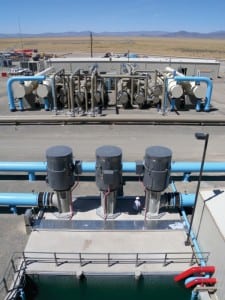
Top Plant: Blue Mountain Faulkner 1 Geothermal Power Plant, Humboldt County, Nevada
Completed in 2009 and partially funded under the American Reinvestment and Recovery Act, the 50-MW Blue Mountain Faulkner 1 Geothermal Power Plant is harnessing large amounts of renewable energy by tapping into an underground geothermal reservoir in northern Nevada. This subterranean source of heat allows the binary plant to generate pollution-free baseload electricity.
-
 News
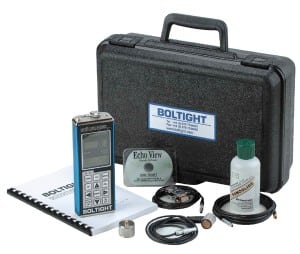
NewsBolt Load and Elongation Measuring Device
Boltight has developed a fast and accurate device for measuring bolt load and bolt elongation that uses the latest ultrasonic technology. Called the Boltight Echometer, the device is used for monitoring critical bolting applications either during the installation of a new plant or while carrying out routine maintenance. The Echometer works by measuring the time […]
-
 O&M
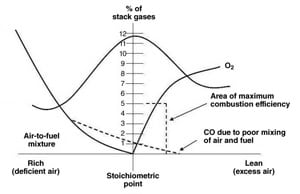
O&MFlue Gas Analysis as a Furnace Diagnostic Tool
Combustion flue gas analysis has been used to optimize the boiler air/fuel ratio for decades. Measuring the amount of excess oxygen and/or carbon monoxide in combustion flue gases gives an indication of boiler efficiency and, thereby, plant operating economics. New sensors make those measurements simple and accurate.
-
 Waste to Energy
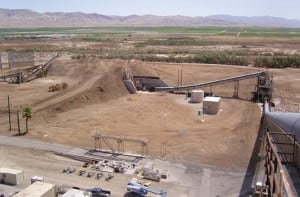
Top Plant: Colmac Energy Inc.’s Biomass- Fueled Power Plant, Mecca, California
The 47-MW Colmac Energy facility is the largest biomass-fueled power plant in California. Colmac operates with a capacity factor consistently in the 92% to 95% range and at a net plant heat rate comparable to waste coal facilities. Colmac Energy has demonstrated that biomass plants using urban wood wastes as fuel can generate significant environmental benefits, including reduced air pollutants from open-air burning and lowered demand for landfill space.
-
 News
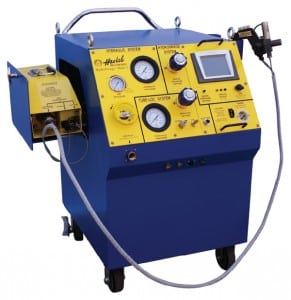
NewsUpdated Tube Expansion System
An updated HydroSwage Tube Expansion System featuring new ease-of-use and data collection features is being offered by Haskel International. The compact Mark V system provides high accuracy, speed, and repeatability by expanding heat exchanger tubes into tube sheets through the direct application of high internal hydraulic pressure. It is designed for use in fabricating heat […]
-
 Coal
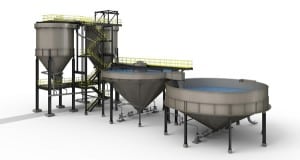
CoalEPA Regulations Accelerate Industry Shift from Wet to Dry Bottom Ash Solutions
Energy efficient and environmentally responsible dry bottom ash technologies will soon be required by regulation. Progressive companies will bring their plants into compliance early because it’s a good business strategy. Here are your compliance options.
-
News
Three Questions About Renewable Energy
Renewable energy advocates hailed recent poll results as unquestionably demonstrating the public’s support of renewable energy resources. However, answers to follow-up questions showed that the public’s willingness to pay for increased renewable energy is lukewarm at best.
-
 Solar
SolarTop Plant: DeSoto Next Generation Solar Energy Center, DeSoto County, Florida
The forecast is looking sunny for the 25-MW DeSoto Next Generation Solar Energy Center, which has more than 90,000 photovoltaic (PV) panels and is the largest solar PV plant in the U.S. Completed in October 2009, it is a sustainable energy solution with minimal maintenance costs. The site uses no fuel, consumes no cooling water, has no air emissions, and creates no waste products.
-
 News
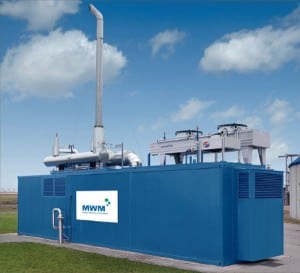
NewsTotal Biogas Package
German company MWM introduced the new MWM container, which it says is a highly efficient and economic distributed generation system designed for natural gas and biogas applications. The package, which includes a biogas genset, a standard container, and biogas processing, are aligned with special requirements of biogas operation. For example, it uses specially designed exhaust […]
-
 Wind
WindWind Energy Soars Around the World
Denmark put into operation its 12th offshore wind farm this October. The €440 million Rødsand 2 wind farm, a 90-turbine installation with a nameplate capacity of 207 MW, was erected for owner E.ON by Siemens Energy—both German firms—over a mere 122 days. The wind farm joins Rødsand I, a 72-turbine installation that began operating nearby in the Baltic Sea in 2003.
-
 Waste to Energy
Top Plant: Kajang Waste-to-Energy Plant, Semenyih, Malaysia
At Malaysia’s first waste-to-energy plant, municipal solid waste (MSW) is converted into refuse-derived fuel for use in an integrated steam power plant. This facility was designed to achieve the twin objectives of environmentally friendly MSW disposal and generating renewable power.
-
Commentary
While Congress Bickers, Solar Industry Holds Its Breath
Energy is the most regulated sector of the American economy, making public-private partnerships essential to scaling the solar industry. Such partnerships have helped other energy sectors to reach scale over the past hundred years.
-
 Coal
CoalSpain Makes Headway in CCS Efforts
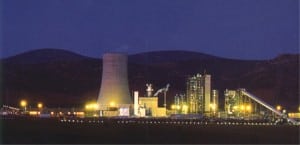
A 14-MW pilot plant built by energy firm ELCOGAS at its 335-MW integrated gasification combined-cycle (IGCC) facility at Puertollano in Spain in September captured its first metric ton of carbon dioxide. Now the company plans to begin tests to procure more technical and economic information about carbon capture and storage (CCS), including how efficient it is to co-produce hydrogen and power with carbon capture processes.
-
 Waste to Energy
Top Plant: Kaukaan Voima Oy Biomass-Fired Power Plant, Lappeenranta, Finland
Located in the heavily forested country of Finland, the Kaukaan Voima biomass-fueled power plant produces process steam and electricity for UPM’s Kaukas pulp and paper mill as well as electricity and district heating for Lappeenrannan Energia, a city-owned power company. Launched in 2009, the plant can provide 125 MW of electricity, 110 MWth of district heat, and 150 MWth of process steam thanks to one of the world’s largest wood-fired fluidized bed boilers.
-
News
EIA: 2009 Had Largest Decline in Power Generation in Six Decades
Economic and environmental developments markedly affected electricity markets in 2009, driving generation down 4.1% to 3,950 million MWh from 4,119 million MWh in 2008—the lowest level since 2003 and the largest decline in six decades, the U.S. Energy Information Agency (EIA) said in its recently released “Electric Power Annual” report.
-
 Gas
GasTurkey Opens Record-Breaking Combustion Gas Engine Plant
Turkey, a country that has seen rapid economic growth since the 1980s, largely spurred by a shift in governmental strategy to open up markets and increase private participation, has been actively overhauling its power infrastructure to meet soaring electricity consumption. According to grid operator Turkish Electricity Transmission Co., national consumption increased to 17 billion kWh this September—an 11% increase over the 15.3 billion kWh consumed in September 2009.
-
 Wind
WindTop Plant: Thanet Offshore Wind Farm, Isle of Thanet, UK
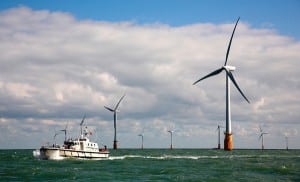
In September, the 300-MW Thanet Offshore Wind Farm, the world’s largest offshore wind energy facility, began operation off the southeastern coast of England. The wind farm has 100 3-MW turbines manufactured by Vestas. The facility will generate electricity equivalent to the annual consumption of more than 200,000 British households.
-
News
Illinois House Approves Tenaska’s Taylorville IGCC Project
The Illinois House on Tuesday approved plans to build Tenaska’s $3.5 billion proposed integrated gasification combined cycle (IGCC) plant with carbon capture and storage (CCS) in Taylorville, Ill. The state Senate is expected to vote on the 602-MW plant later today.