
Articles By

-
News
Supreme Court Justices Skeptical of GHG Public Nuisance Suit
Liberal and conservative U.S. Supreme Court justices on Tuesday skeptically met arguments that power plant owners that emit global warming–causing greenhouse gases (GHGs) can be sued for damages. Justices questioned the court’s jurisdiction to decide on emissions standards, the vast scope of the case, and factors to assess the best available technologies to curb GHG emissions.
-
News
Progress Energy: Hydrogen Explosion Caused Death of Employee at Sutton Plant
An internal investigation has shown that hydrogen gas, which had not been fully purged from the generator during unit maintenance at the coal-fired L.V. Sutton Steam Electric Plant in New Hanover County, N.C., ignited and caused an explosion that killed one worker on March 15, Progress Energy said in a statement.
-
News
DOE Offers $2.1 B Loan Guarantee to California Parabolic Trough Units
The Department of Energy (DOE) on Monday announced a conditional commitment for a $2.1 billion loan guarantee to support Units 1 and 2 of Solar Trust of America’s Blythe Solar Power Project. The two-unit 484-MW concentrating solar thermal plant will be built near Blythe, in Riverside County, Calif.
-
News
BOEMRE Approves Cape Wind’s Construction and Operation Plan
Plans to build and operate the Cape Wind project nearly 5 miles offshore in Nantucket Sound, Mass., were approved on Tuesday by the Department of Interior’s Bureau of Ocean Energy Management, Regulation, and Enforcement (BOEMRE). Cape Wind Associates now says that construction of what could be the first U.S. offshore wind farm could begin as early as this fall, but the controversial project must still overcome several hurdles.
-
News
NRC, U.S. Army Corps Issue FEIS for New V.C. Summer Reactors
The Nuclear Regulatory Commission and the U.S. Army Corps of Engineers (USACE), Charleston District, have completed the Final Environmental Impact Statement (FEIS) for the Combined Licenses (COL) for the proposed V.C. Summer Units 2 and 3 reactors, concluding that there are no environmental impacts that would preclude issuing the COLs for construction and operation of the proposed reactors at the site, near Jenkinsville, S.C.
-
News
NRG Pulls Support for STP 3&4 on Uncertainties Related to Fukushima Crisis
NRG Energy, the majority owner and operator of the South Texas Project, on Tuesday said it was pulling its financial support for a multibillion-dollar project to build two new advanced boiler water reactors (ABWRs) at its nuclear plant in Matagorda County, Texas, because the Japanese nuclear crisis had “diminished prospects” for that project.
-
General
Government Winners Are Often Losers
By Kennedy Maize Washington, D.C., April 19, 2011 – An article in the Washington Post last week highlights why it is folly for government to try to pick winners in complex, technological markets. In this case, it is the market for cars, where the Obama administration is betting – with your money and mine – […]
-
News
NRC Holds Back COL for Calvert Cliffs Over Foreign Ownership Issue
The Nuclear Regulatory Commission (NRC) on Friday told Unistar Nuclear Energy it could not issue the company an operating license for its planned reactor at Calvert Cliffs in Maryland because it was fully owned by France’s Électricité de France (EDF)—a foreign entity.
-
News
Gap in Containment Building Keeps Crystal River Shut Down Indefinitely
Progress Energy Florida last week told the Nuclear Regulatory Commission (NRC) and state regulators that Crystal River Nuclear plant has been shut down indefinitely while the company conducts a “thorough engineering analysis and review” of a new gap in the reactor’s containment building wall that resulted from tendon retensioning work.
-
News
California Governor Signs 33% RPS Law, Eyes More Ambitious Target
California’s Governor Jerry Brown on Tuesday signed into law SBX1-2, a law that increases the state’s renewable portfolio standard (RPS) target from 20% in 2010 to 33% by 2020—the most aggressive goal in the nation. In his signing message, Brown said he would pursue even more far-reaching targets, pushing the RPS to 40% in the “near future.”
-
News
EPRI: Deployment of Fully Functional Smart Grid Could Cost up to $476B
A report released last week by the Electric Power Research Institute (EPRI) that broadly assesses the costs and benefits to modernize the U.S. power system suggests that investments needed to deploy a fully functional smart grid range between $338 billion and $476 billion—but could result in benefits of $1.3 trillion to $2 trillion.
-
News
AWEA: Added Wind Capacity Plunged Nearly 50% in 2010 Compared with 2009
In 2010, only 5,116 MW of nameplate wind capacity was added in the U.S.—a nearly 50% drop from the record 10,000 MW installed in 2009, the American Wind Energy Association (AWEA) said in its newly released annual report. The industry group said, however, that wind power capacity added in 2010 made up 26% of all new generating capacity added in the U.S.—second only to natural gas.
-
News
DOE, GE Make Hefty Investments in Solar Power
Solar power in the U.S. received multiple boosts in the past week as the Department of Energy (DOE) finalized $2.7 billion in loan guarantees for solar projects in California while making available $170 million in funding for solar photovoltaic (PV) technologies, and GE Energy announced plans for what it said will be the biggest solar PV panel factory in the U.S.
-
News
Japan Raises Daiichi Accident Rating to Chernobyl Level
On Tuesday, Japan’s Nuclear and Industrial Safety Agency (NISA) provisionally raised the accident rating for three reactors at the crippled six-unit Daiichi nuclear plant in Fukushima Prefecture to Level 7—making it a “major accident” and putting in on par with the 1986 Chernobyl accident in the Ukraine. And today the Tokyo Electric Power Co. (TEPCO) confirmed damage to spent nuclear fuel rods stored in the Unit 4 building.
-
General
Don’t Close the Government, Abolish DOE
By Kennedy Maize Washington, D.C., April 11, 2011 – Now that the children of all ages have stopped holding their breath until the government turns blue, we can get back to more important subjects, such as what the federal government should look like, how it should relate to the states, how much should it spend, […]
-
News
TEPCO Stops Radioactive Leaks Amid an Array of New Threats
In a major breakthrough at the crisis-stricken Fukushima Daiichi power plant, engineers who had been desperately struggling to contain radioactivity at the plant’s units today managed to stop highly radioactive water leaking into the Pacific Ocean. Tokyo Electric Power Co. (TEPCO) says, however, that it will continue to pump contaminated water into the sea for lack of storage capacity, and efforts are under way to begin injection of nitrogen into the primary containment vessel of Daiichi 1.
-
News
EPA Takes Action on N.J. Complaint About Pennsylvania Plant Pollution
The U.S. Environmental Protection Agency (EPA) on Thursday proposed a rule—granting a Clean Air Act petition filed by New Jersey’s Department of Environmental Protection (DEP)—to limit sulfur dioxide emissions from a 420-MW coal-fired power plant in Pennsylvania that it alleged was adversely impacting air quality in four New Jersey counties.
-
News
Progress to Shut Down Coal Plant Ahead of Schedule
Progress Energy Carolinas will shut down its 170-MW W.H. Weatherspoon coal-fired power plant this fall, several years ahead of the originally announced retirement schedule. The decision follows an evaluation of system resource needs.
-
News
Dominion to Switch Three Coal-Fired Plants to Biomass
Dominion Virginia Power on Friday announced it would convert three 63-MW Virginia coal-fired peaking plants to biomass. The Dominion subsidiary said that while the switch would provide a boost to the local economy, it would also reduce nitrogen oxides, sulfur dioxide, mercury, and particulate emissions to “meet stringent new emission standards established by the U.S. Environmental Protection Agency.”
-
News
Federal Judge Ruling Poses Another Delay for Kansas Coal Plant
Sunflower Electric Power Corp.’s proposed 895-MW Kansas coal-fired power plant suffered another legal setback last week as a federal district court judge ruled in a lawsuit filed on behalf of environmental group Sierra Club that the U.S. Department of Agriculture (USDA) violated federal law by providing approval and financial assistance to the project without environmental review and pubic involvement.
-
News
IEA: Coal Demand Eclipses Clean Energy Efforts
The first Clean Energy Progress Report released today by the International Energy Agency (IEA) finds that while “impressive progress” has been made in developing clean energy technologies in recent years, demand for fossil fuels has continued to surge. Coal has met 47% of global new electricity demand over the past decade, “eclipsing clean energy efforts made over the same period of time,” the agency says.
-
News
DOE, DOI Make Hydropower Push with Funding, Potential Capacity Additions
An internal study released by the Bureau of Reclamation on Thursday found that the federal body overseen by the Department of the Interior (DOI) could generate up to 1 million MWh more power annually from 70 of its existing facilities in 14 states. The report was followed by an $26.6 million funding announcement by the DOE and DOI on Tuesday for research and development projects to advance hydropower technology, including pumped storage.
-
Legal & Regulatory
Flawed Rules May Sink Small Calif. Renewable Projects
In December 2010, the California Public Utilities Commission (CPUC) issued a decision with considerable fanfare that was intended to provide for the development of 1,000 MW of additional new renewable generation and provide California’s large investor-owned utilities (IOUs) with additional flexibility in complying with California’s Renewables Portfolio Standard (RPS) requirements. Unfortunately, it is likely to have the opposite effect.
-
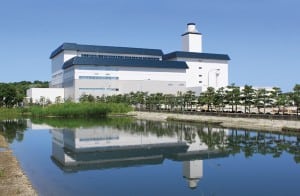 Gas
GasSendai Plant Boosts Efficiency and Cuts Emissions
Located on the scenic Japanese coastline, Tohoku Electric Power Co., Inc.’s new 446-MW Sendai Thermal Power Station Unit 4 is a combined-cycle plant that replaces three 175-MW coal-fired units that had been in operation for more than 50 years. The new plant features the first application of MHI’s 50-Hz M701F4 gas turbine, which provides a thermal efficiency boost from the old plant’s 43% to more than 58%. This change substantially reduces CO2 emissions.
-
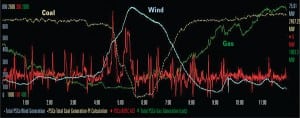 Solar
SolarEnergy Storage Enables Just-in-Time Generation
One of the main criticisms of renewable energy facilities is that they are unable to dispatch electricity when it’s needed. The great game-changer is low-cost energy storage, which would enable renewable energy production to be stored and rapidly released when needed. Here are seven promising distributed energy storage technologies that could be commercialized in the near future.
-
Commentary
Frisbees to Flatulence
I recently outlined the top four regulatory obstacles facing existing U.S. coal-fired power plants in the coming years. That list, although not comprehensive, covered issues that owners of coal plants should be concerned about in the near term. However, in the long term, there is one regulatory development that dwarfs all others.
-
 Wind
WindChanging Winds: The Evolving Wind Turbine
As early as the first century A.D., wind energy was harnessed for practical purposes. Since then, turbine designs have come a long way from the archetypal post-mounted four-bladed devices. Today’s ubiquitous three-bladed designs will soon be evolving in many unexpected directions.
-
Commentary
Australians Say "No" to Carbon Tax
Australian prime minister Julia Gillard invited Jill Duggan, of the European Commission Directorate General of Climate Action and the UK government’s head of international emissions trading, to help bolster Gillard’s push for support of a carbon tax early in March. However, when interviewed on a morning show, Duggan was unable to estimate either the cost or the benefits of the UK’s program. In fact, the interview was a complete disaster.
-
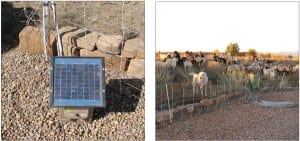 Solar
SolarThe Smart Grid and Distributed Generation: Better Together
Electricity grids are slowly getting smarter. Simultaneously, the use of distributed generation is increasing. Though smart grid advocates tout the ability of a smarter grid to enable greater deployment of distributed resources, the benefits could flow in both directions.
-
 O&M
O&MCondenser Performance Improvement Through Innovative Cleaning and Leak Detection Technologies
One of the largest returns on investment a plant can achieve is the improved condenser performance that results from an effective condenser tube cleaning. Perhaps it is time to reevaluate your choice of cleaning technologies, establish an optimal cleaning schedule, and add routine air and water in-leakage surveys to your plant’s maintenance schedule.