
Articles By

-
Press Releases
EP Presentation Updates May 6
Make the most of your time in Rosemont, Illinois at ELECTRIC POWER. The conference runs May 10 to 12, but Monday, May 9 offers several preconference workshops for in-depth professional advancement. Topics include: PRB Foundation (Conveyor Safety) Course Combustion Optimization in Utility Boilers—Performance Improvements and NOx PRB Combustible Dust—How to Perform a Process Hazard Analysis […]
-
Press Releases
EP At the Show May 6
See the latest power generation technology solutions by visiting the Exhibit Hall between sessions and during special show floor events. You’ll find more than 500 exhibits in one place, at one time. Don’t miss this unique opportunity to evaluate prospective suppliers. The Exhibit Hall is also a great place to network and catch up with […]
-
Press Releases
EP Announcements May 4
Don’t miss the most important generation industry event of the year! State of the Industry speaker confirmed: John Shelk, President & CEO, Electric Power Supply Association, will deliver the State of the Industry speech before the Executive Roundtable, Tuesday morning at 8:30 a.m. What you’ll hear on Tuesday morning alone is worth the price of […]
-
Press Releases
EP Presentation Updates May 4
During the show, you’ll find brief reports on selected sessions and presentations in this space. It’s no substitute for attending the sessions, but we know you can’t get to them all, so we give you a taste of tracks you might have missed. To help you plan your time at ELECTRIC POWER, consult the online […]
-
Press Releases
EP At the Show May 4
The ELECTRIC POWER Exhibit Hall is the real-world meet-up for the power generation industry. It’s where everyone comes together between sessions, for lunches, for receptions-and, of course, to visit a wealth of exhibits and industry vendors. Here’s just a glimpse of what you’ll find on the Exhibit Floor… Tuesday, May 10 11:00 a.m. – 6:00 […]
-
News
Exelon, Constellation to Merge in $7.9B Deal
In the latest of a string of mergers in the utility sector, Exelon on Thursday said it would buy Constellation Energy in a $7.9 billion deal. The agreement would bring together Exelon’s large nuclear fleet and Constellation’s “customer-facing” business, creating a platform for growth, the companies said in a joint statement.
-
News
NERC to Conduct Large-Scale Grid Security Readiness Exercise
The North American Electric Reliability Corp. (NERC) plans to conduct a large-scale grid security exercise later this year that will involve bulk North American power system owners and operators.
-
News
Mass. Proposes Tougher GHG Standards for Wood-Burning Biomass Producers
The Massachusetts Department of Energy Resources (DOER) on Tuesday filed draft rules with the state Legislature that could require large wood-burning power producers to meet strict greenhouse gas (GHG) emission standards before they can receive state financing. The rules were modeled on conclusions reached in a June 2010 study that burning forest trees for power is not carbon neutral.
-
News
New Wash. Law Phases Out Coal-Fired Power by 2025
A law signed by Governor Chris Gregoire on Friday phases out coal-fired power production in Washington State with the closure of two coal boilers at TransAlta’s Centralia power plant.
-
News
No Limits for TEPCO’s Liability in Fukushima Crisis, Japan Says
In the past week, Japan’s Prime Minister Naoto Kan and Chief Cabinet Secretary Yukio Edano separately rejected suggestions that Tokyo Electric Power Co. (TEPCO) could be exempt from liability for damages at its crippled Fukushima Daiichi power plant caused by the magnitude 9 quake and 14-meter tsunami wave on March 11.
-
News
Efforts to Stabilize Fukushima Daiichi See Incremental Improvements
Workers are scrambling to contain highly radioactive water and prevent another explosion at the quake-devastated Fukushima Daiichi nuclear power plant. Meanwhile, the situation—which still remains “very serious,” according to the International Atomic Energy Agency (IAEA)—has improved only incrementally, the chairman of the U.S. Nuclear Regulatory Commission (NRC) told lawmakers.
-
News
Industry Groups Urge EPA to Grant Stay on Boiler MACT Rules
Seventeen industry groups, including the Biomass Power Association (BPA) and U.S. Chamber of Commerce, last week petitioned the Environmental Protection Agency (EPA) to put on hold rules for industrial boilers while the agency reconsiders them.
-
Press Releases
EP Presentation Updates May 2
ELECTRIC POWER conference tracks are programmed by a 100-member industry committee to ensure that session content is substantive, practical, and timely. It’s information you can use presented by people who have been in your shoes. To help you plan your time at ELECTRIC POWER, consult the online conference grid. You’ll have complete session details when […]
-
Press Releases
EP At the Show May 2
Do you have limited time, or do you just want to visit with hundreds of North American and international industry exhibitors? Then the Expo-Only Special Package is for you: See the latest power generation technology solutions at more than 500 exhibits. Don’t miss this unique opportunity to evaluate prospective suppliers. Attend the Keynote and CEO […]
-
Press Releases
EP Announcements May 2
May 6 is the last day to save by registering for ELECTRIC POWER online! Register online today and save $200. Stay in the middle of the action. Book your hotel room now. ELECTRIC POWER has discounted hotel rooms at several different hotels, but time is running out, so make your reservation today. When you register, […]
-
General
The Tired Obama Attack on Gasoline Prices
By Kennedy Maize Washington, D.C., May 2, 2011 – The Obama administration’s response to current high gasoline prices is so 1970s…or 1980s…or 1990s…or 2000s. Been there, done that, dead end. Washington seems to be perfumed with a silliness pheromone that gets loosed in the Nation’s Capital whenever gasoline prices go up. As pump prices climb, […]
-
 Coal
CoalChina’s Five-Year Plan Is Heavy on Non-Fossil Generation
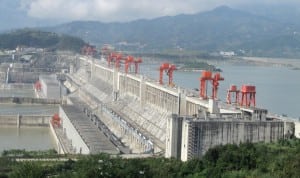
The People’s Republic of China’s Congress approved a much-anticipated draft of the country’s 12th Five-Year Plan (2011–2015) on March 14. Along with key objectives that included boosting its gross domestic product (GDP) by 7% annually on average, the country for the first time in a five-year plan established targets to tackle climate change. It plans to reduce carbon dioxide emissions per unit of GDP by 17% from 2010 levels by 2015 and to reduce energy consumption per unit of GDP by 16% from 2010 levels by 2015.
-
O&M
Preventing Copper Deposition in Steam Turbines
Many large utility-scale units with copper alloy condensers and feedwater heaters lose generating capacity when copper and copper oxide deposits develop on high-pressure (HP) steam turbine blading. It is not unusual for a 400-MW unit to lose 10% of its generating capacity over a six-month period when water treatment processes aren’t properly tuned to prevent copper transport in the steam and condensate systems. In fact, one utility reported that it lost 20 MW of capacity in one month because of such deposits. The financial implications of such deposits, particularly in power markets where plants are pushed to their generating limits, are tremendous.
-
Commentary
Customers Know What Customers Know Best
Wish you could get inside your customer’s head? If so, forget data and go to the source.
-
 Coal
CoalLarge-Scale Tests Begin to Convert Flue Gas to Usable Water
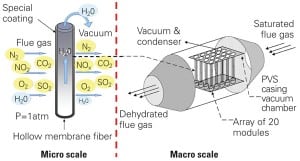
Subsidized by the Dutch government, a number of Dutch utilities, the European Membrane Institute at the University of Twente, and Dutch consulting firm KEMA have, for over a decade, been testing membrane technology that promises to directly convert water vapor from power and other industrial plants’ flue gases into drinking water. The technology could provide a new source of large volumes of potable water.
-
O&M
Predictive Maintenance That Works
This series of articles focuses on the nuts and bolts of predictive maintenance (PdM), also known as condition-based maintenance. A well-defined and well-executed PdM program saves time and money by reducing unneeded time-based maintenance tasks and by identifying and fixing problems before they cause equipment failure or plant shutdown. In this article, we begin introducing condition-monitoring techniques commonly in use at power plants.
-
Commentary
Prudence: Who’s Minding the Store?
Regulators are asked to balance a societal need with the cost burden placed on those who pay for the service. Sometimes they forget that it’s other people’s money at stake.
-
 Wind
WindMajor Offshore Players Introduce Colossal Wind Turbines
Competition among offshore wind turbine vendors vying for market share went into overdrive in the first three months of 2011 as several key players announced gigantic new turbine models.
-
Legal & Regulatory
Is FERC Backstop Siting Authority Still Alive?
The U.S. Court of Appeals for the Ninth Circuit recently dealt another setback to the use of Section 216 of the Federal Power Act, which gives the Federal Energy Regulatory Commission (FERC) “backstop” authority to site electric transmission lines. Although enacted in 2005, this authority has never been used by FERC, and it can be questioned whether it ever will be used.
-
Commentary
How to Hire an Honest Staff
It’s not just hard finding good help these days. It’s hard finding honest help, too.
-
 Hydro
HydroChina Dam Gets World’s First Self-Closing Ring Gate Control System
A major technical advance in hydroelectric dam safety was achieved this March as Alstom’s Chinese arm, the Tianjin Alstom Hydro Co. (TAH), delivered what it called “the world’s first self-closing electronic ring gate control system” to the Ahai hydropower project in China.
-
 Coal
CoalResearch and Development for Future Coal Generation
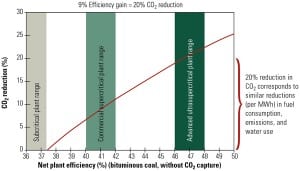
If coal is to be a viable long-term fuel for a significant percentage of electricity generation, research and development is needed to increase thermal efficiency, demonstrate cost-effective and secure carbon dioxide capture and storage, further improve emission controls, and reduce water demands.
-
 Environmental
Researchers Develop Supercritical CO2 Brayton Cycle Turbines
Researchers at Sandia National Laboratories say a project that focuses on supercritical carbon dioxide (CO2) Brayton cycle turbines is moving to the demonstration stage.
-
 Coal
CoalAdded Regulatory Hurdles Will Accelerate Coal Plant Retirements
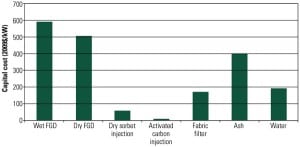
The U.S. Environmental Protection Agency is developing a number of new regulations for the power sector governing air emissions, cooling water intake structures, and coal combustion waste disposal methods. Combined, these regulations have the potential to drive as much as 40% of existing coal-fired generating units to retire in the next 10 years, representing about 51 GW.
-
 Solar
SolarInterest, Funding Buoys Floating Solar Power Plants
Like most forms of generation, solar power has its disadvantages. Two cited most by critics of photovoltaic (PV) or concentrating solar power facilities are that they require large expanses of land and that solar cell fabrication and maintenance costs are high. Several companies have been assessing a new approach to tackling these factors: installing solar plants on water.