
Articles By

-
Legal & Regulatory
Supreme Court Expands Employee Rights
U.S. Supreme Court rulings in two recent cases further advance the rights of employees in disputes with employers, continuing a long-term trend in federal law on employment discrimination.
-
 News
NewsNOx Burner Optimization Kit for All Burners
Hamworthy Peabody Combustion’s new Q-jet Low NOx Burner Optimization Kit can be retrofitted to practically any existing burner, regardless of manufacturer, to increase efficiency and reduce maintenance. In addition, the Q-jet Kit eliminates the need to replace complete burner assemblies just to meet emissions requirements, saving time and money. A key feature is that the […]
-
Legal & Regulatory
Japan, Critical Materials, and Weak Links in Supply Chains
The devastation in Japan has focused new attention on supply chain issues and the impact of the partial collapse of that country’s manufacturing infrastructure on both Japanese imports and exports.
-
 News
NewsForged Ball Valves
Valve-maker Conval announced that its popular Camseal zero-leakage ball valves now have forged bodies. These new forged ball valves are available in half-inch through 4-inch sizes with top entry, socket weld, butt weld, and flanged ends. Pressure classes range from ASME 900 through 4500. Camseal forged ball valves feature zero body leakage, zero seat leakage, zero seal […]
-
Legal & Regulatory
John Hanger, Pa.’s Former Environmental Chief, Talks About Challenges of Keeping Gas Drilling Safe
John Hanger, who led Pennsylvania’s Department of Environmental Protection until January, talked with ProPublica earlier this year about the challenges of trying to regulate the expanding drilling industry.
-
News
Nuclear Sneak Attack
A renewed attack on nuclear power immediately followed the March 11 catastrophe at the six-unit Fukushima Daiichi nuclear power complex in Japan. At least one legislator and a multitude of anti-nuclear groups have demanded that the U.S. cease approval of all new nuclear plants for the foreseeable future and/or close our Mark I boiling water reactor (BWR) plants. This knee-jerk response adds nothing substantive to the nuclear safety debate. (Be sure to read our cover story for more on this issue.)
-
Commentary
Solving the Challenges of Growing Energy Demand
The electric power generation landscape in both America and the rest of the world is poised to undergo a fundamental transformation in the next several decades. Global energy consumption is projected to rise dramatically by 2035, and the methods by which we generate electricity and the fuels we choose to use will begin to change as well.
-
HR
Writing an Employee Handbook Your Employees Will Read, and Heed, Part 1
Not complying with current law can be expensive in today’s legal climate. Employers should review their employee handbooks and employment-related policies to make sure they are up to date. More importantly, employers should draft their handbooks so that employees actually read them and follow their policies.
-
 Nuclear
The Battle to Stabilize Daiichi
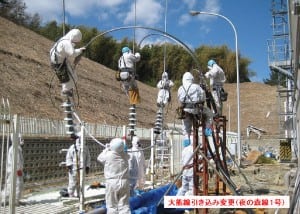
Weeks after a massive magnitude 9.0 earthquake and subsequent 14-meter-high tsunami devastated Fukushima Prefecture in northeastern Japan, workers from the Tokyo Electric Power Co. (TEPCO) were still struggling to regain control of four severely damaged reactors at the six-unit Fukushima Daiichi nuclear power plant.
-
Commentary
Customers Know What Customers Know Best
Wish you could get inside your customer’s head? If so, forget data and go to the source.
-
 Coal
CoalChina’s Five-Year Plan Is Heavy on Non-Fossil Generation
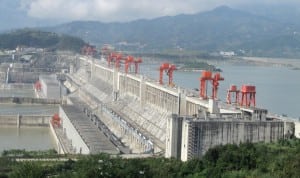
The People’s Republic of China’s Congress approved a much-anticipated draft of the country’s 12th Five-Year Plan (2011–2015) on March 14. Along with key objectives that included boosting its gross domestic product (GDP) by 7% annually on average, the country for the first time in a five-year plan established targets to tackle climate change. It plans to reduce carbon dioxide emissions per unit of GDP by 17% from 2010 levels by 2015 and to reduce energy consumption per unit of GDP by 16% from 2010 levels by 2015.
-
O&M
Preventing Copper Deposition in Steam Turbines
Many large utility-scale units with copper alloy condensers and feedwater heaters lose generating capacity when copper and copper oxide deposits develop on high-pressure (HP) steam turbine blading. It is not unusual for a 400-MW unit to lose 10% of its generating capacity over a six-month period when water treatment processes aren’t properly tuned to prevent copper transport in the steam and condensate systems. In fact, one utility reported that it lost 20 MW of capacity in one month because of such deposits. The financial implications of such deposits, particularly in power markets where plants are pushed to their generating limits, are tremendous.
-
Commentary
Prudence: Who’s Minding the Store?
Regulators are asked to balance a societal need with the cost burden placed on those who pay for the service. Sometimes they forget that it’s other people’s money at stake.
-
 Coal
CoalLarge-Scale Tests Begin to Convert Flue Gas to Usable Water
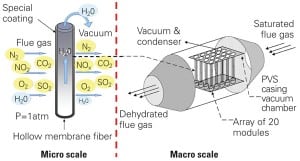
Subsidized by the Dutch government, a number of Dutch utilities, the European Membrane Institute at the University of Twente, and Dutch consulting firm KEMA have, for over a decade, been testing membrane technology that promises to directly convert water vapor from power and other industrial plants’ flue gases into drinking water. The technology could provide a new source of large volumes of potable water.
-
O&M
Predictive Maintenance That Works
This series of articles focuses on the nuts and bolts of predictive maintenance (PdM), also known as condition-based maintenance. A well-defined and well-executed PdM program saves time and money by reducing unneeded time-based maintenance tasks and by identifying and fixing problems before they cause equipment failure or plant shutdown. In this article, we begin introducing condition-monitoring techniques commonly in use at power plants.
-
Commentary
How to Hire an Honest Staff
It’s not just hard finding good help these days. It’s hard finding honest help, too.
-
 Wind
WindMajor Offshore Players Introduce Colossal Wind Turbines
Competition among offshore wind turbine vendors vying for market share went into overdrive in the first three months of 2011 as several key players announced gigantic new turbine models.
-
Legal & Regulatory
Is FERC Backstop Siting Authority Still Alive?
The U.S. Court of Appeals for the Ninth Circuit recently dealt another setback to the use of Section 216 of the Federal Power Act, which gives the Federal Energy Regulatory Commission (FERC) “backstop” authority to site electric transmission lines. Although enacted in 2005, this authority has never been used by FERC, and it can be questioned whether it ever will be used.
-
 Hydro
HydroChina Dam Gets World’s First Self-Closing Ring Gate Control System
A major technical advance in hydroelectric dam safety was achieved this March as Alstom’s Chinese arm, the Tianjin Alstom Hydro Co. (TAH), delivered what it called “the world’s first self-closing electronic ring gate control system” to the Ahai hydropower project in China.
-
 Coal
CoalResearch and Development for Future Coal Generation
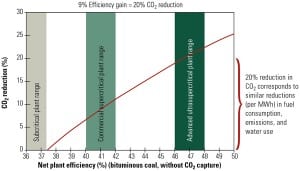
If coal is to be a viable long-term fuel for a significant percentage of electricity generation, research and development is needed to increase thermal efficiency, demonstrate cost-effective and secure carbon dioxide capture and storage, further improve emission controls, and reduce water demands.
-
News
Saskatchewan Greenlights C$1.24B CCS Demonstration Project
The Canadian province of Saskatchewan on Tuesday approved construction of a C$1.24 billion project that will integrate and demonstrate carbon capture and storage (CCS) at an aging Boundary Dam Power Station unit near Estevan.
-
News
MIT Study: Japan Crisis to Have Consequences for All Aspects of Nuclear Power
The nuclear crisis at Fukushima Daiichi could increase costs for existing and future nuclear power plants, increase scrutiny on relicensing procedures, and cause a reevaluation of the entire spent fuel management system, researchers from the Massachusetts Institute of Technology (MIT) said as they released a comprehensive report on the future of the nuclear fuel cycle.
-
News
Indiana, Iowa Pass Key Nuclear Bills
Last week, lawmakers from Indiana approved a bill that could allow utilities to charge consumers costs incurred to extend the lives of nuclear reactors, and on Tuesday, Iowa legislators voted to begin the process of developing a new nuclear plant.
-
News
TEPCO: At Least 55% of Daiichi 1’s Core Has Been Damaged
As much as 55% of Unit 1’s reactor core at the quake-stricken Fukushima Daiichi nuclear power plant is thought to be damaged; Unit 2’s core is estimated to be 35% damaged, as is 30% of Unit 3’s core, the Tokyo Electric Power Co. (TEPCO) said today. Seven weeks after the crisis began, the utility—which has also admitted damage of the spent fuel rods at Unit 4—continues all efforts to cool the affected reactors.
-
News
Ga. Judge Remands 1,200-MW Coal Plant Permit to Regulators
A Georgia administrative law judge has remanded an air permit for LS Power’s proposed 1,200-MW Longleaf coal-fired power plant to the state Environmental Protection Division (EPD). The judge found that the permit did not sufficiently limit pollution and ordered the regulatory body to amend the permit to include federally approved tests for five air pollutants.
-
News
Co-op Rejects Vermont Yankee Power Purchase Deal
Entergy Corp.’s Vermont Yankee nuclear power plant hit another hurdle on Tuesday as the Vermont Electric Cooperative (VEC) rejected a 20-year power purchase contract at below market prices.
-
News
EIA Outlook: U.S. Coal-Fired Fleet Will Shrink, Natural Gas, Renewables to Grow
An annual report released on Tuesday by the U.S. Energy Information Administration (EIA) that assesses energy and technology market trends forecasts that if current laws and regulations remain unchanged, natural gas and renewables will see strong growth in the electricity sector. The report also suggests that expected regulations from the Environmental Protection Agency (EPA) will have an impact on the U.S. power sector, most notably on its fleet of coal-fired power plants.
-
News
NRG Pulls Support for STP 3&4 on Uncertainties Related to Fukushima Crisis
NRG Energy, the majority owner and operator of the South Texas Project, on Tuesday said it was pulling its financial support for a multibillion-dollar project to build two new advanced boiler water reactors (ABWRs) at its nuclear plant in Matagorda County, Texas, because the Japanese nuclear crisis had “diminished prospects” for that project.
-
News
TVA to Shutter 16% of Coal-Fired Capacity by 2017
The Tennessee Valley Authority (TVA) on Thursday said it would retire 18 older coal-fired units at three power plants starting next year as part of plans to idle or retire 2,700 MW of its 17,000 MW of coal-fired capacity by the end of 2017. The federally owned utility plans to replace the capacity with nuclear—proceeding with plans for Watts Bar Unit 2 and Bellefonte—as well as renewables, natural gas, and energy efficiency.
-
News
TEPCO: Recovery Roadmap Could Put Units into Cold Shutdown within Six Months
The Tokyo Electric Power Co. (TEPCO) unveiled a two-stage plan to put units at its quake and tsunami–crippled Fukushima Daiichi nuclear plant into cold shutdown within six to nine months, and the International Atomic Energy Agency (IAEA) said that if efforts go as planned, the amount of radiation may not increase.