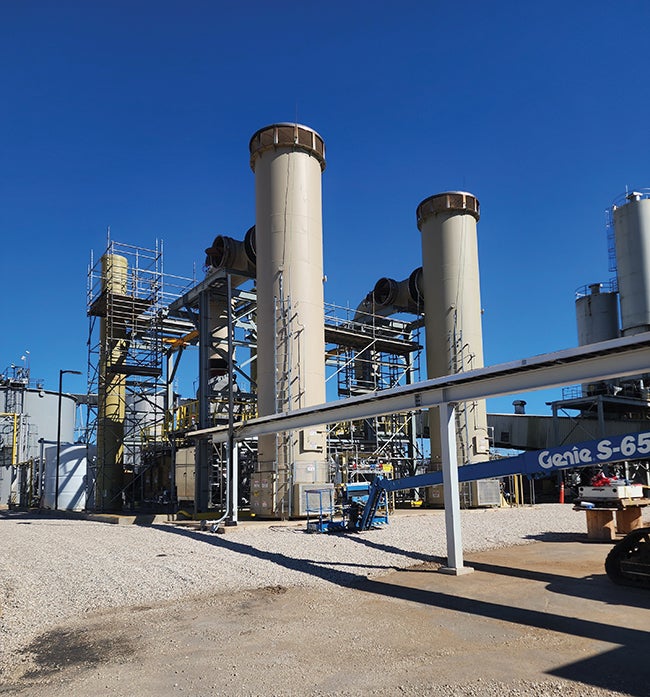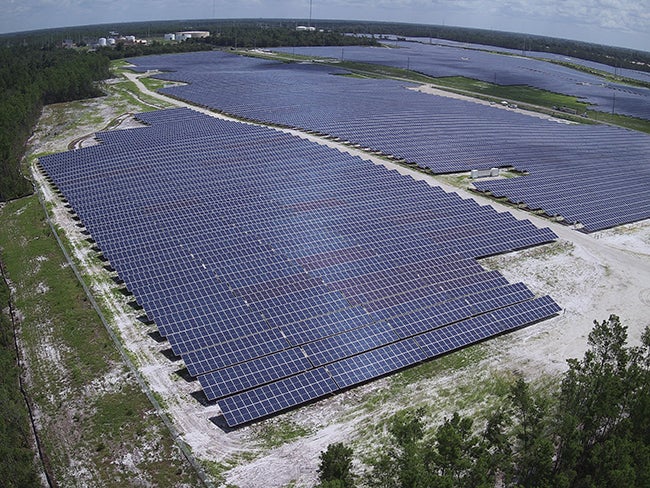
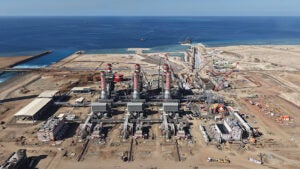
When no suitable vessel was available to carry its gas turbine generators from the U.S. to Saudi Arabia’s Red Sea coast, the Rabigh Reinforcement project team turned to the heavy-lift charter market at a time when shipping conditions were already challenging. Drawing on its logistics experience and global agreements, the consortium engaged one of the world’s largest shipping carriers, which moved all the gas turbine generator bodies together on a single chartered vessel making a dedicated voyage to Saudi Arabia.
That kind of logistics improvisation is one example of how the 1,179-MW combined cycle plant reached first fire in July 2025, roughly 14 months after the engineering, procurement, and construction (EPC) contract was awarded. The project’s contracting structure, in which site preparation began in July 2023 and the contract was not awarded until May 2024, made that pace possible. But two executives responsible for delivering the plant say the schedule was protected by decisions made in the field: early planning, a deliberately built workforce, and a safety culture that kept 12 million man-hours free of lost-time injuries. Sandeep Kumar Gupta, sales director with Siemens Energy Gas Services, and Naira Elsayed, a senior project manager with Elsewedy Electric Power Systems Projects (PSP), described those decisions as guests on The POWER Podcast.
Early Alignment Protected the Schedule Before Contract Award
For roughly 10 months, early execution activities progressed while broader contractual and commercial arrangements were still being finalized. Gupta called the arrangement “certainly unconventional,” saying it worked only because of trust, alignment, and disciplined risk management among the three parties. The Saudi Electricity Company (SEC) accelerated bid evaluation and established interim mechanisms, including a limited notice to proceed and advance project payments, which allowed the consortium to order critical long-lead equipment and prepare the site.
Elsayed said the project management team also did something not normally done: It joined the proposal team during tendering to turn the project scope into an execution plan. “We took the tendering phase to plan our job and make ourselves ready for execution,” she said. Work on long-lead items began before the contract was signed.
When Red Sea Shipping Was Disrupted
Red Sea shipping disruption hit the project’s heaviest equipment, some of it coming from the U.S. The gas turbine generators charter protected the simple cycle milestone, but the steam turbine generator proved harder to move. Because it was a single unit, Elsayed said, chartering a dedicated vessel for it was difficult. Rather than wait, the team rerouted the 380-ton generator around the Cape of Good Hope to a port on the Arabian Gulf, far from the site. From there it spent 32 days on the road, a journey that required special permits, road modifications, and bridge adjustments that were not part of the original plan. “We cannot always control the external events, but we can control our response through flexibility, quick decisions, and strong partnership with alternative solutions,” she said.
Building a Workforce Ahead of Demand
Skilled labor was among the project’s biggest challenges, Elsayed said, because many large projects were running in parallel across Saudi Arabia under Vision 2030. Planning began during tendering, when the team ran a market survey to build a database of the manpower it would need. It then set up a small training and testing center at the site for welders and electrical technicians, and developed competitive employment packages.
The team also selected 25 fresh-graduate engineers from 100 applicants and enrolled them in a two-year training program, with the aim of placing them on the client side in plant operations. Work was divided into packages that experienced subcontractors with available crews could take on, and sister companies took some packages because of their capacity to supply manpower. Elsayed said her company’s reputation for moving good performers between projects helped retain them by offering “a career path, not just a job.”
Safety as Shared Responsibility
The project recorded no lost-time injuries even as its workforce peaked at about 2,500 people on site. Elsayed said the project had the standard elements of a strong safety program, including a professional safety team, continuous induction and training for subcontractors, and close monitoring of site activity. She said the difference was culture, built around the concept “that safety was everyone’s responsibility, not only the safety team.”
Safety performance was linked to key performance indicators across project roles, and subcontractors with strong records received recognition. The safety team also worked side by side with subcontractors to find safe alternatives “rather than simply reject unsafe works,” she said, so that work could proceed under high safety measures.
One Team, With a Track Record
Gupta said the partnership came down to clear roles, trust, and a shared goal. Siemens Energy delivered the power island, Elsewedy Electric PSP delivered the balance of plant and site execution, and SEC provided leadership as owner. “When issues came up, people picked up the phone and solved them rather than escalating them,” he said. Siemens Energy’s expansion beyond its traditional original equipment manufacturer (OEM) role into greater EPC responsibility, he added, helped streamline decision-making and reduce interfaces.
The partnership was already well established. Siemens (now Siemens Energy) and Elsewedy Electric previously delivered Beni Suef, one of three plants in Egypt’s 14.4-GW Megaproject, which POWER named its 2019 Plant of the Year. As a result, Elsayed said, the two companies did not need time to learn to work together at Rabigh, and their experience on many joint projects allowed execution to proceed smoothly.
Gupta was careful not to draw overly broad conclusions from the project. Whether Siemens Energy takes on a similar EPC role elsewhere will depend on the customer, the project requirements, and the risk profile, he said, and Rabigh should be viewed in the context of the specific needs of the project “rather than as a universal delivery model.” What he said is transferable is early alignment: Time at Rabigh was gained by getting the owner and the EPC partner aligned early on objectives, roles, and decision-making, and Siemens Energy is bringing that approach to other projects.
To hear the full interview with Gupta and Elsayed, listen to The POWER Podcast. Click on the SoundCloud player below to listen in your browser now or use the following links to reach the show page on your favorite podcast platform:
For more power podcasts, visit The POWER Podcast archives.
—Aaron Larson is POWER’s executive editor.