Geothermal power and conventional fossil fuel–powered technologies have similar power production cycles, and both generation types can be dispatched. Geothermal power’s primary advantage is its renewable fuel. Its primary disadvantage is that its fuel requires large investments over many years to characterize uncertain sources. Enhanced recovery techniques that use fracking may be the future of this renewable resource.
Underachiever. That’s what comes to mind when considering the state of geothermal power in the United States.
By all accounts, geothermal energy is a very attractive source of electric power. The heat of the earth is essentially endless, providing a sustainable source of energy—and power—far into the future. The technology is fairly well known. The U.S. has produced electricity from the stored energy in our planet’s crust since 1960. Furthermore, electricity from geothermal heat, unlike that from the wind or the sun, is dispatchable, and plants typically have capacity factors of 80% to 90%.
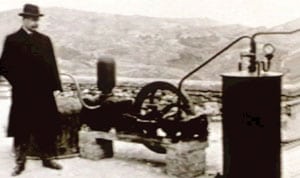
Today, geothermal power installations in the U.S. total 3,102 MW, according to the Geothermal Energy Association (GEA). Production is concentrated in nine states: Nevada, California, Utah, Idaho, Oregon, Alaska, Hawaii, New Mexico, and Wyoming. The largest single project is also the oldest: The Geysers, located in the Mayacamas Mountains north of San Francisco, which began commercially generating electricity for Pacific Gas & Electric Co. in 1960. Now owned by Calpine, the 15 units at The Geysers have a net generating capacity of 725 MW, down considerably from their 2,000-MW peak in the 1980s (Figure 1).
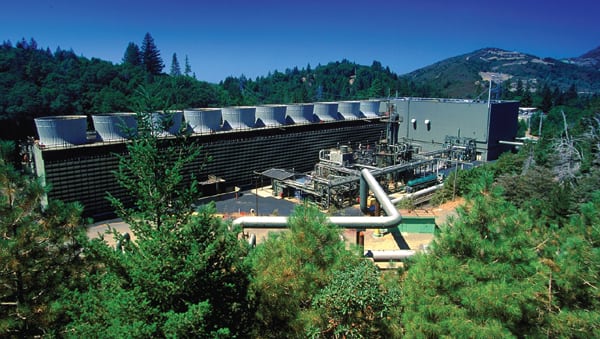 |
| 1. Renewable treasure. Naturally occurring high-pressure steam reservoirs in the Mayacamas Mountains north of San Francisco have been harnessed to produce electricity. This group of plants, collectively known as The Geysers, constitute the largest geothermal complex in the world. The Geysers produce one-fifth of California’s renewable energy. Courtesy: National Renewable Energy Laboratory |
The U.S. has the largest fleet of geothermal power plants in the world, although they supply only a tiny portion of the nation’s electricity. The second-largest geothermal system is in the Philippines, with total generating capacity of about 1,900 MW, which provides 27% of that country’s electricity (Figure 2).
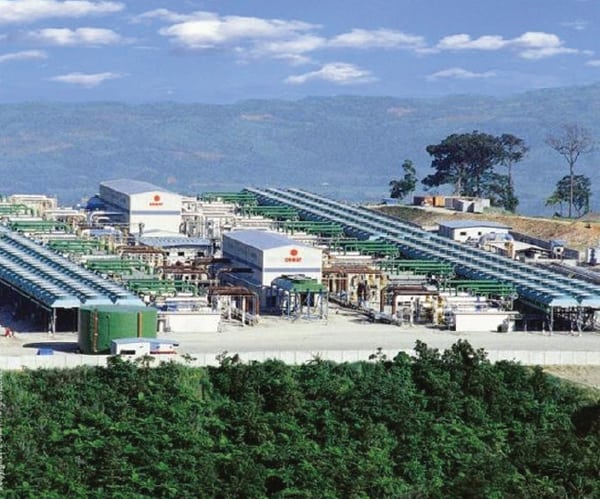 |
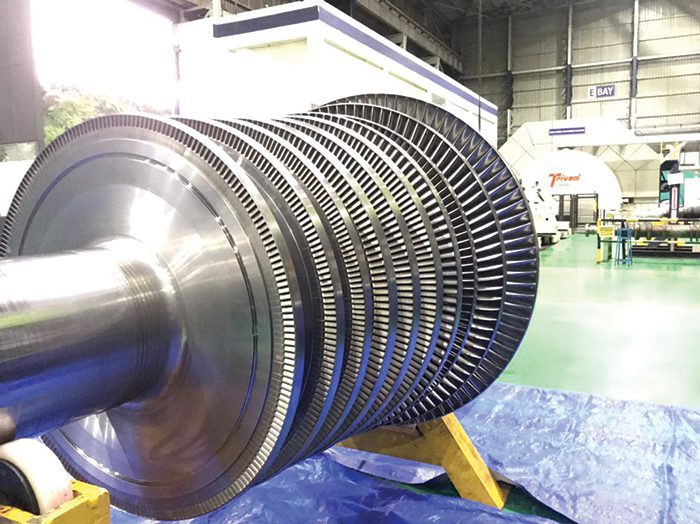
| 2. Island power. Ormat’s organic Rankine cycle modules were used at the 125-MW Upper Mahiao Geothermal Plant, located on the island of Leyte, Philippines. The plant went into service in 1996. Courtesy: Ormat Technologies Inc. |
Unrealized Potential
A recent Electric Power Research Institute (EPRI) report on geothermal commented, “Over the long term, the potential for geothermal power production can hardly be overstated. The earth’s crust serves as an insulating blanket over an otherwise hot planet. At different depths, there is hot rock virtually everywhere, meaning that the thermal resource is as geographically dispersed as sunshine and is often available just a few hundred to a few thousand feet underground.”
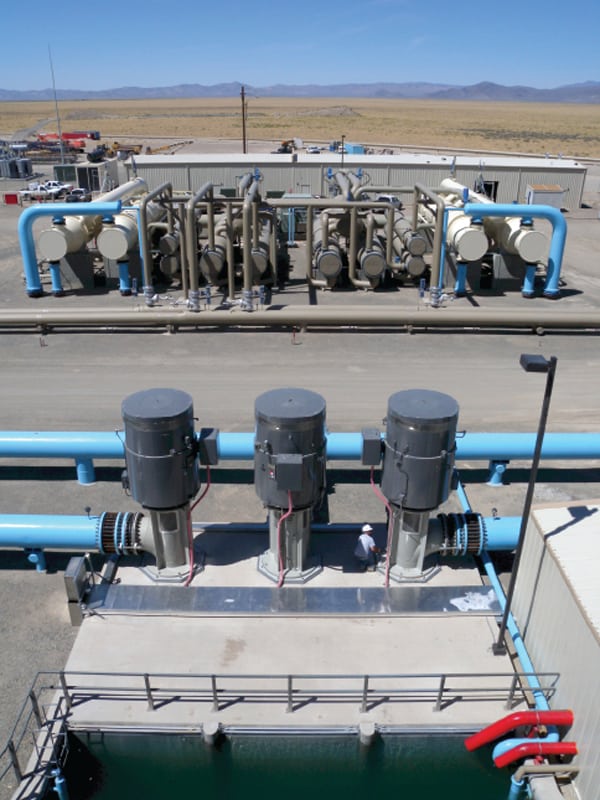
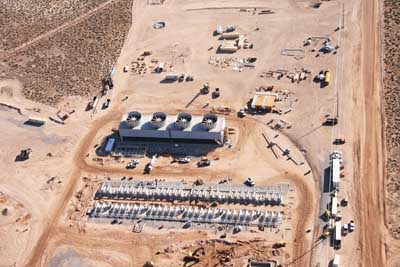
The geothermal industry has also developed exciting new technologies. It has moved beyond conventional steam turbines driven by geysers of superhot water gushing from the ground, exemplified by The Geysers. Companies such as U.S. Geothermal and Ormat Technologies employ binary generation technology developed by the federal government in the 1970s and 1980s. These binary plants use lower-temperature hot geothermal water to vaporize an organic liquid with a boiling point lower than water’s. The vapor produced is then expanded through a turbine generator to produce electricity, much as in a conventional steam plant. The condensed geothermal brine is then reinjected into the geothermal reservoir. According to U.S. Geothermal, 12 operating binary geothermal projects in the western U.S. today generate 184 MW of electricity (Figure 3).
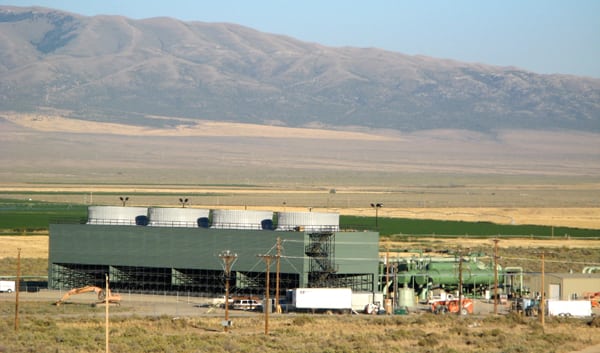 |
| 3. One of a dozen. U.S. Geothermal’s Raft River geothermal project, in operation in southern Idaho since early 2008, is one of 12 operating binary plants in the western U.S. The approximately 10 MW produced by Raft River is sold to Idaho Power. The company is currently constructing a new 8.6-MW plant outside San Emidio, Nev. Courtesy: U.S. Geothermal |
Disastrous Decade
Despite its promise, geothermal power production has barely budged in the U.S. over the first decade of this century. According to Energy Information Administration data, geothermal power production in 2004 was 0.341 quadrillion Btu. In 2008, the figure was 0.360 quads. By contrast, wind provided 0.142 quads in 2004 and 0.546 quads in 2008. The geothermal industry today shows little tangible evidence of significant growth. In 2010, for example, only one new geothermal power plant came online. That was a 15-MW plant in Nevada’s Jersey Valley, owned by Ormat.
Recent headlines tell part of the tale. The New York Times: “Short on Cash and Know-How, U.S. Geothermal Industry Stumbles.” Renewable Energy World: “Geothermal Industry Continues to Struggle for Acceptance.”
The Times interviewed John McIlveen, a Wall Street analyst who follows the five publicly traded geothermal companies. He noted that all of the public geothermal players have been clobbered by the market, in part because geothermal development requires large amounts of capital for risky drilling to prove resources before they can be turned into revenue-producers. This is not a good time for technologies with high upfront costs and uncertain downstream results.
Getting a new project going, McIlveen noted, can take five years or more and cost $3 million to $10 million. But McIlveen also blamed the decline in the values of the companies’ stock on “the lack of execution on the part of the geothermal companies.” Recent projects have sometimes come in short of the original developers’ claims.
The Renewable Energy World article observed that “a lack of private capital echoed throughout our investigation.” The magazine said, “Perhaps this is the price the industry must pay for having painted overly rosy pictures in years past.”
Karl Gawell, executive director of the GEA, the industry’s Washington lobbying group, rejects the “underachiever” label as “not fair.” He told POWER recently, “Expectations were too high to begin with.” Geothermal, he noted, grew steadily through the late 1970s and 1980s, raising hopes of continued growth. But the industry collapsed in the 1990s, he said, and “for 10 years, nothing happened.”
Interest in geothermal picked up again in 2005, noted Gawell, with passage of the Energy Policy Act of 2005 and the inclusion of geothermal in the production tax credit regime. But the next year, Gawell added, “the Bush administration decided to zero us out” of the Department of Energy budget. Then the economy tanked.
Today, says Gawell, the industry is starting to see the glimmer of resurgence. A GEA report last April noted, “While the economic downturn of 2008 adversely impacted the rate of geothermal resource development, the geothermal industry has maintained steady growth in the U.S. through 2010 and 2011. The total number of geothermal projects under development, as well as geothermal prospects reported in 2011 increased 12% over 2010.”
“It’s a slow go,” said Gawell, “slower than it should be.” In part, he said, that’s because the 10-year black hole of development has meant the industry has to rebuild its infrastructure and development capacity almost from scratch. “There is a learning curve as rebuilding takes place,” he said.
An example of that learning curve is found in a shortage of drilling crews with geothermal experience. It isn’t a rig availability problem, but the experience of the crews running the rigs. Geothermal drilling isn’t the same as drilling for oil and gas. The holes needed to prove the resource are wider in diameter. Also, geothermal drilling involves higher temperatures and caustic steam. “What I’m told,” said Gawell, “is that the experience of the crews is important. If a crew has drilled for a number of projects, they get better results. We have not been drilling enough holes in recent years.”
Another problem, said Gawell, is “misapplied incentives” in federal renewable energy tax law. While the geothermal industry fought hard to get included in production tax credits that have aided wind and solar development since the Energy Policy Act of 1992, those tax credits don’t kick in until the project is actually making electricity. “It’s great to have the incentives,” said Gawell, “but the big risk in obtaining the money is in the reservoir work.” That occurs well before energy production starts.
Industry Rebirth
A number of projects are moving forward today, and some 700 MW are in the final phases of development, according to the GEA’s 2011 “Annual U.S. Geothermal Power Production and Development Report.” Many of those projects are pushing to beat the 2013 deadline. New geothermal projects have to be in service by Dec. 31, 2013, to qualify for the production tax credits. Whether Congress will approve further extensions is uncertain, but some Washington observers say the prospects are doubtful given the current concern over federal deficits.
Legislation is moving in Congress to make it easier to finance geothermal projects at the front end. The House Natural Resources Committee has approved a bill that streamlines permitting for geothermal exploration on federal lands. In the Senate, the Energy and Natural Resources Committee has approved a bill, pushed by Alaska Republican Senator Lisa Murkowski, that would create a revolving loan fund for drilling exploration wells. Separately, Sen. Ron Wyden, an Oregon Democrat, has introduced legislation to increase the investment tax credit for geothermal projects.
But in today’s gridlocked and spending-constrained political environment, observers give the geothermal legislation slim chances for passage. “The problem,” says the GEA’s Gawell, “is nobody really knows if any of this is going to go anywhere.” Given the uncertainty, investors tend to sit on their wallets.
Washington’s rocky experience with loan guarantees for renewable energy projects—particularly high-profile financial failures of some solar photovoltaic module manufacturers in 2011—also militates against new renewable energy loan programs. Orthodox Republican doctrine challenges the ability of the government to pick economic “winners and losers,” preferring markets to bear the fruits or pains of investment decisions.
Long-Term Bet
Whatever happens in the short run in Washington, geothermal continues to offer the prospects of a large, indigenous future source of power. A 2007 Massachusetts Institute of Technology study, “The Future of Geothermal Energy,” found that enhanced geothermal systems, exploiting different approaches than the conventional projects most people think of as geothermal today, “could provide 100 GW or more of cost-competitive generating capacity in the next 50 years.”
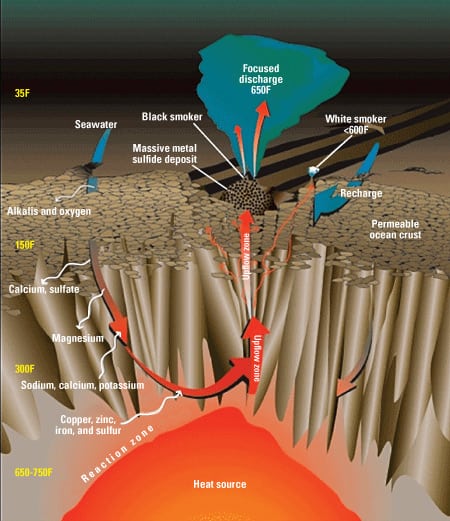
Current technology uses either natural steam or hot water from underground reservoirs to make electricity. New technologies would capture the energy of hot, but dry, rocks—a resource far more widely distributed than geysers or hot springs. Hot, dry rocks are the foundation of the “enhanced” systems that technologists see as having such great potential. Research is focusing on the use of hydraulic fracturing, or “fracking,” technology (which is revolutionizing natural gas production) to make these hot rocks more permeable and better able to yield their heat (Figure 4).
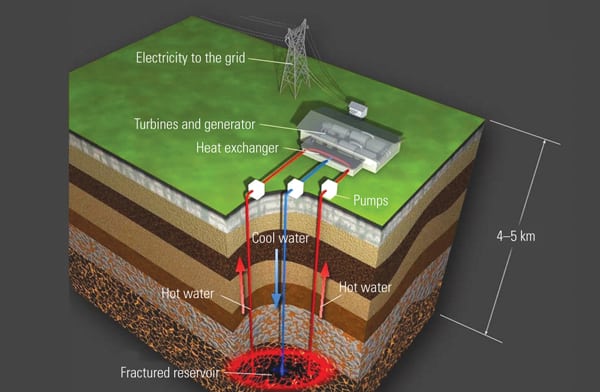 |
| 4. Breaking rocks. Hot, dry rock resources located 1 to 3 miles below Earth’s surface are heated to 250C and higher by very deep thermal sources. Source: Western Power |
Will the optimistic vision of power from hot rocks come to pass? Travis Coleman, who leads EPRI’s geothermal energy work, says, “Enhanced geothermal systems are a big part of the future. The technology is conceptually very simple, but how you apply it in different rock formations is incredibly complex.”
Geothermal is only one of many competing energy technologies that developers can choose to power the future. As the MIT panel observed, “Geothermal energy provides a robust, long-lasting option with attributes that would complement other important contributions from clean coal, nuclear, solar, wind, hydropower, and biomass.” One can now add natural gas to that list.
But future decisions about technology developments in the U.S. will be driven largely by the private sector, even if the federal government’s awkward thumb is on the scales to some degree. Those decisions will involve tricky and risky choices involving cost, performance, timing, and social values. Will geothermal be able to compete in that complex environment? That question is far from answered.
— Kennedy Maize is a POWER contributing editor and executive editor of MANAGING POWER.