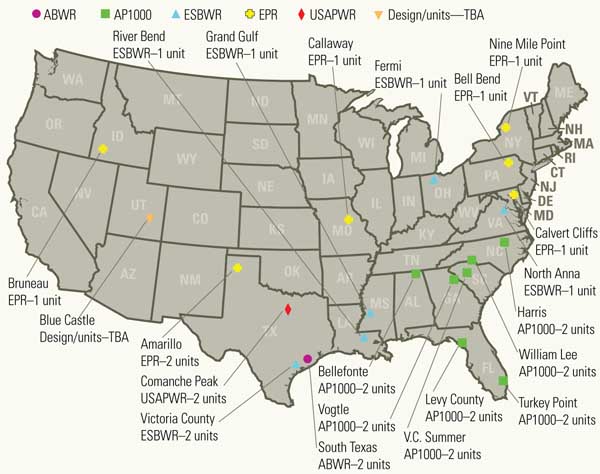

The eyes of Texas—and the rest of the world—are upon NRG Energy after its September application for licenses for two new reactors at South Texas Project (see Global Monitor). The filing was the first of its kind in nearly three decades and the first of up to 30 like it expected over the next few years. However, most industry observers—including yours truly—expected a nuclear utility to be first out of the gate, not a company that emerged from bankruptcy less than four years ago.
How will NRG stand up under the heightened scrutiny? It depends on how well it solves a certain equation.
Perception is reality
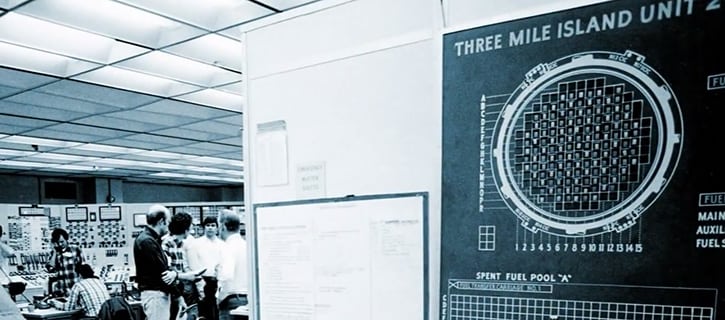
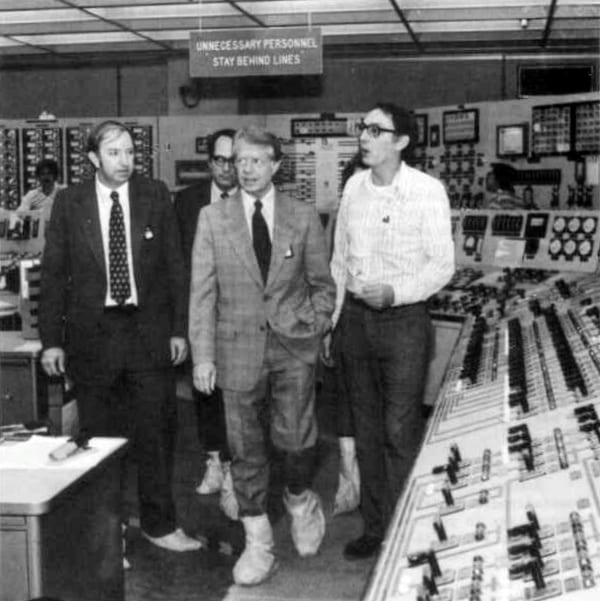
Peter Sandman (www.psandman.com) was a professor of journalism specializing in media coverage of environmental issues in March 1979, when Three Mile Island Unit 2 suffered a partial meltdown, ending orders for new reactors in the U.S. The Columbia Journalism Review asked him to go to the site and "cover the coverage" of the TMI disaster. Years later, Sandman wrote a series of articles based on his findings there and elsewhere, recommending ways for nuclear utilities to improve their public communications during crises. It’s my observation that his advice applies equally well to utilities looking to invest billions in advanced nuclear units.
In the late 1980s, Sandman coined the formula Risk = Hazard + Outrage in an effort to quantify the public fear caused by a nuclear power mishap. For example, although there was no chance that the molten core of TMI Unit 2 would breach the containment below and create a real public hazard, the public’s outrage—fanned by poor communications and exacerbated by release of the movie The China Syndrome just 12 days earlier—heightened the perceived risk of such an event. Conversely, the full meltdown of Chernobyl Unit 4 in Ukraine seven years later was extremely hazardous, yet the outrage it generated in the U.S. paled in comparison.
Sandman’s formula can be likened to the International Nuclear Event Scale developed by the International Atomic Energy Agency in 1990 to standardize reporting of nuclear events to the public. The scale runs from zero (an event with no safety significance) to a Chernobyl-like seven. On this scale, TMI was a five. A 1980 level-four accident in France passed without notice in the U.S., while the corrosion discovered at the Davis-Besse nuclear station in 2002 rated a three—though its outrage factor was much higher.
Equation proofs
Sandman’s equation makes clear that risk can be minimized only when hazard and outrage are both at a minimum. Utilities considering adding new nuclear resources would be wise to heed a few of the PR pointers Sandman developed in the wake of TMI. They’re still fresh, and applicable to any company with a public image.
Pay attention to communication. Few citizens understand nuclear power technology. Yet the general public’s voice of dissent (informed or not) can bring a project to a jarring halt. Free and open communication channels are vital to discussions of a new nuclear plant. The public must feel it is part of the conversation, and nay-sayers cannot be ignored.
Metropolitan Edison’s bungling of press relations during the TMI accident only increased the outrage factor. Then-Pennsylvania Governor Dick Thornburgh ordered an evacuation of school children near the plant even though MetEd maintained that radiation levels did not justify it. MetEd was right, but for the wrong reason.
Err on the side of pessimism. After MetEd’s initial public pronouncement minimized the importance of the event, the company’s PR people later had to admit that, "it is worse than we first thought." It would have been better had they been able to say, "it is better than we first thought."
For today’s utilities, the lesson here is that rosy predictions of the cost, schedule, and community impact of a proposed plant can come back to haunt you. Experienced nuclear utilities with a track record of safe and efficient operations begin the permitting process with lots of public credibility. Miss that first milestone or raise the cost estimate before breaking ground, and you squander much or all of that cred.
Don’t lie, and don’t tell half-truths. Making statements that are technically accurate but designed to mislead is still lying. At the height of the TMI crisis, MetEd issued a press release that said the plant was "cooling according to design." Translation: The safety margins and plant automation are working correctly, even though the plant is self-destructing.
Another case in point: This July, Tokyo Electric Power Co. found several drums of very low-level radioactive waste spilled on the basement floor of its huge Kashiwazaki-Kariwa plant following a powerful earthquake. Reporters flogged that non-story for weeks, but who can blame them? They remembered that in 1999 the utility admitted that it had falsified safety records for years and had covered up an incident in which operators lost control of a reactor.
New math
How does NRG rate so far on Sandman’s criteria? Picking the operator of South Texas Project as its partner was a plus, and selecting the already-approved advanced boiling water reactor design was inspired. David Crane, NRG’s CEO, says his firm arranged for Toshiba to build the new reactors because "the Japanese have built four of [them] already, on time and on budget." NRG also has mitigated cost and completion risk by making Hitachi and Toshiba equity participants in the project. Doing so may allow NRG to tap Japanese government guarantees as well as those offered by the U.S. Department of Energy.
NRG’s chutzpah, backed by the nuclear expertise of Japan Inc., might be just what’s needed to kick off America’s second act on the world’s nuclear power stage. Just don’t forget your math lessons in the days ahead.
—Dr. Robert Peltier, PE Editor-in-Chief