
Congress’s enactment of the Public Utility Regulatory Policies Act of 1978 (PURPA) triggered a revolution in the development and construction of power plants. PURPA’s creation of an independent class of generators—qualifying facilities (QFs)—exposed a century-old economic myth that had justified restricting ownership of generating facilities to governmental and investor-owned utilities (IOUs). The success of QFs also debunked the long-standing assumption that IOUs and the government are uniquely able to construct and operate generating facilities with the requisite safety and reliability.
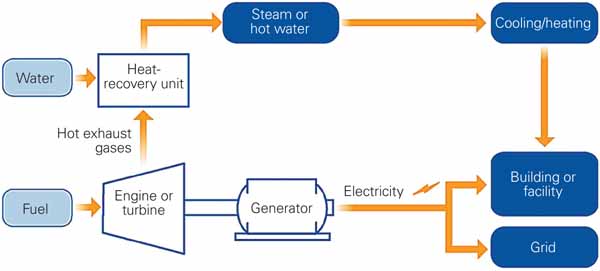
PURPA was passed in response to the energy crises of the 1970s, which were precipitated by Arab oil embargoes and a fear that North America was running out of natural gas. QFs became the catalyst for the initial development of alternative fuel generating facilities. PURPA also accorded QF status to gas, coal, and oil-fired cogeneration facilities, recognizing that these facilities promise greater fuel efficiencies than traditional fossil-fueled power plants.
Today we are confronted with an energy crisis of a magnitude, and with potential consequences, exceeding the exigencies that prompted enactment of PURPA. Gasoline prices are approaching $4 a gallon, the geopolitical implications of America’s addiction to imported oil are without bounds, and concerns about climate change are evolving—as they should—from a political debate to a scientific and economic challenge. At the same time, the first QFs, which became operational in the 1980s, are approaching the expiration of their original power purchase agreements.
Without near-term, definitive assurance that cogenerators will be able to extend expiring agreements or enter into new ones, many may cease operations. They cannot await the expiration of current contract terms because steam hosts must know with absolute certainty years in advance whether they can continue to rely on their cogenerator to supply steam or if they must initiate the permitting, financing, and construction activities necessary to procure an alternative steam source.
Given the nation’s unquestioned need for substantial additions to its generating resources and the fact that development and construction costs of new generation will exceed the comparable costs of existing facilities, enabling cogenerators to remain viable resources should be a major and immediate policy objective.
"Market competition" more art than economics
Regulators and utilities insist that cogenerators "compete" in the "market." However, such "market competition" often fails to account for the political, engineering, and economic realities and prejudices that preempt many cogenerators from competing against utility and other resources on a level playing field. In contrast, by adopting renewable portfolio standards, states have created "markets" in which solar, wind, geothermal and other renewable QFs are readily able to procure contracts at attractive prices.
The handicaps faced by QFs are many. Advances in technology often enable modern electric-only facilities to burn fuel more efficiently than 1980s-era cogenerators. The size of many cogenerators was dictated by permitting considerations (for example, California imposes prolonged and expensive requirements for units over 50 MW) or by the steam host’s thermal needs. These factors placed cogenerators at a disadvantage relative to substantially larger facilities, which benefit from economies of scale. A cogenerator’s dispatchablity is constrained by its contractual and PURPA obligations to deliver steam to its host (midnight may be super-off-peak for the purchasing utility but peak for steam usage). Consequently, these obligations often render cogenerators unable to promise the same operating flexibility as other resources. Moreover, utilities and ratepayer groups have chafed at the allegedly "overmarket" prices yielded by "avoided cost" calculations and stridently oppose any "ratepayer subsidy" of QFs.
Policy must recognize cogen benefits
Prolonged debate, ongoing uncertainties, and escalating rhetoric regarding the future of cogeneration impedes meaningful resource planning and harms electric consumers. Through earthquakes, terrorist attacks, and energy crises, cogenerators have proven to be an indispensable component of our electric and industrial infrastructure. Simplistic one-dimensional arguments that cogenerators are "not competitive" ignore the reality that most cogenerators produce power more efficiently—with lower emissions and at a lower economic cost—than the resources constructed pre-PURPA that utilities frequently run.
Adopting regulatory policies that recognize the unique benefits that cogenerators offer and the unique constraints under which they operate advances both PURPA’s fuel efficiencies and energy independence objectives. Regulators should design capacity payments to capture the value of the cogenerator being available and to account for the actual costs of alternative resources. In today’s economy, it is unrealistic to expect a cogenerator to guarantee that an unaffiliated steam host will remain in operation for 20 or 30 years. The threat of imposing severe damages and regulatory penalties on the cogenerator for the loss of a steam host benefits nobody and should be removed.
The Federal Energy Regulatory Commission should also consider relaxing its one-size-fits-all operating and efficiency criteria so that each cogenerator could optimize operations to best benefit all constituencies. Meaningful incentives and streamlined regulatory procedures should be provided to cogenerators who invest capital to further increase efficiencies and reduce emissions.
—Steven F. Greenwald leads Davis Wright Tremaine’s Energy Practice Group. He can be reached at stevegreenwald@dwt.com. Jeffrey P. Gray is a partner in the firm’s Energy Practice Group. He can be reached at jeffgray@dwt.com.