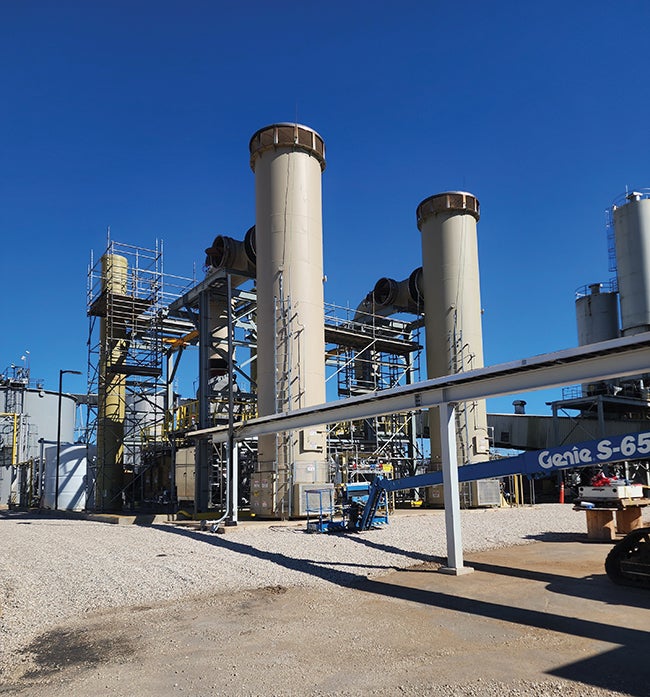
Grid operators, utilities, and project developers are facing several enormous demands at once. They’re being asked to deliver capacity for a wave of new load from data centers, electric vehicle (EV) charging networks, and electrified buildings, while at the same time integrating a record pipeline of new generation from utility-scale solar, wind, and battery storage. And underneath both is a third demand driver—replacing decades of equipment that is approaching, or has already passed, the end of its designed service life. All three jobs land on the same piece of infrastructure: the transformer.
For anyone responsible for energizing a project on a deadline, the result is a procurement environment unlike anything the industry has seen in ages. Lead times for some classes of new transformers stretch beyond two years, prices have climbed across nearly every category, and the supply pressure is predicted to continue well into the 2030s. Solving it requires more than waiting in line at the factory.
Where Transformer Demand Is Coming From
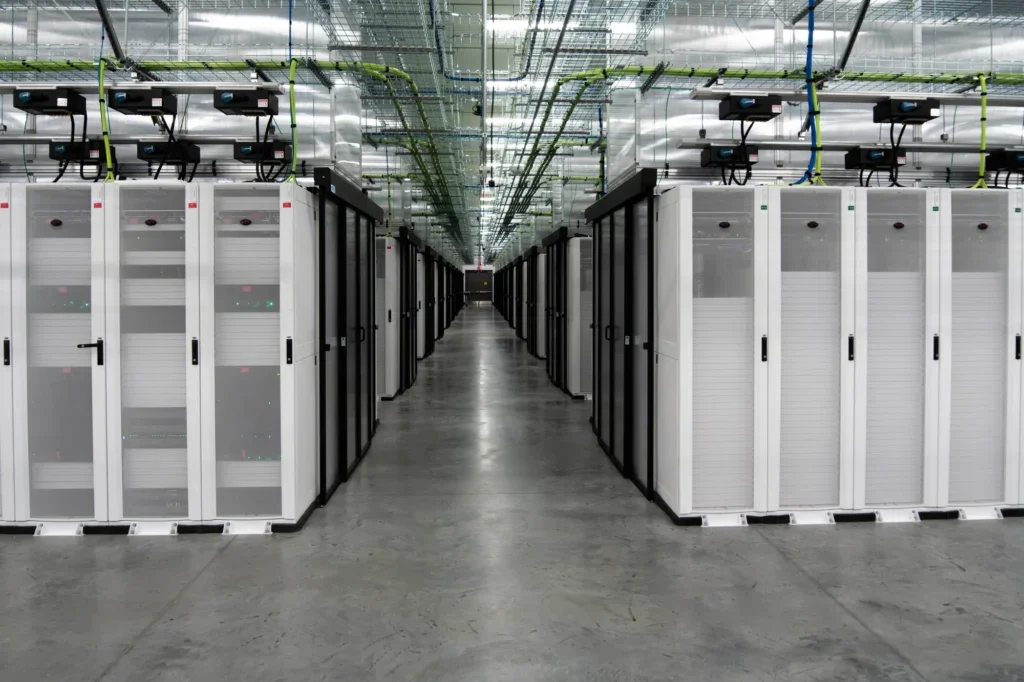
The most publicized driver is the data center boom. The U.S. Department of Energy (DOE) projects that data center electricity consumption could increase from 176 TWh in 2023 to as much as 580 TWh by 2028, growing from about 4.4% to 12% of total U.S. electricity use. Globally, Gartner forecasts data center consumption will more than double from 448 TWh in 2025 to 980 TWh by the end of the decade. Each new campus needs transformers—often hundreds of them—and the timelines do not bend easily. As STL Partners has noted, every month of delay completing a data center can cost developers roughly $14.2 million in lost revenue, cost overruns, and contractual penalties.
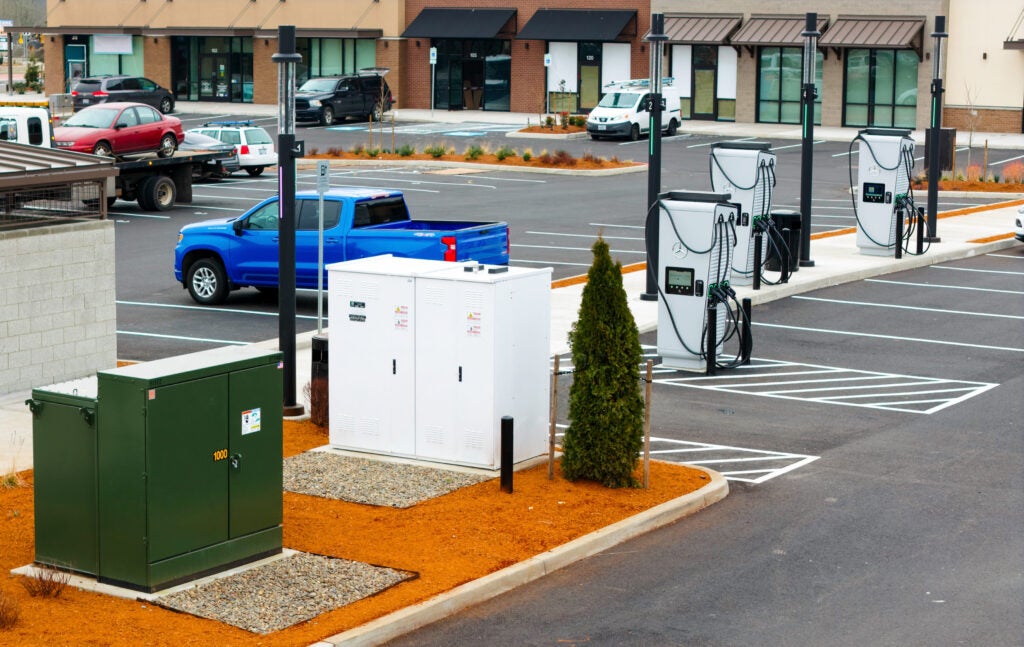
EV charging adds another layer. The DOE has estimated that widespread EV adoption could increase total U.S. electrical use by 40% by 2050. Every charging site is, in effect, a new load point requiring distribution-level equipment. And the rise of EV manufacturing is also competing for the same grain-oriented electrical steel (GOES) used in transformer cores. With only one domestic GOES producer—Cleveland-Cliffs—the upstream raw-material market is tightening at the same time downstream demand is rising.
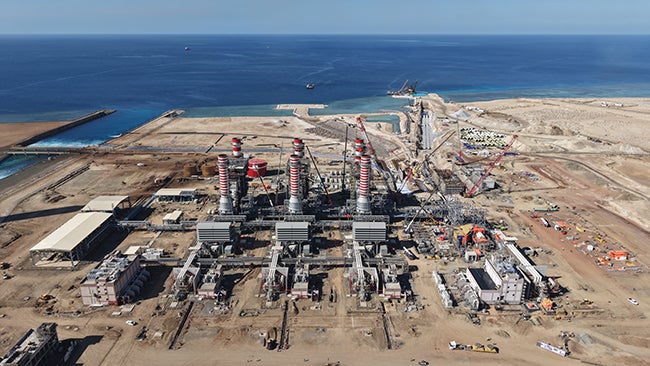
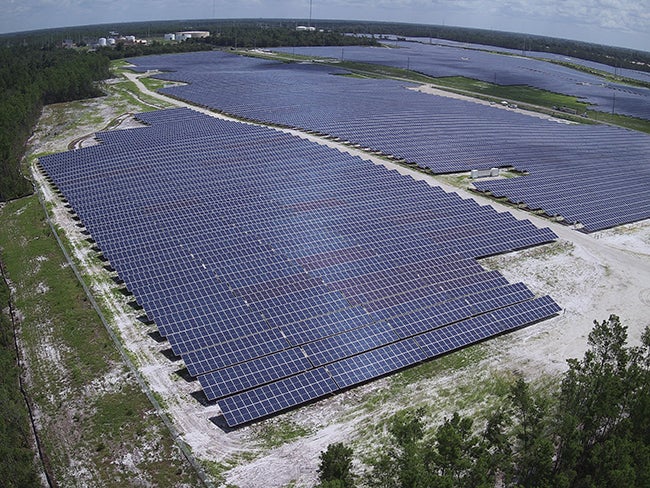
Renewables drive a parallel demand stream on the generation side. According to the World Resources Institute, U.S. solar projects alone added an estimated 39.6 GW of capacity in 2024, up from 27.4 GW in 2023, and battery storage is projected to grow nearly 50% year-over-year. Every solar farm, wind project, and battery energy storage system (BESS) installation needs step-up and distribution transformers to connect to the grid. The challenge is daunting.
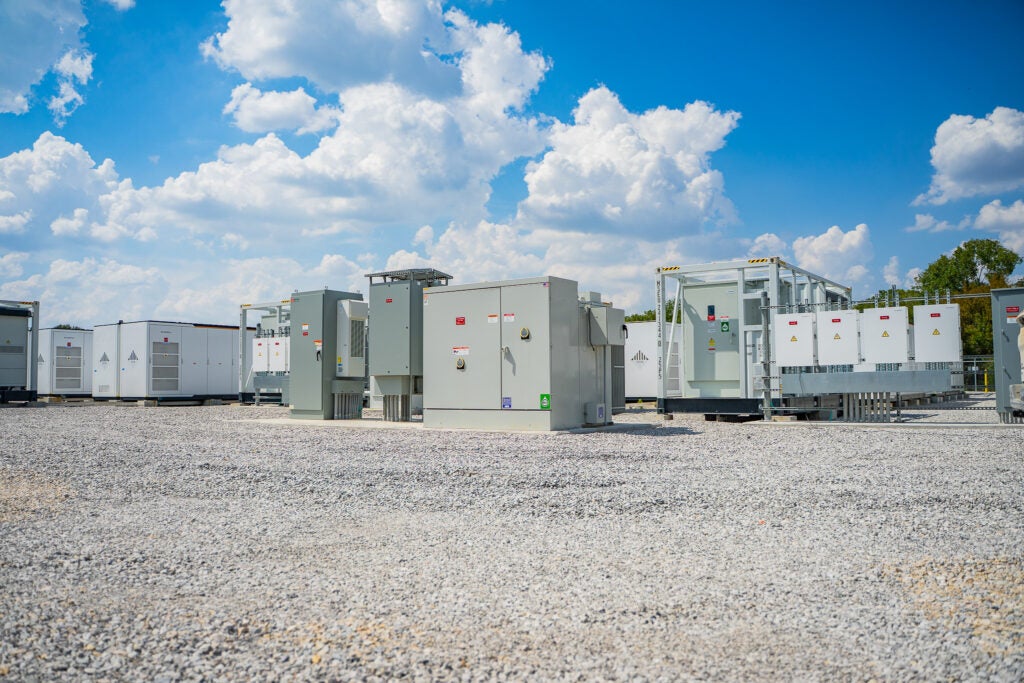
“We are seeing a massive increase in demand from not only data centers, but also new BESS and manufacturing projects across the U.S.,” said Mac Spiller, Chief Commercial Officer at Maddox Industrial Transformer. “All these projects are competing for the same supply of transformers. Historically they’ve been stuck between two options when it comes to transformers. They can wait and accept long lead times from big global OEMs, or roll the dice on fast cheap imported transformers. Companies like Maddox are the third option where customers get the quality, engineering, and service support of a big OEM, while still getting the flexibility and speed of a smaller company.”
The Aging Fleet Problem
If the new-load story were the whole picture, the supply chain might eventually catch up. It isn’t. Sitting underneath the growth curve is an aging-equipment curve that has been accumulating for decades.
Most of the U.S. grid was built in the 1960s and 1970s. The DOE’s 2015 infrastructure review found that 70% of U.S. transmission lines were more than 25 years old, against a typical service life of about 50 years. Distribution transformers tell the same story. The National Laboratory of the Rockies (NLR, formerly the National Renewable Energy Laboratory) reported that 55% of in-service U.S. distribution transformers are already more than 33 years old, against an average lifespan of roughly 30–40 years. Furthermore, it warns that failure rates will rise sharply after 2030. By 2050, the NRL estimates that between 60% and 80% of in-service transformers will need to be replaced.
The replacement burden is enormous. The NLR estimates that distribution-transformer capacity may need to grow between 160% and 260% by 2050 compared with 2021 levels, driven by both electrification and end-of-life retirements. A September 2025 analysis by Wood Mackenzie pegged the 2025 supply deficit at roughly 30% for power transformers and 10% for distribution units, with more than 40 million U.S. distribution transformers already beyond their expected service life. The firm’s earlier July 2025 supply-chain report, Untangling the US Transformer Supply Chain Crisis, found that demand for three-phase padmounts—the workhorse distribution unit for data centers—is already up 77% from 2019 levels.
In other words, utilities and developers are competing for the same factory slots, and utilities have a structural, ongoing replacement need that is not going away. As the Wood Mackenzie/American Clean Power report Making the Connection notes, this isn’t even just a transformer problem; it’s a transmission-and-distribution equipment problem, with shortages also emerging in switchgear, breakers, and cable.
Why Traditional Procurement Is Breaking
Historically, utilities, contractors, and project managers operated on a build-to-order model: engineer the project, place an order, and take delivery a few months later. That model assumes spare factory capacity. Right now, there isn’t any. According to Wood Mackenzie’s second quarter (Q2) 2025 survey, large power transformers are averaging 128 weeks of lead time, and generator step-up units 144 weeks. Manufacturers have committed nearly $2 billion to new and expanded North American capacity since 2023, but most of that capacity won’t fully come online until 2027 or 2028.
Buyers who wait until they need a transformer to start sourcing one are increasingly the ones whose projects slip. Meanwhile, procurement teams that are succeeding have shifted toward two complementary strategies: tapping supply that already exists, and reserving future supply before they need it.
Strategy 1: Tap Supply That Already Exists
Remanufacturing—taking surplus or out-of-service transformers, stripping them down, replacing failed components, and rebuilding them to like-new condition—is one of the few levers that adds supply without waiting on a new factory. According to the Remanufacturing Industries Council, the process consumes less energy and emits fewer greenhouse gases than new manufacturing. It also typically delivers a 10% to 40% cost reduction compared with a new factory-built unit.
However, the lead-time difference is the true headline. While new factory-built distribution transformers can run 60 to 80 weeks, Maddox’s remanufactured transformers can ship in 1 to 4 weeks. That speed is possible because the underlying core and tank already exist; the work is in the diagnostics, component replacement, potential rewinding, testing, and finishing. Maddox buys old units from utilities, demolition contractors, and recyclers—paying up to five times scrap value—and rebuilds them at facilities across the country.
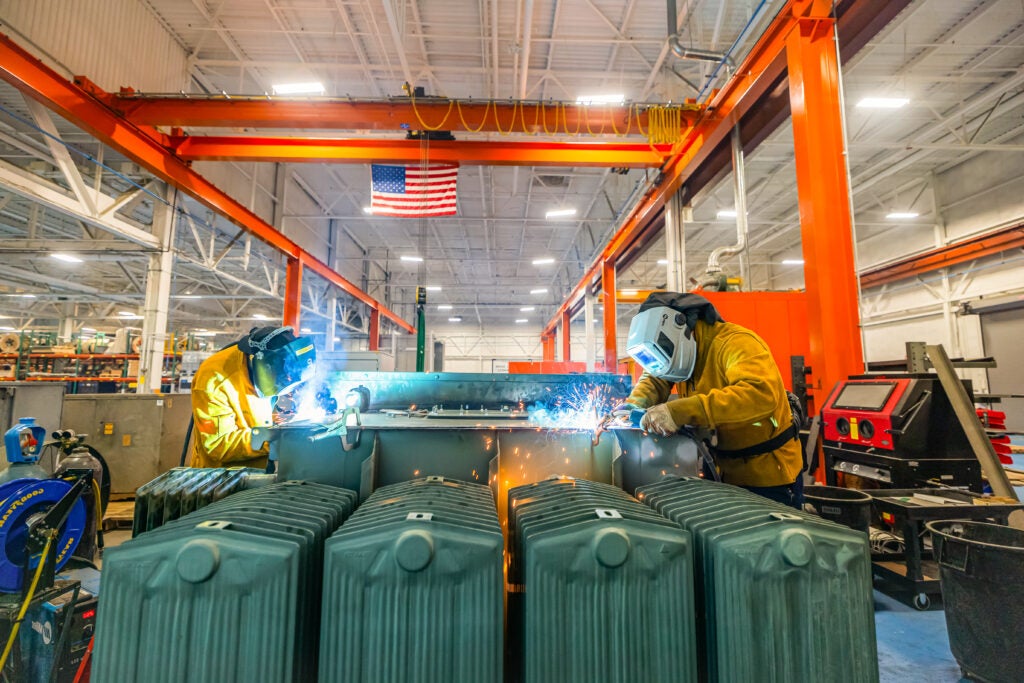
There is also a reliability argument that often goes underappreciated. According to a study by the Hartford Steam Boiler Inspection and Insurance Co., the second leading cause of transformer failure stems from design and manufacturing issues, with many failures occurring at initial energization. A remanufactured unit with a proven service history avoids that early-life risk.
“At Maddox, when we remanufacture a transformer, we start by thoroughly testing it to see what condition it is in. We will then completely disassemble it, repair or replace any damaged components from bushings, to gaskets, and gauges. We can also rewind the coils if they have failed. After reassembling and performing all the repairs our team will do another battery of tests to make sure it meets all IEEE and ANSI standards. Then, it is sanded, painted, and goes through one last quality control inspection before shipping out. The goal is to deliver a unit that works and looks like new. Right now, we have five shops across the U.S. where we remanufacture transformers with several more locations in the works,” Spiller explained.
Strategy 2: Reserve Future Capacity Now
The second shift is a move away from just-in-time purchasing. Sophisticated buyers are now treating transformers less like a line item and more like a strategic reservation, locking in capacity before project details are even finalized. As Spiller observed in a recent Capacity interview, “Data center procurement folks have become smart about how they buy electrical equipment. They’re purchasing much further in advance for projects in the future and reserving capacity in anticipation of building rather than buying as the need arises.”
This is exactly the gap that build-to-stock and capacity-reservation programs are designed to close. Maddox supplies new transformers in common voltages and configurations to stock, holding thousands across yards in the U.S. so that buyers facing aggressive schedules, or emergencies, can take delivery in days rather than months or quarters. For projects further out, customers can reserve manufacturing slots in advance, even before final specifications are locked, and store finished units at Maddox locations until the site is ready to receive them.
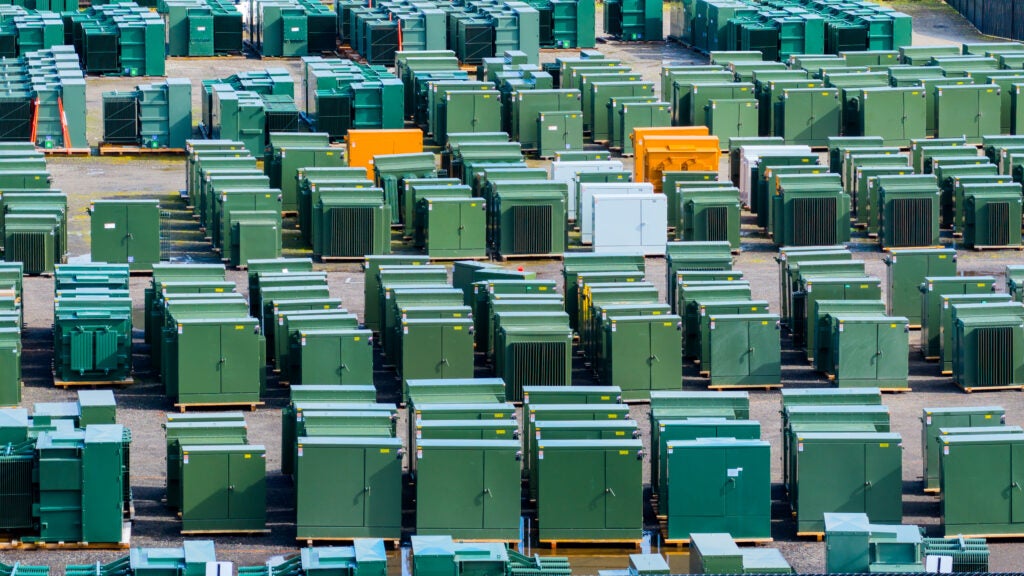
Three design choices can help future-proof orders. The first is designing projects with standardized kVA sizes and voltages. Try to specify common voltage classes and sizes. If you do need something custom, make that design standard across all your sites so that those transformers can be used interchangeably across your projects. The next is specifying a slightly larger kVA than current needs, or a 55/65°C temperature rise for the 12% overload above rated kVA. The last is specifying FR3® Fluid, which extends insulation life and improves thermal performance. These are small decisions at the order stage that pay back when load creeps up, which, given every forecast on the table, it almost certainly will.
“We’ve noticed a change from transactional procurement to supply chain partnership, especially with data centers,” said Spiller. “Buyers want a supplier who understands their roadmap, not just a one-off order. The old adage is probably truer than ever: ‘People buy from companies they know, like, and trust.’ Conversations have shifted away from ‘How fast can you get it done?’ to ‘Can I trust you to not screw this up?’ And I think that’s a very healthy thing for the industry.”
How to Beat the Bottleneck
The transformer crunch is structural, not cyclical. Even with $2 billion in new North American manufacturing capacity coming online, Wood Mackenzie expects pad-mount three-phase shortages to worsen as data centers, manufacturing facilities, and EV infrastructure keep absorbing supply. The buyers who weather it well are the ones who stop treating transformer procurement as an afterthought.
That means engaging suppliers early in project planning, building flexibility into specifications where possible, considering remanufactured units alongside new equipment, and working with partners who hold real inventory rather than promising it. The grid’s three demand drivers—new load, new generation, and aging-fleet replacement—aren’t going to change anytime soon. The procurement strategy has to.