
Plant Design
-
 Renewables
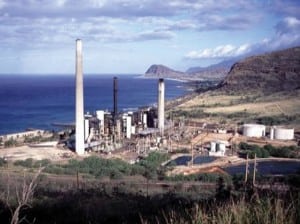
HECO Successfully Cofires Biofuel as No. 6 Oil Substitute
All states were not created equal, particularly when it comes to indigenous reserves of fossil fuels. North Dakota is experiencing a boom in oil production, which has increased almost 10-fold since 2005, and
-
Coal
Fuel-Flexible CFBs Add Flexibility to Resource Plans
The downward trend in solid fuel quality has negatively affected many power generators that rely on imported fuels. For others, this represents a market opportunity. A quick survey of recent installations found that fuel-flexible circulating fluidized bed (CFB) boilers addressed owners’ fuel source concerns by efficiently burning low-quality, high-moisture coals, even when mixed with biomass and […]
-
T&D
Federal Cybersecurity Framework Calls for Increased Vigilance
The energy industry, already familiar with the latest iteration of the North American Electric Reliability Corp. (NERC) Critical Infrastructure Protection (CIP) reliability standards, should take note: Meeting
-
 Coal
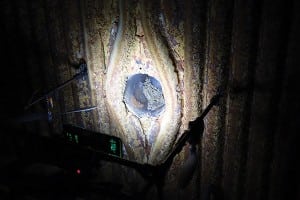
CoalDrones Promise Faster, Easier Inspection of Boilers, Stacks, Towers, and More
Mention the word “drone,” and most people will have a mental picture of what a drone is and does. They likely will think first of military drones carrying missiles and other weapons that could malfunction
-
 Legal & Regulatory
GE Executive Markhoff Talks About the Water/Energy Nexus
Source: POWER During IHS CERAWeek in Houston in early March, POWER Editor Gail Reitenbach sat down with Heiner Markhoff, president and CEO of GE Power & Water’s Water & Process Technologies, to ask him about several issues of concern to power plants. Though the “water/energy nexus” theme has gained prominence recently, Heiner Markhoff’s comments underscored […]
-
O&M
Upgraded Control Room Consoles Improve Ergonomics
Great River Energy (GRE) is a not-for-profit electric cooperative that generates and transmits power for 28 member cooperatives throughout southern, central, and northern Minnesota and northwestern Wisconsin
-
Coal
Establishing Proper Pressure Drop for Feedwater Flow Control Valves
In power plants with drum-type boilers and constant-speed main boiler feed pumps, the feedwater control valve (also referred to as the drum level control valve) provides the means for controlling flow to the
-
 Coal
CoalRemote Monitoring and Diagnostics Within a Smart Integrated Infrastructure
It seems as if each week brings further bad news for coal power plants. Recently, Consumer’s Energy sought relief to close three power plants, South Carolina Electric & Gas announced it would cease
-
 Commentary
How U.S. Power Generators Are Preparing for 2014
The business environment for generating companies worldwide continues to become increasingly complex, and not just as a result of regulations. Even in the U.S., the concerns and constraints faced by generators
-
 Gas
GasKorean Utility Plans First Underground Combined Cycle Power Plant
The oldest power plant in South Korea is making way for something so new that no one has even attempted it before. Korea Midland Power Corp. (KOMIPO) announced earlier this year that Seoul Thermal Power Station, built in the 1930s, would be replaced with a new 800-MW two-unit combined cycle power plant—one that will be built […]
-
 Gas
GasPractical Considerations for Converting Boilers to Burn Gas
Many utilities have taken advantage of relatively low-cost natural gas to address environmental pressures and upgrade their power generation portfolio in one of three distinct ways—replace, repower, or
-
O&M
How Stealth Combustion Losses Lower Plant Efficiency. Part 1: The Problem
At the average coal-fired power plant, the battle to reduce net heat rate is complicated by skin-tight maintenance budgets, staff reductions, and—for some—the switch from baseload to mid-peaking service. The most fruitful approach to improving a plant’s heat rate is to optimize combustion in its boiler, particularly by minimizing the amount of “stealth” air in-leakage.
-
Coal
Leadership Changes at Mississippi Power as Kemper IGCC Cost Overruns Soar
Cost overruns of nearly $1 billion to build the 582-MW Kemper integrated gasification combined cycle (IGCC) plant in Kemper County, Miss., were underscored on May 20 as Mississippi Power’s Board of Directors took the dramatic step of replacing the Southern Co. subsidiary’s leadership.
-
 O&M
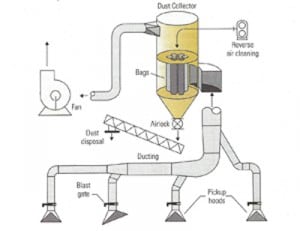
O&MGive Your Plant a Dust Control Tune-Up
Every piece of equipment that transports or processes coal creates some level of particulate matter. Having a strategy for coal dust management in your plant is essential.
-
Coal
Kemper County IGCC Project Update
The integrated gasification combined cycle (IGCC) plant located in Kemper County, Mississippi, is a 2 x 1 plant that will produce 582 MW at peak and 524 MW fired on syngas, with ammonia, sulfuric acid, and carbon dioxide as by-products. The carbon dioxide will be used for enhanced oil recovery (EOR). Engineering was completed in Q3 2012, and the facility’s commercial operation date is planned for May 2014.
-
Coal
Project Planning Key to Smooth J.T. Deely 2 SCR Retrofit
Recent experience on the Deely 2 SCR retrofit project reminds us that the time spent in thoroughly planning a project prior to the start of construction is usually repaid with avoided construction delays.
-
 O&M
O&MJinzhushan 3: The World’s First PC-Fired Low Mass Flux Vertical Tube Supercritical Boiler, Part 3
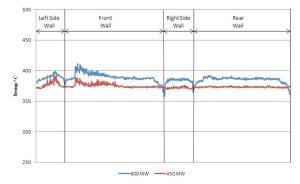
The world’s first supercritical pulverized coal–fired low mass flux vertical tube Benson boiler is Jinzhushan 3, located in the Hunan Province of the People’s Republic of China. The 600-MW Babcock & Wilcox Power Generation Group Inc. once-through boiler burns Chinese anthracite using downshot pulverized coal (PC) technology. Part 1 of this three-part article presented a summary of the project design features. Part 2 discussed the boiler technology. This third and final part reviews the plant’s performance test results.
-
 Coal
CoalCountries Worldwide Propose to Build 1,200 New Coal Plants
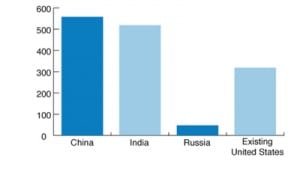
While the war on coal is working to reduce coal generation and consumption and associated carbon dioxide emissions in the United States, many world economies are looking toward coal for future generation needs. China, India, Russia, and Germany, to name a few, are building coal-fired power plants.
-
O&M
EPRI: Generation Sector Research Update
This synopsis of today’s most interesting research related to power generation gives you a glimpse of what’s possibly coming to your plant in the not-so-distance future. Research under way today will surely determine how power plants are designed, operated, and maintained for many years to come.
-
 O&M
O&MInsulation and Lagging Fundamentals
Insulation and lagging are key to saving energy in a typical steam plant, and plant operators would be well advised to pay close attention to energy losses in their insulation and lagging systems.
-
 O&M
O&MJinzhushan 3: The World’s First PC-Fired Low Mass Flux Vertical Tube Supercritical Boiler, Part 2
The world’s first supercritical pulverized coal–fired low mass flux vertical tube Benson boiler is Jinzhushan 3, located in Hunan Province of the People’s Republic of China. The 600-MW Babcock & Wilcox Power Generation Group Inc. once-through boiler burns Chinese anthracite using downshot pulverized coal (PC) technology. Part 2 of this three-part article discusses the boiler technology. The third and final part will review the plant’s performance test results.
-
Coal
Coal to Gas Once More for Dominion
Dominion Virginia Power plans to convert its oldest coal-fired power plant, the 227-MW Bremo Power Station near Bremo Bluff, Va., to natural gas, the company announced earlier this month. The two-unit plant would be the ninth in its fleet to be closed or converted to alternative fuels.
-
 Coal
CoalJinzhushan 3: The World’s First PC-Fired Low Mass Flux Vertical Tube Supercritical Boiler, Part 1
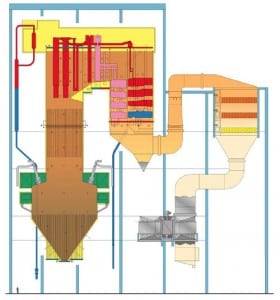
The world’s first supercritical pulverized coal–fired low mass flux vertical tube Benson boiler is Jinzhushan 3, located in the Hunan Province of the People’s Republic of China. The 600-MW Babcock & Wilcox Power Generation Group Inc. once-through boiler burns Chinese anthracite using downshot pulverized coal (PC) technology. Part 1 of this three-part article provides a project summary and overview. The other two parts will look at technology features of the unique boiler design and plant performance test results.
-
 Coal
CoalDesign Features of Advanced Ultrasupercritical Plants, Part III
Advanced ultrasupercritical (A-USC) is a term used to designate a coal-fired power plant design with the inlet steam temperature to the turbine at 700C to 760C. In the first two parts of this three-part report, we introduced the A-USC boiler and the metallurgical advancements required for the A-USC boiler to operate at such high temperatures. This final report explores the A-USC boiler’s unique design challenges.
-
 Coal
CoalCoal-to-Gas Switching: It’s All in the Price
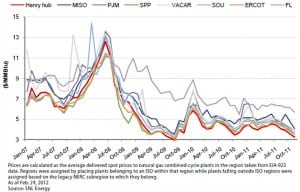
Trying to assess the potential for coal-to-gas switching in today’s environment is something of an art form. Suppose for a moment that one were able to devise an economic model that truly replicates real-world generation dispatch for plant operators. A model is only as good as the inputs that go into it, and, let’s face it, future natural gas prices are a critical component.
-
 O&M
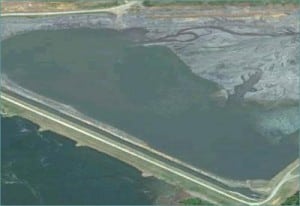
O&MOptimizing Your Coal Ash Recovery Operation
Coal combustion products often can be recycled into a variety of construction and building materials. However, first you must be able to retrieve the wet ash from a holding pond before the ash can be dried and sold.
-
 Coal
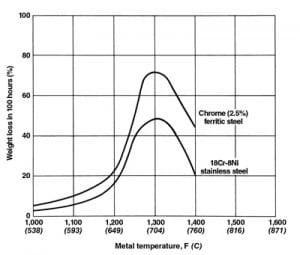
CoalDesign Features of Advanced Ultrasupercritical Plants, Part II
Advanced ultrasupercritical (A-USC) is a term used to designate a coal-fired power plant design with the inlet steam temperature to the turbine at 700C to 760C. In Part I of this three-part report, we introduced the A-USC boiler. In this segment, we look at the metallurgical advancements required for the A-USC boiler to operate at such high temperatures. The final report will explore the A-USC boiler’s unique design challenges.
-
 Coal
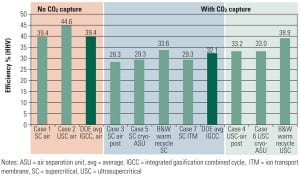
CoalDesign Features of Advanced Ultrasupercritical Plants, Part I
Advanced ultrasupercritical (A-USC) is a term used to designate a coal-fired power plant design with the inlet steam temperature to the turbine at 700C to 760C. In Part I of a three-part report, we introduce the A-USC boiler. Future reports will discuss the metallurgical and boiler design challenges.
-
O&M
Constructing and Managing Coal Ash Landfills
Creating a landfill to hold dry boiler ash is a challenging proposition these days. There’s more to the project than you might imagine, as you’ll learn from this article about the development of a typical new ash landfill.
-
 O&M
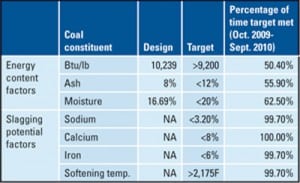
O&MImproved Performance from Priority-Based Intelligent Sootblower Systems
When sootblower operation frequency is too high, a plant risks losing power generation from tube leaks; but when sootblower frequency is too low, there is a risk of boiler pluggage. Intelligent sootblowing finds the right balance between tube erosion and plant economic operation.