As artificial intelligence (AI)–driven data center demand strains grid infrastructure across the U.S. and beyond, operators are facing rising scrutiny from utilities, regulators, and the communities where they build. Caspar Herzberg, CEO of industrial software company AVEVA, argues that the industry’s response can’t stop at sustainability commitments—it requires operational transparency and measurable performance data that utilities, regulators, and communities can actually verify.

POWER asked Herzberg how AI workloads are reshaping grid planning, what real transparency looks like in practice, and why he believes digital twins and standardized metrics—not pledges—will determine which operators earn lasting trust. His responses, lightly edited for length, follow.
POWER: Data centers are already straining grid infrastructure in many regions. What does AVEVA’s operational data show about how AI workloads are changing power consumption patterns, and what should utilities be planning for over the next five years?
Herzberg: Across the industrial operations and energy systems we support at AVEVA, we’re seeing that AI is making electricity demand more dynamic. The challenge is not only the amount of power consumed, but also the higher densities, sharper peaks, and faster changes associated with compute-intensive workloads. In response to these changes, utilities need to understand how these loads behave, rather than solely planning around annual totals. That means visibility into ramp rates, cooling requirements, backup generation, onsite storage, and the flexibility large customers can provide.
The industry is increasingly focused on “speed to power,” which connects new capacity quickly while maintaining reliability and affordability. That means utilities need to understand not only how much electricity data centers use, but how their demand changes over time. Our work with NREL [National Renewable Energy Laboratory, now the National Laboratory of the Rockies, or NLR] illustrates what this can look like in practice. NREL’s eGridGPT, a generative AI model designed for on-premise use in grid control rooms, integrates with the AVEVA PI System to provide operators, engineers, and corporate users with guidance and decision support, including state estimation, variable-energy forecasting, and grid operations. Over the next five years, these capabilities will need to be supported by more granular forecasting, stronger transmission and distribution infrastructure, faster interconnection processes, and continuous operational coordination with data center customers.
POWER: “Transparency” is used frequently as a goal, but what does it look like in practice? What data should operators actually be sharing with regulators and communities, and through what mechanisms?
Herzberg: At AVEVA, transparency means giving grid operators, regulators, and local communities a clear, real-time picture of how a facility operates, including its electricity demand, load changes, cooling needs, backup generation, emissions, water use, renewable energy, public impact, and storage. This does not mean putting sensitive operational details into the public domain. But utilities and regulators should have secure access to reliable, timely data rather than piecing together a facility’s impact from occasional reports or disconnected spreadsheets.
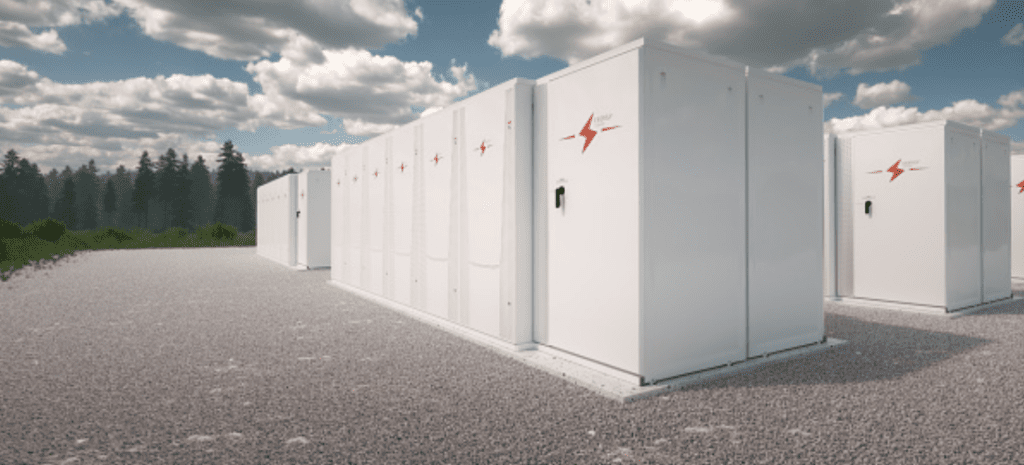
Unlike traditional data center operations, AI training and model use induce large and rapid power swings, making energy storage critical to ensure that electricity is always supplied reliably. By 2030, roughly 20–25 GW of battery storage could be installed in data centers globally, potentially making them a key grid asset if the incentives are right.
POWER: Can you give a concrete example where better real-time operational visibility prevented a reliability or environmental incident?
Herzberg: AVEVA’s work with Ontario Power Generation (OPG) shows how real-time visibility can identify risk before it becomes a larger operational problem. OPG brings data from thousands of sensors across its nuclear and hydroelectric operations into the AVEVA PI System and uses predictive analytics to identify equipment degradation early. It has built more than 1,200 predictive models, reduced annual maintenance effort by approximately 3,000 hours, and achieved up to $4 million in efficiency savings within 24 months. One nuclear analytics catch alone generated approximately $400,000 in savings, while a hydroelectric early-warning catch generated approximately $200,000. The important point here is not that every intervention represents a major incident avoided, but rather that operators must gain enough advance notice to act before equipment problems arise.
Additionally, AVEVA’s work with the Silicon Valley Clean Energy and ZGlobal project provides a real-world look at how multiple organizations accessed the same near-real-time and historical data through a secure cloud-based data community. This simplified settlement and validation, improved transparency, and helped the partners identify when assets were not performing as expected. By keeping these lines of communication secure and open, operators and providers were on the same page regarding critical uptime and maintenance.
POWER: Digital twins have been discussed in the power sector for years. What’s different about applying them to data center resilience, and what weather or grid scenarios are operators most actively modeling right now? How mature is digital twin adoption in data center operations today—are we talking leading-edge deployments or is this still largely aspirational for most operators?
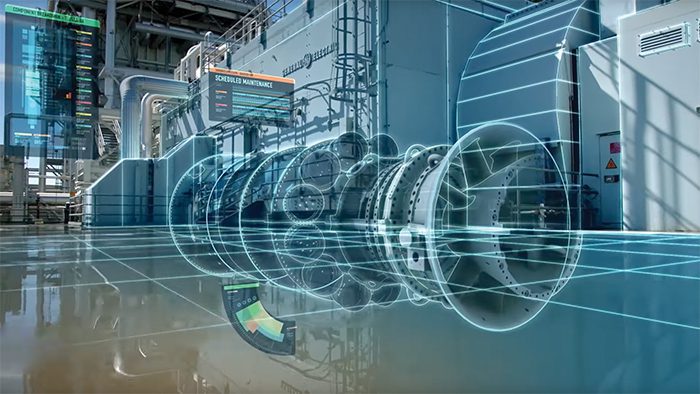
Herzberg: Digital twin adoption is often thought of simply as a 3D model of the building—this is a misunderstanding of what the technology is truly capable of. When activated fully and applied to data centers, they can show how the electrical systems, cooling, IT [information technology] workload, backup assets, and external grid interact. That allows operators to test what happens during extreme heat, a major storm, a sudden increase in compute demand, a grid constraint, transmission outage, flood, or cooling-system failure. The model can then be continuously updated with live operational data. That is what turns a digital twin from a static representation into a living operational tool. When applied to digital twins, AI can also help identify patterns and actionable next steps, but those recommendations are only as good as the data, context, and human judgment behind them.
Digital twin adoption in data center operations is already well beyond the aspirational stage, although the level of maturity varies across the industry. AVEVA has been working with data center operators for more than a decade to harness digital twin technologies to improve visibility across critical infrastructure, strengthen reliability, support intelligent alarm management, and optimize energy performance across sites.
What’s changing now, of course, is the sheer scale and complexity of AI factories. As data centers evolve toward hundreds of megawatts and ultimately gigawatt-scale facilities, the industry is moving from relatively focused operational twins toward full-lifecycle digital twins that connect design, simulation, and operations in a continuous digital thread.
The reason is straightforward: these facilities increasingly resemble industrial plants rather than traditional IT environments. They involve utility-scale electrical systems, facility-scale liquid cooling networks, significant water and heat management requirements, and tightly interconnected physical systems. At that level of complexity, disconnected spreadsheets and point solutions won’t cut it.
So, I would describe the market as being in a transition phase. Real-time operational digital twins are already delivering value today for leading operators. The next frontier is a “living digital twin,” enabled by technologies such as OpenUSD and NVIDIA Omniverse, where engineering models, simulation environments, and live operational data remain connected throughout the life of the facility. That’s where many of the most advanced AI factory projects are headed.
POWER: You’ve argued that measurable metrics matter more than sustainability commitments. Which metrics do you think should become the industry standard, and who should be setting and auditing them—operators, regulators, or third parties?
Herzberg: Sustainability commitments are important, but they need to be supported by measurable operational results. For data centers, that means reporting electricity consumption and peak demand alongside measures such as power usage effectiveness (PUE), IT utilization, emissions, renewable-energy matching, water usage effectiveness, backup-generation runtime, outages, and recovery time. Where facilities can offer demand flexibility, it’s also valuable to understand how much load can be shifted or reduced without compromising performance.
The World Economic Forum’s (WEF’s) Net Positive AI Energy Framework takes a similar outcomes-based approach, built around efficiency, deployment of AI, and demand management. AVEVA is working through organizations such as WEF and the Sustainable Markets Initiative (SMI) to ensure these frameworks work in real operating environments, not just on paper.
One group cannot own the process. Operators should report the data, regulators should establish consistent definitions and minimum disclosure requirements, and independent third parties should verify material claims. Without common standards and credible auditing, sustainability reporting will remain difficult to compare and can be easily misunderstood.
POWER: Water use is increasingly contentious alongside energy. How should operators be reporting on water consumption in communities that are already under resource stress?
Herzberg: Where data centers draw on water-stressed aquifers or other constrained local resources, water use becomes a significant public policy issue. Operators should be clear about how much water they withdraw, consume, and discharge; where it comes from; and whether it is potable, reclaimed, or recycled. There cannot be one global threshold that applies to every data center, particularly in regions that frequently experience water stress. The same volume of water can have very different implications for operators and the community depending on where a facility operates. An important consideration is to combine consistent measurement with local context, so regulators and communities understand not only how much water a facility uses, but what that use looks like locally.
—Aaron Larson is POWER’s executive editor.