
Environmental
-
Coal
EPA Proposes Two Options to Regulate Coal Ash
In an unusual two-option proposal that drew clashing views from green groups and power plant operators, the Environmental Protection Agency has proposed regulating coal combustion ash either as a nonhazardous waste subject to tougher management and disposal requirements or as a "special" hazardous waste that would have similar controls but still be eligible for recycling and reuse in products such as Portland cement.
-
Coal
EPA Issues Final Greenhouse Gas Tailoring Rule
Less than 24 hours after the unveiling of sweeping Senate legislation to reduce U.S. greenhouse gas emissions, the Environmental Protection Agency released a final Clean Air Act rule that defines emission thresholds for greenhouse gas permitting requirements for power plants and other large stationary sources.
-
Coal
American Power Act Dangles Carrots for Nukes, Coal, Gas
Facing a difficult uphill slog in a sharply polarized Senate, Sens. John Kerry and Joseph Lieberman have unveiled long-awaited draft climate change and energy legislation that includes billions of dollars in incentives for the nuclear, natural gas, and coal industries aimed at attracting enough bipartisan support to overcome an all-but-certain filibuster led by the Senate Republican leadership.
-
Commentary
Power Industry Flip-Flops on Support of Carbon Controls
I recently had the privilege of moderating the Power Industry Executive Roundtable, part of the annual ELECTRIC POWER Conference & Exhibition opening ceremonies. Usually, the power industry executives have predictable views of important issues, but not this year.
-
 Environmental
Dry Injection of Trona for SO3 Control
In 2006 and 2007, POWER ran a three-part series on the formation of SO3, O&M issues caused by SO3, and sorbent injection control for SO3 control. Three years later, many plants still struggle with their SO 3 mitigation systems or remain undecided on which mitigation path to follow. This article explores the advantages of dry sorbent injection technology.
-
Coal
New Coal Ash Rules May Focus on Conversion to Dry Storage
While the Environmental Protection Agency appears to have initially proposed to regulate power plant coal ash as hazardous waste, there are indications the Obama administration is preparing new federal rules that will at a minimum require utilities to convert coal ash impoundments from wet to dry storage to prevent leaks—a change that would cost tens of millions of dollars but also potentially increase regulated utilities’ rate base and earnings, a Wall Street firm says.
-
Coal
Congress, APPA Divided on EPA Greenhouse Finding
Highlighting a sharp division within the public power community, two senior House Democrats blasted the American Public Power Association for endorsing Sen. Lisa Murkowski’s effort to strip the Environmental Protection Agency of its Clean Air Act authority to regulate greenhouse gas emissions, with the lawmakers saying they have been informed that “numerous” APPA members oppose the endorsement.
-
Coal
New York Proposes Costly Retooling of Power Plant Cooling
In a move that could cost the state’s electricity generators an estimated $8.5 billion, New York regulators [have] issued a draft policy that would require the installment of closed-loop cooling systems at two dozen large power plants in the state, including oil, coal, nuclear and natural gas generators, to reduce fish kills and other harmful effects to wildlife in the water bodies that supply the plants’ cooling water.
-
O&M
The Unique Challenge of Controlling Biomass-Fired Boilers
Biomass has many advantages as a fuel for boilers: It’s inexpensive, readily available in many regions, CO2 neutral, and its use warrants government subsidies. The fuel also presents unique concerns to the designers, owners, and operators of biomass plants, especially in the design of the control system.
-
 Coal
CoalFrom GHG to Useful Materials
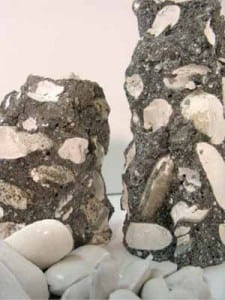
Could the transformation of carbon dioxide (CO2) into carbonates and oxides solve the problem of greenhouse gas emissions (GHG) from fossil-fired power plants? Some companies are betting that such processes could make everyone happy and even create new profits. Buzz has been growing about this approach, though the concept has been around for many years.
-
 Coal
CoalBig Bend’s Multi-Unit SCR Retrofit
Tampa Electric will soon complete a comprehensive selective catalytic reduction project on all four units at its Big Bend Power Station that will make Big Bend among the cleanest coal plants in the U.S. The project — the centerpiece of the company’s 10-year, $1.2 billion air quality improvement program — is on schedule to meet all of its air quality improvement goals by mid-2010.
-
 Coal
CoalBig Stone Remodels ESP into Pulse Jet Fabric Filter
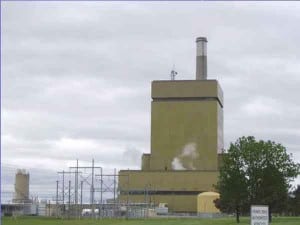
Short of replacement, what are your options when your original electrostatic precipitator fails to meet your current emissions and opacity requirements? The management of Big Stone Plant chose the unconventional, yet economic approach of building a pulse jet fabric filter inside the casing of the old electrostatic precipitator. The upgrades restored plant availability and prepare the plant to meet the next regulated reductions in particulate matter emissions.
-
 Water
WaterStrategies to Reduce Sulfuric Acid Usage in Evaporative Cooling Water Systems
Concentrated sulfuric acid is often used to prevent calcium-based scale formation on condenser and heat exchanger tube surfaces in power plant evaporative cooling water systems. Unfortunately, the chemical’s price has jumped more than 300% over the past three years. If the rising cost of water treatment has you under the budget gun, here are some alternative strategies that can reduce or even eliminate your sulfuric acid usage.
-
Coal
EPA Proposes To Tighten Ozone Standard
In one of the most far-reaching of numerous new air regulations expected from the Obama administration, the Environmental Protection Agency (EPA) has proposed to tighten the primary federal standard for ground-level ozone, the principal constituent of smog, to within a range of 60 to 70 parts per billion, saying the tougher standard is needed to protect human health.
-
Coal
DOE Official Floats NSR ‘Carve-Out’ for Some Coal Plants
The Energy Department’s top fossil energy official said [in December that] he might seek exemption or relaxation of “new source review” requirements for certain U.S. coal-fired power plants that are boosting efficiency through retrofits if the plants are also good candidates for subsequent installation of carbon capture and storage systems.
-
 Coal
CoalKnoxCheck Reports Reactor Potential and Catalyst Activity
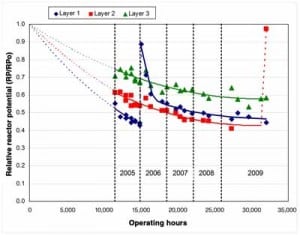
Adding a selective catalytic reduction (SCR) system to an operating coal-fired plant may be an expensive and time-consuming project, but the environmental benefits are without question. However, once construction is complete and operations staff assume control of the SCR, proper measurement tools are required to monitor the catalyst performance life cycle.
-
 Solar
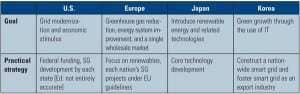
SolarWhich Country’s Grid Is the Smartest?
The U.S. isn’t the only country evaluating and implementing elements of smart grid technology. In fact, it could be argued that other nations are much farther along the path to a comprehensive, technically advanced system for integrating renewables, managing load, and creating a more flexible power grid.
-
Legal & Regulatory
GHG Emissions Reporting Begins Jan. 1
Last fall, the U.S. Environmental Protection Agency (EPA) issued a rule creating a mandatory national system for reporting greenhouse gas (GHG) emissions. The agency requires regulated entities to begin monitoring GHG emissions January 1, 2010, and to submit their first annual emissions reports March 31, 2011. This is a key step toward federal regulation of GHG emissions (a step that may have major implications regarding "major sources" and permitting requirements for new sources). It’s also an opportunity for power producers to implement their inventory management plans.
-
 O&M
O&MThe U.S. Gas Rebound
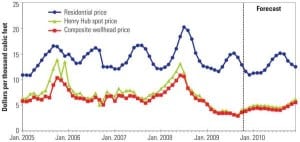
"It’s déjà vu all over again," said Yogi Berra. The Hall of Fame catcher could easily have been predicting the coming resurgence of natural gas – fired generation. Yes, a few more coal plants will be completed this year, but don’t expect any new plant announcements. A couple of nuclear plants may actually break ground, but don’t hold your breath. Many more wind turbines will dot the landscape as renewable portfolio standards dictate resource planning, but their peak generation contribution will be small. The dash for gas in the U.S. has begun, again.
-
 Environmental
A New Regulatory and Environmental Milieu
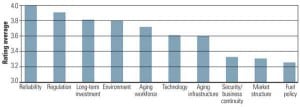
There will be no shortage of important issues to keep utility executives and their staffs busy throughout 2010. Few of these will be surprises, although a number will emerge quickly and assume larger-than-life significance. The confluence of the great recession and the sturm und drang of environmental legislation will create the liveliest of the debates, but more subtle trends will drive additional stressors. The results of Black & Veatch’s 2009 fourth annual industry strategic directions survey can offer guidance as to how these issues will affect the industry in the coming year.
-
 Coal
CoalThe Impact of Carbon Trading on Performance: What Europe’s Experience Can Teach North American Generators
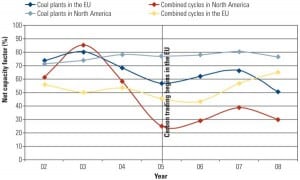
The European carbon trading system experience suggests that North American generators should expect severely altered coal-fired power plant operating profiles if cap-and-trade legislation becomes law. In a groundbreaking study, Solomon Associates predicts the reduction in mean run time that North American generators should expect. The trends outlined in this study provide an overview of some of the broad challenges facing generators in moving to a carbon-constrained market environment.
-
 Solar
SolarA New Foundation for Future Growth
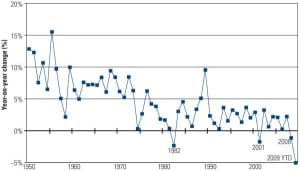
As the economy begins to grow again, the banking industry continues to stabilize, and lawmakers work on finalizing climate change legislation, the decisions made in 2010 will lay the foundation for the power industry for decades to come.
-
 Coal
CoalBrazil: Latin America’s Beacon
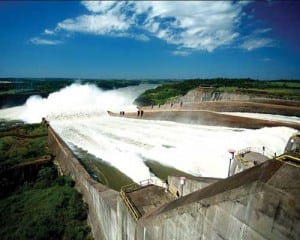
With the eighth-largest economy in the world, Brazil has a clear need for power, but balancing supply and demand has proven tricky in recent decades. Even in a country where over 80% of generation capacity comes from renewables, planning for future capacity additions isn’t straightforward or easy.
-
 Coal
CoalTuning Ammonia Flow to Optimize SCR Performance
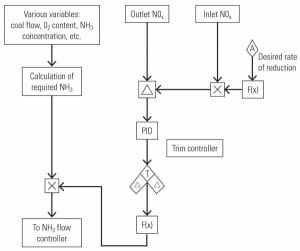
The selective catalytic reduction system has become ubiquitous throughout the world of power plants. Emission control requirements are ever-more stringent, and the cost of excursions is becoming increasingly high. The key to staying under the regulators’ radar is precisely controlling the ammonia injected into the boiler. A new control strategy does precisely that.
-
Commentary
Carbon-Cutting Solution: Dynamic Demand Technology
Once upon a time, climate change felt like a distant threat on the horizon. Now it is happening in front of our very eyes. Across the world, global warming is sparking more intense heat waves, more flooding, and more droughts. If climate change continues at its current pace, the social, environmental, and economic costs don’t […]
-
Coal
EPA Tightens Emissions Rules for Coal Processing, Preparation Plants
The U.S. Environmental Protection Agency has adopted final rules tightening emissions limits for coal preparation and processing plants and imposing new reporting requirements on those facilities.
-
Coal
Expect New Mercury Rules by 2011
In a major air regulatory development, the Environmental Protection Agency has agreed to issue rules by November 2011 to reduce mercury and other hazardous air pollution from coal- and oil-fired power plants under a settlement agreement resolving a lawsuit filed by a host of environmental organizations.
-
Coal
EPA Signals Move to Toughen Ozone Standard
The Environmental Protection Agency has decided it will reconsider the 2008 ozone standards issued by the Bush administration, with the agency suggesting in a court that it would toughen the standards because it has concerns about whether standards “satisfy the requirements of the Clean Air Act.”
-
 Coal
CoalThree CCS Tests Worldwide
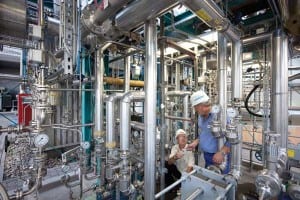
This September — a year after Vattenfall launched the world’s first oxyfuel pilot plant for carbon capture and sequestration (CCS) at the Schwarze Pumpe lignite-fired plant south of Berlin, Germany — three high-profile and long-awaited carbon capture tests started operation around the world.
-
Environmental
New Pressurized CCS System Could Cut Energy Penalty
Researchers at the Massachusetts Institute of Technology (MIT) looking into new power generation cycles have designed an innovative oxyfuel system that uses a pressurized coal combustor to capture and concentrate carbon dioxide emissions for direct injection into deep geological formations.