
Environmental
-
 O&M
O&MApplying CFD to Optimize Furnaces Cofiring Biomass, and the Impact of Cofiring on SCR
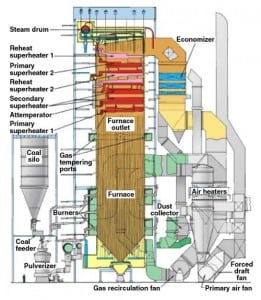
The international policy framework regulating the emissions of greenhouse gases from industrial and utility boilers is in flux. Meanwhile, most boiler owners are evaluating potential strategies for when, not if, more stringent emissions reduction regulations are put in place. One of the most attractive compliance options is the cofiring of biomass in existing coal-fired boilers.
-
 Coal
CoalLarge-Scale Tests Begin to Convert Flue Gas to Usable Water
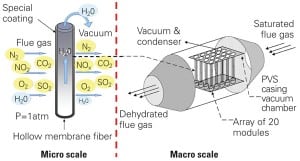
Subsidized by the Dutch government, a number of Dutch utilities, the European Membrane Institute at the University of Twente, and Dutch consulting firm KEMA have, for over a decade, been testing membrane technology that promises to directly convert water vapor from power and other industrial plants’ flue gases into drinking water. The technology could provide a new source of large volumes of potable water.
-
 Environmental
Researchers Develop Supercritical CO2 Brayton Cycle Turbines
Researchers at Sandia National Laboratories say a project that focuses on supercritical carbon dioxide (CO2) Brayton cycle turbines is moving to the demonstration stage.
-
 Gas
GasSendai Plant Boosts Efficiency and Cuts Emissions
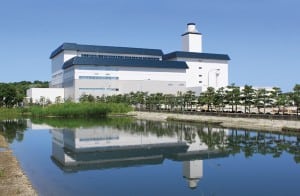
Located on the scenic Japanese coastline, Tohoku Electric Power Co., Inc.’s new 446-MW Sendai Thermal Power Station Unit 4 is a combined-cycle plant that replaces three 175-MW coal-fired units that had been in operation for more than 50 years. The new plant features the first application of MHI’s 50-Hz M701F4 gas turbine, which provides a thermal efficiency boost from the old plant’s 43% to more than 58%. This change substantially reduces CO2 emissions.
-
 Solar
SolarEnergy Storage Enables Just-in-Time Generation
One of the main criticisms of renewable energy facilities is that they are unable to dispatch electricity when it’s needed. The great game-changer is low-cost energy storage, which would enable renewable energy production to be stored and rapidly released when needed. Here are seven promising distributed energy storage technologies that could be commercialized in the near future.
-
Coal
House Panel Hustles Through Bill Blocking EPA Climate Rules
In an anti-climactic markup that featured little new debate and no amendments by opposing Democrats, the House Energy and Power Subcommittee approved Republican legislation to block Obama administration action on climate change by stripping the Environmental Protection Agency of its Clean Air Act authority to regulate carbon dioxide and other greenhouse gases.
-
Coal
EPA Requiring Three Oklahoma Coal Plants to Scrub or Use Gas
In an unusual ultimatum, the Environmental Protection Agency said that it is proposing to take over visibility portions of the Oklahoma Clean Air Act implementation plan to require three coal-fired power plants in the state either to switch to natural gas or install sulfur dioxide scrubbers within three years.
-
Coal
Air Rules Could Risk 11% of PJM Generation
Anticipated clean air regulations could force the retirement of as much as 19,000 MW of coal capacity in the Mid-Atlantic—or 11% of the region’s generation—unless power prices rise to levels that make operation of the plants profitable, according to the independent market monitor for PJM Interconnection.
-
 Coal
CoalCanada’s “Clean” Image Extends to Clean Power
Canada’s extensive natural resources are the driver of its powerful economy, and energy is Canada’s single most important export. Yet policy makers across the nation are currently dealing with the consequences of a generation of under-investment in the electricity system and deciding what the new grid and supply mix should look like. Several provinces are competing to lead the charge in renewable energy and grid intelligence. Policy makers hope that such efforts will not only provide for Canada’s electricity needs but also create the green economy jobs that will drive the nation’s next generation of economic development.
-
Coal
Coal Groups Blast Colorado’s Dash to Natural Gas
In a decision blasted by the coal industry as making the state "dangerously reliant" on natural gas, the Colorado Public Utilities Commission has approved an emissions-reduction plan for Xcel Energy that further expands the utility’s already extensive shutdown of coal-fired power plants in favor of gas-fueled generation.
-
Coal
Illinois Lawmakers Block Clean Coal Plant
Ringing what may be the death knell for the $3.5 billion Taylorville IGCC project, the Illinois Senate voted 33-18 in early January against authorizing construction of a coal gasification and power generating plant proposed in the state by Tenaska.
-
 O&M
O&MContinuous SO3 Monitoring Can Reduce Sorbent Consumption
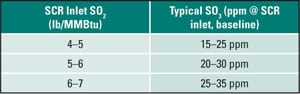
An unintended consequence of employing selective catalytic reduction and wet flue gas desulfurization to reduce nitrogen oxide and sulfur dioxide levels at coal-fired power plants has been unwanted sulfur trioxide (SO3) emissions. Picking the right sorbent in the right amount can eliminate that problem.
-
 Coal
CoalThe U.S. Power Industry 2011: The Sequel
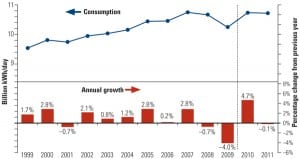
If Hollywood were scripting the power industry story for 2011, it would be a sequel to 2010—more of the same, but just not quite as good. Natural gas gets top billing and the accolades, wind power drops to a supporting role, and new nuclear answers the casting call but has yet to get a speaking part. Coal is like Mel Gibson—a talented Oscar winner unlikely to get another leading role. In this, our fifth annual industry forecast report, the story may be familiar, but the price of admission is going way up.
-
 O&M
O&MEPRI Identifies Four Breakthrough Technologies for 2011
The Electric Power Research Institute (EPRI) has identified four breakthrough technologies and funded them through its Strategic Research and Development Portfolio. EPRI expects to accelerate development of these innovations because they are likely to have significant effects on how electricity is generated and delivered.
-
 Coal
CoalCoal Plants Challenged as Gas Plants Surge
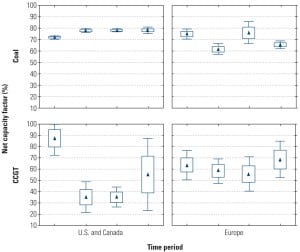
European carbon trading is gradually pushing down coal-fired capacity factors, and operating costs are rising. The U.S. may not have a carbon market, but increasing regulatory requirements are having the same effect on coal-fired generation capacity factors and operating costs. In the meantime, gas-fired assets are enjoying increased usage and lower unit costs.
-
 Coal
CoalOxy-Combustion: A Promising Technology for Coal-Fired Plants
For more than a decade Babcock & Wilcox Power Generation Group Inc. and Air Liquide have been developing oxyfuel technology with the goal of using it to concentrate CO2 from pulverized coal-fired power plants and achieve up to 90% CO2 capture and storage. This technology was recently selected for demonstration as part of FutureGen 2.0.
-
Commentary
Anticipating the New Utility MACT Rules
It’s been almost three years since the U.S. Court of Appeals for the D.C. Circuit issued its decision vacating the Environmental Protection Agency’s (EPA) Revision Rule and the Clean Air Mercury Rule. Since then, the utility industry has been in a holding pattern with respect to the control of hazardous air pollutant (HAP) emissions.
-
Coal
Efficiency Favored in EPA Greenhouse Guidance To States
A long-awaited Clean Air Act regulatory guidance document released by the Environmental Protection Agency recommends that state air regulators strongly emphasize energy efficiency in determining the most cost-effective and technically feasible greenhouse gas control technologies that must be used by utilities and other major industrial emitters when expanding existing facilities or building new ones.
-
Coal
DOE Warns of Coal Plant Water Supply Shortages
With utilities already alarmed by looming federal regulations that could force construction of expensive cooling towers that would sharply increase water use, a report by the Energy Department’s Argonne National Laboratory warns that nearly 350 U.S. coal-fired power plants are vulnerable to potential water demand or supply conflicts over the next 20 years stemming from increased competition for dwindling water resources—particularly in the Southeast.
-
Coal
Peabody: China, India Leading Coal "Supercycle"
While U.S. coal production has been stagnant in 2010, demand for coal in China and India has sharply risen this year and could represent the early stages of a "long-term supercycle" for the global coal industry, according to Peabody Energy, the world’s largest private coal company.
-
 Coal
CoalEPA Regulations Accelerate Industry Shift from Wet to Dry Bottom Ash Solutions
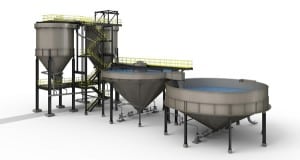
Energy efficient and environmentally responsible dry bottom ash technologies will soon be required by regulation. Progressive companies will bring their plants into compliance early because it’s a good business strategy. Here are your compliance options.
-
Legal & Regulatory
EPA’s Mercury Rule: Another Incarnation Coming
Much like the shape-shifting substance it regulates, the mercurial enforcement rule that governs mercury emissions from coal-fired power plants has changed unpredictably several times in recent years.
-
 Gas
GasSmart Power Generation at UCSD
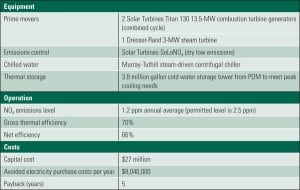
The University of California, San Diego has been accumulating awards for its savvy use of a constellation of power generation and energy-saving technologies. The campus already controls a fully functioning microgrid—including a cogeneration plant—and, as befits a research institution, is constantly looking for new ways to make its energy system smarter. This “living laboratory,” as campus leaders like to call it, demonstrates what it takes to build a smarter grid and why the effort is worth it.
-
 Coal
CoalSouthern Co. Captures Carbon Dioxide at Plant Yates Pilot
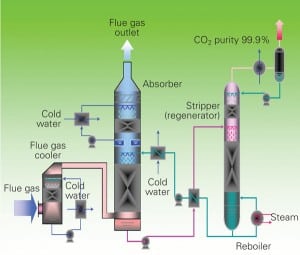
The pilot-scale project at Georgia Power’s Plant Yates near Newnan, Ga.—the first step in one of the industry’s largest demonstrations of a start-to-finish coal-fired power plant carbon capture and storage system—reached a significant milestone this September, capturing the greenhouse gas for the first time.
-
 Coal
CoalFrog-Inspired Artificial Foam Could Help Trap CO2
In August, researchers from the University of Cincinnati who are working on creating an artificial foam that could absorb carbon dioxide (CO2) from the flue gas at power plants and convert it into biofuel won the grand prize at the 2010 Earth Awards in London.
-
 Nuclear
NRC Confident in Long-Term Dry Cask Storage
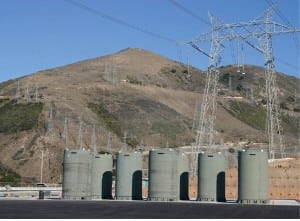
The U.S. Nuclear Regulatory Commission (NRC) approved an updated “waste confidence” rule in mid-September that reflects the agency’s confidence that spent nuclear fuel (SNF) can be safely stored for at least 60 years beyond the closing date of any U.S. nuclear plant. Approval of this rule was required before the NRC can license any new reactors that will be required to store SNF on site indefinitely.
-
Coal
EPA Boiler Regulations Will Strangle Construction of New Power Plants
An Environmental Protection Agency plan to tighten emission limits for new and existing industrial boilers has sparked alarmed protests from the biomass generation industry and electric utilities, who say the proposed regulations are so onerous they threaten to shut down existing biomass power plants and already are chilling deployment of new facilities.
-
 Coal
CoalOverblown: Wind Power on the Firing Line, Part I
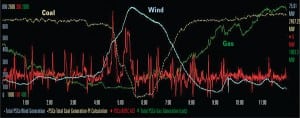
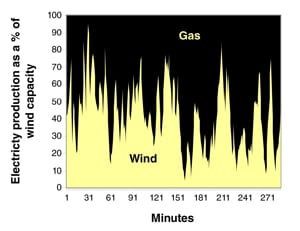
The conventional and oft-repeated truth is that wind generation directly reduces carbon emissions. Challenging the conventional wisdom has drawn much criticism from wind proponents, but the latest research has shown that wind has had, and will continue to have, negligible impact on the nation’s carbon emissions. The data are convincing and can no longer be ignored.
-
Coal
Overblown: Wind Power on the Firing Line, Part II
Wind electricity production must displace some existing generation. However, its relentless variability imposes daunting challenges for wind integration. Clever engineering schemes can mask the problem, but the data show that wind generation has and will continue to reduce carbon by negligible amounts, but at great expense.
-
Coal
EPA Air Regulations Shrinking Power Glut
Pending Environmental Protection Agency regulations to slash U.S. power plant emissions likely will lead to the closure of nearly 18% of the nation’s coal-fired generation capacity, trim demand for steam coal by 15% to 31% and boost demand for natural gas by 8% to 16%, a new Credit Suisse analysis concludes.