
Environmental
-
Environmental
Budget Proposal to Sell TVA Blasted by Republicans, Clean Energy Groups
Reform—and the possible partial or total sale—of Tennessee Valley Authority (TVA), the federally owned and operated but self-financed 80-year-old corporation, as proposed by the White House in its fiscal year 2014 budget, was reportedly unexpected and has been criticized by varied entities.
-
Coal
IEA: Carbon Mitigation Efforts Have Stalled Despite Rapid Renewables Expansion
The carbon intensity of the global energy supply has barely budged in more than two decades despite otherwise successful efforts in deploying renewable energy, the International Energy Agency (IEA) warns in an annual report submitted to the Clean Energy Ministerial (CEM) on Wednesday.
-
Coal
EPA, DOJ Settle with Dominion Energy on CAA Violations
The U.S. Department of Justice (DOJ) and the Environmental Protection Agency (EPA) announced on Monday that Dominion Energy has agreed to pay a $3.4 million civil penalty and spend approximately $9.8 million on environmental mitigation projects to resolve Clean Air Act (CAA) violations.
-
Coal
EPA Updates MATS for Power Plants
The U.S. Environmental Protection Agency (EPA) on March 28 finalized updates to emission limits for new power plants under the Mercury and Air Toxics Standards (MATS). The rule includes emission limits for mercury, particulate matter (PM), sulfur dioxide (SO2), acid gases, and certain individual metals.
-
Coal
Kemper County IGCC Project Update
The integrated gasification combined cycle (IGCC) plant located in Kemper County, Mississippi, is a 2 x 1 plant that will produce 582 MW at peak and 524 MW fired on syngas, with ammonia, sulfuric acid, and carbon dioxide as by-products. The carbon dioxide will be used for enhanced oil recovery (EOR). Engineering was completed in Q3 2012, and the facility’s commercial operation date is planned for May 2014.
-
Coal
Project Planning Key to Smooth J.T. Deely 2 SCR Retrofit
Recent experience on the Deely 2 SCR retrofit project reminds us that the time spent in thoroughly planning a project prior to the start of construction is usually repaid with avoided construction delays.
-
 Environmental
Electrostatic Precipitator Upgrade Opportunities
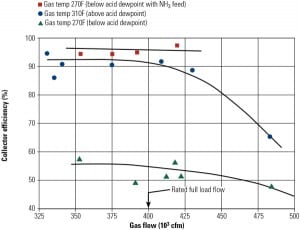
The results of stack emissions testing conducted at several coal-fired power plants during the past three years have provided useful guidance for plant operators who are required to meet new federal guidelines regarding the release of particulate matter. The data and guidelines presented here will assist those who operate plants with electrostatic precipitators to develop a strategy for filterable particulate emissions control.
-
 Environmental
Enhancing Mercury Capture: An Asset-Based Approach
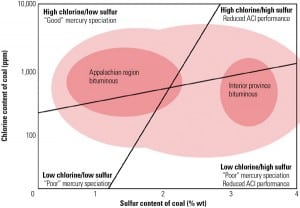
The Mercury and Air Toxics Standards will soon force many coal-fired plants to install mercury-specific emission control equipment. Planners can use particular characteristics of a plant to quickly screen for the best mercury removal technology.
-
Coal
EPA Directs 36 States to Revise SIPs for Emissions During Plant Startup, Shutdown, Malfunction
A rule proposed by the Environmental Protection Agency (EPA) directs 36 states to revise their Clean Air Act State Implementation Plans (SIPs) to eliminate exemptions for excess emissions of air pollutants at power plants during startup, shutdown, or when the plant malfunctions.
-
Environmental
When Dinosaurs Roamed California: The Coming Extinction of Fossil Fuel Use
California’s push to boost its renewable capacity may be doing more than spurring the development of wind and solar. A review of recent data suggests the state’s regulatory schemes have the potential to spell the end of fossil-fuel generation altogether.
-
Coal
EIA: U.S. Power Sector SO2, NOx Emissions Lowest Since 1990
Power plant emissions of sulfur dioxide (SO2) and nitrogen oxides (NOx) in the U.S. declined to their lowest level since 1990, the Energy Information Administration (EIA) said in early March.
-
Environmental
Carbon Capture for Gas Power Appears on the Horizon
You may think of carbon capture and sequestration as a coal industry issue, but two forward-thinking companies are joining forces to make it work for gas.
-
Coal
Four Major EPA Air and Water Rules Forthcoming Through May, Agency Schedule Shows
The Environmental Protection Agency (EPA) estimates final regulations curbing greenhouse gas (GHG), mercury, and air toxics emissions from new sources could appear in the Federal Register by the end of April. Also forthcoming are final cooling water intake rules and proposed effluent guidelines. The coal ash rule, which has no target date for a final rule, may not be issued this year, the agency said.
-
Coal
Senate Democrats Urge Obama to Amend EPA’s GHG Rules for New Coal Plants
In a letter to President Obama last week, four Senate Democrats expressed "continued concern" about the Environmental Protection Agency’s (EPA’s) plans to issue greenhouse gas (GHG) new source performance standard (NSPS) rules for new fossil fuel-fired power plants. The proposed rules could ban "new state-of-the-art" plants from being built and hamper advancements that could benefit the nation’s coal power sector, the senators argued.
-
Solar
Environmental Groups Remonstrate Against U.S. Challenge of India’s Solar Domestic Content Rules
A dozen environmental groups on Wednesday called on the U.S. Trade Representative to reconsider a World Trade Organization (WTO) challenge to domestic content rules and subsidies in India’s national solar program, urging it instead to agree to a solution that allows India to support and build its domestic solar industry.
-
Environmental
Democrats Seek Feedback on Newly Proposed Carbon Fee for Emission Sources
A new draft carbon-pricing bill that solicits feedback on how much industrial sources burning fossil fuels should pay per ton of carbon dioxide emitted was released by a bicameral group of Democrats on Tuesday. The bill diverges from a previously introduced measure to levy carbon taxes at the point of production or sale of a fossil fuel and applies instead at the “point of emissions”—which includes coal, oil, and natural gas generators.
-
Coal
Four Major EPA Air and Water Rules Forthcoming Through May, Agency Schedule Shows
The Environmental Protection Agency (EPA) estimates final regulations curbing greenhouse gas (GHG), mercury, and air toxics emissions from new sources could appear in the Federal Register over the next six weeks. Also forthcoming are final cooling water intake rules and proposed effluent guidelines. The coal ash rule, which has no target date for a final rule, may not be issued this year, the agency said.
-
Coal
Gates Calls for Increased Spending on Energy Research, Renewed Focus on Nuclear
Bill Gates didn’t mince words last night when sharing with the IHS CERAWeek crowd his thoughts about public support for basic scientific research in the United States.
-
Coal
China Looks to Curb Carbon Emissions by Diversifying Power Portfolio
China will reduce the nation’s carbon emissions and energy use per unit of gross domestic product (GDP) by at least 3.7% this year and perform trials for a carbon-trading program, China’s National Development and Reform Commission (NDRC), said in a report on Tuesday. The country would also make "greater efforts to conserve energy" and "reduce the discharge of major pollutants," it’s top economic planner said.
-
Environmental
Obama Nominees—McCarthy for EPA, Moniz for DOE, and Jewell for DOI—Face Tough Confirmation Hearings
President Obama this week nominated Gina McCarthy, the current assistant administrator for the Environmental Protection Agency (EPA) Office of Air and Radiation, to head the EPA. He also nominated Dr. Ernest Moniz, currently a faculty member at the Massachusetts Institute of Technology (MIT) for secretary of energy. Both are expected to face a difficult confirmation process.
-
Environmental
EIA: U.S. Power Sector SO2, NOx Emissions Lowest Since 1990
Power plant emissions of sulfur dioxide (SO2) and nitrogen oxides (NOx) in the U.S. declined to their lowest level since 1990, the Energy Information Administration (EIA) said last week.
-
Environmental
Gas Power Fights Uphill Battle in China
Soon to become the world’s largest electricity market, China is also looking to ease its reliance on coal by shifting toward renewables and natural gas. But an array of roadblocks stand in the way of gas becoming a major element of the mix. -
Environmental
The Effect of Shale Gas on Power Generation in New England
Generators in New England were burned in the 2000s when a fleet of new gas turbine plants couldn’t compete because of high fuel prices. But what goes around comes around, and these same plants are now pushing out oil and coal thanks to cheap shale gas and favorable regulations. -
Legal & Regulatory
With the Gas, the Flow of Fracking Litigation Continues
Few industrial innovations are free of litigation, and fracking is no exception. In this update from last year’s review of litigation trends, favorable early results for explorers and developers suggest cautious optimism may be in order for the natural gas industry. -
Environmental
Air Quality Impacts from Natural Gas Extraction and Combustion
EPRI performed a review of air quality issues related to natural gas extraction and combustion in 2011–2012. This review focused on both traditional pollutants (such as particulate matter and volatile organic compounds) and emerging air pollutants (such as ultrafine particle number) that are being considered in air quality management processes. This article summarizes the major topics and conclusions from this review. -
 Coal
CoalNations Agree to Legally Binding Instrument to Curb World’s Mercury Emissions
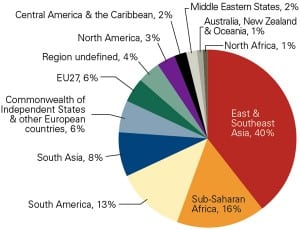
Mercury emissions from power plants in 137 United Nations member countries could be subject to strict controls and reductions if an international treaty is signed by participating nations this October.
-
 Coal
CoalDespite Pollution-Curbing Efforts, Dense Smog Covers Wide Swath of China
Four bouts of dense smog described as the worst air pollution in recent memory enveloped more than half of China in January, from the Beijing-Tianjin-Hebei triangle in the north of the country to Nanjing in the south, via the central city of Wuhan.
-
 Coal
CoalTechno-Economic Considerations When Using Low-Grade Coal for Power Generation
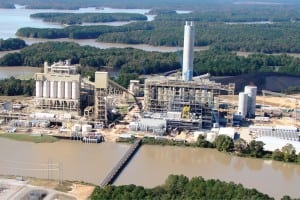
The use of low-grade coal is becoming synonymous with circulating fluidized bed (CFB) power plants. Although CFB technology may often be a better choice than pulverized coal technology, that is not always the case. Owners and developers need to consider several technical and economic factors before making this decision.
-
 Waste to Energy
Expanded Honolulu WTE Plant Delivers Triple Benefits for Oahu
Covanta Energy and the City and County of Honolulu recently completed a $300 million expansion of a 20-year-old waste-to-energy (WTE) facility. The plant is now capable of processing up to 3,000 tons of municipal refuse daily, recycling all the metals, and generating up to 90 MW—enough to supply nearly 10% of Oahu’s electricity.
-
 Waste to Energy
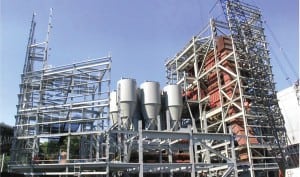
Why Aren’t Construction and Demolition Wastes Considered Biomass Fuel?
You may be surprised to learn that even with the increased demand for biomass fuels for power generation, construction and demolition fuel is classified as solid waste, not biomass. Reconsidering this designation is critical as U.S. environmental regulations tighten emission profiles for solid waste combustion units and renewable portfolio standards expand.