
Environmental
-
Coal
Utility Business Customers to Feast on Free Allowances
An analysis by the Center on Budget and Policy Priorities concluded that two-thirds of the value of carbon emission allowances described by the recent H.R. 2545 will benefit utility business customers and households in the top quartile of personal income. The middle quintile will see increased cost for electricity.
-
Coal
MIT Report Urges Faster Action on Carbon-Capture Retrofits
MIT researchers push for faster commercialization of carbon capture technologies for coal-fired power plants by reducing system costs.
-
 Coal
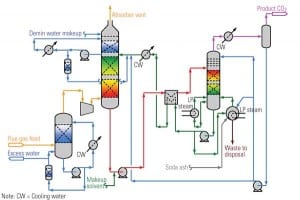
CoalCommercially Available CO2 Capture Technology
While many CO2 removal technologies are being researched through laboratory and pilot-scale testing, an existing technology has a significant operating history at commercial-scale facilities, where it is collecting CO2 from multiple sources, including low-CO2 concentration flue gas (<3.1% by volume) with high oxygen concentrations (>13% by volume).
-
 Environmental
Help Build the Global Energy Observatory
How would you like to be able to access data on all the power plants in the world and all of their performance metrics, analyze that data, and map it? Those abilities are part of the vision behind the Global Energy Observatory (GEO), an OpenModel website that serves as a wiki for global energy data.
-
 Coal
CoalOf Fracking, Earthquakes, and Carbon Sequestration
Hydraulic fracturing — the process of drilling and then pumping fluid deep into a formation to generate fractures or cracks, typically for extracting natural gas from shale formations — has been under fire lately, owing to concerns that it contaminates drinking water. But while Congress debates proposed legislation that would impose new restrictions on the technology, an entirely different concern related to fracturing — or "fracking" — is emerging: It may trigger earthquakes.
-
 Coal
CoalMajor Scottish Coal Plant Starts CCS Pilot Program
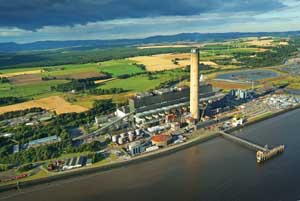
Energy provider ScottishPower on May 29 flicked on the switch of a carbon capture and storage (CCS) pilot program at its 2,304-MW coal-fired Longannet power plant, in Fife, Scotland, marking the beginning of a seven-month test — and the first time a UK coal-fired power plant has reportedly attempted to capture its carbon emissions.
-
 Environmental
Power Industry Needs to Do a Better Job of Educating and Messaging
At the opening ELECTRIC POWER 2009 plenary session, both the keynote speaker and the Power Industry Executive Roundtable participants kept circling back to the problems created by a public and lawmakers who seem to be promoting policies without an adequate understanding of energy realities. Most of the speakers acknowledged that the industry itself is partly to blame, but nobody offered a way forward.
-
 Coal
CoalCarbon Control: The Long Road Ahead
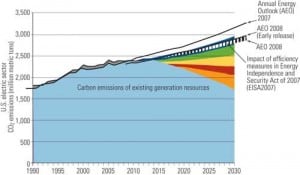
The industry is preparing for carbon legislation by exploring options for dealing with CO2. But even if the technical issues are resolved, actually sequestering CO2 poses a number of other daunting challenges.
-
 Coal
CoalTechnology Could Deliver 90% Hg Reduction from Coal
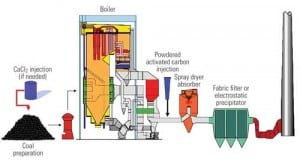
Reducing mercury emissions at coal-fired power plants by 90% has been considered the holy grail of mercury control. A new technique promises to get us there — at a price.
-
Legal & Regulatory
Looking Downstream After the Cooling Water Case
In the wake of the recent U.S. Supreme Court ruling related to cooling water intake practices at large power plants, many utilities are relieved to be off the hook as far as implementing expensive control upgrades to protect fish and other aquatic organisms.
-
 Coal
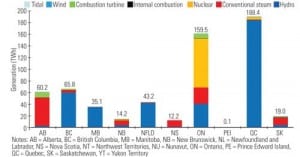
CoalCanada Moves to Rebalance Its Energy Portfolio
Though Canada is rich in fossil fuels, nuclear power may fuel a significant portion of the nation’s future electrical generation needs, especially in provinces that have traditionally relied on hydropower and fossil fuels.
-
 O&M
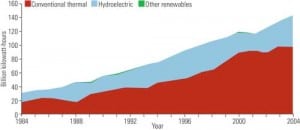
O&MTurkey Opens Electricity Markets as Demand Grows
Turkey’s growing power market has attracted investors and project developers for over a decade, yet their plans have been dashed by unexpected political or financial crises or, worse, obstructed by a lengthy bureaucratic approval process. Now, with a more transparent retail electricity market, government regulators and investors are bullish on Turkey. Is Turkey ready to turn the power on?
-
 Coal
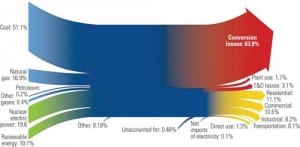
CoalCHP: Helping to Promote Sustainable Energy
Because combined heat and power (CHP) plants optimize energy use, they cut fuel costs and pollution. Even though U.S. power plants have been using CHP for decades, today’s energy experts have a newfound appreciation for its ability to promote sustainable energy use.
-
 Coal
CoalCapturing CO2: Gas Compression vs. Liquefaction
Carbon capture and sequestration is very likely to be a key element of any future greenhouse gas legislation. Integrated gasification combined-cycle plants now under design have provisions to separate the CO2 at elevated pressures. Coal-fired plants have a far more difficult and expensive task — separating and compressing CO2 from pressures just above atmospheric conditions.
-
 Coal
CoalAustralia Faces Imminent Power Supply Issues, Groups Say
Australia, the world’s second-largest exporter of thermal coal and uranium, and a significant exporter of liquefied natural gas (LNG), faces inevitable electricity rationing and the threat of blackouts unless the government acts urgently to ensure large-scale investments are made in new power-generating capacity, experts from five nations said in April. The Australian Academy for Technology […]
-
Coal
Energy R&D: The Missing Link to a Sustainable Energy Future
Q: What do you get when you gather roughly two dozen top researchers from academia, government, and industry to speak on interdisciplinary energy-related issues for a week?
A: A lot of informative but crowded slides, high-octane brain power, fact-based analysis of where we are and we’re headed globally, informed questions, and surprisingly practical answers. -
Coal
EPA Preparing Regulations for Coal Plant Ash
New coal-fired power plant ash management regulations appear to be inevitable, perhaps as soon as year-end. The Tennessee Valley Authority and Edison Electric Institute are on board with new regulations, as long as the ash is regulated as a nonhazardous waste under the Resource Conservation and Recovery Act.
-
Coal
UK Sets Binding Carbon Cuts; Requires CCS at Coal Plants
The UK has all but doomed new coal-fired capacity by simultaneously setting binding carbon reduction goals and by requiring carbon capture and sequestration (CCS) of carbon emissions from new mid-size coal-fired power plants. Existing plants will also be required to retrofit their plants when CCS technology is demonstrated, now estimated to happen by 2020.
-
 Coal
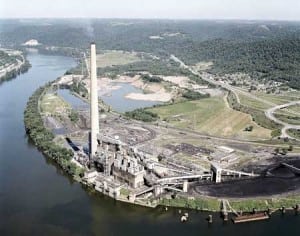
CoalFirstEnergy Retools Coal Plant to Burn Biomass
FirstEnergy has announced plans to repower two coal-fired units at the R.E. Burger plant to burn biomass. Conversion of the two units, expected to be completed by 2012, gets the utility off the hot seat with the EPA for alleged Clean Air Act violations.
-
 Coal
CoalCommercial Experience with Concrete-Friendly Mercury Sorbents
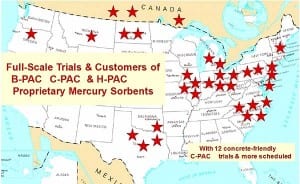
Commonly, 20% of the cement (by weight) in a concrete mix is replaced by fly ash. Fly ash enhances the workability, durability, and ultimate strength of concrete at a lower cost than cement. However, mercury sorbents can change the ash properties to make it unsuitable as a concrete additive. New “concrete-friendly” sorbents can keep the revenues from ash sales flowing.
-
 Coal
CoalCERAWeek 2009: Floundering Economy Eclipses Renewable, Carbon Plans
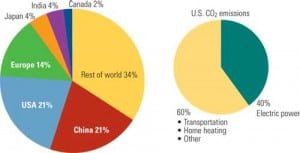
For the past 26 years, Cambridge Energy Research Associates (CERA) has hosted an annual conference in Houston that is world-renowned for its high-profile speakers and attendees’ willingness to exchange ideas and share industry forecasts. The consensus this year was that the power industry remains strong but market and political forces, often working at cross-purposes, make bringing any new power generation to market more problematic than ever.
-
 Coal
CoalNorway Leads the Way on CCS
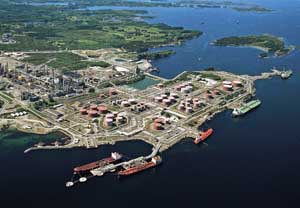
According to a new study from Emerging Energy Research, more than $20 billion will be spent on carbon capture and storage (CCS) projects this year at 50 power generation projects totalling 16 GW around the world. The European Union (EU), with an investment of $11.6 billion, leads all efforts, because it is pressed to achieve a target to reduce carbon emissions by 20% of 1990 levels by 2020. In December, the governing body reached agreement on a climate and energy package, which includes a framework for CCS and a directive on the way EU members and Norway will regulate licenses to ensure reliable carbon storage. The U.S. takes second place, earmarking $6 billion, and Canada is third, at $2.7 billion.
-
 Environmental
Researchers: Spanish Electricity Model Is Unsustainable
The current Spanish electricity model is unsustainable: Carbon dioxide (CO2) emissions are hard to control, demand shows no sign of weakening, and the country is overly dependent on imported fuel. These are the conclusions of a team of scientists from the Institute for Research in Technology of the University of Pontificia Comillas in Madrid, who looked at how the Spanish electricity sector would evolve in four different scenarios.
-
 Coal
CoalEPA Considers Regulating Coal Ash Ponds
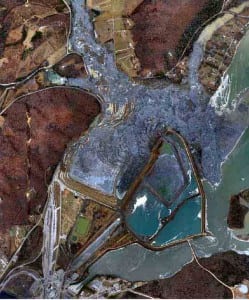
The Environmental Protection Agency has ordered a review of some 300 U.S. utility coal combustion waste sites and said it will develop new regulations to ensure that incidents like December’s colossal coal ash spill in Kingston, Tenn., are not repeated.
-
Coal
EPA to Reconsider Setting CO2 Standard for New Power Plants
Environmental Protection Agency Administrator Lisa Jackson has said that the EPA will reconsider a controversial policy memorandum issued by the agency late last year stating that the agency would not establish a carbon dioxide emission standard for new power plants and other large industrial sources of the heat-trapping gas.
-
Coal
Obama Answers Critics of Climate Allowance Auction
In the face of growing criticism from congressional Democrats of his plan to require electric utilities and other industries to pay for greenhouse gas emission allowances, President Obama told business leaders he is willing to negotiate on the issue, but warned that broad, free allowance allocations would mask the carbon price signal economists say is crucial to speed the deployment of clean technologies needed to fight global warming.
-
 Coal
CoalCFB Technology Offers Short- and Long-Term Environmental and Power Generation Benefits
Circulating fluidized bed technology has the potential to significantly reduce carbon emissions when burning coal and adds the additional flexibility of burning other renewable fuels. Foster Wheeler’s Flexi-Burn technology allows the CFB to produce a CO2-rich flue gas and be part of a practical carbon capture and storage solution.
-
 Coal
CoalPolish Plant Beats the Odds to Become Model EU Generator
Once a Soviet satellite, Poland is now transforming into a thoroughly modern nation. To support its growing economy, this recent European Union member country is modernizing its power industry. Exemplifying the advances in the Polish electricity generation market is the 460-MW Patnów II Power Plant — the largest, most efficient (supercritical cycle), and environmentally cleanest lignite-fired unit in the country.
-
 Water
WaterFlue Gas Desulfurization Wastewater Treatment Primer
Purge water from a typical wet flue gas desulfurization system contains myriad chemical constituents and heavy metals whose mixture is determined by the fuel source and combustion products as well as the stack gas treatment process. A well-designed water treatment system can tolerate upstream fuel and sorbent variation over time and consists of multiple process treatment steps arranged in just the right order to produce wastewater acceptable for discharge.
-
 Environmental
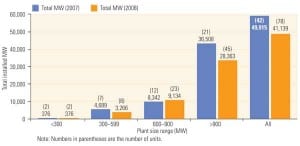
Update: What’s That Scrubber Going to Cost?
POWER published a summary of the flue gas desulfurization system scrubber cost survey conducted by the EUCG’s Fossil Productivity Committee in our July 2007 issue. Although the detailed results of the latest survey are proprietary to EUCG members that participated in it, we are privileged to present the newest summary data. The bottom line: Costs continue to rise but appear to be more predictable.