
Articles By

-
 News
NewsKeep Oil Leaks Under Control
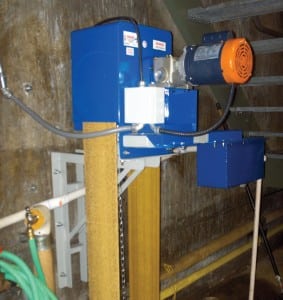
An oil skimmer could simplify your plant water maintenance activiites.
-
Legal & Regulatory
Energy Storage: Renewables’ Necessary Partner
Timing is everything in the world of electric power generation. The timing of the delivery of electricity is affected by both the users’ demand and the speed with which a variety of energy sources supply power to the transmission system. Modern grids require reliable energy sources to instantly meet the needs of their users.
-
 Gas
GasEconomic Operation of Fast-Starting HRSGs
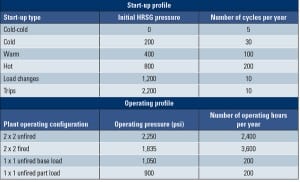
Fast-starting combined-cycle plants are designed for a certain operating life based on a customer-specified set of operating scenarios. During that design phase, periodic inspection and maintenance procedures to benchmark equipment actual wear and tear should be developed, but seldom are. Without an accurate assessment of remaining equipment life for components subjected to fast and frequent […]
-
 Gas
GasKawasaki Plant Claims Efficiency Record
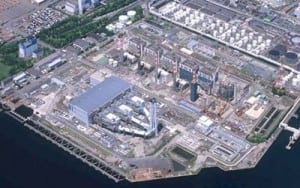
Tokyo Electric Power Co.’s new Kawasaki Thermal Power Plant claims the title of having the highest combined-cycle efficiency in the world: 59.1%. The new gas-fired facility is equipped with three 500-MW single-shaft combined-cycle blocks. Each block is based on the MHI M701G2 gas turbine, which is the largest gas turbine currently in commercial operation.
-
 Commentary
The Second Wave of the Smart Grid
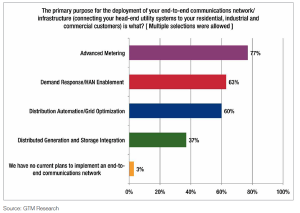
Now that U.S. utilities have taken federal stimulus funds and seamlessly built out two-way advanced metering infrastructure (AMI) connecting utility control centers and end users (ok, not completely, but let’s assume that the “stall-ulus” becomes a true stimulus), the question becomes, what’s next? At the moment, this new “comm layer” or “platform” has utilities planning in two directions: upstream and downstream from the smart meters.
-
Commentary
"Cap and Innovate" for Electric Utilities
The Kerry-Graham-Lieberman bill is a very important step forward in the climate debate. We need federal action on climate legislation now. And we need to get it right.
-
News
Scientific Calculator
Carol Browner, director of the White House Office of Energy and Climate Change Policy, trusts the latest Intergovernmental Panel on Climate Change (IPCC) report’s conclusions that anthropogenic carbon emissions are the primary cause of climate change. When pressed, the customary response of Browner and other proponents has been to rely on that oft-cited list of 2,500 scientists said to have given their full support of the report’s conclusions. Browner should check her facts.
-
 Water
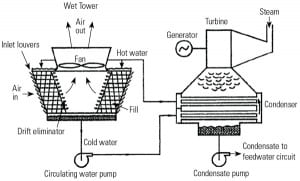
WaterAppraising Our Future Cooling Water Options
Ensuring the availability of water for power plants is a matter of both water quantity and quality. As freshwater becomes less available for power plant use, new supplies from marginal or impaired sources will require new cooling technologies. We look at cooling equipment options and how water availability and quality affect cooling system design and cost.
-
Commentary
New Breed of Hacker Targeting the Smart Grid
In recent months, U.S. utilities, manufacturers, and technology firms received $3.4 billion as part of the economic stimulus package. These funds have been allocated to help modernize the country’s electric power system and increase energy efficiency. However, as these "smart-grid" grants continue to be awarded, questions are being raised about how to safeguard smart meters and other critical infrastructure from cyber attacks.
-
Coal
CORRECTED: New York Coal Plant to Get 20-MW Energy Storage System
New York regulators in April approved construction of a 20-MW energy storage system at the site of an operating coal-fired power station near Union, Broome County. When operational, the $22.3 million project, owned by AES ES Westover LLC—an AES Corp. subsidiary—will use the technology to participate in New York’s growing day-ahead market for ancillary services and regulation.
-
 O&M
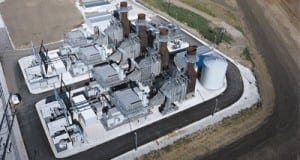
O&MImproving SCR Performance on Simple-Cycle Combustion Turbines
Austin Energy replaced the selective catalytic reduction (SCR) catalyst twice over five years for its four peaker turbines. The duct modifications and injection grid redesign, combined with new catalyst, are producing high NOx reduction and low ammonia slip, and the catalyst is now expected to last at least five years.
-
Coal
EPA Proposes Two Options to Regulate Coal Ash
In an unusual two-option proposal that drew clashing views from green groups and power plant operators, the Environmental Protection Agency has proposed regulating coal combustion ash either as a nonhazardous waste subject to tougher management and disposal requirements or as a "special" hazardous waste that would have similar controls but still be eligible for recycling and reuse in products such as Portland cement.
-
 Wind
WindOffshore Wind Takes Off Around the World
After more than a decade of debate, in April, U.S. Interior Secretary Ken Salazar approved Cape Wind, a proposed 130-turbine offshore wind farm for Nantucket Sound in Massachusetts. It would be the first wind facility in U.S. waters. Despite remaining hurdles, the approval marks a shift in political winds for the nation’s fledgling industry, and it could spur further development of projects proposed for relatively shallow waters along the East Coast and in the Great Lakes.
-
 O&M
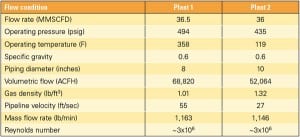
O&MReal-Time Monitoring of Natural Gas Fuel Cleanliness
Gas turbines require clean gas to operate efficiently. Particulate contamination fouls fuel nozzles, causes increases in flue stack emissions, and occasionally causes unplanned plant outages. Now a new real-time natural gas cleanliness monitoring and web-based alarm system is providing valuable protection for natural gas–fired power plants. The adaptation of laser light–scattering technology for the purpose of contaminant measurement in high-pressure gaseous pipelines provides a method of monitoring liquid and solid contamination levels.
-
Coal
EPA Issues Final Greenhouse Gas Tailoring Rule
Less than 24 hours after the unveiling of sweeping Senate legislation to reduce U.S. greenhouse gas emissions, the Environmental Protection Agency released a final Clean Air Act rule that defines emission thresholds for greenhouse gas permitting requirements for power plants and other large stationary sources.
-
 Wind
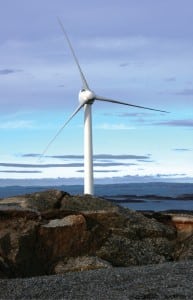
WindCompetition for Offshore Turbine Market Heats Up
One indication that the world’s offshore wind sector is poised to soar is the escalating competition between turbine makers. This April, General Electric (GE)—the world’s second-largest manufacturer of wind turbines—announced it would introduce a 4-MW gearless wind turbine (a design requiring no gearbox between turbine and generator) in 2012. The move directly challenges market leader Siemens Energy, of Germany, and its head-to-head competitor, Denmark’s Vestas Wind Systems.
-
 Business
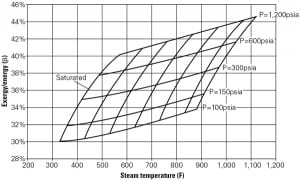
A Proposed Definition of CHP Efficiency
Many alternative approaches for determining a useful definition of combined heat and power fossil power plant efficiency have been proposed, although most fail to produce a universal definition. This follow-up report to our February story on plant efficiency shows how an exergy analysis supplies the elusive solution.
-
Coal
American Power Act Dangles Carrots for Nukes, Coal, Gas
Facing a difficult uphill slog in a sharply polarized Senate, Sens. John Kerry and Joseph Lieberman have unveiled long-awaited draft climate change and energy legislation that includes billions of dollars in incentives for the nuclear, natural gas, and coal industries aimed at attracting enough bipartisan support to overcome an all-but-certain filibuster led by the Senate Republican leadership.
-
 Nuclear
Finnish Government OKs Two Nuclear Plant Proposals
Finland’s government in April approved two of three proposals for the construction of new nuclear reactors in an effort to rid the country of its dependency on electricity imports from other countries—especially Russia—as well as to decrease carbon emissions.
-
 News
NewsIn-Line Vibration Transmitter
IMI Sensors released model 682A09 ICP In-Line 4-20 mA Vibration Transmitter, a device that installs with any industrial accelerometer and converts the vibration signal to a 4-20 mA velocity output that can be trended with today’s PLC, DCS, or SCADA control room systems. Its sleek design installs right into the cable run. No DIN rails, […]
-
 Coal
CoalComparing the Value of Single- and Double-Layer Insulation on Boiler Walls
Boiler insulation practices have moved from using a single layer to a double layer of the same total thickness in recent years. However, this dual-layer trend has a downside: higher installation costs and the opportunity for contractors to cut corners when installing insulation. It’s time to return to using single-layer insulation on power boilers.
-
 Hydro
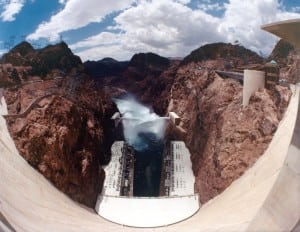
HydroHoover Dam Contracts for Low-Water Hydroelectric Turbine
Growing water demand and reduced runoff due to drought has depleted waters feeding many hydroelectric power plants around the world—sometimes causing severe power shortages, such as in Brazil and New Zealand. The 2,080-MW Hoover Dam (Figure 4), a facility that generates power for more than a million people in Arizona, Nevada, and Southern California, is not immune to this phenomenon. According to a recent study by the Scripps Institution of Oceanography, the Colorado River system, which includes Lake Powell and Lake Mead (both manmade reservoirs), is suffering a net deficit of nearly one million acre-feet of water per year.
-
 News
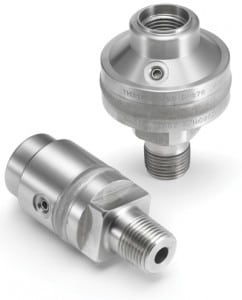
NewsCaustic Media–Shielding Seals
Types 510 and 511 diaphragm seals are the newest addition to Ashcroft’s line of instrument media isolators. These economical, all-welded seals protect pressure gauges, transmitters, switches, and other instruments against the potentially harmful effects of caustic media. The seals are available for use with ranges from vacuum through 5,000 psi, and they can be threaded […]
-
 O&M
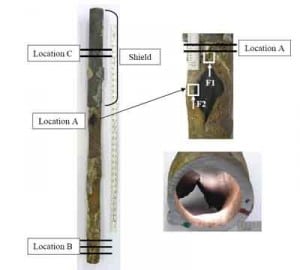
O&MThe Role of Fireside Corrosion on Boiler Tube Failures, Part II
One of the primary challenges of reliably burning coal is managing the corrosion experienced by the furnace heat transfer surfaces. Fireside corrosion remains a leading cause of failure in superheater and reheater tubes. In Part I, we examined three case studies of different failure modes experienced by tubes located throughout the furnace. In Part II, we conclude with two additional boiler tube failure case studies.
-
 Gas
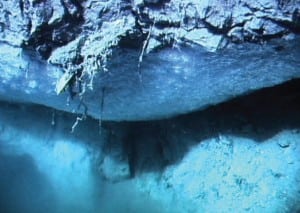
GasDOE Expedition Confirms Resource- Quality Gas Hydrate in the Gulf of Mexico
Gas hydrate, a potentially immense energy resource, occurs at high saturations within reservoir-quality sands in the Gulf of Mexico, an expedition by the U.S. Department of Energy has discovered.
-
 News
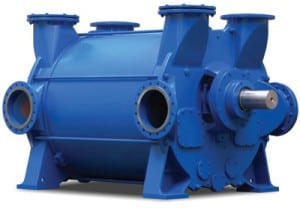
NewsVacuum Pump and Compressor Series Upgrade
GD Nash introduced the new 2BE4 series vacuum pumps and compressors, a redesign and upgrade of the existing 2BE3 series. The 2BE4 series includes optimized inlet and discharge porting for enhanced performance, and cylindrical roller bearings for improved load ratings and increased reliability (bearing upgrade is possible in existing 2BE3s). The series also includes optional […]
-
 O&M
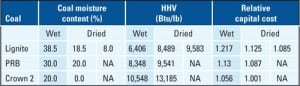
O&MPower 101: Flue Gas Heat Recovery in Power Plants, Part II
Every power engineer must have a firm grasp of the rudiments of how fuel is processed to produce electricity in a power generation facility. With this article, we continue our three-part series on the essentials of recovering heat from flue gas to dry and process coal, with the goal of improving overall plant operating efficiency.
-
 Hydro
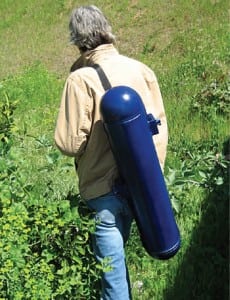
HydroThe Backpack Power Plant
Soldiers could one day carry 600-W power plants on their backs, or set up arrays of up to 20 kW in streams deeper than 4 feet, if a prototype being developed by California-based Bourne Energy comes to fruition.
-
 News
NewsMobile Water Desalination Technology for Rent
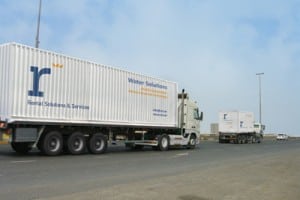
Rental Solutions & Services (RSS), a global provider of rental power and cooling, recently launched its latest product offering, temporary desalination, or mobile water. The company, which recently opened a new office in Cyprus to serve the Mediterranean market, says its rental desalination, or mobile water technology has various applications, especially where freshwater is scarce […]
-
Commentary
Power Industry Flip-Flops on Support of Carbon Controls
I recently had the privilege of moderating the Power Industry Executive Roundtable, part of the annual ELECTRIC POWER Conference & Exhibition opening ceremonies. Usually, the power industry executives have predictable views of important issues, but not this year.