
Articles By

-
 News
NewsHermetically Sealed Piezoelectric Accelerometers
Meggitt Sensing Systems introduced the Endevco model 7251A series, a family of small, lightweight, hermetically sealed piezoelectric accelerometers with integral electronics. The centrally located thru-bolt mounting hole of this series provides both 360-degree cable and connector orientation, allowing the sensor to offer a flat mounting surface, even when not fully perpendicular, for ease of use […]
-
Coal
Proposed Clean Energy Agency Has Cost Issue
Even as Senate energy leaders gear up to re-introduce widely supported legislation to create the Clean Energy Deployment Administration, they have acknowledged that the bill faces a heightened problem this term: the need to find nearly $10 billion in offsets to pay for the new green energy financing authority at a time of overwhelming concern about the federal debt.
-
News
Turning Gold into Lead
Despite California’s deep economic wounds, Governor Jerry Brown (D) last month signed a bill (SB 2X) that increased the state’s already ambitious renewables portfolio standard (RPS) goal from 20% to 33% by 2020. Together with the state’s Global Warming Solutions Act of 2006, which requires caps on greenhouse gas emissions starting next year, the new law will push up the price of electricity and further delay the Golden State’s economic recovery by permanently driving away irreplaceable businesses and manufacturing jobs.
-
 News
NewsFilters for Lower-Pressure Liquid and Gas Applications
Mott says its new 7710 Series filters are designed to accommodate lower-pressure liquid and gas filtration applications at a value price point. Porous metal elements for this model are 10-inch long, 316L stainless steel cartridges in either a double open ended or 1-inch NPT connection configuration. The 316 stainless steel housing comes standard with a […]
-
Commentary
In Cap and Trade Fight, Environmentalists Had Spending Edge over Opponents
New research challenges the commonly held view that cap and trade legislation failed because of the spending advantages of opponents and false balance in news coverage. The report, "Climate Shift: Clear Vision for the Next Decade of Public Debate," released by American University Professor Matthew Nisbet on April 25, also shows how well funded both sides of the debate were.
-
 Hydro
HydroSeven Charged in Siberian Hydropower Plant Accident
The Russian Investigative Committee has completed a probe into the August 2009 accident at the Sayano-Shushenskaya Hydro Power Plant in Siberia that killed 75 people. The committee has charged seven people—including the plant’s former head, Nikolai Nevolko, his deputies, and the plant’s former chief engineer, Andrei Mitrofanov—for violating safety rules. If found guilty, the officials could face five years in jail.
-
Commentary
U.S. Nuclear Operations in a Post-Fukushima World
Perhaps more than for any other industry, a nuclear accident in any part of the world affects nuclear operations elsewhere. Such an incident necessarily and inevitably results in industry self-examination, heightened regulatory oversight, and third-party scrutiny.
-
Commentary
Stop the "Anti-Transmission" Bill
When it comes to energy, the new Congress has a whole host of challenges and opportunities. But there is at least one complex challenge that has a straightforward solution. If we want a secure, reliable, and affordable energy mix, we must modernize our nation’s energy grid.
-
 Nuclear
Recovery Efforts Continue at Fukushima Daiichi
In April, Japan’s Nuclear and Industrial Safety Agency provisionally raised the accident rating for three reactors at the crippled six-unit Daiichi nuclear plant in Fukushima Prefecture to Level 7—making it a “major accident” and putting it on par with the 1986 Chernobyl accident in the Ukraine. Recovery efforts continue at the nuclear plant with workers […]
-
 Nuclear
Germany Considers Accelerated Nuclear Exit on Fukushima Worries
In the wake of the devastating nuclear crisis afflicting the Fukushima Daiichi nuclear plant in Japan, Germany has embarked on an abrupt shift away from nuclear power, shutting down eight reactors for safety checks and ditching concerted efforts to keep nuclear power plants open in the long term. In mid-April, Chancellor Angela Merkel told reporters that leaders of Germany’s 16 states all want to “exit nuclear energy as soon as possible and make the switch to supplying via renewable energy.” The policy reversal has incited ardent opposition from the energy sector and industry.
-
Solar
Countries Abandon Subsidies for Renewables en Masse
Stricken by the economic crisis and forced to implement austerity measures, several countries around the world have been forced to abandon or slash subsidies for renewable power producers.
-
 Water
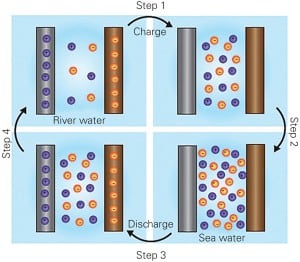
WaterBattery That Extracts Energy from Water Salinity Difference
A rechargeable battery developed by researchers from Stanford University employs the difference in salinity between freshwater and saltwater to generate a current.
-
Business
POWER Digest (June 2011)
Italian Firm Wins Contract to Build Massive African Hydropower Plant. Italian construction firm Salini Costruttori said on March 31 it has signed a €3.35 billion contract with Ethiopia state-owned Ethiopia Electric Power Corp. to build a 5,250-MW hydropower plant on the Blue Nile, a tributary of the Nile River. The project, slated to be completed […]
-
Business
NERC CIP Update
The North American Electric Reliability Corp. (NERC) Reliability Standards are under constant revision even while new requirements are under active development. Three important regulatory definitions are currently being contested.
-
O&M
Air Preheater Uses New Adaptive Brush-Sealing Design
Radial, axial, and circumferential metallic seals installed on rotary, regenerative air preheaters have evolved little from the original metal strip designs that date back to the original Ljungström preheaters developed nearly a century ago. Unfortunately, metallic strip seals degrade soon after installation, allowing excessive air-to-gas leakage, which translates into increased fuel consumption and fan power.
-
 Gas
GasThe T-Point Plant: The Ultimate Validation Test
Fourteen years ago, the MHI T-Point demonstration combined-cycle plant in Takasago, Japan, changed the way modern gas turbines are validated under real operating conditions. In February, T-Point marked yet another milestone by starting to validate the world’s largest and highest efficiency gas turbine, which operates at the unprecedented turbine inlet temperature of 1,600C.
-
News
GAO: U.S. Nuclear Waste Policy Plagued with Uncertainties
A report released by the Government Accountability Office (GAO) today—and presented at a House Energy and Commerce Committee hearing on the Energy Department’s role in managing civilian radioactive waste—concludes that uncertainties exist about the direction of the nation’s policy for nuclear waste disposal.
-
Instrumentation & Controls
Twin Pac Controls Upgraded
In November 2008, a central Texas utility commissioned HPI, a full-service turbomachinery design and construction firm based in Houston, to perform a major upgrade of its plant’s power distribution and turbine control systems.
-
 Gas
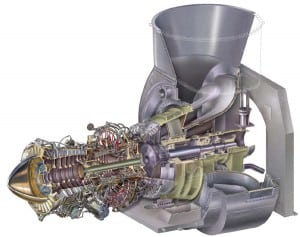
GasSelecting Your Next Combustion Turbine
With natural gas serving as the fuel de jour, many utilities and merchant generators will be considering the purchase of new combustion turbines in the near future. If you are in the market for a gas turbine, here are some key design features you should discuss with turbine vendors prior to your next purchase.
-
News
Duke Energy Likely to Shutter Two Coal-Fired Units in Indiana
Duke Energy will retire two coal-fired units at the four-unit 560-MW Gallagher Station in New Albany, Ind., instead of converting them to natural gas if regulators approve the company’s plans to buy the 640-MW natural gas–fired Vermillion Energy Facility in Cayuga, Ind.
-
Commentary
Your Guide to Retirement
Someone once said that "life begins at retirement." For people, perhaps, but not for our aging inventory of coal-fired power plants that are slated for retirement during the next decade.
-
Legal & Regulatory
Reliability Challenges Cause Texas-Size Headache
Even though Texas is again basking in warm weather, federal regulators are still investigating the rolling blackouts that hit the Lone Star state during a record-breaking cold snap in early February.
-
 Business
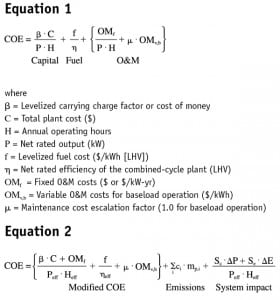
A More Accurate Way to Calculate the Cost of Electricity
Life-cycle cost of ownership is a common metric used to compare power plant system alternatives. However, the familiar formula for calculating the cost of generating electricity omits factors that are becoming increasingly important to business decisions. A new formula addresses those blind spots by estimating the value of the part-load performance of cycling combined-cycle plants.
-
News
New Jersey to Pull Out of RGGI, Shun New Coal Plants
New Jersey Governor Chris Christie on Thursday announced he would withdraw his state by the end of the year from the Regional Greenhouse Gas Initiative (RGGI)—a cap-and-trade carbon trading system that involves 10 Northeastern states—because the “program is not effective in reducing greenhouse gases and is unlikely to be in the future,” he said. The governor also said the state would not permit any new coal plants and that it would shut down “dirtier” intermediate and peaker plants.
-
General
Bryson to Head Commerce Department?
By Kennedy Maize Washington, D.C., May 31, 2011 — By the time you read this, the event may have already happened. The Washington rumor mill is rumbling loudly that President Obama will name John Bryson, former California electric company executive, to be commerce secretary, replacing Gary Locke, who will be named U.S. ambassador to China. […]
-
News
EPA Admits Error in Proposed Mercury MACT Rule
The Environmental Protection Agency (EPA) has acknowledged in a letter to non-profit power trade organization Utility Air Regulatory Group (UARG) that it made a conversion error in the way mercury emissions data was calculated to set limits for the agency’s mercury maximum achievable control technology (MACT) floor in the proposed Mercury and Air Toxics Standards (MATS) rule.
-
News
15 States Claim EPA Violated Clean Air Act with Endangerment Finding
Fifteen states on Monday, led by Texas, filed an opening brief in a legal challenge to the Environmental Protection Agency’s (EPA’s) finding that greenhouse gases (GHGs) pose a danger to public health and welfare.
-
News
ICC Rejects ComEd’s Smart Grid Fee Hike Request
The Illinois Commerce Commission (ICC) on Tuesday rejected a request by Exelon Corp.’s energy delivery arm ComEd to charge customers for several smart grid initiatives, including advanced meter deployment. The commission, however, approved ComEd’s request to collect an additional $155.7 million–a 7.6% increase over current revenue—through new delivery rates.
-
News
DOE Offers Loan Guarantee for Nev. 110-MW CSP Tower Plant
The Department of Energy (DOE) on Thursday conditionally offered a $737 million loan guarantee to support SolarReserve’s Crescent Dunes Solar Energy Project, a 110-MW molten salt concentrating solar power (CSP) tower generating facility. The project would be the first of its kind in the U.S. and the tallest molten salt tower in the world, the federal agency said.
-
News
NRC Holds Up Westinghouse AP1000 Design Certification, Citing New Technical Issues
Efforts to confirm regulatory review of Westinghouse’s AP1000 reactor design have resulted in the uncovering of “additional technical issues,” which Westinghouse must resolve before the Nuclear Regulatory Commission (NRC) can consider finalizing certification for the design, NRC Chair Gregory Jaczko said on Friday.