
Articles By

-
 Marmaduke
Marmy’s One-Squirt Celebration
Steve Elonka began chronicling the exploits of Marmaduke Surfaceblow—a six-foot-four marine engineer with a steel brush mustache and a foghorn voice—in POWER in 1948, when Marmy raised the wooden mast of the SS Asia Sun with the help of two cobras and a case of Sandpaper Gin. Marmy’s simple solutions to seemingly intractable plant problems remain timeless. This Classic Marmaduke story, published more than 50 years ago, reminds us that an overhaul or startup may not go as planned, but it can still have a happy ending.
-
 O&M
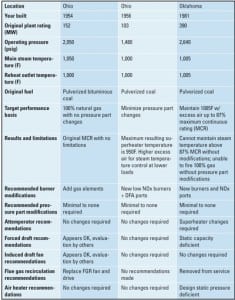
O&MNatural Gas Conversions of Existing Coal-Fired Boilers
Why should utilities consider converting existing coal-fired plants to burn gas? We explore the rationale for fuel switching, some of the options available for the conversion of coal-fired units, technical considerations related to conversion, and some of the financial considerations that will impact the final decision.
-
 Coal
CoalLargest CCS Project in Operation
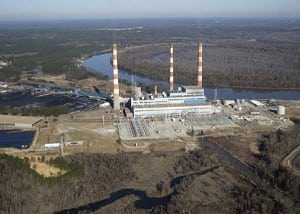
Companies continue to increase the size of carbon capture and sequestration test projects. Mitsubishi Heavy Industries (MHI) has launched operation of what it calls the world’s largest demonstration of carbon capture on a pulverized coal plant.
-
 News
NewsScreened Tungsten Halogen Lights for Nuclear Plants
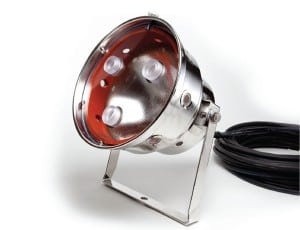
BIRNS Inc., designer and manufacturer of lights for the nuclear power industry, introduced enhancements to the popular BIRNS Kelvin—a 16,000-lumen tungsten halogen light that features a 120 volt/1,000 W lamp with instant on/off and hot-restrike capability. Designed for underwater use in areas with high levels of radiation and nuclear contamination, the new model 5813 now […]
-
Commentary
Which Comes First?
Proponents of carbon dioxide emission reductions from power plants are lamenting the decision by American Electric Power to cancel the carbon capture and sequestration plant at its Mountaineer facility in West Virginia. It’s not politics, it’s just business.
-
 Hydro
HydroChile, Peru Put the Brakes on Mega-Hydro Projects
Weeks after Brazil’s environmental agency, IBAMA, granted final approval for construction of the mammoth 11.2-GW Belo Monte Dam in the Amazon region to proceed, an appeals court in Chile suspended plans for the 2.75-GW multi-dam HidroAysen project in the Patagonia region, and Peru’s government terminated a concession for the 1.5-GW Inambari in the Peruvian Amazon area after month-long mass protests (Figure 5).
-
 News
NewsClean-Up Kit for Large Outdoor Oil Spills
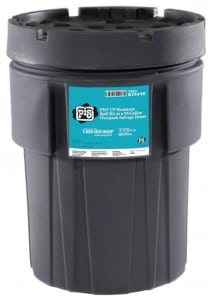
New Pig Corp. launched the “PIG UV-Resistant Spill Kit in a 95-Gallon Container” as an easy oil-spill clean-up solution to large outdoor spills. Suitable for outdoor use and storage, the PIG UV-Resistant Spill Kit is nontransparent, providing superior protection of absorbent contents from UV degradation during long-term storage outdoors. The container includes enough PIG oil-absorbent […]
-
 Hydro
HydroOsmotic Power Makes Headway
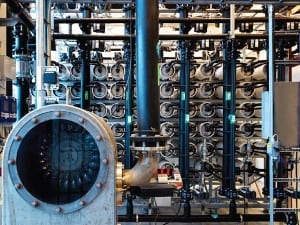
Statkraft began operating its 4-kW prototype osmotic power plant at Tofte, just outside Oslo, Norway, in 2009. Now the firm reports that it is close to developing a large-scale plant. In June, Statkraft and Japanese materials manufacturer Nitto Denko/Hydranautics signed an agreement for the development and supply of membranes specifically designed for use in large-scale osmotic power plants.
-
 News
NewsHeavy-Duty Lathe Carriage Shields
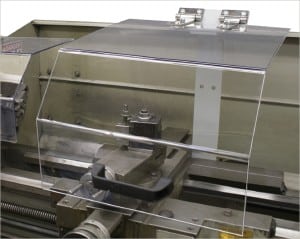
Danray Products introduced a line of heavy-duty lathe carriage (saddle) shields that are designed for manual lathes or similar machines. The shield attaches directly to the backside of the carriage, so it moves with the carriage as the work piece is being machined. This provides a barrier between individuals and the point-of-operation hazard. The shield […]
-
 Gas
GasE.ON Commissions 433-MW Hungary CCGT
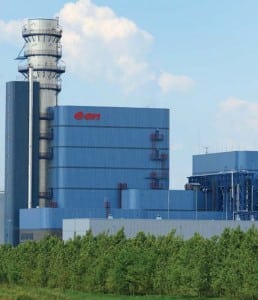
Two years after it laid the foundation stone, Germany’s E.ON on June 27 opened Hungary’s most efficient combined cycle gas turbine (CCGT) power plant (Figure 7). The €400 million ($573 million) plant in Gönyü has a capacity of 433 MW and an efficiency of over 59%, E.ON claims. Siemens supplied the main components: an SGT5-4000F gas turbine, an SST5-5000 steam turbine, an SGEN 5-3000W generator, and the entire electrical and instrument and control equipment. The natural gas–fired power plant is of single-shaft design with the main components arranged in a single driveline.
-
Commentary
Coal: A Key Part of Our Clean Energy Future
With the U.S. economy still struggling, few things are as important as having an abundant, reliable supply of energy to help drive our recovery. Many American families are hurting and our businesses are being challenged to create new jobs. That’s why federal, state, and local public policies must balance the need for broader economic prosperity, […]
-
Business
POWER Digest (August 2011)
The Tide Turns for Marine Energy Devices. Siemens Energy recently secured a 10% stake in Marine Current Turbines, the UK company that owns SeaGen, a 1.2-MW tidal power plant, which was commissioned in 2008 on the Irish Sea. Marine Current Turbines is planning to build a larger, 8-MW plant off the coast of Scotland by […]
-
 O&M
O&MSystems Integration, Flexible Control Reduce Makeup Water Cost
Longview Power, a 695-MW coal-fired power plant now under construction in Maidsville, W.Va., is scheduled to begin commercial operation later this year. The $2 billion project reached 580 MW in early June, just a month after completing the “first fire on coal” schedule milestone. Testing and tuning of the controls and various systems continue.
-
 O&M
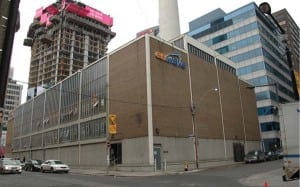
O&MImproving the Efficiency of Toronto’s District Heating Plant
Enwave Energy Corp.’s district heating plants in downtown Toronto will be operating cleaner and more efficiently before the fall 2011 heating season begins when boiler upgrades now under way are completed. Enwave hired Benz Air Engineering (BAE) to design and install upgrades to all eight boilers inside Enwave’s Pearl Street Station. When the $20 million project is completed, the retrofits will produce energy savings exceeding $5 million per year. In addition, the company will receive incentives of $100,000 per boiler from Enbridge, its natural gas provider.
-
 O&M
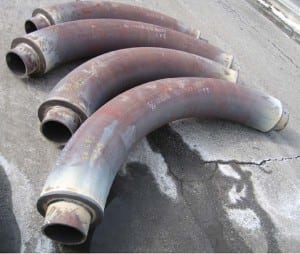
O&MFighting Pipe Abrasion
Steel piping systems used to convey coarse materials, often over long distances, are under constant attack from abrasion. In power plants, the materials are usually coal and limestone slurry. The common industry solution has been to install abrasion resistant (AR) pipe that is much harder on the Brinnell Scale than standard steel pipe. The harder the inner wall, studies have shown, the better it resists the gouging or plowing action of abrasive sliding particle flow.
-
Legal & Regulatory
New Approach Needed for Renewable Integration
It is time for the renewable integration discussion to move beyond simply identifying the challenges of ensuring reliability in a nation increasingly served by intermittent renewable resources and toward developing real-world solutions to these challenges.
-
 Coal
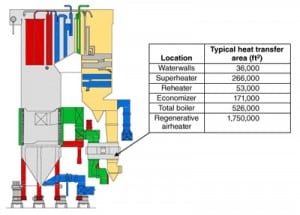
CoalInnovations in Air Heater Design Produce Performance and Reliability Improvements
The regenerative air heater on a typical steam generator usually accounts for over 10% of a coal-fired plant’s thermal efficiency. A poorly performing air heater will cause an increase in the gas outlet temperature, often reducing the electrostatic precipitator collection efficiency and baghouse reliability. Recent design innovations enable restoration of this lost performance.
-
 Coal
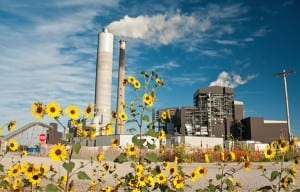
CoalPlant of the Year: KCP&L’s Iatan 2 Earns POWER’s Highest Honor
Kansas City Power & Light (KCP&L) began engaging stakeholders in 2003 to develop consensus on a regional energy plan designed to balance customers’ desire for low electricity costs with system reliability needs and environmental requirements. The culmination of that plan was the completion of Iatan 2, which entered service in August 2010. For executing an innovative energy plan that reduced overall fleet emissions, ensuring the region’s future electricity supply, and completing an approximately $2 billion project in time for the summer 2010 peak load by using innovative contracting and project controls, KCP&L’s Iatan 2 is awarded POWER’s 2011 Plant of the Year Award.
-
 O&M
O&MPulverizers 101: Part I
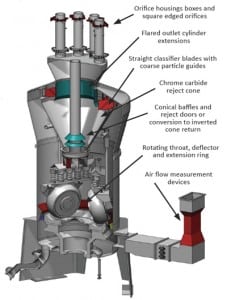
Pulverizers prepare raw fuel by grinding it to a desired fineness and mixing it with the just the right amount of air before sending the mixture to boiler burners for combustion. In Part I of three parts, we’ll examine the essentials of pulverizer capacity, what should be done after a coal pulverizer fire or other incident, and how to tune up pulverizer performance. In future articles we’ll discuss measuring pulverizer performance and performance optimization.
-
 O&M
O&MMarmaduke Award: CFE Extends CTG Universidad Unit 2’s Life with Conversion to Synchronous Condenser
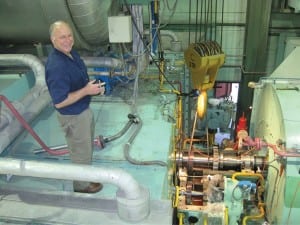
CTG Universidad is a two-unit combustion turbine plant commissioned in late 1970 by the Comisión Federal de Electricidad (CFE) on the north side of Monterrey, Mexico’s third-largest city and an important industrial center. By the 1990s, the two 14-MW turbines were obsolete, used sparingly, and slated for demolition in 2010. However, by 2002, portions of Monterrey began experiencing power restrictions caused by a lack of sufficient reactive power production, and that situation presented an opportunity for the plant. By repurposing an old combustion turbine for use as a synchronous condenser to provide local reactive power, CFE significantly reduced local power supply limitations. For that savvy plant repurposing, CFE’s CTG Universidad Unit 2 is the winner of POWER’s 2011 Marmaduke Award for excellence in power plant problem-solving. The award is named for Marmaduke Surfaceblow, the fictional marine engineer and plant troubleshooter par excellence.
-
Coal
Is AEP Exaggerating Impact of Air Rules?
American Electric Power recently announced plans to retire over 6,000 MW of coal-fired generation in response to two looming Environmental Protection Agency air quality regulations. Is AEP exaggerating the impact of these regulations? Some members of Congress believe that to be the case. AEP disagrees.
-
 Smart Grid
Smart Grid Award: Vermont Electric Cooperative Takes Wise Approach to Smart Grid Projects
A cooperative in northern Vermont serving a largely rural area has proven that even small utilities can achieve great smart grid results by planning wisely. For improving service to its members by developing a grid modernization strategy before “smart grid” was a buzz phrase, Vermont Electric Cooperative is the winner of the first POWER Smart Grid Award.
-
Coal
House GOP Moves to Block EPA from Regulating Coal Ash as Toxic Waste
Continuing the House Republicans’ aggressive attack on Obama administration environmental proposals, a House subcommittee approved legislation in June to prevent the Environmental Protection Agency from regulating coal ash as a hazardous waste—one of two options the EPA is considering for tightening coal ash management regulations in response to a disastrous leak from a Tennessee Valley Authority ash impoundment in 2008.
-
General
Blue Ribbon Commission Delivers Nothing New on Nuke Waste
By Kennedy Maize Washington, D.C., July 30, 2011 — If you want “outside the box” thinking, don’t ask it from those who built the box. That’s the thought that came to mind when I read this week’s draft report from the group of Washington has-beens and hangers-on the Obama administration asked last year to formulate […]
-
News
FERC Order Aims to Remove Barriers to Transmission Development
The U.S. Federal Energy Regulatory Commission (FERC) finalized an order last Thursday that it says reforms its transmission planning and cost allocation requirements “to benefit consumers by enhancing the grid’s ability to support wholesale power markets and ensuring transmission services are provided at just and reasonable rates.”
-
News
Santee Cooper to Explore Potential V.C. Summer Nuclear Expansion Partnerships
South Carolina state-owned utility Santee Cooper last week said it had separately signed letters of intent with Duke Energy Carolinas and Florida Municipal Power Agency (FMPA) to negotiate partnerships in the two new nuclear reactors at the V.C. Summer Nuclear Generating Station that Santee Cooper is planning with South Carolina Electric & Gas (SCE&G).
-
News
EPA Delays Ozone Standard Reconsideration for Fourth Time
The Environmental Protection Agency (EPA) said on Tuesday it would not issue a reconsideration of the Bush administration’s ozone standard by the July 29 deadline, but it will finalize the standard “shortly.”
-
News
Entergy to Proceed with $92M Vermont Yankee Refueling
Entergy Corp. on Monday said it would move forward with fabrication of fuel and refueling of the Vermont Yankee nuclear power plant this October—even though the New Orleans–based company will then be embroiled in a federal court trial against the state of Vermont. The state is determined to shut down the nuclear plant as soon as a Legislature-approved permit expires in March 2012.
-
News
SWEPCO Reaches Settlement in Lawsuits Challenging Ultrasupercritical Power Plant
Southwestern Electric Power Co. (SWEPCO) on Monday said it has settled a series of lawsuits and other actions brought forth by an assortment of groups opposing construction of the 600-MW John W. Turk., Jr. power plant—the nation’s first ultrasupercritical pulverized coal power plant.
-
News
EU to Member States: Submit Nuclear Waste Disposal Plans by 2015
Fourteen of the European Union’s (EU’s) 27 member states that operate nuclear power plants must draw up national programs for the management of spent nuclear fuel—including concrete timetables and cost assessments—and submit them to the European Commission by 2015, at the latest, under a new EU directive adopted last week.