 |
Arevon’s Eland solar-plus-storage project in California provides power for the Los Angeles region and is helping the state progress toward its goal of providing more renewable energy. It’s a finalist for a POWER Top Plant Award for renewable energy.
Companies in the renewable energy sector acknowledge the importance of hybrid project configurations that include energy storage. It makes commercial sense, as adding storage means solar arrays or wind farms become more efficient because their energy can be used even when weather or the time of day doesn’t cooperate.
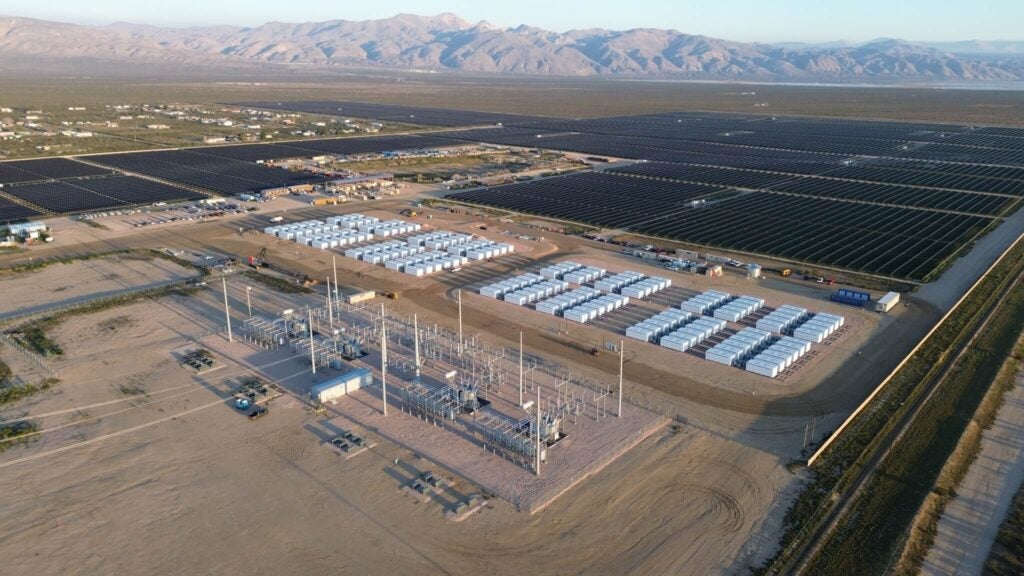
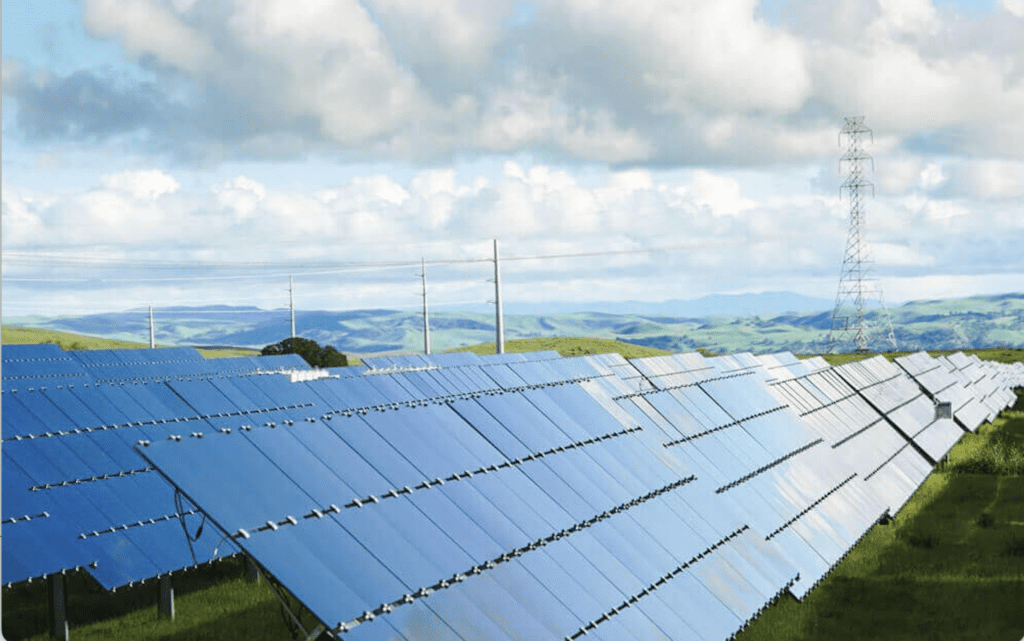
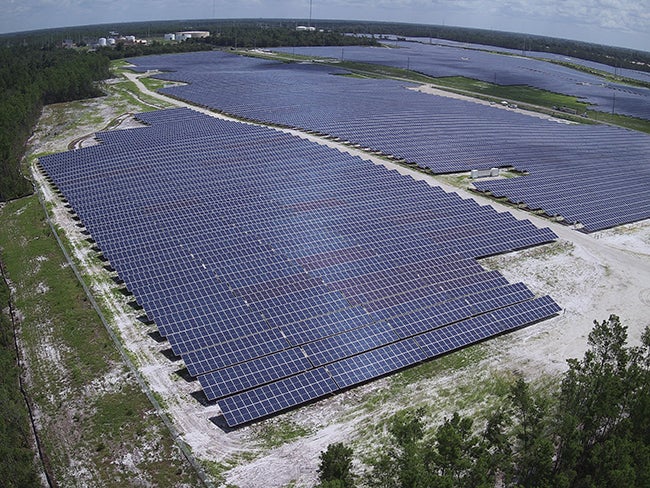
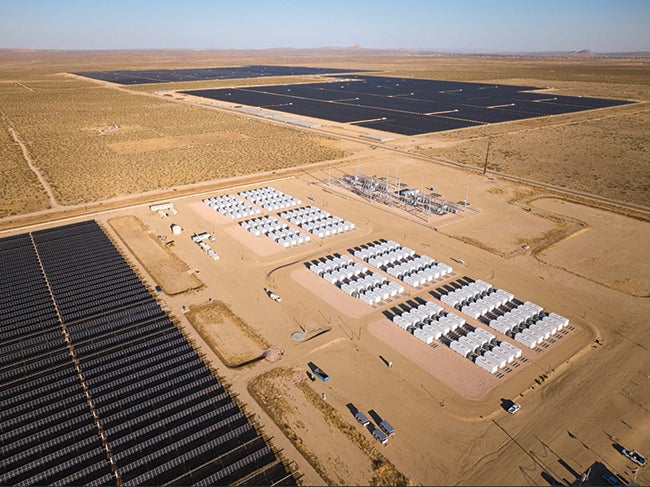
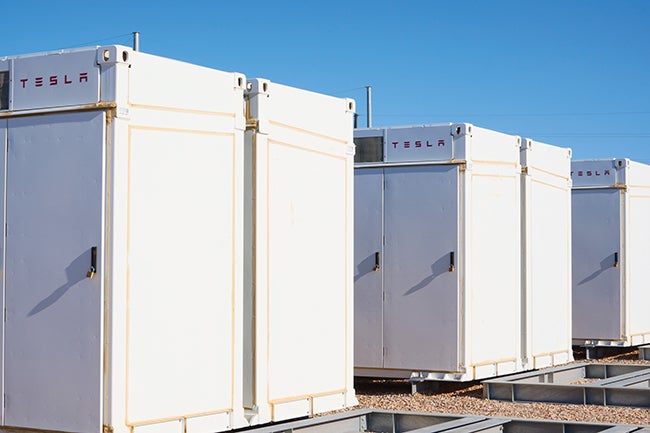
Arevon is one of those groups. Arevon’s Eland solar-plus-storage project, located in Kern County, California, features 758 MW of solar power generation capacity, paired with 300 MW/1,200 MWh of battery energy storage. The facility in the Mojave Desert was developed and built, and is owned and operated, by Arevon, which is headquartered in Scottsdale, Arizona. Eland is built on 4,600 acres; the installation includes 1.36 million solar panels and 172 Tesla Megapack battery enclosures (Figure 1).
 |
|
1. The Eland solar-plus-storage project has 758 MW of solar power generation paired with 300 MW/1,200 MWh of battery energy storage. The storage component features 172 Tesla Megapack battery enclosures. Courtesy: Arevon |
“Eland is one of the most significant projects in Arevon’s portfolio and among the largest solar-plus-storage projects in the United States,” said Paul Smerchanski, vice president of Origination for Arevon. “It demonstrates Arevon’s ability to develop, finance, construct, own, and operate utility-scale hybrid renewable infrastructure at scale. The project is central to Arevon’s long-term strategy of pairing renewable generation with battery storage to deliver dispatchable domestic energy. Arevon continues to develop similar large-scale solar-plus-storage projects across the country, particularly in markets with growing power demand and grid reliability needs.”
The solar panels at Eland are mounted on Nextpower trackers that adjust with the sun throughout the day to increase energy output. Additionally, the unique configuration of the lithium iron phosphate battery storage technology generates a storage capacity equivalent to more than 20,000 Tesla Model 3 vehicles, according to Arevon.
In This Issue
Full issueThe project’s capital cost topped $2 billion, and it was developed in two phases. Eland 1 reached commercial operation in December 2024. Eland 2 came online in August 2025. Arevon has said Eland “is a project helping meet California’s most demanding energy challenges head-on: powering communities through peak demand, reducing the risk of brownouts and blackouts, and helping keep energy prices stable.” The project is a model for large-scale commercial solar-plus-storage installations, and its many attributes have made it a finalist for a POWER Top Plant award for renewable energy.
Power Purchase Agreements
The Eland project operates under a long-term power purchase agreement (PPA). Smerchanski told POWER, “The 25-year power purchase agreement was structured to provide stable, reliable homegrown energy and predictable pricing for Southern California Public Power Authority (SCPPA) members, including Los Angeles Department of Water and Power (LADWP) and Glendale Water and Power (GWP). A major consideration was ensuring the project could reliably deliver energy during peak demand periods, which is why the four-hour battery storage component was critical. The agreement also supported California’s clean energy and reliability goals while maintaining long-term affordability for ratepayers.”
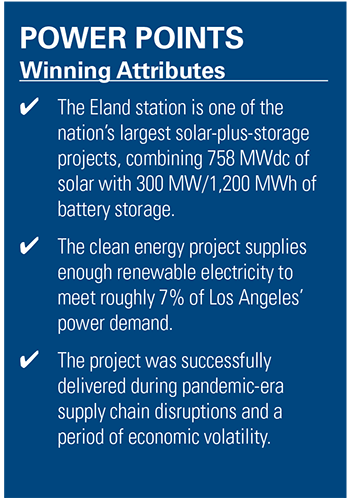
Eland at full operation generates about 7% of Los Angeles’ electricity. LADWP officials have said that Eland is the lowest-cost project in its portfolio and brings the LADWP one step closer to its goal of 100% clean energy by 2035. Janisse Quiñones, now CEO of LUMA Energy but formerly CEO of LADWP, said of the project when it came online, “The Eland project represents what we need to achieve this objective—scale, energy storage, reliability, and innovation—while demonstrating what is possible when public and private sectors partner to benefit our city. This project has had the lowest cost for solar and storage, translating to more affordable bills for our LADWP customers.”
Los Angeles Mayor Karen Bass at the project’s inauguration said, “We are building a greener Los Angeles. The Eland solar-plus-storage project alone will generate enough power to serve more than 266,000 homes in Los Angeles and push the city’s clean energy share above 60%, a major milestone in L.A.’s transition to being powered by 100% clean energy by 2035. This is L.A.’s clean energy future.”
“Eland is a game-changer for Glendale,” said Scott Mellon, general manager of GWP. “It’s not just about clean energy—it’s about building a smarter, more resilient power grid that meets the moment. With cutting-edge solar and storage in one of the biggest projects of its kind, we’re locking in affordable, 100% carbon-free energy for our community and setting the pace for what a modern utility should look like.”
Delivering Benefits
Arevon said the first phase of the Eland project delivered measurable benefits during its first eight months of operation, including more than 1,550 hours of critical peak-time operation. Eland 1’s battery system was dispatched more than 350 times in less than a year during the most expensive and high-demand hours.
The project delivered more than 1,450 hours of electricity during nighttime hours, proving that stored solar power can work around the clock. It also had an almost-instant response time; Arevon said Eland 1 delivered power to the grid in three seconds after a signal was sent. The company noted that speed “is critical to avoiding outages and maintaining grid stability.”
The facility’s completion required collaboration among Arevon and its partners throughout the development process. Company officials told POWER that when the project was initially approved in late 2019, PPAs were at record lows. Then came the pandemic, and supply chain disruptions delayed progress for 18 months.
“Eland was developed and constructed during a period of unprecedented supply chain disruption, workforce constraints, inflation, and logistical challenges related to the pandemic,” said Smerchanski. “Arevon and its partners worked closely with its suppliers, contractors, SCPPA [in coordination with LADWP and Glendale], and public agencies to maintain construction progress and mitigate delays wherever possible. Specifically, the project faced several months of pandemic-related delays in solar panel deliveries that extended the construction beyond the planned timeline. Successfully delivering the project under those conditions demonstrated the strength of the project team and supply chain coordination.”
Overcoming Challenges
Work on the Eland project experienced more challenges in 2023 and 2024, including interconnection delays, and commercial operation date testing issues. Those disruptions, combined with broader macroeconomic pressures from the pandemic, caused the cost of executing PPAs to increase significantly. Arevon honored the original PPA despite economic and regulatory hurdles. The company worked closely with senior utility leadership teams to revise timelines and meet critical financing milestones.
“Like many long-duration infrastructure projects developed during periods of inflation and supply chain volatility, adjustments were required to reflect changing market conditions, equipment pricing, labor costs, and financing realities,” said Smerchanski. “The parties worked collaboratively to amend the agreements while preserving the long-term value of the project for all stakeholders. This required successfully navigating formal approvals across SCPPA, LADWP, and Glendale—a testament to the combined effort required to make the project happen.”
 “Testing and energization of a project of this scale—including both solar generation and battery storage systems—required extensive collaboration to ensure reliability, safety, and performance standards were achieved prior to commercial operation,” said Brinda Malladi, vice president for Transmission and Interconnection at Arevon. “Interconnection coordination and commissioning timelines demanded close engagement with SCPPA, grid operators, and equipment providers. During construction and commissioning, performance and safety metrics were tracked against predefined thresholds, including battery system performance, grid synchronization behavior, and commissioning test results.
“For instance, when a new protection scheme requirement, introduced in 2024, threatened to delay commercial operation by six months, Arevon worked directly with senior SCPPA, LADWP, and Glendale leadership to accelerate procurement and construction timelines for the necessary equipment, preserving PPA and financing milestones to keep the project on track,” said Malladi. “During commissioning, a SCADA [supervisory control and data acquisition] communications issue disrupted a mandatory performance test and risked schedule delays. The Arevon team worked with SCPPA, LADWP, and Glendale to successfully navigate this performance testing period, during which the aforementioned SCADA communications issue was identified, diagnosed, and resolved without restarting the test window—demonstrating both system resilience and disciplined operational response.”
The 2022 Inflation Reduction Act helped the project, as Eland became the first hybrid renewable energy facility funded by investment tax credit (ITC) and production tax credit (PTC) transactions. “Eland is one of the first large-scale hybrid solar-plus-storage project financed using both ITC and PTC structures monetized through traditional tax equity financing,” said Nimmi Kavasery, Arevon’s managing director of Project Finance. “The structure allowed different portions of the project to optimize available federal incentives while attracting institutional investment capital. This financing approach helped support affordability, scale, and long-term project economics, while also creating a model for future hybrid renewable projects.”
More than 1,000 workers were employed by the project at peak construction. Arevon noted that the workforce resulted in secondary economic benefits for local hotels, restaurants, and small businesses. The company, which said integration of economic, educational, and environmental investments is part of its “Three Pillars of Giving” framework, said it estimates the Eland project over its lifetime will contribute more than $36 million in payments to local governments in support of schools, first responders, and public infrastructure.
Arevon calls Eland a major milestone in the company’s project portfolio, adding that the group’s partnership with the LADWP—the nation’s largest municipal utility—demonstrates how private and public sectors can work together to meet ambitious clean energy goals. The company said that as California moves toward a carbon-free grid, Eland is a benchmark for how large-scale solar and storage can deliver both affordable, reliable energy, and long-term community benefits.
—Darrell Proctor is a senior editor for POWER.