
Seven of the nation’s largest artificial intelligence (AI) companies and hyperscalers signed a White House-brokered agreement March 4 committing to build, procure, or fund new generation capacity sufficient to cover the electricity demands of their data centers—and to pay for all grid infrastructure upgrades required to connect them, without passing those costs to residential or commercial ratepayers.
Amazon, Google, Meta, Microsoft, OpenAI, Oracle, and xAI each signed the Ratepayer Protection Pledge, a non-regulatory, voluntary commitment convened by President Donald Trump. The administration described the effort as a direct policy response to the strain that accelerating AI infrastructure build-out is placing on the U.S. grid, and as a mechanism to ensure that ordinary electricity customers do not absorb the capital costs of hyperscaler expansion.
In This Article
- What Is Covered Under the Ratepayer Protection Pledge
- A Policy Response to a Structural Problem
- Administration Presses on Permitting and Grid Approvals
- What Hyperscalers Are Already Doing
- Industry Groups Welcome Pledge but Point to Remaining Structural Barriers
- State Regulators, Key Affordability Guardians, Signal Readiness to Act
What Is Covered Under the Ratepayer Protection Pledge
Under the terms described in the White House fact sheet, signatory companies will work to negotiate separate rate structures directly with utilities and state governments. Those agreements are intended to ensure hyperscalers—not existing utility customers—bear the costs associated with the generation capacity and grid upgrades required to serve their facilities, the fact sheet says.
Critically, companies signing the pledge have agreed to pay for contracted power supply and associated delivery infrastructure whether or not they ultimately consume the electricity. “Under the Ratepayer Protection Pledge, these companies will negotiate separate rate structures with utilities and State governments, and commit to pay these rates for the power and related infrastructure brought online to service their data centers, whether they use the electricity or not,” the fact sheet says.
The pledge may also obligate hyperscalers to ensure that sufficient new electricity supply accompanies the growth of their facilities. The White House said companies signing the pledge are “agreeing to build, bring, or buy new generation resources and cover the cost of all power delivery infrastructure upgrades required for their data centers, ensuring such expenses are not passed to American households.”
And beyond generation procurement, the companies will also cover the costs of the power delivery infrastructure required to connect their facilities to the grid. That includes transmission and distribution upgrades associated with large-load interconnections—investments that utilities in many jurisdictions would otherwise recover through regulated rates paid by existing customers.
The pledge further calls for coordination with regional grid operators to ensure backup generation resources can be made available during system emergencies. “Companies signing the Ratepayer Protection Pledge will also coordinate with grid operators to make backup generation resources available, contributing to a more reliable grid and preventing blackouts and power shortages in times of emergency,” the fact sheet says.
The pledge, however, does not include binding enforcement mechanisms, and the White House disclosure does not indicate the commitments will be subject to independent auditing, penalties for noncompliance, or a defined methodology for determining what constitutes adequate cost coverage. POWER has asked industry whether the commitments could ultimately include defined dollar amounts or megawatt obligations.
A Policy Response to a Structural Problem
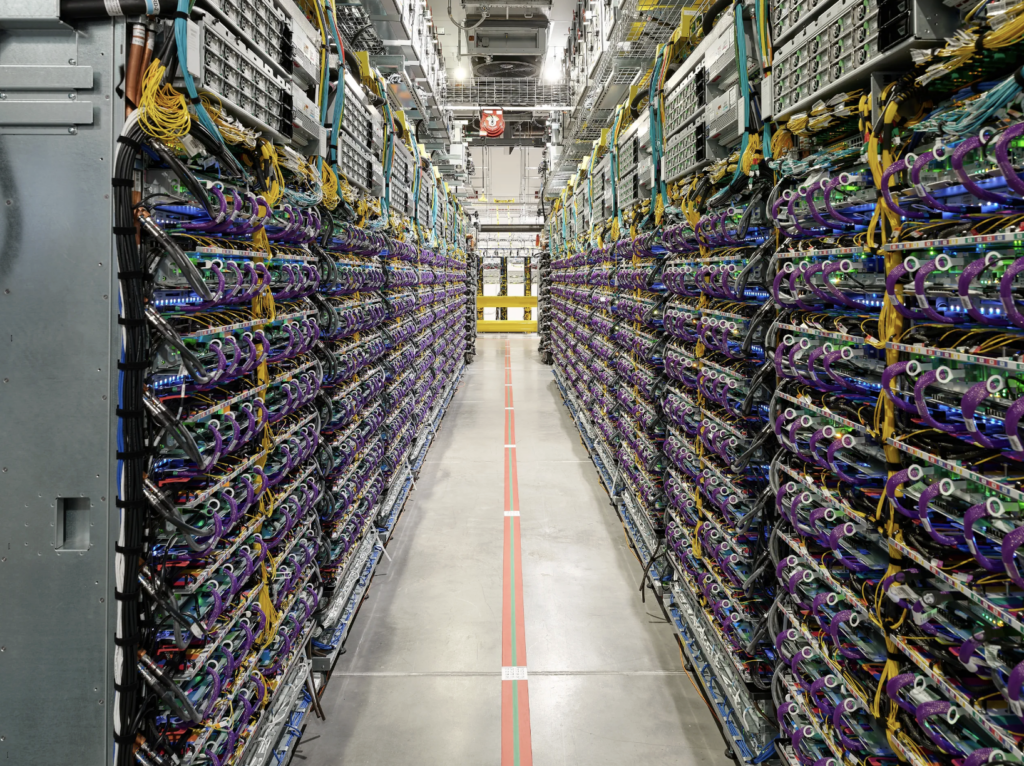
For now, the pledge arrives as pressure mounts on grid operators, regulators, and incumbent utilities to manage load growth that is accelerating faster than most planning cycles anticipated. According to EPRI’s freshly updated February 2026 Powering Intelligence report, U.S. data centers consumed an estimated 177 to 192 TWh of electricity in 2024—which is roughly 4 to 5% of total national demand—and a share EPRI projects will rise to 9% to 17% by 2030, with annual consumption potentially reaching 793 TWh in the high scenario. That projection range, driven by the record pace of data center development over the past 18 months, is approximately 60% higher than EPRI’s own 2024 estimates.
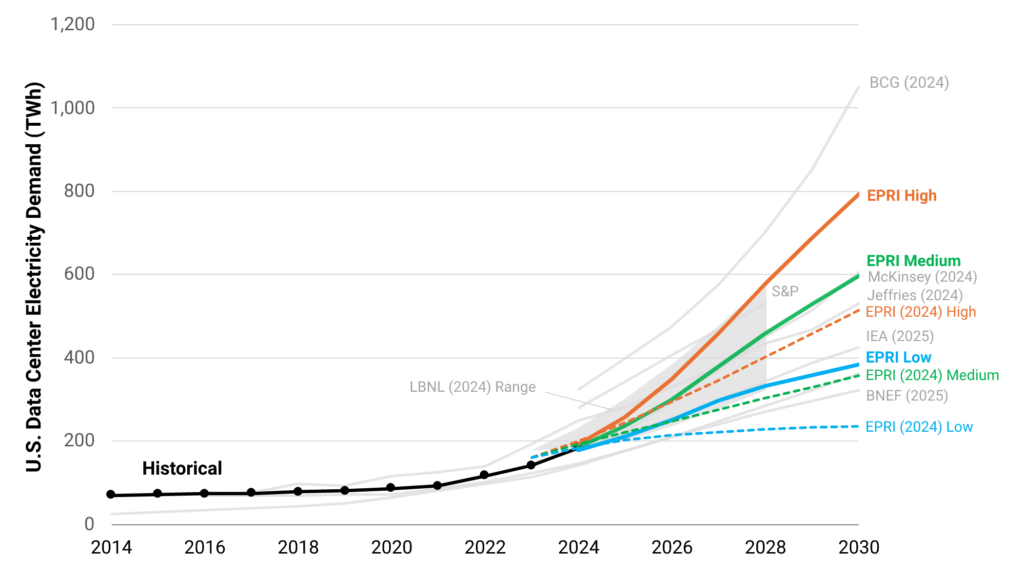
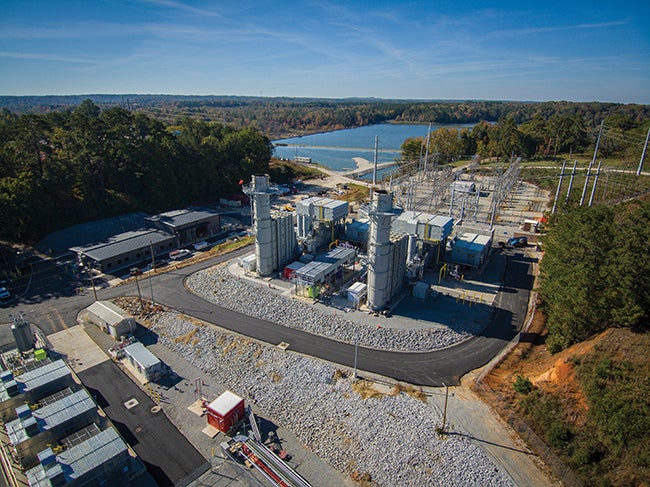
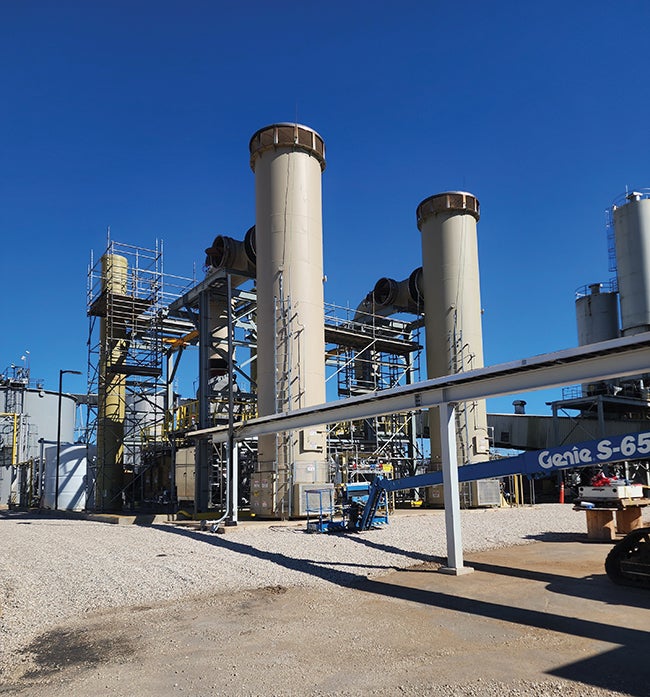
However, what is most testing utilities’ ability to keep pace is that regional clusters of large loads are transforming local grid dynamics. EPRI’s data shows that concentration is accelerating in a small number of states. Virginia—already the only state where data centers exceed 20% of in-state electricity consumption—could see that share reach 39% to 57% by 2030. Under the medium-growth case, seven additional states—Oregon, Iowa, Nebraska, Nevada, Wyoming, Arizona, and Indiana—are projected to cross the 20% threshold, even as new nominal capacity builds emerge in states such as Ohio, Pennsylvania, Louisiana, and Mississippi, where developers are prioritizing power access and land availability, particularly for large AI training centers. Under current federal and state policy, EPRI’s modeling projects the supply response will run heavily on natural gas, forecasting incremental capacity additions of 6.6 GW to 13.7 GW per year from 2025 to 2030—above the five-year historical average of 5.7 GW annually—as wind and solar play a reduced role following curtailment of Inflation Reduction Act tax credits under the 2025 budget reconciliation bill.
According to a February 2026 analysis commissioned by the investor-owned utility trade group Edison Electric Institute and conducted by Charles River Associates, average U.S. residential electricity rates broadly tracked inflation over the past five years. While 34 of 48 states experienced below-average rate increases, the drivers of the largest rate spikes—particularly in California and the Northeast—were wildfire spending and wholesale market volatility, respectively, not data centers. The exception was PJM, the 13-state mid-Atlantic grid operator, where surging data center demand forecasts contributed to a benchmark capacity price increase of 833% between the 2024–25 and 2025–26 delivery years, followed by an additional 22% increase for 2026–27.
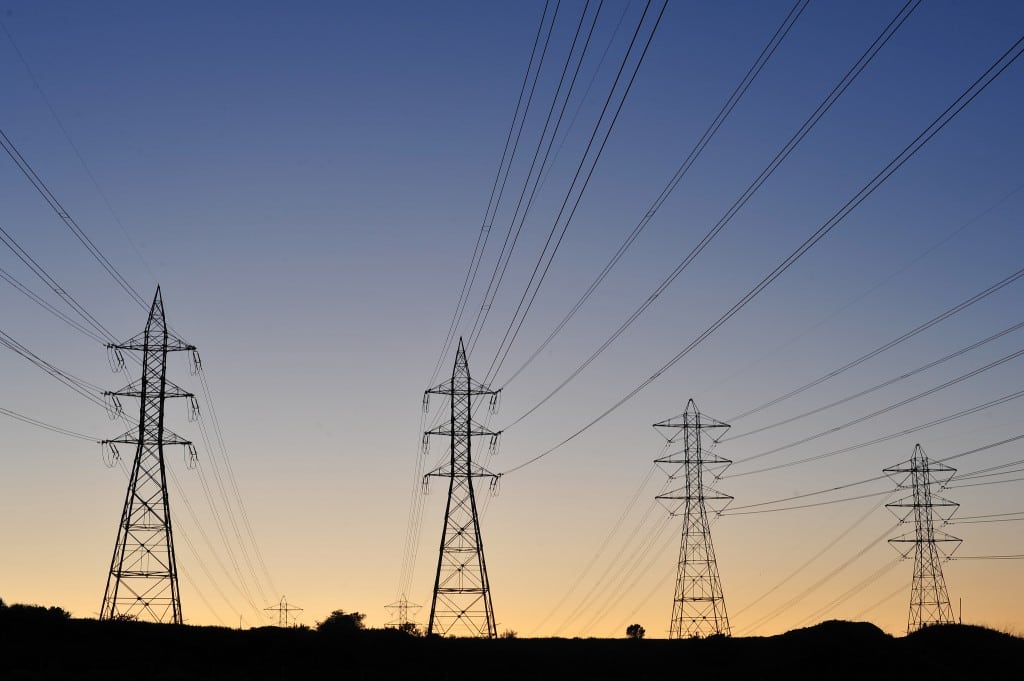
Generally, utilities that do not own generation pass those capacity costs directly through to retail customers, the report explains. Maryland and Pennsylvania—both served largely by non-generation-owning utilities—posted the largest year-over-year residential rate increases in the country through October 2025, at 18.4% and 17.5%, respectively. By contrast, customers of vertically integrated utilities such as Dominion Energy experienced only minor bill impacts despite a 798% increase in capacity prices in their PJM zone. The structural problem, CRA noted, is that PJM’s market design does not permit assigning the incremental cost of serving new data centers to those data centers—all customers in a given zone pay the same capacity price.
Large-load tariffs now deployed across multiple states seek to address that gap by requiring data centers to directly fund the generation and grid infrastructure built to serve them. As of November 2025, the DELTa Database of Emerging Large Load Tariffs—a living resource maintained by the Smart Electric Power Alliance and the North Carolina Clean Energy Technology Center—tracked 66 large-load tariffs and service rules across 34 states and 51 utilities, with 36 already approved and 29 pending or proposed.
In January 2026, the National Energy Dominance Council intervened directly in the PJM capacity market. The Council—backed by the governors of all 13 PJM states—joined Trump’s Energy Dominance Council in a non‑binding “Statement of Principles” urging PJM to run a one‑off reliability backstop auction (RBA) offering 15‑year capacity contracts for new plants, create large‑load rate classes so data centers shoulder more of those costs, tighten load forecasts, and cap interconnection studies at 150 days.
PJM moved on two of those fronts before Wednesday’s meeting, acting on a large-load roadmap the PJM Board published in January that the Statement of Principles had endorsed. On Feb. 27, PJM filed two proposals at FERC. The first would extend its existing capacity auction price collar for the 2028–29 and 2029–30 delivery years—holding the price cap at approximately $325/MW-day rather than allowing it to rise to $550/MW-day, and setting a floor of roughly $175/MW-day. The second would establish an expedited interconnection track for new generation projects of at least 250 MW that can reach commercial operation within three years.
The urgency behind both filings is fueled by PJM’s most recent capacity auction. While it cleared enough resources to meet the projected need for 2027–28, it fell 6,600 MW short of its Installed Reserve Margin target, triggering a tariff provision requiring backstop procurement. The reliability backstop auction called for in the Statement of Principles—the one-time mechanism that would require large loads to fund new capacity directly—remains under stakeholder development and is expected later in 2026. PJM is also developing “connect-and-manage” rules under which data center load growth that does not bring associated new supply to the grid may face curtailment before standard demand response is deployed.
Administration Presses on Permitting and Grid Approvals
The hyperscaler pledge follows a series of executive actions from the Trump administration to address energy supply constraints since January 2025. A grid security executive order signed in April 2025 is credited by the White House with preserving 17,000 MW of generation that would otherwise have faced retirement under prior environmental compliance timelines. A May 2025 nuclear deployment executive order targeted regulatory reform to accelerate advanced reactor deployment, in part to serve AI data center demand.
On Wednesday, Trump suggested the pledge’s enforceability will rest on permitting speed rather than regulatory mandate, and he credited Environmental Protection Agency (EPA) Administrator Lee Zeldin with compressing timelines. Under Zeldin, EPA launched its “Powering the Great American Comeback” initiative in February 2025, targeting New Source Review and Clean Air Act approvals for new power generation, which are historically among the longest-lead requirements for gas-fired plants—often running 12 to 18 months or more.
In September 2025, EPA issued interpretive guidance redefining “begin actual construction” under NSR regulations to allow developers to pour foundations, erect structural steel, and build external walls before air permits are issued—potentially compressing project schedules by months. A proposed rule to codify that interpretation is expected in 2026. Legal challenges remain a hurdle, however. In October 2025, Earthjustice, the Natural Resources Defense Council, and the Sierra Club sent a formal letter to Zeldin, arguing that EPA lacks statutory authority to allow substantial on-site construction before preconstruction permits are issued, and warned that any case-by-case guidance without formal rulemaking has no force of law.
Meanwhile, Energy Secretary Chris Wright addressed the four Federal Energy Regulatory Commission (FERC) commissioners present at Wednesday’s White House meeting—Chair Laura V. Swett, David Rosner, Lindsay S. See, and Judy W. Chang—directly. “FERC is a noble regulatory agency that just got bureaucratic and lived in a different time and a different age,” Wright said. “We need to make things happen fast… you are the most powerful people in the country. Please get us approvals.”
What Hyperscalers Are Already Doing
In response to mounting public scrutiny over electricity cost impacts, several signatories had already begun structuring bilateral cost-allocation arrangements with utilities well before March 4—and several had issued their own public commitments.
Microsoft. As POWER reported in January, Microsoft launched its Community-First AI Infrastructure initiative, committing to full cost-recovery mechanisms embedded in state rate proceedings and citing a Wisconsin rate structure that requires data centers to bear the full cost of the electricity needed to serve them as a replicable model. The company is backing We Energies’ March 2025 proposed “Very Large Customer” tariff, now before the Wisconsin Public Service Commission, which would charge large loads—including data centers—the full cost of electricity required to serve them and prevent those costs from flowing to residential ratepayers. In the MISO footprint alone, Microsoft said it has already contracted for 7.9 GW of new electricity supply—more than double its current consumption in that region—to help ensure capacity keeps pace with AI data center load growth. Microsoft is also OpenAI’s primary infrastructure partner, meaning its Community-First cost-recovery commitments apply directly to the AI campuses it builds on OpenAI’s behalf.
Amazon. Amazon Web Services (AWS) CEO Matt Garman, in a March 4 post, detailed how the company has participated in utility rate proceedings in Indiana, Missouri, Ohio, Oregon, and Virginia, using long-term agreements (LTAs) that include minimum demand charges, financial guarantees, and multi-year commitments to ensure costs are not borne by surrounding ratepayers. In Indiana, regulators approved an agreement between NIPSCO and Amazon projected to deliver approximately $1 billion in customer savings over 15 years. In Mississippi, Amazon’s load commitments are underwriting a $300 million Entergy grid transformation initiative targeting a 50% reduction in outages at no additional cost to residential customers.
In Pennsylvania, Amazon’s investment in a Salem Township data center campus includes financial support for the Susquehanna nuclear plant—an arrangement that follows the 18-month negotiation between Talen Energy and Amazon that produced an $1.8 billion nuclear PPA and established a grid-connected IPP model that regulators had previously rejected in its behind-the-meter form. Amazon also has a commitment to help build an SMR project in Washington state with Energy Northwest.
Google. Google’s President and Chief Investment Officer Ruth Porat outlined five specific commitments in support of the pledge on Wednesday. The company will pay 100% of the power and infrastructure costs directly driven by its growth, using its Capacity Commitment Framework (CCF)—a consensus-based cost-allocation mechanism first adopted in early 2025—as its primary vehicle. Google explains that its CCF requires large energy customers to sign binding long-term contracts with guaranteed minimum payments and upfront collateral to ensure the full cost of generation capacity and grid infrastructure built to serve them is borne by the customer—not existing ratepayers—whether or not that capacity is ultimately used.
Google also plans to bring net-new generation online, including advanced nuclear, geothermal, and long-duration storage, and restart NextEra’s Duane Arnold nuclear plant in Iowa. In Texas alone, Google has contracted to add more than 7,800 MW of net-new generation capacity to the grid, and Porat said the company will “very shortly close” on Alphabet’s $4.75 billion acquisition of data center infrastructure firm Intersect Power. That deal will allow it to co-locate data centers directly adjacent to new generation capacity. In Arkansas, Google’s investment covers the full energy costs of its data center there, contributing more than $1 billion in savings to Arkansas customers. On grid resilience, Google cited a partnership with CTC Global to scale advanced conductors capable of doubling transmission capacity on existing rights-of-way, and a collaboration with PJM on AI-driven grid management through startup Tapestry. The company also committed to training 100,000 electrical workers and 30,000 new apprentices across the country. Google reported a trailing twelve-month Power Usage Effectiveness (PUE) of 1.09, against an industry average of 1.56, and said it has added more than 22 GW of new energy to global grids over the past decade.
Meta. Meta, which earlier this year announced 6.6 GW of nuclear power procurement by 2035 through deals with Vistra, Oklo, and TerraPower in one of the largest corporate clean energy purchases on record, pledged full cost coverage for data center energy use and signed the ratepayer protection pledge at the White House event. Representing the company was Dina Powell McCormick, Meta’s newly appointed president and vice chairman, whose prior service as deputy National Security advisor in the first Trump administration likely made her a deliberate choice for an event framed around AI competitiveness and national security. McCormick said Meta’s Louisiana operations have reduced energy costs for state ratepayers by an estimated $650 million over 15 years. The most concrete operational announcement on Wednesday pivoted toward workforce development. Meta said it launched a four-week fiber technician training pilot in Ohio, developed in partnership with Senators Bernie Moreno and Jon Husted. Graduates receive a fiber technician license and a guaranteed job offer from Meta. “We are so proud of the jobs that we are creating, whether it is in Louisiana or in Ohio,” she said. “It is not just extraordinary engineers. It is pipe fitters. It is welders. It is electricians.”
OpenAI. While OpenAI Chief Operating Officer Brad Lightcap attended the White House event, the ChatGPT developer had already addressed questions around energy infrastructure and electricity costs in a detailed post on Jan. 20 about its Stargate initiative. Stargate—a joint venture with SoftBank, Oracle, and MGX targeting 10 GW of U.S. AI compute capacity by 2029—had by January surpassed the halfway mark in planned capacity.
The first site, in Abilene, Texas, is operational and running frontier AI workloads. (Bloomberg reported on March 6 that Oracle and OpenAI have since reportedly scrapped plans to expand the Abilene campus from 1.2 GW to 2 GW, citing financing complications and OpenAI’s changing demand forecasts. Bloomberg reported Meta is in active talks to lease the expansion site, with Nvidia facilitating and paying a $150 million deposit to developer Crusoe.)
In its January post, OpenAI pledged that its data center buildout would not raise electricity prices for local customers, backing the pledge with site-specific utility structures rather than aspirational language. The utility arrangements vary by market. In Wisconsin, Oracle and Vantage Data Centers are developing dedicated solar and battery storage through WEC Energy Group under a project-funded rate designed to wall off cost increases from other customers. In Michigan, Oracle and Related Digital are drawing on existing DTE Energy resources, supplemented by project-financed battery storage, under a structure DTE says protects existing customer rates. In Texas, SB Energy has committed to fund and build new generation and storage to cover the majority of load at a Stargate campus in Milam County. OpenAI also committed a minimum of $175 million in local infrastructure and water restoration in Wisconsin, and said its campuses use closed-loop cooling systems that, at the Abilene site, consume roughly half the water the city uses in a single day.
OpenAI’s relationship with the federal government, notably, has expanded sharply in recent months. In August 2025, the General Services Administration struck a OneGov agreement making ChatGPT Enterprise available to every federal agency for a nominal $1 annual fee, structured to support the White House’s July 2025 America’s AI Action Plan. Then on Feb. 27—last week, three days before the White House AI event—OpenAI announced an agreement with the Department of War to deploy its models on classified military networks, reached within hours of President Trump ordering federal agencies to cease using rival Anthropic’s AI tools.
(Anthropic, maker of the Claude family of AI models, was absent from the White House event, reportedly frozen out of federal AI contracts after refusing the Department of War’s classified deployment terms. The company nonetheless published the most structurally detailed ratepayer commitment of any AI developer, on Feb. 11, pledging to cover 100% of grid upgrade costs required to interconnect its data centers, procure net-new generation to match its load, and directly cover any demand-driven price effects where new supply has not yet come online. Where Anthropic leases capacity rather than owns it, the company said it is still working to quantify and address its workloads’ cost effects on ratepayers—which is a gap it has acknowledged openly.)
Oracle. Oracle—a Stargate equity partner alongside SoftBank and MGX—has assembled one of the most aggressive behind-the-meter generation portfolios of any hyperscaler, driven largely by ERCOT interconnection queues estimated at five to seven years for new grid-connected capacity. The company’s power strategy layers three distinct technologies. In July 2025, Oracle and Bloom Energy struck a deal to deploy solid oxide fuel cells at select Oracle Cloud Infrastructure data centers in the U.S. Bloom committed to deliver on-site power for an entire data center within 90 days. Then in October, Oracle tapped Houston-based VoltaGrid for a 2.3-GW fleet of modular natural gas generation across multiple Texas sites, backed by firm fuel supply from Energy Transfer’s pipeline network and built on INNIO Jenbacher reciprocating engines. Oracle has separately contracted roughly 1 GW of additional behind-the-meter gas generation for a West Texas campus developed with Vantage Data Centers. Oracle CEO Clay Magouyrk attended the White House event and signed the ratepayer protection pledge but did not speak from the podium. Bloomberg reported Thursday that the company is planning to cut thousands of jobs across divisions as early as this month amid cash pressure from its AI infrastructure expansion.
xAI. xAI, Elon Musk’s AI company, was represented at the White House event by SpaceX President Gwynne Shotwell. Detailing commitments specific to the company’s Colossus supercomputer facility on the Tennessee-Mississippi state line, Shotwell said “xAI will commit to develop 1.2 GW of power as our supercomputer’s primary power source—that will be for every additional data center as well.” The company also pledged to expand what it described as the world’s largest Megapack battery storage installation at the site. “The installation will provide enough backup power to power the city of Memphis, and more than sufficient energy to power the town of Southaven, Mississippi, where the data center resides,” Shotwell said.
xAI is also committed to building new substations and transmission infrastructure and to constructing water recycling plants designed to protect approximately 4.7 billion gallons annually from the Memphis Sand Aquifer. “As part of today’s commitment, we will take extensive additional steps to continue to reduce the costs of electricity for our neighbors,” she added.
Industry Groups Welcome Pledge but Point to Remaining Structural Barriers
The Clean Energy Buyers Association, whose members include several pledge signatories, argued the pledge’s significance extends beyond its immediate policy terms. “While this pledge marks a historic step toward combatting rising electricity prices, it’s important to note that these companies have been actively taking action and contributing to the costs of running our electricity grid for years,” CEBA CEO Rich Powell wrote on March 5. “But behind the pledge is something bigger—a generational wave of private investment in new, carbon emissions-free electricity that is reshaping America’s energy landscape.”
Powell noted that CEBA members have contracted more than 127 GW of carbon-free energy since 2014, and at least 65.6 GW is already operating. “These aren’t aspirations on a slide deck. These are signed contracts, shovels in the ground.” Powell’s statement, however, also notably pointed to a policy gap: that outdated permitting rules remain “the single greatest barrier to getting new clean energy generation and transmission built at the pace our economy demands.” Without permitting reform, the private capital these companies are prepared to deploy cannot reach the communities that need it, he said.
Separately, the Electric Power Supply Association (EPSA), which represents competitive wholesale generators providing more than 225,000 MW of capacity nationally, backed the pledge as aligned with its longstanding position that market-based frameworks, as opposed to cost socialization through a regulated rate base, are the appropriate vehicle for funding AI-driven load growth.
“Competitive power generators are ready to deliver the energy needed to power that growth while ensuring that the costs associated with new data centers and rising power demand are borne by investors and private capital, not ratepayers,” said EPSA President and CEO Todd Snitchler.
Snitchler’s statement also pointed to a substantive market-structure argument—that competitive generators, operating under bilateral contracts and without guaranteed rate recovery, already absorb investment risk that would otherwise land on captive ratepayers under a cost-of-service utility model. EPSA cited its members’ commercial activity as evidence that private capital is already moving. The association pointed to more than 12,000 MW of new generation capacity announced in PJM since 2024, and referenced its endorsement of the Vistra-Meta nuclear deal as a model for direct utility-to-hyperscaler power agreements that isolate risk within the commercial relationship.
“As policymakers consider how best to integrate large new loads into the power system,” Snitchler added, “competitive generators are prepared to deliver the reliable electricity America’s innovation economy requires — while protecting consumers from bearing the risk of bad or unnecessary investments and stranded costs.”
Clayco, one of the top five data center builders in the U.S., was also present at the White House. On the same day, the Chicago-based design-build firm—which collected $7.6 billion in revenue in 2025—launched a dedicated Power and Energy business unit focused on utility-scale solar and battery energy storage projects. While Ryan McGuire, president of its data center-focused Clayco Compute unit, attended the White House event, the new unit, led by Vice President Ryan Johnson, will serve utilities, independent power producers, and financial sponsors through integrated engineering, procurement, and construction, the company said. Clayco, notably, is already under contract on a solar-plus-storage project in Illinois scheduled to mobilize later this year, and projects $300 million in revenue and roughly 1,000 craft professionals by 2027.
State Regulators, Key Affordability Guardians, Signal Readiness to Act
The National Association of Regulatory Utility Commissioners (NARUC), whose members are the state commissioners who will ultimately implement any rate structures negotiated under the pledge, responded cautiously, albeit constructively. “NARUC appreciates the President’s efforts to ensure customers do not bear the costs of data centers and the increased demand on the electric grid,” said NARUC President Ann Rendahl, a commissioner on the Washington Utilities and Transportation Commission, in a statement sent to POWER.
However, the group also made clear where implementation authority actually resides. “NARUC also appreciates the recognition that states and state commissions have a responsibility to establish rate designs and contract terms to prevent shifting data center costs to customers,” Rendahl said. “As regulators, we are charged with serving the public interest — and a chief concern is affordability.” NARUC has been exploring the complex landscape of large-load issues through its Demand Roundtable, webinars, conferences, and committee work, equipping state regulators with the rate design frameworks and technical information needed to act.
“We welcome the opportunity to work with federal partners, tech companies, consumer advocates, and other stakeholders to ensure that state interests on affordability, energy infrastructure, grid reliability, and workforce development are at the forefront of these discussions,” Rendahl said. “State regulators have firsthand knowledge of these issues, and we see this as a chance to expand on the dialogues that NARUC has already started.”
—Sonal Patel is a POWER senior editor (@sonalcpatel, @POWERmagazine).