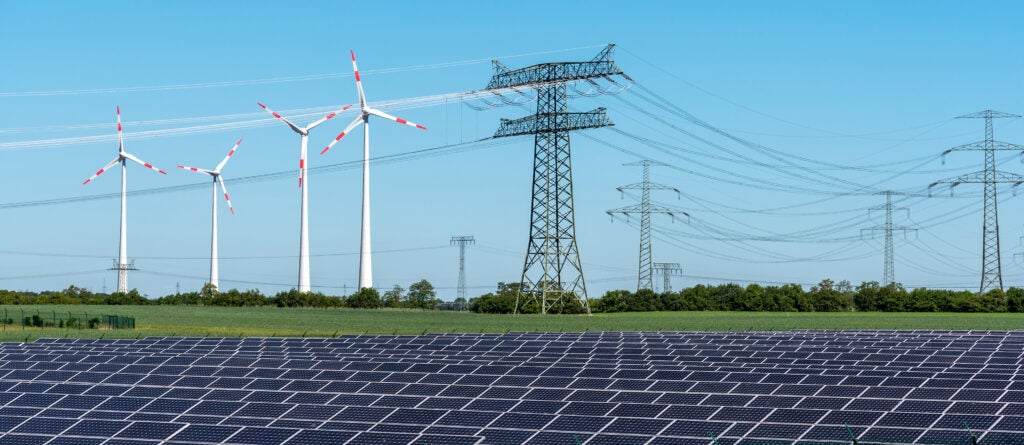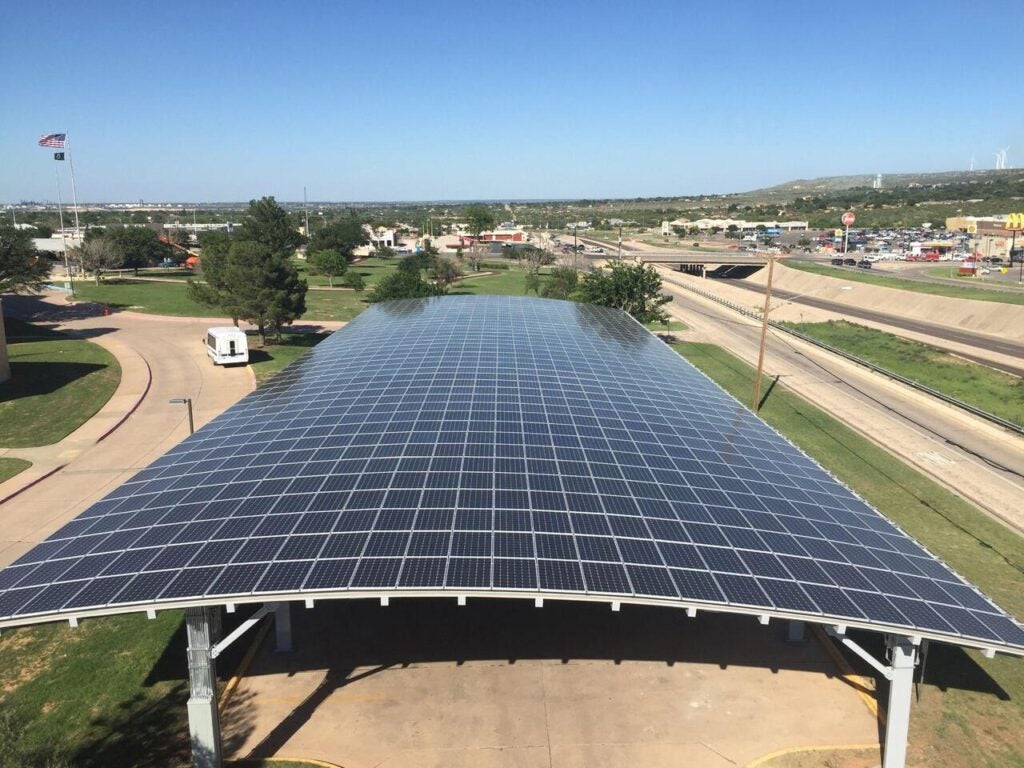
Like its neighbor to the south, Canada faces enormous costs to upgrade and expand its transmission and distribution system. The desire to integrate more renewable power into the grid, build a smarter grid, and export more power are providing the rationale for action, but capital and political will lag behind.
One of the great challenges facing any electrical system is the constant need for decisions regarding the transmission and distribution of power. Canada’s high-voltage network consists of more than 160,000 kilometers of high-voltage lines. Beyond maintaining the aging facilities, operators are tasked with integrating more intermittent generation from renewable sources and incorporating smarter grid systems.
Like generation decisions, decisions about transmission are mostly made at a provincial level. Federal powers only intervene when international interconnection is involved and in certain intra-provincial matters. But it seems that across the country there is a need for upgrades. “There are cycles of activity in the renewal of transmission and distribution networks. We are coming to the stage of the cycle where large parts of the system need to be renewed. Power and transmission grids will be a good market for the next five to 10 years,” predicts Franck Willier, managing director, Cicame Energie Inc. Cicame is part of Sicame, which purchased Alcan Accessories in 2000 and has since built up a broad service offering of equipment for utilities. “New technology can increase efficiency and take better decisions on the network, all the way up to decisions on new generation or transmission,” Willier continues.
Canada has three power grids: the Western grid, the Eastern grid, and the Québec grid, which includes Atlantic Canada. More than from east to west, the grid is designed to allow for a flow of power down to the U.S. “If you look at a map where the transmission lines are shown, you’ll see that most of them go north-south. It’s the way that it developed,” explains Pierre Guimond, president of the Canadian Energy Association. “We never really sold electricity east-west, because there were no customers, as the provinces were self-sufficient. Since the California market exploded in the mid-1990s, we’ve really had a lot of commerce in electricity with the United States.”
This integrated grid means that Canada is a major supplier of power to the New England states, New York, and California, as well as to states in the Upper Midwest and the Pacific Northwest (Figure 1). Some Canadian players are now looking for longer-term contracts on their U.S. exports so that they can be leveraged toward further grid development. “B.C. has an abundance of renewable possibilities, but in order to exploit this potential we must find a market,” says Bev Van Ruyven, deputy CEO and executive vice president of BC Hydro, the dominant electrical utility of British Columbia. “If we can lock in long-term contracts of 20 to 30 years, this will allow us to invest further in transmission and perhaps even invest in a green corridor to reach those U.S. markets.”
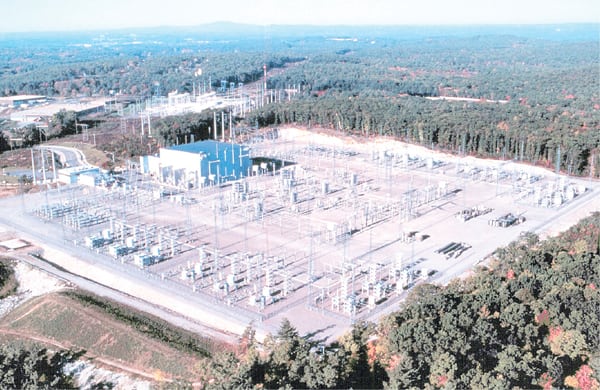 |
| 1. Cross-border transmission. This aerial view of the static inverter plant at Sandy Pond in Ayer, Mass., is part of the long-distance high-voltage direct current Québec–New England transmission line that links Québec hydro power and New England load centers. Courtesy: ABB |
Connecting Renewables
“One thing that often gets forgotten is that if you are a big supporter of renewable energy, you also have to be a big supporter of increased transmission. It is easier to build generation that has a small, defined footprint than to build a transmission line that covers hundreds of miles,” insists Paul Murphy, CEO of the Independent Electricity System Operator (IESO), which was created to independently and reliably oversee the transmission system, administer the wholesale electricity market, and manage the import and export trade in Ontario.
Dealing with variable generation facilities is something relatively new to the industry. “Integrating renewables into the system and the market is the biggest challenge. Maintaining reliability is at the core of our reason for being. Maintaining reliability in a sector that is transforming substantially is quite a test,” confesses Murphy.
Anthony Ciccone, principal, power sector at Golder Associates, notes, “We are seeing a lot more district energy and cogeneration facilities being developed across the country. The result of these ‘energy campuses’ is a more balanced load that is less dependent on the grid. These smaller, more neighborhood-friendly projects are well received in populous areas where residents are averse to the large transmission lines and power plants. This shift means a lot more projects and a lot more development.”
Nevertheless, the need for major investment in long-distance transmission networks could emerge as the greatest constraint on Canada reaching its renewable energy goals. Policymakers and utilities across the country are aware of this issue, but the expenditure and public unease associated with large-scale transmission projects will require continuous and concerted political will.
Smart Grid
Around the world, one of the most discussed infrastructure topics is the “smart grid.” Its definition varies, as Sandy Taylor, president and CEO of ABB Inc. Canada explains: “A lot of people think that smart grids are about the consumer and begin at the smart meter level. I think that smart, or smarter grids, can go far beyond that” (Figure 1).
 |
| Sandy Taylor, president and CEO of ABB Inc. Canada |
“A smart grid extends from the generation, through the transmission and distribution systems, to the consumer. It incorporates the entire value chain. The evolving needs of a smarter grid are a really interesting opportunity for ABB,” he explains.
Ontario has engaged in a billion dollar program to install smart meters for all 4.5 million electricity customers in the province. Meters are just the first step. The challenge being faced by utilities now is managing the data that are being provided by the installed smart meters. “The sheer volume of data is much larger than ever before,” explains Jan Peeters, chairman and CEO of Olameter, a firm that provides outsourcing solutions for back-office activities within utilities. “Info is now being provided every half-hour of every day as opposed to one reading for every 30 to 60 days. The nature of that data and the technology available means there are always missing intervals. In the past, these could be made up using estimates. As the time-of-use rates become different from one half-hour to the next, it becomes critically important to collect every interval. Lost or corrupted data is proving to be a much greater problem than anyone anticipated.”
Distributors, which often represent the link between the customer and the utility, are at the front line of this development. Brian Bentz is president and CEO of Powerstream, a municipally owned Ontario distribution company that is responsible for more than 300,000 customers in the Greater Toronto Area. “The challenge is being commercial and innovative and having the correct risk appetite. The market requires an evolving delivery model due to the smart grid and decentralized renewable generation. It takes a different skill set to survive in that environment.”
Peeters reveals: “An expectation is being built up that utilities are now going to analyze the data and stream it in close to real time, allowing home owners to perform active load management. There is a disconnect between what the installed systems can do and what is expected of them. I think that utilities can overcome these challenges, but it’s going to take time, money, and experience.”
A number of companies see great opportunity as these systems are adopted across the country. Dessau, the Québec-based engineering giant (Figure 2), sees these developments as a key area for future growth. “Hydro-Québec is one of the leaders in smart grids, and we have been involved for the last five years in the automation of their substations and high-voltage transmission. We are currently working with them as they take the next step and move smart grids into their distribution network. We also look towards other utilities, across North America, as there will be huge investment in this sector.”
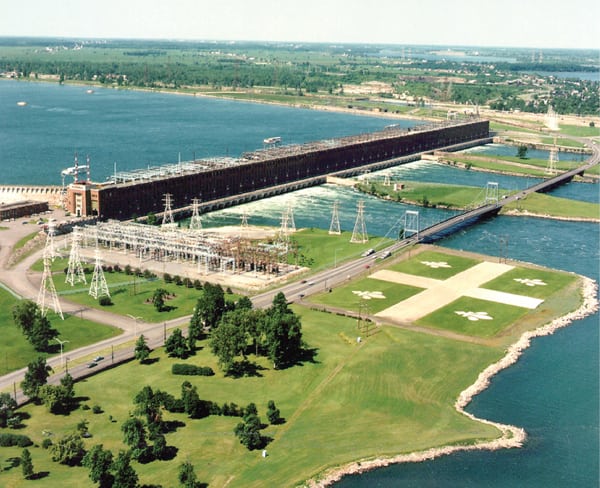 |
| 2. Harnessing power. Dessau handled the modernization and upgrading of Beauharnois power station, which was built more than 80 years ago along the waterfront, just 40 km from Montreal. It is considered a heritage site. Courtesy: Dessau |
“There are a lot of electric utilities that will have to rapidly upgrade their network to incorporate the smart grid technology and automation,” says Michel Famery, vice president of National Development in Energy and Telecoms at Dessau.
— Tom Willatt and Sharon Saylor (info@gbreports.com) are with Global Business Reports.