At the Platts Third Annual Nuclear Conference in Washington this February, most of the several hundred participants were extremely enthusiastic about the long-stalled future of U.S. nuclear power. During the keynote address, Nuclear Regulatory Commission (NRC) Chairman Dale Klein said, "I am a regulator and I am prohibited by the law that created [my agency] from engaging in any activity that promotes nuclear energy, including discussion of opportunities. Let me start out, though, by indulging in a bit of optimism."
To reduce Klein’s comment to a Monty Pythonism, he was saying, "Wink-wink, nudge, nudge, say no more, say no more." The NRC anticipates a nuclear resurgence, no question about it, and obviously welcomes it.
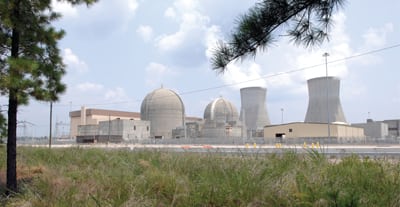
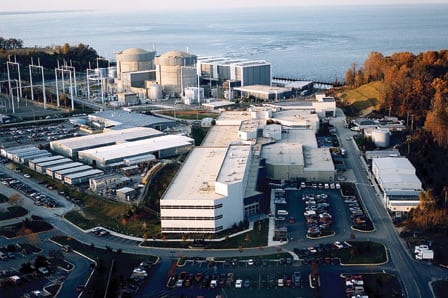
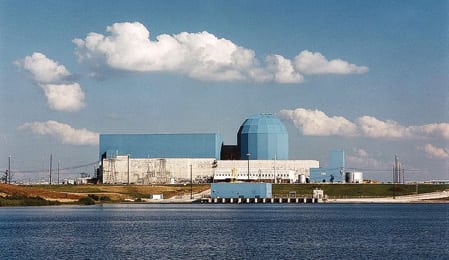
Indeed, a month later the NRC approved Exelon Corp.’s application for an early license for a nuclear unit that could be added to the Chicago-based company’s existing site in Clinton, Ill. (Figure 1). In effect, Exelon is "banking" the site for future use, which could cut months from the regulatory review process should it decide to build a new plant there. That’s a decision the company says it has not yet made.
|
1. Double your pleasure. This March, the Nuclear Regulatory Commission approved Exelon Corp.’s application for an early license for a single reactor at an existing company site in Clinton, Ill. Courtesy: Exelon Corp.

|
So far, some 16 firms, representing about 32 new units, have expressed their intentions to file applications this year or next for combined construction and operating licenses (COLs). The Nuclear Energy Institute has a chart on its web site that details these great expectations. Having approved Exelon’s Clinton COL, the NRC has another three applications in its queue. All of the sites are at existing nuclear stations.
This January, Standard & Poor’s Ratings Services issued a bullish report on the prospects for nuclear power, based on the U.S. Energy Information Agency’s (EIA’s) prediction that U.S. electricity demand will grow 45% by 2030. What’s significant about S&P’s sanguinity is that debt raters are among the most pessimistic analysts in the financial world. Bond holders generally face more things that can go wrong, and fewer things that can go right, than equity investors. So the debt raters are generally gloomy about almost anything.
Merchants of menace?
S&P’s Dimitri Nikas, who wrote the red-blooded S&P report, told the Washington meeting that it should be possible for conventional, regulated utility companies building new nuclear plants to get investment-grade bond ratings. But he also warned that without long-term power sales agreements in advance of groundbreaking, merchant nukes will have a hard time getting an investment-grade rating.
That speaks to one of the cloudy edges around the sunny mood of the nuclear power folks. How do merchant generators fit into the nuclear revival?
It’s a key question, because wholesale power generation is a competitive business in about half of the U.S., including the dominant markets in the Northeast and Middle Atlantic states (ISO-New England, NYISO, and PJM), as well as the unique Electric Reliability Council of Texas market. For many nuclear power developers, it’s a jungle out there.
Some merchant gencos are bullish about nukes. NRG Energy, for example, plans to file a COL application for an advanced GE boiling water reactor to be located at the South Texas nuclear site. Constellation Energy, another merchant, is leading the charge for new nuclear construction, although the Baltimore-based company stresses that it hasn’t made a final decision to move forward.
So it looks very much like the generating ball is teed up for nuclear success, for both conventional power companies and non-utility generators. But there’s a darker side, not often expressed directly, but present nonetheless. Who is going to be the Tiger Woods to smack that ball way down the fairway and set up a success?
Asked about the possibility of new near power plants in the U.S. at the Platts conference, many lips said, "Yes." But the eyes (and some of the scuttlebutt) said, "Maybe, we hope, let’s keep our fingers crossed."
Won’t get fooled again
I think there’s a "Charlie Brown, Lucy, and the football" feeling just below the surface optimism of the nuclear industry. The nukes are looking to kick that atomic field goal once and for all. Deep down inside, they fear that just as they swing a leg, somebody (Uncle Sam, Wall Street, the greens, the invisible hand of the market) will jerk the football out of the way and the industry will take another pratfall.
The residue of history plays directly into this. Remember that the first nuclear renaissance was quite brief. Few folks are still around who remember those halcyon days of atomic power.
The nuclear boom lasted just a decade, from 1969 and the opening of Oyster Creek to 1979 and the meltdown at Three Mile Island (TMI). Prior to Oyster Creek, nuclear power was essentially experimental. The power utilities were wary of this capital-intensive technology. The 610-MW Oyster Creek GE boiling water reactor started the boom days for nukes (although how much GE lost building Oyster Creek on a fixed-cost, turnkey basis is buried in the myths of nuclear history).
But the nuclear bubble started deflating well before TMI put the radioactive kiss of death on the U.S. industry. Plant orders had dried up by 1975. The last alleged order, by Commonwealth Edison (now an Exelon subsidiary) in 1978, was a sham. The utility never applied for an NRC construction license (back then, you needed one license to build and another to drive), and ComEd withdrew the order in the mid-1980s. Every plant ordered since 1974 eventually got cancelled, as delays, cost-overruns, inflation, and skyrocketing interest rates clobbered the economics of nuclear power.
So the underlying caution of the industry as it looks at today’s positive signs makes sense. Although the speakers at the nuclear conference in Washington began by exuding optimism, they usually ended by noting how much can go wrong. There are so many moving parts that all must mesh before juice reaches the grid from a start-from-scratch nuclear plant that building one is a daunting proposition. Following are the issues fraught with the most risk.
Technology
The next new nuclear plants are not your father’s reactors. We’re talking new technology for the most part, but not exclusively (see box). None of the advanced reactors that the NRC has certified (by reviewing engineering documents) has a performance record. Anyone building a Westinghouse AP1000 or a GE Advanced Boiling Water Reactor will be betting big money—perhaps even betting the company—on a first-of-its-kind technology.
The reactor vendors have put a lot of thought, money, and intellectual and engineering elbow grease into the new plant designs. The new plants have a real elegance about them and clearly reflect the lessons learned in the 1970s. There’s a lot less brute-force engineering in the new designs and a lot more reliance on passive safety.
But, as the euphemism goes, in the real world, "Stuff happens." So there is a fundamental reluctance on the part of some potential nuclear builders to be the first to build. The line to be second is far longer than the line to be first.
The only new reactor design that has any track record is AREVA’s EPR (evolutionary power reactor), a French pressurized-water design with a unit under construction in Finland. Constellation is committed to the AREVA EPR, if it decides to go ahead with new nuclear units at its Calvert Cliffs site or elsewhere. But the EPR is not yet certified by the NRC, meaning it also has technological risks.
There was considerable salesmanship among the reactor vendors at the Platts conference as they tried to convince potential buyers of the superiority of their technology. But at the end of the day, each technology has some advantages and some disadvantages, and each has technical risks as well. Choosing the technology is a high-stakes gamble, because the potential rewards are equally high
Regulation
The NRC’s Dale Klein told the industry that he’s dedicated to making sure his shop is not "a bottleneck in the process" leading to a rebirth of nuclear power in the U.S. Fairly or unfairly, the industry generally perceived the NRC during the 1970s and 1980s as a drag on reactor development. Over many years since, the agency has worked to make obtaining a COL as easy as one-stop shopping.
But this version of one-stop shopping won’t be as quick as it is easy. Gone are the days of nuclear rubber stamps. Klein said the commission is looking at a 42-month process for the COL filings it receives The first 30 months will be eaten up by a thorough technical review by NRC staff, assuming all goes well (and that’s a pretty large assumption). The final year (at least) will be devoted to public hearings.
The NRC process is hardly the only regulatory hurdle a utility will face if it wants to build a new nuke. States and local governments will also be involved, and that’s where plant opponents are likely to make their initial stand. In the case of regulated plants, state commissions will want assurances of prudence and cost-control. It was the states, more than the NRC, that forced cancellations in the 1980s by insisting on protections against "rate shock."
In the case of merchant plants proposed for competitive markets, the challenge will be lining up financing. There will be a complex dance among the parties over long-term power-purchase agreements, construction and operational agreements, and the spread of cost and time overruns, all in the context of federal and state requirements.
One week after the Platts conference, DTE Energy CEO Tony Early highlighted the state regulatory problem in remarks in an address to the Economic Club of Detroit. Announcing that DTE subsidiary Detroit Edison plans to file a COL application to the NRC in 2008, Early said, "At the state level, we still have major barriers. What company would be willing to make a $3 billion investment without some assurance that it could recover its costs? That’s the dilemma for Michigan utilities caught in a hybrid regulatory environment. The partially regulated and partially competitive structure in Michigan fails to provide the certainty required for power plant investment critical to the state’s future."
Finally, barely mentioned at the conference and elsewhere, there are the courts. We live in a litigious society, and losers in regulatory proceedings are likely to believe they can be winners in judiciary proceedings. They will have standing and they will be heard. As they usually do, the lawyers will win, whether or not anyone else does.
Financing
FPL Group CFO Moray Dewhurst shook up the Platts conference when he first said that he was "extremely bullish" over the prospects for new nukes, and then rained financial lightning bolts on the sunny parade. "The board pays me to be skeptical," he said wryly.
Dewhurst recalled the history of cost overruns, which often reached 200% to 300%, in the construction of the last generation of plants. He reminded the attendees of what happened to the now-deceased Long Island Lighting Co., which bet the company on the Shoreham nuclear plant and lost. The plant was abandoned after it was built and the investor-owned utility died.
Dewhurst drew some gasps from the audience when he estimated the cost of a new nuclear unit on a hypothetical greenfield site in the range of $4,000 to $5,000/kW, including interest and inflation. "You have to be prepared to justify that the project will make economic sense," he said. The only way to justify a nuke today in terms of existing economics, he said, is high natural gas prices.
But gas prices, after soaring two years ago, have now come down significantly and some analysts expect the natural gas price slide to continue. If an Alaska natural gas pipeline gets built—an aim of both Congress in the 2005 Energy Policy Act and the Bush administration—gas prices could fall further and stabilize, according to the EIA. Substantial growth in liquefied natural gas terminals in the U.S. could also put downward pressure on gas prices.
Added to the economic uncertainty is the prospect that it might take 10 to 12 years to complete a nuclear project. By comparison, a supercritical coal project might take seven years to permit and build. "A two-year delay," Dewhurst said, "could easily add one to two billion dollars to the total cost" of a nuclear power project.
Intellectual capital
The brain drain of nuclear engineers, which affects both builders and regulators, is well known. Baby boomers are retiring. The nuclear engineering departments at major universities have become backwaters as the industry has stagnated. Many of the world’s best and brightest youngsters, who once flocked to nuclear engineering, have instead pursued careers in electronics, telecom, and other high-tech industries.
Anticipating the burdens of a licensing a raft of new nuclear plants, Congress authorized the NRC to increase its staff considerably. Klein told the Washington conference that the NRC has upped its staffing levels by 371 positions (that doesn’t yet mean live bodies) in fiscal 2006, with another 600 positions to follow. Will the agency be able to fill those slots with well-qualified folks? That remains to be seen.
Klein noted that the NRC will be competing with the private sector and the Department of Energy and its 10 national labs, and even with the armed forces, state and local governments, and health care professions for nuclear science and engineering graduates. In economic terms, that means the price of talent will go up significantly.
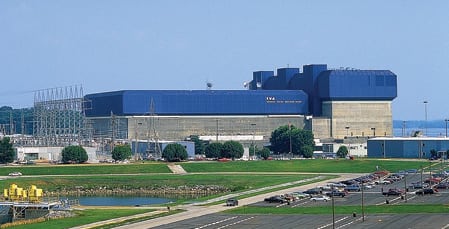
During a Q&A session, Klein highlighted another human resource hurdle that hasn’t gotten as much attention: skilled trades. It’s not possible to build a nuclear plant to the strict quality requirements of the industry and its regulators without highly qualified welders, carpenters, electricians, plumbers, concrete finishers, and the like. Klein noted that he made a recent visit to Alabama to check on the progress of TVA’s restart of its Browns Ferry Unit 1 (Figure 2). The day he was there, Klein said, TVA was 50 welders short of what it needed on the job.
|
2. Phoenix rises. Browns Ferry Unit 1 is scheduled for restart next month. Courtesy: TVA
|
Another looming problem, said Klein, sending a shiver through many in the audience, is workers’ immigration status. "We also have to have a process to assure that we have no undocumented workers" at nuclear construction sites, he said. That’s not going to be easy, as major contractors will have "subs of subs of subs" working on the projects. Klein suggested that the builders work with the trade unions on worker documentation. But that adds another layer of costs and another political dimension to the nuclear renaissance. Imagine the headlines when Rep. Henry Waxman (D-Calif.), chairman of the House Reform and Oversight Committee, announces his hearings on the use of undocumented and illegal workers on the construction of the nation’s new nuclear plants.
Politics
The nuclear industry is joyous about the goodies it won in the 2005 Energy Policy Act: a production tax credit (PTC), standby support in the case of delays, and loan guarantees. All may prove illusory, however.
The PTC, the same subsidy enjoyed by renewables, only kicks in when a generating plant is running and generating power and income. FPL’s Dewhurst says the standby support is "not much help." What the loan guarantee authority really means isn’t yet known (is it an insurance policy or an actual loan?), and it’s capped at $2 billion.
What’s more, the nuclear industry bet its future on the Republican Party in 2005 and 2006, and it bet wrong. The Nuclear Energy Institute (NEI), the industry’s trade association, hired a new chief executive and a new chief lobbyist, both Republicans, with ties to then–Senate Energy and Natural Resources Committee Chairman Pete Domenici (R-N.M.). "They drank Karl Rove’s ‘permanent Republican majority’ KoolAid," a nuclear utility lobbyist told me recently.
The Democrats ending up winning both the House and the Senate in the November 2006 midterm elections. Karl Rove was discredited. Domenici is now merely a minority member of the energy committee.
Democrat Harry Reid of Nevada, a dedicated opponent of burying nuclear waste at Yucca Mountain in his state, became Senate majority leader. Nancy Pelosi of California, never a fan of the nukes, became speaker of the House. Democrats with known anti-nuclear tendencies moved into chairmanships of major committees and subcommittees (although the Senate Energy Committee stayed in New Mexican hands as Jeff Bingaman once again took the controls). The NEI appears politically damaged.
If a Democrat wins the White House in 2008, the NEI will be completely isolated, making life for would-be nuke builders difficult indeed. A Democratic president, most pundits say today, is likely. The president names the NRC chairman and will have at least one vacancy to fill at the NRC. A Democratic president also is likely to make DOE appointments that will provide new interpretations and decisions on the 2005 energy law’s provisions.
Global warming
The latest driving force behind the purported nuclear renaissance is man-made global warming. As long as this issue drives public policy, the nukes are in the mix. Aside from hydroelectric plants, which are vulnerable to droughts, nuclear power plants are the only form of baseload generation that isn’t known to produce greenhouse gases (and some claim, but haven’t proven, that organic matter buildup on the upstream side of dams generates plenty of methane). Some environmentalists’ idea that wind, solar, and biofueled generation could replace a majority of fossil fuel–fired plants is a pipe dream.
Without some way to factor CO2 control costs into the price of coal plants, noted FPL’s Dewhurst and others at the Platts meeting, the economics of new nuclear power don’t work. Carbon dioxide limits kick coal out of the market. Without them, coal remains king.
TVA chief Jerry Kilgore, who wants to build new nuclear units and is overseeing preparations for the restart of the ancient Browns Ferry Unit 1 this month, told the audience at the Platts conference that he is keeping an eye on both nukes and coal, to bide time until it is clear that carbon caps will be mandatory. "We will keep coal in our sights," he said. Given TVA’s ruinous experience with nukes in the past, the giant federal power agency surely is hedging its nuclear bets with coal.
In mid-February, DTE Energy’s Tony Early, speaking at the Economic Club of Detroit, said the company isn’t ruling out new coal generation. It’s hedging its baseload generation bets. When the NRC granted the early site permit to Exelon, the company made clear that it isn’t committed to building a new nuke, only to keeping its options open.
Uranium prices
The economic rationale for new nukes rests entirely on the assumption that the cost of nuclear fuel will remain low and stable compared with fossil fuels. According to EIA data, fuel represents about 25% of the bus-bar cost of a nuclear kilowatt-hour, vs. about 75% for a coal-fired kilowatt-hour.
What if uranium prices go up the way they did during the 1970s, when every utility with more than two customers was looking to build a nuke? They already are, according to Jeff Combs, president of Ux Consulting (www.uxc.com), which tracks supply, demand, and prices of uranium worldwide.
The final speaker at the two-day Platts conference, Combs sent the attendees home on a down, but realistic, note. Over the last several years, he said, the price of U3O8 has "skyrocketed." In 2003, he noted, uranium was trading at $10.90 per pound. Last July, the price was $45/lb. At the end of 2006, the price was $75.
There’s plenty of uranium in the world, said Combs, but the market has changed since the 1970s uranium bubble burst and prices plummeted in the 1980s. The 1970s uranium market collapsed on the cancellation of nuke after nuke and the arrival of a secondary market for separative work units (SWUs). Demand dissolved and SWUs swamped the market.
Today, demand is going up worldwide, driven by Russia and China, and supply isn’t keeping pace. The Russians and Chinese are both talking seriously about adding two new reactors a year over the next several years. The U.S.-India nuclear cooperation deal late last year will also boost uranium demand. Supply will have a tough time keeping pace.
Since the 1980s, says Combs, there has been considerable consolidation in the uranium business, driven by the low prices of the 1980s. A small number of mega-companies now dominate uranium production, making the market susceptible to disruptions. For example, Canada’s Cameco Corp. had a major flood late last year at its Cigar Lake mine in Saskatchewan, taking significant supply off the market temporarily. Prices spiked.
New trading patterns have emerged in the uranium market, said Combs. Russia and China, which used to sell uranium abroad, are now stockpiling their domestic production and looking for more from outside their borders. Russia, which has an agreement with the U.S. to blend down weapons-grade uranium through the U.S. enrichment company USEC, now wants to take back more of the resulting fuel-grade uranium for its new reactors.
New demand is being created faster than new supply, which suggests prices for U3O8 will increase. Russia and China have both said they expect to bring on three new units a year for the next decade. "Recent experience with production expansion is not encouraging," said Combs.
Where’s the football?
So where does all this leave the U.S. nuclear renaissance? While conditions are very favorable for a nuclear rebound, it isn’t, in the words of former CIA Director George Tenet, describing Iraq’s alleged nuclear weapons program, a "slam dunk."
There’s demand for new baseload capacity in the U.S.; a favorable regulatory regime exists in Washington for the moment; promising new reactor technology appears to be available. But there are regulatory risks, financial obstacles, human resource problems, technology issues, and political hurdles.
To return to the Peanuts analogy, will Lucy pull the football away as Charlie Brown tries to kick the ball through the uprights? That’s a "known unknown." So the industry will have to judge the risks ahead carefully as it lines it to attempt a nuclear field goal.