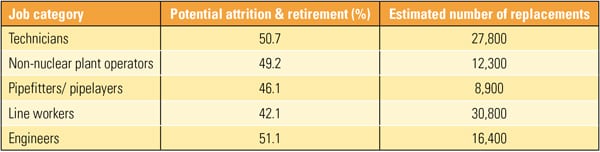
Despite all the hype over the past few years about the potential devastation caused by large-scale baby boomer retirements, recent studies say that age is responsible for only 15% of U.S. workforce attrition. According to the Department of Labor, in 2006 retirements shrunk headcount by a mere 4.4%.
But here’s another statistic that should give utility executives pause: Last year, “quits” rose to 19.4%–up one percentage point from 2005 and the highest rate in many years.
In other words, if you’re focusing on retirements, you’re ignoring nearly 80% of the employee loss problem. But you’re not alone. Surveys report that only one in eight companies has a goal of addressing nonretirement attrition.
Should organizations pay less attention to aging workforce issues and more to the causes of nonretirement departures? Not necessarily. Why? Because every industrial organization has unique characteristics and needs.
Management by fad
That uniqueness, however, can open the door to unusual, unworkable, and expensive solutions. Over the past two decades, fad after fad has infected the business world. Concepts such as large-scale downsizing, Y2K, Total Quality Management, ISO 2000, Quality Circles, and e-business have swept across the organizational landscape. Sometimes these movements brought necessary changes in some sectors. But few found broad interest and long-term use.
Remember the counterintuitive efforts of some bricks-and-mortar stalwarts to set up e-business units during the 1990s (exemplified by Time Warner letting itself be acquired by AOL), the billions spent to inoculate IT systems against an imaginary Y2K bug, and the reverence still being paid to the management techniques popular in the high-flying Enron days? In many cases, unproven management strategies and methods were implemented unnecessarily. Sometimes they only wasted time and money. In other cases, they wreaked havoc on firms that had been very successful.
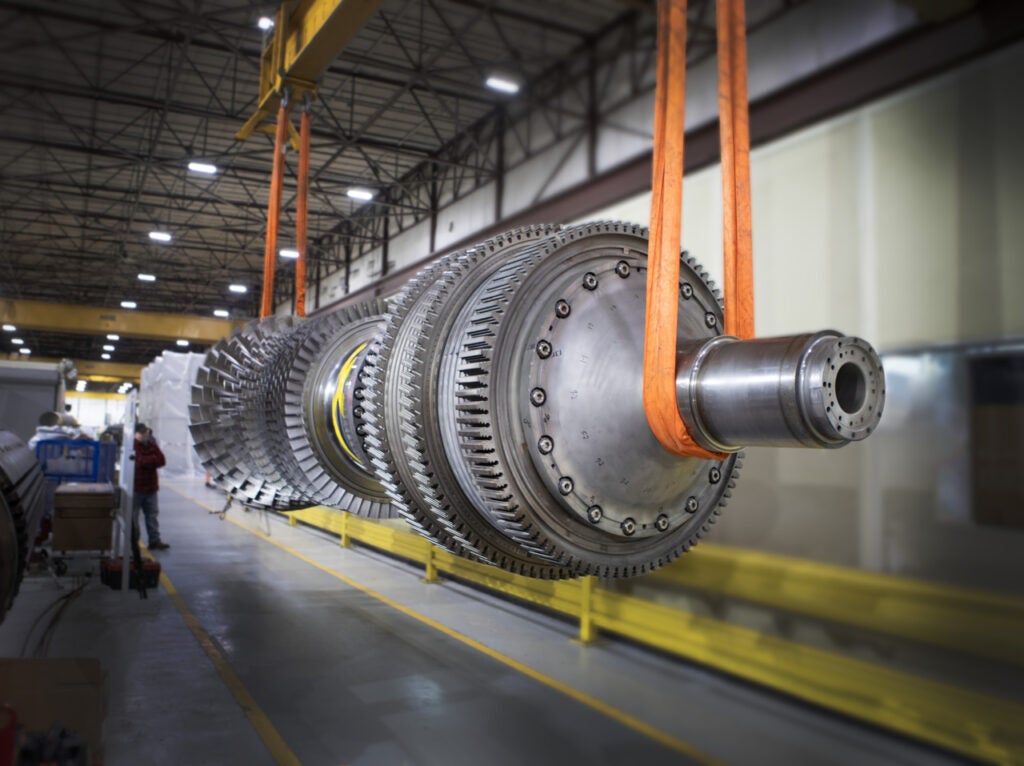
For another example more familiar to power engineers, let’s briefly examine the consequences of downsizing by electric utilities. Turbine generator maintenance used to be done by large in-house crews with access to huge in-plant parts and equipment inventories. A 1,000-MW plant may have had a full-time major maintenance staff of 75 to 100, many with decades of overhaul experience under their toolbelts. Day-to-day maintenance was carried out by another team of 25 to 35 people. With such personnel resources on hand, outage planners had the luxury of long lead times and slow budgeting. Management could predict easily and plan with certainty.
Outsourcing, prompted by Wall Street’s closer attention to utilities’ quarterly results, radically altered maintenance and outage planning and execution. Those big in-house crews are now gone, replaced by just enough people to oversee the work of outsourcing contractors. Inventories have shrunk, too. As a result, utilities and plants now operate in thrall to productivity, dominated by short-term planning. Long-term projects, such as vital regional transmission upgrades, are rarely given the priority they deserve. The new corporate culture doesn’t quantify the effects of employee dissatisfaction, which may be why more experienced hands are quitting. No one likes work that isn’t fun anymore.
The bottom line is that management by fad just doesn’t work. Lean manufacturing and Six Sigma techniques may work for General Electric, but not for smaller firms with limited resources.
Bringing certainty to management
Engineers know that you can’t control what you can’t measure. Developing future business strategies is pointless without an accurate assessment of the current business environment. Understanding the issues is especially critical to forward-thinking workforce management. Here are some questions that any utility or plant manager should be asking—and be able to answer:
- How deep is my organization’s knowledge, and where will wholesale employee retirements create gaps in it?
- Is my firm capturing the knowledge of senior employees long before they give notice? If so, how? Am I confident that the processes in place are capturing and transferring the right kind of knowledge?
- Which metrics are being used to gauge the capability of my workforce?
- Are my organization’s business processes modern and adaptable to changes in business climate?
- What kind of personnel should I be looking to hire?
- Are company training programs instilling the skills needed to improve business performance?
These questions can be answered by a workforce analysis. It helps organizations identify and quantify existing workforce challenges, forecast future workforce needs, and correlate them to business needs.
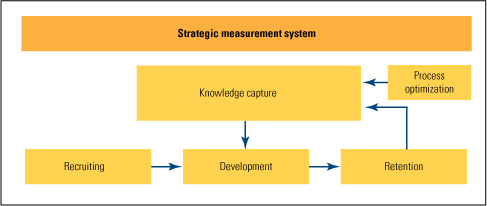
A workforce analysis leverages strategic and tactical tools for isolating the existing skills of an organization and measuring the depth of knowledge within it. The analysis then relates specific skills to the business reasons for each performance requirement of a job position. A workforce analysis also provides the following information:
- The strengths and weaknesses of a workforce.
- Trends in attrition numbers, and their impact on mission-critical business skills.
- Key areas in need of training, process improvement, and knowledge capture.
- The depth of knowledge within each job class, and the importance of each task performed by workers to achieving business goals.
- The organizational learning rate—a measure of a firm’s ability to boost its productivity through experience and to transfer knowledge between locations.
- A map of the strategic skills and knowledge gaps that have the biggest impact on accomplishing the organization’s mission.
A workforce analysis delivers exactly what management needs to act with certainty and precision.
Here’s the first of three examples. At one company, an analysis that correlated the company’s skill levels to its attrition rate concluded that if nothing were done to reduce attrition, skilled workers would be unavailable to perform 63% of employee tasks within five years. In this case, the rate of skills attrition outstripped that of retirements. Interliance Consulting pinpointed the nature of the problem, identified the most-endangered skills, and delivered to management a tailored program for solving the problem.
At a second company, workforce analysis revealed a connection between the organization’s learning rate and loss of skills. It found that high attrition rates in certain departments would reduce skill levels within those departments by 31% over five years at the current learning rate.
At a third firm, an electric utility, the challenge was worker uncertainty. Through interviews, the workforce analysis found that the average O&M employee was less than 50% certain of his or her ability to perform all tasks required by the position. Interliance took this workforce analysis one step further. After breaking down employee uncertainty by position, the consultant delivered a report containing the following information:
- The relative levels of certainty for every plant department and job description.
- How those certainty levels would change over time.
- Which skills were most vulnerable to loss.
- The department needing the most attention.
Those results were then correlated with statistics on the frequency and location of the reported problem. The exercise enabled Interliance to suggest changes in the utility’s knowledge capture, skills development, and process improvement initiatives.
Workforce analysis to the rescue
The product of a workforce analysis is a business case that quantifies the value of knowledge and skills and the cost of losing them. Some consultants are paid hundreds of thousands of dollars for vaguely worded and therefore unworkable “strategic solutions” to general problems involving knowledge capture, training, or business processes. By contrast, a workforce analysis delivers specific proposals and rigorous analyses. In many cases, implementing the suggested plans has saved companies millions over time.
Another big plus of workforce analysis: It doesn’t take an eternity. Some consultants spend years dissecting the woes of a single production line, racking up thousands of billable hours in the process. By comparison, a typical workforce analysis costs much less because it takes only about six weeks from start to finish.
—Brad Kamph (bkamph@interliance.com) is president of Interliance Consulting Inc., a 20-year-old developer of workforce, knowledge management, process optimization, and performance measurement strategies for energy companies.