Hazardous areas exist in every power plant. Following proper design rules and anticipating how the plant will be operated can avoid creating mixtures of gases that could explode or catch fire.
Quantifying electrical safety risks and reducing them to an acceptable level is a team effort. The designer must follow applicable codes and standards when engineering the plant, and operators must run and maintain it within those guidelines. Does your staff know where the hazardous areas are in your plant? Are hazardous area classifications made years ago still appropriate under current standards?

Cataloging risks
Hazardous area classification is a rigorous method of determining where an explosive environment may be present. The codes and standards used in this process provide guidance for selecting, building, and installing electrical equipment in that area. In general, hazardous areas (HAs) are defined by:
- The type of hazard or hazardous material.
- The likelihood of its presence in flammable concentration.
- The auto-ignition temperature of the hazardous material.
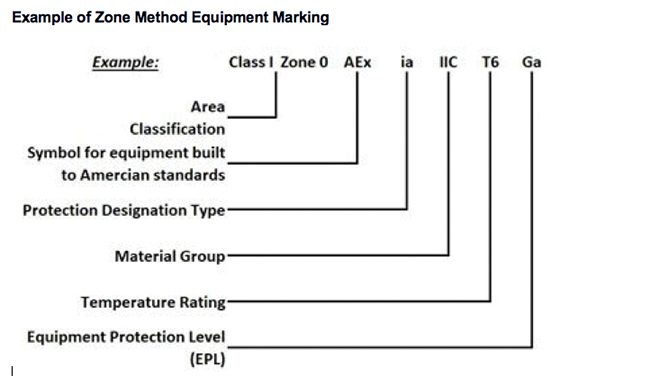
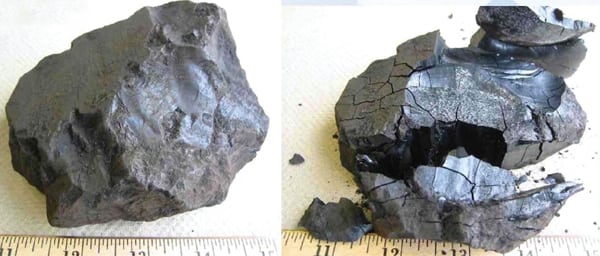
An explosive atmosphere can be created by a gas or vapor, dust, or even fibers. Methane-based hazards dominate the gas-fired generation sector, whereas spontaneous combustion of coal dust plagues plants fired by that fuel. The different zones defined by codes for classifying particular hazardous areas are listed and discussed in the online supplement to this article.
The probability that any hazard exists in combustible concentration is determined by the specifics of the plant or system under consideration. For example, a natural gas vent line is much more likely to contain such a hazard than a lube oil line—unless, of course, the oil line’s flanged joint is leaky.
Finally, plant design also must protect against auto-ignition of combustible substances. A good example of this type of hazard is a flammable gas coming into contact with a hot surface. Codes define various temperature classes to guide designers as they specify equipment.
In the field
By design, natural gas-fired power plants are fueled by an extremely combustible substance. But fuel lines and the turbine deck are hardly the only HAs in the plant. The prerequisites for developing an area classification for a gas-fired plant are understanding the characteristics of all of hazardous materials present in it and defining where those materials exist (or may spread due to a leak). This allows mapping out the plant’s HAs.
Each HA should be classified according to applicable industry codes and standards. For example, electrical area classifications explain how to select and install electrical equipment and wiring—right down to the wiring method—to minimize the likelihood of ignition of a flammable or explosive mixture.
Disclaimer: The guidelines mentioned in this article describe approaches used by Burns and Roe Enterprises Inc. The information is provided solely to educate power plant designers and staff. Burns & Roe is not responsible for classifications prepared by others using these guidelines.
—Ram K. Saini, PE, is senior principal engineer for Burns and Roe Enterprises Inc. He can be reached at 201-986-4339 or rsaini@roe.com. Charles Emma, PE, is principal engineer and can be reached at 856-638-6920 or cemma@roe.com.
The National Electrical Code (NEC), NFPA 70, defines hazardous (classified) areas as those where fire or explosion hazards may exist due to the presence of flammable gases, vapors, or liquids, combustible dust, or ignitable fibers. Electrical area classification (EAC) is the process of determining the existence and extent of hazardous locations in a facility containing any of those substances. The result of the process is usually called the EAC of the facility. In the context of electrical equipment, the following terms—area classification, hazardous locations, hazardous (classified) locations, and classified areas—are all synonymous with EAC. In the following guidelines, the term EAC is used to avoid confusion with other nonelectrical classifications.
The approach described in this article focuses on a combustion turbine-generator (CTG) plant, although the same methods are applicable to any type of power plant and its systems.
Taxonomy and terminology
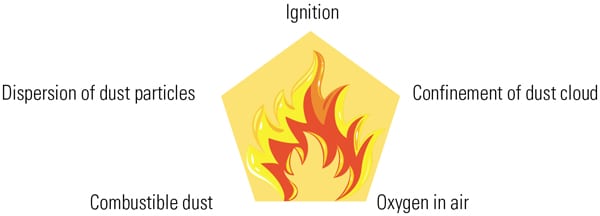
For a fire or explosion to occur, all three of the following statements must be true:
- Flammable or combustible material is present.
- The material is mixed with air in the proportions required to produce an ignitable mixture.
- The release of energy is sufficient to ignite the mixture.
The above conditions constitute the well-known “fire triangle” (Figure 1). In the context of EAC, the source of energy is understood to be the facility’s electrical system.
 1.Air, heat, and fuel must be present to start a fire.
Areas are classified in accordance with the type and properties of the combustible material and the likelihood that an ignitable mixture will exists. Since 2002, the NEC has permitted hazardous locations to be categorized using either of two “concepts” or methods: Class I, II, and III, Division 1 and 2 (NEC Article 500); and Class I, Zone 0, 1, and 2 (NEC Article 505).
The first method has traditionally been used in the U.S. The second method complies with International Electrotechnical Commission (IEC) standards and has been used in Europe. The information presented in this article is based on the “Class, Division” concept.
Hazardous locations are categorized by class, group, and division as follows.
Class (material type)
Class I: Denotes areas where flammable gas, vapor, or liquid is present.
Class II: Denotes areas where combustible dust is present.
Class III: Denotes areas where ignitable fibers are present. (Class III areas rarely exist in CTG facilities.)
Group (material properties)
Hazardous chemicals and flammable materials are given group designations based on their propensity to explode or catch fire. The designations facilitate the approval and listing of equipment suitable for use in hazardous locations. National Fire Protection Association (NFPA) Recommended Practices 497 and 499 and other industry sources also group chemicals in this way. NEC Article 500 segregates chemicals and materials as follows:
- Group A: Acetylene
- Group B: Hydrogen
- Group C: Cyclopropane, ethyl ether
- Group D: Acetone, butane, propane, hexane, natural gas, fuel oil
- Group E: Combustible metals
- Group F: Carbonaceous materials, including coal dust
- Group G: Flour, starch, plastic
Division (the likelihood of hazardous atmosphere)
Division 1: Denotes areas where flammable or combustible concentrations exist under normal operating conditions or are highly likely to exist under other conditions.
Division 2: Denotes areas where flammable or combustible concentrations exist under abnormal operating conditions or are not likely to exist under other conditions.
Nonclassified or unclassified: Denotes areas where the presence of hazardous material is so infrequent that Electrical Area Classification is deemed unnecessary.
Auto-ignition temperature
The auto-ignition temperature (AIT) of the hazardous material in a facility must be known to complete its EAC. NFPA 497 provides AIT values for various combustible substances.
A typical area classification for propane gas would be: Class I, Division 2, Group D, 450C AIT. Here:
- Class I indicates the presence of vapor.
- Division 2 indicates that the vapor is present only under abnormal conditions.
- Group D indicates that propane is a member of this group.
- 450C is the auto-ignition temperature of propane.
Once an area has been classified, the NEC provides very specific and stringent requirements about the electrical equipment and associated wiring that can be installed within that area. The requirements are intended to prevent electrical equipment from being the ignition source for a flammable mixture. Accordingly, the installation itself must be explosion-proof.
Obviously, a facility’s EAC must be known before any electrical equipment can be specified, designed, or installed. On many CTG power projects, special-purpose mechanical equipment with long lead times (motors and instrumentation and control systems and components, for example) must be specified and ordered early. Failure to determine the EAC for the facility and such equipment in a timely fashion can result in unsafe installations, rework, confusion, delays, and cost overruns.
EAC dos and don’ts
An EAC is best performed by a project team whose members are knowledgeable about classification, applicable codes and standards, electrical equipment and wiring, chemicals used, fire detection and protection systems, process operations and conditions, maintenance procedures, HVAC engineering, and plant safety.
Many variables must be included in area classification equations. They include the properties and behavior of materials, volumes, pressures, temperatures, flows, piping and equipment construction, weather, building arrangements, adequacy of mechanical ventilation and gas detection systems, and operator interfaces. Careful evaluation of all data in accordance with established techniques, along with the application of sound engineering judgment, should produce a consistent and safe classification.
The NEC calls for each room, section, or area of a facility to be considered individually in determining its classification. Eschewing this approach in favor of classifying an entire facility using a broad-brush approach (a process referred to as “blanket classification”) almost always leads to a more dangerous and ultimately more costly facility. This is especially true for a power plant, which normally contains several different process, support, and maintenance areas. A properly conducted EAC, in a well-designed and constructed facility, might result in a few Division 1 areas and several much larger Division 2 and nonclassified areas.
Although many other companies and industry organizations have written specific procedures for Area Classification, the NFPA Recommended Practices for Classification are most applicable to power plants. NFPA 497 covers Class I areas containing gases, vapors, and liquids, and NFPA 499 covers Class II areas containing dusts. These practices assume the ability to identify and locate sources of hazardous material.
The sources can be necessarily open process points or unintentional leaks in the process. Once sources are located, the practices provide guidance in determining the degree of the hazard (Division 1 or Division 2) and its extent. They also provide diagrams for typical situations that give recommended distances from the source for the extent of a hazardous location. Although the diagrams take into account pressure, volume, flow rate, ventilation, building construction, and certain process operations, it must be remembered that they are only typical and require sound engineering for application to specific situations.
The NFPA way
What follows is a brief, nine-step outline of NFPA practices. The actual practices and associated references should be consulted when performing any EAC.
To determine an electrical area classification:
1. Assemble pertinent information, including: codes, standards, practices, and reference; process and operating descriptions; process flow diagrams and material and heat balance chart; piping and instrumentation diagrams; equipment arrangement drawings and plot plans; and commissioning, testing, operating, and safety procedures.
2. List all flammable and combustible materials and their pertinent properties, such as ignition temperatures and flash points.
3. Confirm the need for classification by assessing the likelihood of the presence of flammable and combustible materials.
4. Locate material release sources, such as open process points, control valves, pump seals, drains, metering points, sampling points, and vents. See NFPA 497 and 499 for additional guidance in identifying sources. As a practical matter, areas with large quantities of process equipment and piping that handle flammable/combustible materials can, as an area, be considered a release source.
5. Determine an area’s Class and Group from the chemicals present.
6. Determine the degree of hazard (Division 1 or Division 2) by assessing the probability of presence.
7. Determine the extent (or distance from the source) of hazardous areas by reviewing the plant’s equipment layout drawings.
8. Consider using recognizable boundaries (walls, floors, ceilings, and column lines) to delineate Classified Areas. This approach will greatly simplify both design and installation.
9. Prepare the recommended documentation for the EAC project team to review and approve.
Applicable industry codes and standards
The following codes and standards are particularly applicable to Hazardous Classified Areas in CTG power plants.
a. U.S. standards
National Fire Protection Association
NFPA 30-2003: Flammable and Combustible Liquids Code
NFPA 50A-1999: Standard for Gaseous Hydrogen Systems at Consumer Sites
NFPA 59-2001: Standard for the Production, Storage and Handling of Liquefied Natural Gas
NFPA 70-2005: National Electrical Code (Chapter 5)
NFPA 497-1997: Classification of Flammable Liquids, Gases, or Vapors and of Hazardous (Classified) Locations for Electrical Installations in Chemical Process Areas
American National Standards Institute (ANSI)
ANSI K61.1-1999: Safety Requirements for the Storage and Handling of Anhydrous Ammonia
ANSI C2-2002: National Electrical Safety Code – Section 127
ANSI/ASHRAE 15: Safety Code for Mechanical Refrigeration (for ammonia)
Factory Mutual (FM)
Underwriters Laboratory (UL) standards
Occupational Safety and Health Administration (OSHA) standards
b. European standards
International Electrotechnical Commission (IEC) standards
IEC 79-10 (Part 10): Classification of Hazardous Areas
IEC 79-14 (Part 14): Electrical Installations in Explosive Gas Atmospheres
IEC 79-15 (Part 15): Electrical Apparatus with Type of Protection “n”
c. CTG vendor documentation
Major CTG vendors often supply Area Classification documents pertaining to their systems and equipment.
d. Other
Numerous other materials are available for reference through industry sources.
At-risk systems and equipment
The main components and systems in a CTG power plant that are vulnerable to fire or explosion follow.
Fuel gas systems. These include the gas-receiving station, gas analyzer system, gas compressor station, main shut-off valve, gas relief points, the filter and scrubber station, the gas preheater, the gas control valve block, the gas safety relief valve, gas flow metering, gas distribution piping, and turbine auxiliaries equipment/compartment.
Ignition gas systems. These include propane gas cylinders, piping to ignition burner and combustor, and gas relief points.
Fuel oil systems. These include fuel oil tanks, the fuel oil unloading and forwarding pump station, the fuel oil treatment system, fuel oil metering, the fuel oil booster pump and leakage tank, the fuel oil control valve block, and fuel oil piping to burners. Fuel oil becomes flammable when heated above its flash point.
Hydrogen gas for generator cooling systems. These include the hydrogen gas cylinder station, the gas unit, the seal oil unit, the control cubicle, and piping.
Plant battery systems (including battery rooms).
Ammonia systems. These include storage tanks, pumps, and diked areas.
Potential leak sources
Following are some of the most common potential leak sources in fuel gas, propane gas (ignition), fuel oil, hydrogen gas, and ammonia gas systems. Some are identified by the CTG vendor.
Fuel gas system
- Flange gasket connection points on local piping, tubing, or at equipment.
- Flange gaskets or screwed connections in main headers.
- Seals (unless seal-less) at pumps and control valves.
- Pressure relief devices.
- Gas relief points located in the open air above the turbine building roof for equipment located within the turbine area.
Propane gas (ignition) system
- The ignition gas cabinet, with screwed couplings and glands, in the turbine auxiliary equipment area.
- Gas relief points above the turbine building roof.
Fuel oil system
- Fuel oil transfer pipe joints and coupling in the fuel oil�unloading area and forwarding pump stations.
- Fuel oil tank piping, pump blocks, filling and suction valve blocks, vents, indicators, alarm switches, oil piping (both outdoor and at the combustor), burners, and heaters.
- Open process points, sample points, and sumps.
Hydrogen gas system
- H2 gas storage cylinders.
- The H2 cooling unit and separator.
- The H2-cooled generator.
- Battery rooms (hydrogen gas is released from lead acid�flooded cell batteries as they charge).
Anhydrous ammonia system
- Storage tanks, vaporizer, and diked areas.
Bounding hazardous classified locations
Using the references listed above, determine the extent of the Classified Area for each type of leak source shown in the table.
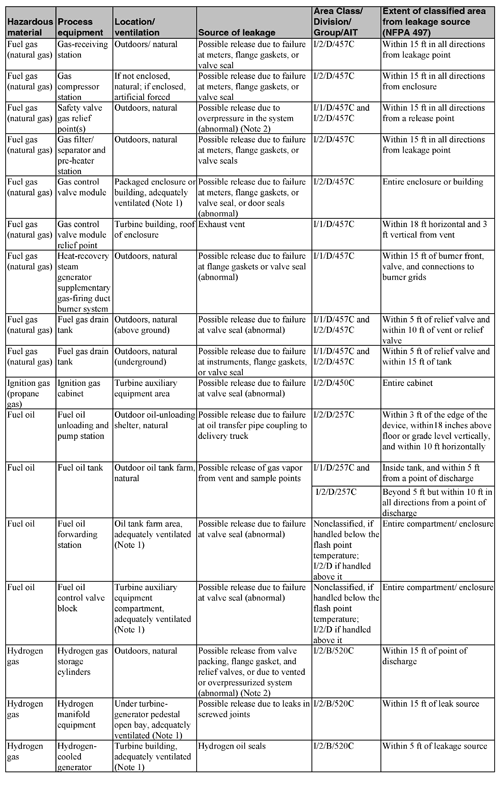 Hazardous materials and where they typically exist in a power plant. Source: Burns and Roe Enterprises Inc. Note 1: Adequately ventilated per NFPA 497 means a ventilation rate that affords either six air changes per hour, 1 cfm per square foot of floor area, or another similar criterion that prevents accumulated vapor-air concentrations from exceeding 25% of the lower flammable limit. Note 2: If vent pipes are being discharged in an otherwise nonhazardous area, they should be discharged outdoors at a minimum distance of 10 feet (for natural gas) and 15 feet (for hydrogen) from any electrical equipment, light fixture, etc. Note 3: A continuously operated exhaust fan in the battery room is required to remove any accumulation of hydrogen gas discharged from the batteries. Loss of electrical power to the fan should be alarmed in the plant control room. Note 4: Ammonia detectors should be installed around the diked area and connected to the plant’s distributed control system. A deluge water spray system should be installed for automatic/manual actuation; its alarm should be sent to the fire alarm panel in the plant control room.
These guidelines should be used as a minimum requirement for Classification of Electrical Areas where such materials are located and processes are performed. Sound engineering judgment should be applied to determine if additional areas, not mentioned in the table, should be identified. Equipment manufacturers’ recommendations for the Area Classification of specific equipment should be followed, especially if they are more stringent than the guidelines provided in the table.
When there is more than one leakage source in an area (for example, a manifold serving several instruments or valves), or if there are several pieces of equipment with potential leak sources, the area should be boxed out as an overall three-dimensional shape covering the limits of the extreme leakage points. To avoid undue expense, take precautions to verify that boxing in overall areas, or extending classified areas to recognizable boundaries, does not include electrical equipment that would otherwise not be included in the hazardous area.
Support drawings and documents
Like any engineering study or analysis, EAC must be carefully documented because it serves as the basis for electrical equipment requirements in classified areas. Such documentation, along with properly implemented protective measures, reduces the possibility of an explosion or fire. The documentation also provides the necessary guidance to engineers working on facility design, as well as to insurance and inspection personnel. The protective measures ensure the safety of the O&M personnel working in the facility.
The design engineer should prepare a hazardous location design basis document defining the plant hazards, the potential leakage sources, and the extent of the classified areas. The design basis document and the associated plant drawings that show the extent of the horizontal and vertical boundaries of each classified area should be discussed with the owner, the construction contractor, and the plant’s operations staff to ensure their understanding of the affected areas.
Figures 1, 2, and 3 are the plan and elevation drawings used for classifying the hazardous areas around a combustion turbine-generator. Figures 4 and 5 are similar drawings for the roof area of a hydrogen-cooled generator and an ammonia vaporizer skid, respectively. Hazardous area classification drawings should be prepared for each plant and should include similar details for the use of the plant construction contractor and the operations staff.
Documentation should include:
- A listing of all the flammable and combustible materials used in the facility, as well as their pertinent properties (flash point, ignition temperature, density, etc.) and how and where the materials are handled.
- Brief descriptions of the process and its O&M and cleaning details.
- A list (including dates and/or editions) of all the codes, standards, references, practices, and other data used to prepare the classification.
- A discussion of all the assumptions made during the analysis.
- A listing of each room or area and its determined area classification, along with the rationale for making the determination.
- A complete set of EAC drawings indicating all of classified area’s process equipment, normal and leakage sources, and boundaries.
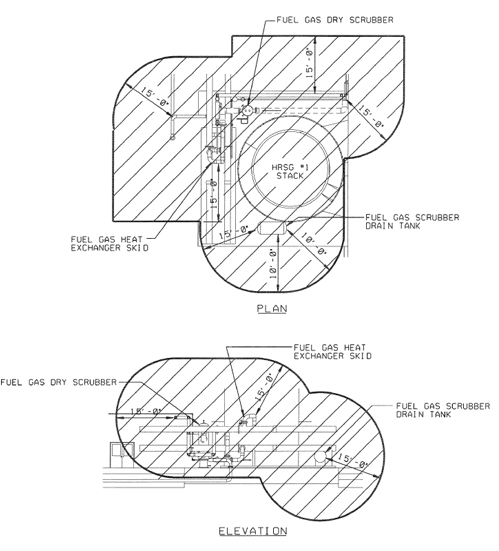 2.The EAC for the area around a heat-recovery steam generator, fuel gas heat exchanger, and scrubber. Courtesy: Burns & Roe Enterprises Inc.
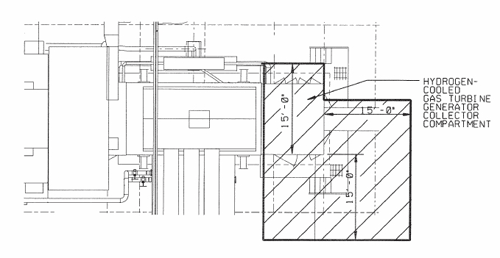 3.Hazardous area classification for the area around a combustion turbine-generator, including the hydrogen manifold and connections. Courtesy: Burns & Roe Enterprises Inc.
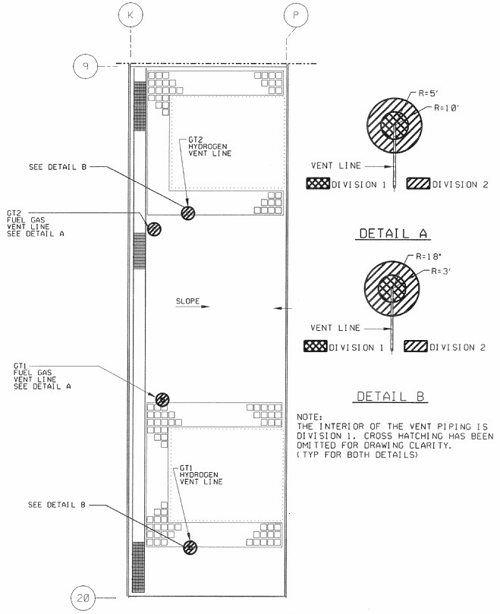 4.Hazardous area classification for the roof above a hydrogen-cooled generator. Courtesy: Burns & Roe Enterprises Inc.
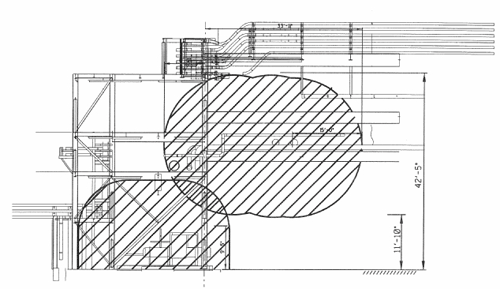 5.Hazardous area classification for the area around the ammonia vaporizer skids and fuel gas valves and devices at a combined-cycle power plant. Courtesy: Burns & Roe Enterprises Inc.
Designing for hazardous areas
As mentioned earlier, once the EAC for an area has been determined, the NEC provides stringent requirements for the design and installation of electrical equipment within it. These rules should be followed very carefully, making exceptions only if absolutely necessary.
Rather than providing specific design guidelines, the following brief list of NEC rules is intended only to convey an awareness of the complexity of electrical design in hazardous areas. Experienced and knowledgeable engineers are needed to apply the NEC rules to specific situations.
- Explosion-proof and dust-ignition proof equipment is required in Division 1 areas and for certain types of equipment in Division 2 areas.
- Equipment approved by Underwriters Laboratories or by another appropriate agency is preferred in hazardous locations.
- It is preferable to locate electrical equipment outside the hazardous area.
- General-purpose equipment is permitted for certain applications in Division 2 areas.
- Purging and pressurization of enclosures are permitted to prevent the entrance of flammable and combustible material, provided that specific rules in NFPA 496 are followed.
- Instrumentation enclosures may be the general-purpose type if they are part of intrinsically safe systems and if they are installed per NEC Article 504.
- Rigid metal conduit is the allowable wiring method in Division 1 areas.
- Cable trays and cables, under certain conditions, are permitted in Division 2 areas.
- Electrical equipment must have temperature ratings or operating surface temperatures below the AIT of the hazardous substance present.
—Ram K. Saini, PE, is a senior principal engineer with Burns and Roe Enterprises Inc. He can be reached at 201-986-4339 or rsaini@roe.com. Chuck Emma, PE, is a principal engineer at the company; he can be reached at 856-638-6920 or cemma@roe.com.