One diagnosis of the state of the U.S. biomass power industry would be: schizophrenic disorder marked by disorganized thinking and lack of motivation. Another might call the patient deeply affected by external issues such as social reform, environmental protection, and regulations on electricity generation.
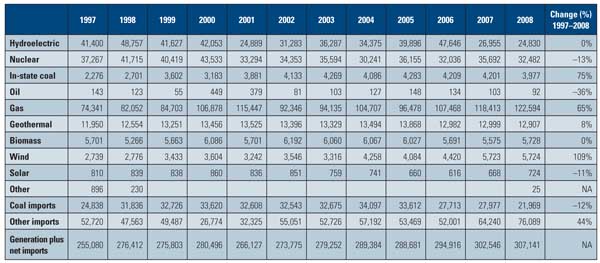
Whatever your preference, our biomass industry report begins in California, where biomass power generation rocketed to prominence in the 1980s, reached a peak of 7,362 GWh in 1992, and then fell and flatlined at around 6,000 GWh annually for the next decade. The final chapter of the story differs considerably from region to region.
Before resuming the tale in California, let’s be clear about our definitions. The biomass plants discussed in this article generate electricity by burning wood wastes (see "What is biomass?") from various sources in a boiler. The steam generated drives a conventional steam turbine and generator (see "Biomass technology is familiar").
To narrow our focus, we’ll consider only that segment of the biomass industry that generates electricity and sells it to municipal or investor-owned utilities (IOUs), which then put the power on a grid. The pulp and paper industry also has plenty of biomass-fueled plants, but the electricity they generate is almost entirely consumed "inside the fence" by factories, as opposed to sold wholesale.
Sliding into the Pacific?
There are about 80 biomass power plants of significant size in the U.S., and they have a combined capacity of about 1,700 MW. Most run in baseload mode. As of March of this year, California was home to 28 of these plants, with a cumulative rating of around 550 MW. The remainder are scattered across 15 other states. Maine, Michigan, and Florida together have about 30% of the industry’s total installed capacity.
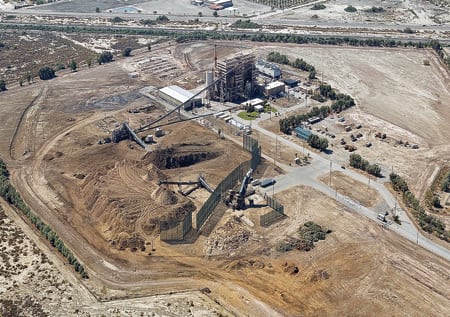
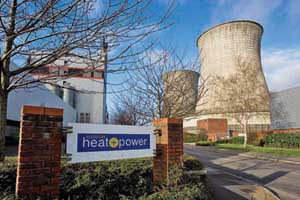
1. Two-decade track record. The 49.5-MW Wheelabrator Shasta Energy Co. power plant has been in commercial service for almost 20 years. It burns about 750,000 tons/year of mill waste and forest residues from Shasta County and surrounding areas. The plant uses three Zurn traveling-grate stoker boilers, three Elliott condensing turbines, and one small GE back-pressure turbine. Its entire output is bought by Pacific Gas and Electric Co. Courtesy: Wheelabrator Technologies Inc.
That’s the good news. The bad news is that California seems to be lagging other states in building new biomass plants and keeping existing ones in business. Some industry pundits even think that biomass in the Golden State is in danger of falling off the generation radar screen over the next decade. The last two biomass plants commissioned in California were a 4-MW facility (in 2001) and a 3-MW unit (in 1999). About 90% of the biomass plants in California were built in the 1980s. This situation is completely unexpected for a state that considers itself a pioneer in carbon controls, the use of renewable fuels, and penalizing coal-fired generation.
How did California go from being the front-runner to an almost has-been in the biomass power race? Are there lessons learned for developers and regulators? The answer begins with a short history lesson.
Green power is born
In 1978, Congress passed the Public Utility Regulatory Policies Act (Purpa) in an effort to diversify and strengthen domestic energy production. Soon afterward, California instituted policies to aggressively implement Purpa and stimulate development of renewable energy sources.
Recall that the late 1970s were marked by such high inflation and energy scarcity that experts were projecting a rise in the price of crude oil to $100 a barrel or more by the mid-1980s. In response to that environment, California required its three regulated IOUs to offer long-term power-purchase agreements (PPAs) to qualified facilities at very attractive prices for both demand and energy. Some of the PPAs had terms as long as 30 years and an initial 10-year period during which the energy prices were fixed. These lucrative contracts were instrumental in kick-starting California’s biomass power industry.

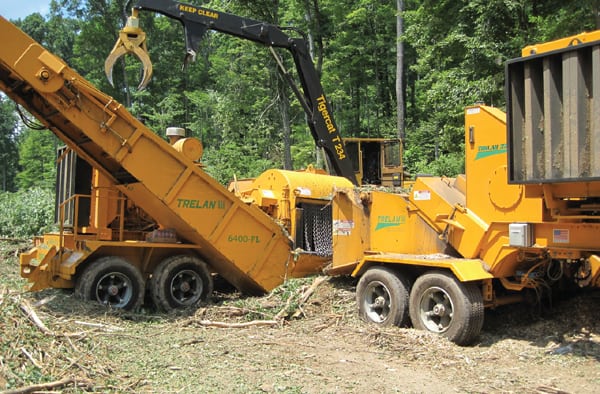
2. Waste? Not. Using urban wood waste as power plant fuel decreases the amount of waste that must be landfilled. Should developers be given economic credit for processing these waste streams? Courtesy: Colmac Energy Inc.
Biomass power emerges
The first small biomass plants in California began producing electricity in 1982. By the end of the decade, the state’s wood-fired generation infrastructure had grown considerably.
Most of California’s early biomass plants burned sawmill residues exclusively. But as more plants were constructed and the number of operating sawmills declined during the 1980s, biomass facilities learned the value of fuel diversity. Forest thinnings, agricultural by-products and residues, orchard removals, and urban wood waste began ending up in boilers. So did urban and construction waste, discarded "raw" furniture, waste from wood product manufacturing, broken pallets and trusses, landscape and right-of-way trimmings, and dunnage. Only demolition wood waste was ruled out because of the perceived hazards of burning painted or treated wood.
By the late 1980s, California’s biomass industry was consuming over 7 million tons of organic waste annually—about 25% of the volume being sent to the state’s landfills. Turning biomass into electricity became an integral part of the state’s management of forest, agricultural, and other wastes. By the early 1990s, 49 biomass plants were supplying over 800 MW of reliable baseload generation to the state’s grid. In California, biomass power was in its heyday.
The climate changes
Over the next 15 years, three events conspired to slowly undermine the foundation of California’s biomass power industry. The grim oil price projections that followed the Arab oil embargo and energy crisis of 1973 proved very wrong. And energy payments to the early biomass plants dried up as their PPAs’ initial fixed-price period expired.
The size of the payments was based on exaggerated projections of utilities’ avoided costs, which in turn assumed rapidly increasing energy costs. But the utilities’ actual avoided costs turned out to be significantly lower. In many cases, the revised energy payments were too small to support the continued operation of a biomass plant. Yet by the end of the 1990s, there were still 38 biomass plants on-line in California.
The third event that further eroded the state’s biomass industry was the California electricity crisis of 2000–2001. In their quest for lower-priced supplies, the state’s utilities bought out one-fourth of existing biomass-fueled electricity production contracts. Spiking wholesale prices opened the door of opportunity for a short while—as did a short-lived $10/ton state subsidy for burning agricultural waste (see sidebar "Biomass improved air quality in California")—and four idled plants totaling less than 65 MW of capacity were restarted. But between 2000 and 2005, ten more California biomass plants shut down for good, leaving the 28 plants and 550 MW of capacity mentioned at the top.

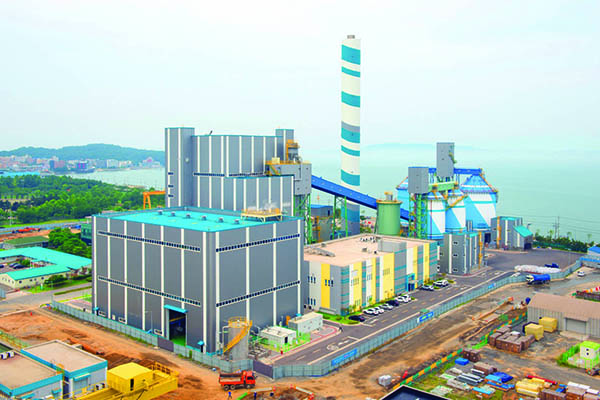
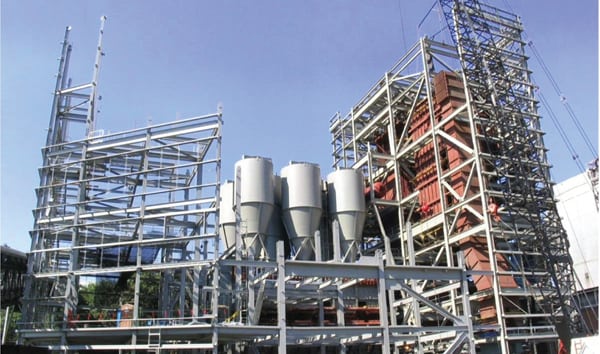
3. Grating wood. The boiler at Hampton Affiliates’ 7-MW biomass plant in Darrington, Wash., is equipped with a Wellons stoker-fired rotating grate system and produces 140,000 lb/hr of steam. The plant entered operation in 2006. Courtesy: Wellons Inc.
Another subsidy, another dead end
Even a subsequent subsidy didn’t foster the growth of California’s biomass capacity above half a gigawatt. Thanks to concerted lobbying by the state industry’s trade association—the California Biomass Energy Alliance (CBEA)—the legislature and regulators in Sacramento slowly came to recognize that biomass power plants benefit the agriculture, forestry, and solid waste sectors, too.
Between 2002 and 2006, customers of California IOUs paid a small fee on their electric bills called the "Public Goods Charge." The California Energy Commission (CEC) was charged with distributing the funds to promote and support various aspects of the state’s renewable energy industry. Some of these funds were given to owners of biomass power plants as a subsidy of up to 1.5¢/kWh for power produced during the first five years of the program.
The CEC realized that during "off-peak" hours, the biomass plants would probably shut down or curtail their output because the subsidy wasn’t sufficient to cover their marginal production costs. But it also recognized the benefits of having the biomass plants running full-time. By consuming as much waste wood as possible, less would be injected into the state’s conventional waste processing and disposal streams. This was a laudable objective, and it was achieved to some extent.
However, the California PTC expired on December 31, 2006, and the CEC has not determined if, or at what level, it will be reinstated. Yet collection of the Public Goods Charge from ratepayers will continue to the end of 2011. This uncertainty is of great concern to the California biomass power industry, and clouds its future outlook substantially.
Race to the bottom
Yet another state regulatory mandate hasn’t benefited the biomass power industry nearly as much as the PTC or the agricultural waste subsidy. On January 1, 2003, California’s Renewable Portfolio Standard (RPS) law went into effect. It requires the state’s regulated IOUs to get 20% of their retail supplies from renewable sources by 2017. In 2006, the deadline for meeting this requirement was advanced to 2010.
Unfortunately for biomass, the RPS does not distinguish renewable fuel–fired capacity by technology or deliverability. But in the free-market competition among renewables, low price will always win. So against wind farms, whose fuel is free and which are subsidized by a large federal PTC of 1.8¢/kWh, biomass plants don’t fare well.
Although more than a dozen new contracts have so far been signed with biomass plants during the RPS era, only one new project has broken ground, and it was not due to the RPS. What’s more, no idled plants have been restarted.
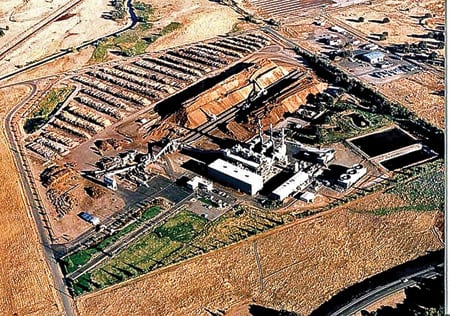
4. Wood-fired CFB. Colmac Energy’s 49-MW Mecca Power Plant, located southeast of Palm Springs, Calif. The plant’s two circulating fluidized-bed boilers drive a single ABB turbine-generator. The boilers are fueled largely by urban wood waste collected from various sites across southern California’s Inland Empire. Some agricultural waste is used as well. The plant entered commercial service in February 1992. Courtesy: Colmac Energy Inc.
The jury is still out on the effectiveness of California’s RPS process, which many consider the most complex in the nation. Most in the biomass industry believe that of the recent contracts signed as a result of winning RPS bids, most do not have terms that are attractive enough to warrant building a new plant or restarting an existing one. As mentioned, biomass projects also are disadvantaged in head-to-head competition against projects fueled by other renewable energy technologies that enjoy larger tax credits and subsidies.
A policy, but not a mandate
The latest chapter in the history of California biomass power began in late 2005, when Governor Schwarzenegger assembled a state Interagency Biomass Working Group composed of virtually every regulatory agency in his administration, including the California Public Utilities Commission (CPUC). He charged the group with identifying how to improve the state’s biomass-to-energy situation. The CBEA considers this action a definite acknowledgement of the industry’s societal and environmental benefits.
In April 2006, the governor issued an executive order that calls for biomass-fueled electricity production to constitute 20% of California’s RPS. Because the overall RPS targets 20% of all electricity supplies, biomass would now seem set to contribute 4% of California’s future electricity supply, which will require a doubling of existing capacity. In July 2006, the Working Group issued the "Bioenergy Action Plan for California" to support the executive order.
Challenges to full implementation of the executive order remain, however. An executive order issued by the governor may represent state policy, but it is not a law, regulation, or mandate. At press time, the CPUC was still trying to figure out how (and if) to implement this policy. Many oppose a biomass set-aside within the RPS. Sadly, what seemed like a watershed event for returning the California biomass industry to respectability has only made its future less certain.
Better news nationally
The experience of the biomass-to-power experience elsewhere in the U.S. during the 1990s and the first half of this decade parallels its history in California. Closures and curtailments have been the norm. But with passage by the U.S Congress of the JOBS Bill in late 2004, the climate for biomass projects seems likely to improve.
The final bill offers a PTC of 1.9¢/kWh for wind energy and geothermal energy, and 1.0¢/kWh for other resources such as solar, biomass, small irrigation power, and municipal solid waste. Companies needed to qualify or begin production by the end of 2007 and would then receive the tax credit for 10 years, except existing biomass plants, which have the credit for five years.
The bill offers a 1.0¢/kWh PTC to solar, small irrigation power, municipal solid waste, and "open-loop" biomass projects (plants fired by conventional wood waste). Although that’s only one-half the credit available to wind and geothermal generation, this PTC tax credit (coupled with rising fossil fuel prices and the emerging patchwork of new state incentive programs ranging from RPS mandates to enhanced state tax credits) has revived interest in biomass-fueled power production. New projects have been proposed nationwide, from Arizona to Washington and Connecticut to Florida. Because the next generation of biomass plants will likely be more geographically diverse, the California situation—too many plants competing for the same waste fuel sources—will be less likely to repeat itself.
Two broad categories of plants are being proposed by developers, and their business models are substantially different. One model is to find an idle biomass (or coal) plant, buy it for a fraction of its original cost, retrofit it to meet state RPS requirements (low emissions and/or advanced combustion technology), and fire it back up to collect the substantial "green tag" revenues available in that locale. These projects rely on the existence of an RPS-driven green tag market, can come on-line quickly, and anticipate a quick return of capital from the market (which, it must be said, has been notoriously volatile). A variation on this theme applies to new projects in Connecticut, whose state clean energy fund subsidy stretches and levelizes the green tag value over an extended period, making conventional financing a possibility.
The second model is that of a more conventional combined heat and power (CHP) plant, typically installed on the grounds of a forest products facility. Such a plant, typically of a smaller size, would use internally generated waste wood materials for at least a portion of its fuel supply and provide turbine extraction steam for the facility’s low-/medium-pressure process drying needs—and, of course, electricity to the local utility grid. The plant may or may not supply electricity to the facility, depending on the facility’s usage patterns and local industrial electric rates. Such projects typically require a long-term PPA with known rates. The power sold outside the fence may or may not be bundled with green tags.
Back to the future
If all biomass projects currently under way are completed, they will add about 270 MW of installed capacity by the end of 2007. The split will be roughly 50/50 between the two business models. Though most readers of POWER would consider this expansion a mere drop in the bucket, it would represent a 15% gain in national biomass power capacity nationally. It also would recoup about half of the biomass industry’s losses over the past 15 years.
Even better news is in the offing. Late last year, Congress extended the JOBS Bill PTC’s "placed in service date" deadline by one year to December 31, 2008. The extension is expected to bring about a further expansion of 100 MW or more by that date, which would increase the industry’s total installed capacity by another 5%.
Some clouds remain on biomass power’s horizon, however. For one, there are a limited number of idled plants that can be restarted quickly. CHP projects at forest products facilities are a niche market that will be saturated within several years. Another shortcoming of proposed biomass projects is their poor economic competitiveness in state-sanctioned RPS auctions held by utilities for new renewable capacity. To date, such projects haven’t done well in these auctions, and many of those that have been winning bidders have been unable to attract financing due to a lack of a guaranteed fuel supply or a poor understanding of their costs. This situation is likely to persist as long as biomass power receives only half the federal PTC available to wind and geothermal producers. Not surprisingly, wind and geothermal facilities have dominated the open RPS solicitations to date across the U.S.
Leveling the playing field
To proliferate nationwide, biomass power plants must find a way to pay for the haulage and processing of waste materials from farms and forestry operations, instead of relying on milling residues or landfill wood diversion for their fuel. Expanding the fuel supply will not only expand the market for biomass power; it will also ratchet up the public environmental benefits of the technology.
For instance, millions of tons of agricultural residue (such as stalks and prunings) are burned openly in the U.S. each year. These could become acceptable fuels for biomass power production—if the economics can be made to work. In addition, federal agencies have identified nearly 200 million acres of federal forest and range land that are in dire need of thinning to restore forest health and reduce wildfire risk. Most of the potential billions of tons of the removed material would have no use, other than as fuel.
A biomass facility that burns fuel sources such as these would require a stronger revenue stream than it is likely to obtain from winning an all-source RPS auction. Making the federal PTC for biomass power production equal to that for wind and geothermal production would bridge much of the gap.
If only Washington were to share states’ and utilities’ growing recognition of biomass power’s environmental benefits. Some states now give biomass supplies double credits toward RPS compliance, and some utilities have held "biomass only" RPS solicitations. The firm capacity that biomass power can provide, which is rare among renewables, is beginning to be valued more highly in some locales. The rapid ratcheting up of many RPS programs (1%/year of total utility load) will expand markets for biomass power plants, which will have additional value when—no longer if—a regional and/or national carbon cap and trade system is put in place (see sidebar "Biomass plants’ negative GHG profile").
Many of the 900 MW of proposed or studied biomass projects that we have identified would utilize these farm and forest fuels. To improve their economics, the industry must continue to educate governments about the myriad benefits of this renewable fuel. Even utilities are entering the biomass market. For example, Public Service of New Hampshire recently spent $75 million to convert a 50-MW coal-fired power plant to burn wood. It expects to earn $15 million a year in renewable energy credits from sales to Massachusetts utilities while increasing the number of timber-industry jobs in the area. The plant began commercial service in January 2007.
It has been nearly 20 years since we have been able to talk about an expanding biomass power industry in the U.S. (and Canada). Although the resurgence has largely bypassed California, in places such as the Pacific Northwest, the Upper Midwest, and New England, a strong comeback is under way, fueled by innovative state programs, the JOBS Bill’s PTC, and rising fossil fuel prices. More work still needs to be done in Washington, however (see sidebar "Inside the proposed IRS "netting rule"). Substantial expansion of biomass power production beyond its traditional forest products and urban wood fuel base awaits a full PTC and more-widespread recognition of the technology’s societal and environmental benefits.
—Phil Reese is a partner of Reese-Chambers Systems Consultants Inc., an industrial permitting, air quality, and risk management consulting firm based in Somis, Calif. He also is a principal and director of Colmac Energy Inc. and chairman of the California Biomass Energy Alliance. Reese can be reached at phil@reesechambers.com. Bill Carlson is the principal of Carlson Small Power Consultants, a biomass power consulting firm based in Redding, Calif. He also is chairman of the USA Biomass Power Producers Alliance. Carlson can be reached at cspc@shasta.com.