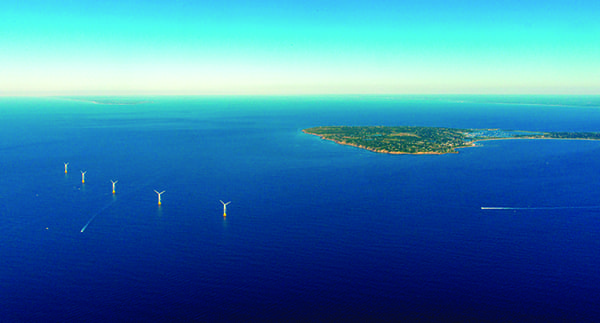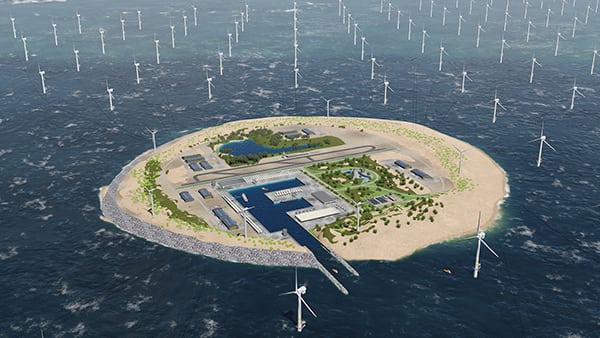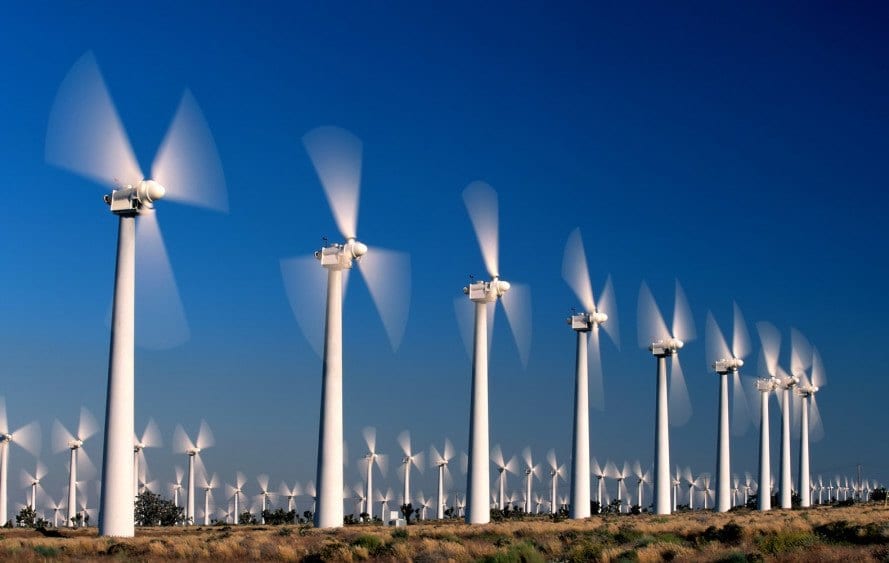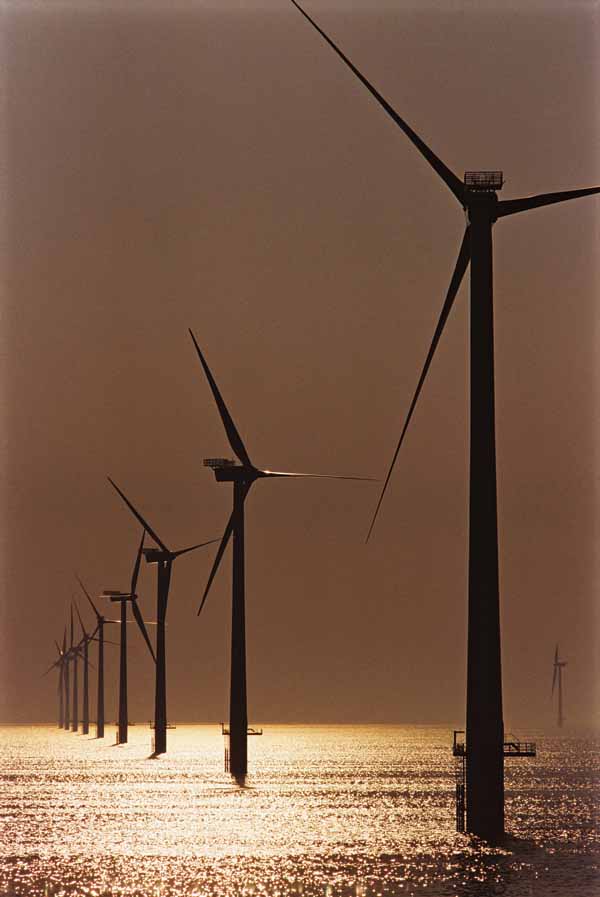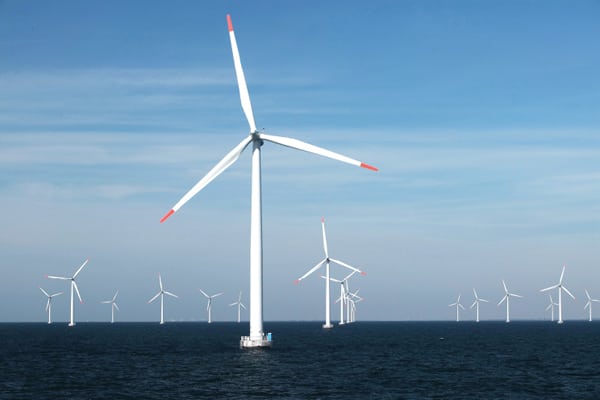
Offshore wind has the potential to be a significant source of renewable energy. The U.S. Department of Energy has estimated that more than 900 GW of potential wind energy blows off the U.S. coast. The European Wind Energy Association has estimated that less than 5% of the North Sea’s wind resource could supply 25% of Europe’s electricity needs. Offshore wind projects have the benefit of relative proximity to coastal load centers, thus mitigating transmission costs. Yet despite this great potential, there are no commercial offshore wind farms in operation in the U.S., and, in the European Union (EU), offshore wind accounts for less than 2% of all generation. Offshore wind projects involve regulatory, technological, and economic challenges that are greater than those confronted by onshore wind projects. Overcoming these challenges will be necessary to permit offshore wind to achieve its full potential.
Setting Up the Regulatory Framework
The regulatory challenge in the U.S. stems from the absence of a comprehensive permitting regime for offshore projects — understandable in light of the paucity of such projects. Offshore wind projects have had to deal with conflicting regulatory schemes at the local, state, and federal levels. The Energy Policy Act of 2005 was the first federal legislation to address offshore wind.
The Federal Energy Regulatory Commission (FERC) and the U.S. Department of the Interior’s Minerals Management Service (MMS) disagreed over conflicting authority to regulate offshore energy projects on the Outer Continental Shelf (OCS). Fortunately, this dispute has been resolved, with the MMS and FERC entering into a memorandum of understanding to clarify jurisdictional understandings. Under the accord, MMS now has exclusive jurisdiction to issue leases on the OCS for all renewable projects, and FERC has exclusive jurisdiction to issue licenses and exemptions for projects on the OCS. Also fortunate is the fact that a number of East Coast states have been promoting offshore wind by sponsoring demonstration projects, supporting power purchase contracts, proposing purchasing regimes, and coordinating state and local permitting.
Tough Turbine Technology
Offshore wind turbines use the same basic technology as their onshore counterparts but are larger — between 2.0 MW and 3.6 MW. The machines must be built to withstand the harsh effects of a marine environment. Currently, there are only a handful of turbine manufacturers with an offshore track record.
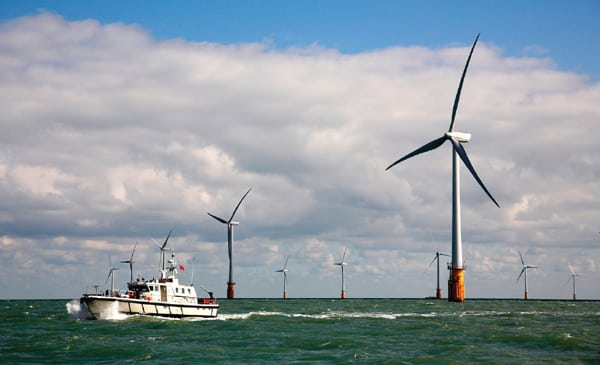
Turbine installation and maintenance also present formidable challenges to offshore wind development. There has been a supply shortage of suitable vessels and trained personnel for turbine, foundation, and undersea electrical installation and maintenance.
The High Costs of Offshore Wind Farms
The costs of nearly every aspect of the construction, operation, and maintenance of offshore wind farms are significantly higher than for onshore installations. The need to "marinize" the machinery can add up to 25% to unit costs. Construction and installation of offshore turbines’ specialized foundations can account for up to 30% of total turbine costs (even more in deeper water), compared to only about 7% for onshore units. Electric interconnection accounts for between 17% and 34% of the total cost on an offshore project but only 5% for an onshore project. Maintenance also adds up, given the marine environment, and the longer time required to reach wind turbines to begin repairs means greater lost production. In absolute terms, an offshore installation can be nearly twice as expensive as an onshore installation.
Can these costs be reduced? Yes, as manufacturers gain experience and turbine production is increased. The offshore construction and maintenance industry is expected to respond to growing demand for vessels, equipment, and trained personnel. Over time, turbine manufacture, installation, and maintenance will become more efficient and cheaper.
Will offshore wind be competitive with other renewable sources? Yes — with improvement in costs, a good wind regime, stable policy support, and a relatively well-priced electricity market. Europe presents a good example. Denmark, Sweden, the United Kingdom, the Netherlands, Ireland, and Germany together have more than 1,100 MW of electricity-generating capacity in offshore wind installations in the North, Baltic, and Irish Seas. Considering the EU’s recent commitment to have 20% of its energy generated from renewable sources by 2020, this capacity is likely to increase to between 20 GW and 40 GW in the next decade.
Encouraging Forecast
The U.S. has a great offshore wind resource, but, unlike western Europe, it also has vast onshore wind resources. The availability of land with decent wind resources in the U.S. has meant that onshore wind has been relatively cheap. Nonetheless, there are regions of the country where land for onshore wind is difficult to obtain, transmission constraints favor more localized development, and energy prices are relatively robust. Hence, the interest in offshore wind is in the Northeast and MidAtlantic states — Massachusetts, Rhode Island, New York, New Jersey, Delaware, and Maryland. The lessons of European offshore development and the improved costs of manufacture and installation derived from that experience will benefit the U.S. Although U.S. offshore wind development has not been easy so far (Cape Wind does come to mind), expect to see offshore wind projects installed in the U.S. by the middle of this decade.
—Ed Feo (efeo@milbank.com) is a partner in the international law firm of Milbank Tweed & McCloy LLP. He cochairs the firm’s project finance and energy practice.