Power outages have become increasingly common, and longer in duration, due to extreme weather and temperature events. Behind-the-meter (BTM) batteries are proving their worth, as they have become more than niche devices quietly supporting backup power during storms. These batteries now offer vital support in an increasingly volatile energy ecosystem.
 |
|
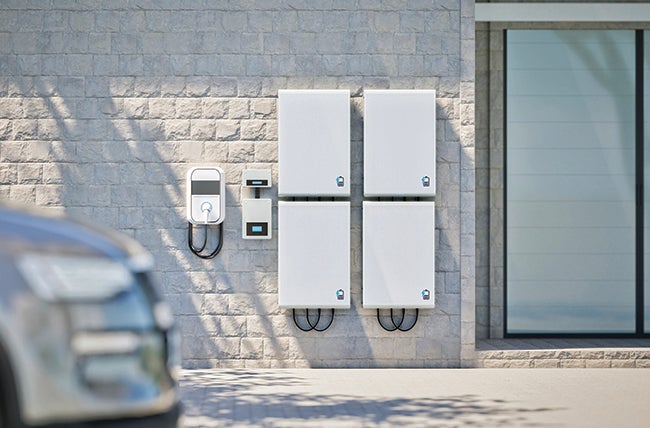
1. Batteries that provide behind-the-meter energy storage are now an important part of electricity reliability and resilience, which is why utilities have created programs to encourage their adoption. Courtesy: Virtual Peaker/iStock |
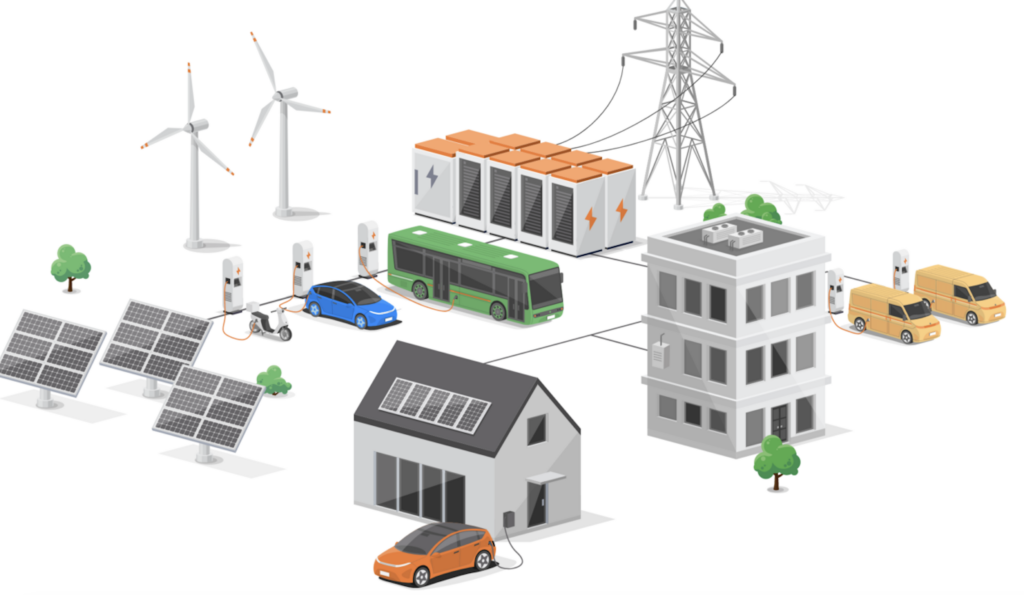
BTM batteries are emerging as one of the most important sources of new grid capacity, as they are flexible, dispatchable, and available far faster than traditional infrastructure expansion. In a power sector defined by rising energy demand, climbing grid-congestion costs, and tightening reliability pressures, tapping into BTM energy storage has become not just valuable but essential for electric utilities. Today’s batteries (Figure 1) are proving that, when aggregated and coordinated, they can meaningfully support peak demand, reduce the likelihood of blackouts, and defer costly utility investments in firm capacity.
New program designs, such as Customer Battery Energy Sharing (CBES), represent an inflection point in the conventional energy paradigm. Electric utilities can learn from early deployments that are already demonstrating measurable reliability and resilience benefits. Likewise, the growing emphasis on collaboration among original equipment manufacturers (OEMs), and device interoperability, provides utilities with a viable path to grow customer participation at scale, adding even greater value to these batteries.
Power loads are growing faster, and infrastructure is challenged to keep up. Electricity demand is accelerating, driven by artificial intelligence (AI) workloads, electrified heating, transportation, and data centers. Grid congestion costs have climbed sharply, with some regions reporting double-digit percentage increases in the per-megawatt-day price of power. These costs ultimately show up in ratepayer bills, power purchase agreements, and utility operating budgets.
At the same time, the retirement of older fossil fuel plants has heightened concerns about firm capacity shortages. While the instinctive response is to invest in new generation, transmission, and distribution infrastructure, these assets require years to deliver and billions to build. Flexible capacity, by contrast, can be created now. And BTM batteries have emerged as one of the most powerful mechanisms for doing so.

In This Issue
Full issueRecent analyses indicate that modest improvements in load flexibility—including expanded participation from BTM batteries—could unlock more than 100 GW of new load capacity nationwide. This represents the scale of multiple large power plants, delivered not through new infrastructure but through better orchestration of existing devices.
Why Behind-the-Meter Batteries Are Uniquely Positioned
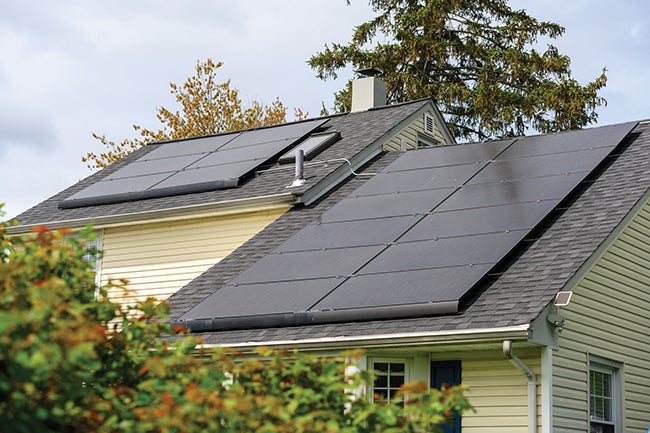
Customer-sited batteries typically enter households and businesses for reasons such as backup power and resilience; extreme weather events causing more outages; and solar self-consumption, as customers seek to maximize the value of rooftop solar (Figure 2) by pairing it with battery storage.
 |
|
2. Homeowners are pairing rooftop solar with battery energy storage systems to capture more value from their investment. Courtesy: Sunrun |
Other reasons for adoption include utility or state-supported incentive programs, which reduce upfront costs in exchange for participation during grid events. What makes batteries so valuable to grid operators is not simply the stored energy; it is their flexibility. Unlike solar or wind, batteries can be dispatched on command. And unlike traditional peaking plants, they can respond nearly instantaneously. This combination of predictability and responsiveness is essential during peak demand events or periods of grid stress.
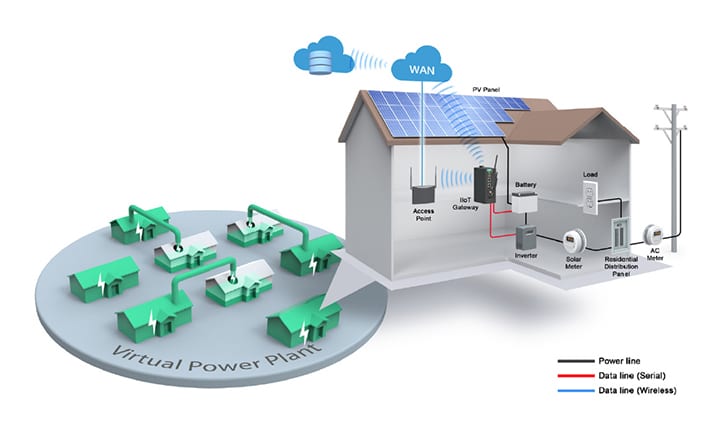
When coordinated through grid-edge distributed energy resource management systems (DERMS), behind-the-meter batteries can function as a single, aggregated asset—one that utilities can call on for multi-hour load shifting; peak shaving; voltage support; emergency demand reduction; and local congestion relief.
These capabilities closely resemble the functions of traditional firm capacity assets, albeit at a fraction of the cost. Virtual power plants (VPPs) built around distributed batteries have already demonstrated their ability to support 20% or more of U.S. peak demand by 2030, according to recent market research. Unlike centralized assets, these aggregated fleets continue operating even if individual devices disconnect or fail, offering a level of distributed energy resilience the grid historically has not had.
Programs such as CBES highlight a powerful new model: incentivizing customers to allow utility-managed access to a portion of their battery capacity during grid events. Under a CBES-like structure, customers maintain full access to their battery for personal backup use but reserve a predictable tranche of energy for the utility. During peak periods or emergencies, the utility can draw on the aggregated reserve to reduce load, stabilize circuits, or avert outages.
Several early deployments of these models have proven that customers are willing to participate when programs are transparent and easy to enroll in. These models also have shown that multi-hour load shifts are achievable, often across consecutive days. Aggregated batteries can meaningfully reduce local load shedding, particularly on constrained feeders.
These programs can scale quickly, particularly when paired with existing solar-plus-storage adoption. These real-world results demonstrate that customer batteries can behave like a reliable, dispatchable resource—with the right program design.
Grid Capacity vs. Firm Capacity: Why Flexibility Matters More Than Ever
It is important to distinguish between grid capacity—the total energy the system can deliver at any moment—and firm capacity, which refers to guaranteed, non-interruptible power traditionally supplied by fossil fuel plants. Utilities need both. But firm capacity is slow and expensive to add.
Recent analyses suggest that deferring the retirement of older fossil fuel plants can increase operational and ratepayer expenses by billions annually. The underlying problem is clear: the cost of maintaining firm thermal assets is rising, while the flexibility they provide can often be delivered more cheaply through distributed resources.
VPPs, including those built around customer batteries, cost 40% to 60% less than new firm capacity additions, while delivering measurable, reliable load flexibility. This is not a perfect substitution—batteries do not generate energy—but they significantly reduce peak demand and allow utilities to stretch existing generation farther. In a world where demand is rising faster than new infrastructure can be built, this flexibility is invaluable.
The scale of battery deployment has grown dramatically: 75% of all new U.S. grid capacity added in the second quarter of 2025 came from large-scale battery storage. Residential, commercial, and industrial battery installations continue to expand despite tariff headwinds.
As more device manufacturers enter the market, utilities must manage a growing number of battery chemistries, inverters, and control protocols. This is why program design and interoperability strategies are now just as important as the batteries themselves.
Utilities that are successfully converting customer batteries into grid resources share several design elements in common:
■ Clear and Simple Customer Incentives. Programs with predictable compensation—whether bill credits, one-time payments, or performance-based incentives—tend to attract higher enrollment.
■ Preserved Customer Autonomy. Customers must maintain confidence that the utility will not compromise their backup power needs. Transparent charge-reserve policies are essential.
■ Multi-Path Enrollment. The most successful programs allow participation through direct-install utility batteries; customer-purchased devices; solar-plus-storage bundles; and/or partnerships with OEM enrollment pipelines.
■ Flexible Dispatch Rules. Static, “one-size-fits-all” events are less effective than adaptive strategies that use forecasting and AI-based predictive controls.
■ Robust Data Visibility. Utilities need granular insights into state-of-charge, availability, and device health to operate programs safely and effectively.
■ Customer Education. Programs that include simple, proactive communication—especially before and after events—tend to have higher customer satisfaction and retention.
When combined, these elements allow utilities to deliver predictable MW-scale dispatch without compromising customer experience.
The Critical Role of Interoperability and OEM Collaboration
As utilities expand their programs, device diversity becomes a major challenge. A single region may include batteries from half a dozen manufacturers, each with its own proprietary control logic and integration requirements.
To scale customer battery programs effectively, utilities must invest in:
■ Standardized Communication Protocols. Open standards—across inverters, controls, and DERMS platforms—reduce both integration time and operational uncertainty.
■ Multi-OEM Integration Pathways. Utilities that collaborate with multiple OEMs expand their accessible device pool dramatically, enabling greater potential MWs of flexible capacity.
■ Testing and Validation Regimes. Ensuring safe and predictable dispatch requires lab-based and field-based testing before devices enter live programs.
■ Cybersecurity Alignment. As device fleets grow, coordinated security protocols become essential to protect both customers and the grid.
By prioritizing interoperability, utilities reduce risk and widen participation, creating more reliable aggregated resources.
What’s Next: Expanding Access and Scaling Customer Participation
The evolution of customer battery programs is moving in several promising directions. There is broader device eligibility, with programs that integrate diverse OEMs—from established brands to emerging technologies—that can capture significantly more load flexibility.
Several other positive steps can be taken. For example, allowing third-party aggregators to enroll their own fleets into utility programs can unlock rapid scaling. Coordinating batteries with electric vehicle chargers, smart thermostats, and solar can create more robust multi-asset VPPs. An increasing focus on equity and inclusion, in which utilities and regulators prioritize participation pathways for disadvantaged communities, renters, and multifamily buildings, is also important. And more dynamic event structures, such as advanced forecasting and model-predictive controls, can shape and shift load across multiple days, amplifying the value of each participating battery.
These innovations point to a future where customer-owned energy resources sit at the heart of everyday utility operations—not at the periphery. The electricity system of the future will not be built exclusively through central generation or multi-billion-dollar infrastructure. It will be built through a combination of resources—some large, many small, all coordinated—and BTM batteries are quickly becoming the backbone of that flexible architecture. Programs have shown that customer batteries can deliver many benefits, and they are happening today, in real-world deployments across diverse geographies and customer classes.
With thoughtful program design, strong OEM partnerships, open interoperability, and a commitment to customer experience, utilities can tap into the full potential of distributed batteries—transforming them into one of the most reliable and cost-effective sources of new grid capacity available. In an era where demand grows by the month and infrastructure takes years to build, customer batteries provide what the grid needs most: flexibility, speed, and resilience.
—Syd Bishop is a senior content specialist with Virtual Peaker.