
POWER
-
 Water
WaterFish and cooling water intakes: Debunking the myths
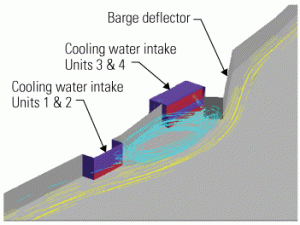
Thermal power plants are required to use fish protection technologies or make changes in plant operation to protect aquatic organisms. We intuitively understand that some organisms in the water drawn in to cool a power plant can be injured or killed when they hit a screen or enter the circulating water system. You have options for compliance with EPA rules; some are extremely expensive and burdensome, whereas others are brilliant in their simplicity. This article debunks several fish impingement myths and gives practical advice for successful compliance.
-
 O&M
O&MWater hammer and other hydraulic phenomena
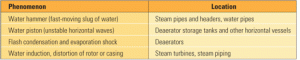
The term "water hammer" encompasses a handful of hydraulic and thermohydraulic mechanisms. They include water hammer in steam and water piping, water piston, water induction, flash condensation and evaporation, and shock waves generated by transonic flow. All can lead to failures of steam and water cycle components and put plant operators and workers at risk. Proper design and O&M practices can keep water hammer and similar phenomena under control.
-
 Gas
GasWill turbines require expensive retrofits to handle imported LNG?
With domestic reserves of natural gas declining and demand for gas rising, imported liquefied natural gas will increasingly fill the shortfall in U.S. pipeline supply. More than 40 LNG receiving/regasification terminals on three coasts are in various stages of development. Yet many questions about the operational and emissions impacts of the "hotter" LNG imports on today’s cleaner-burning gas turbines remain unanswered.
-
 O&M
O&MPractical guidelines for determining electrical area classification
A century ago, boiler explosions were an all-too-familiar event. But with the universal adoption of the ASME Boiler and Pressure Vessel Codes in 1914, explosions caused by poor design or manufacturing became relics of history. Electrical classification codes had the same effect on safety. This article explains how designers and operators practically apply those standards. Code details and samples of area classification drawings for a gas turbine plant are included in an online supplement (see end of story).
-
 Gas
GasBalancing power and steam demand in combined-cycle cogeneration plants
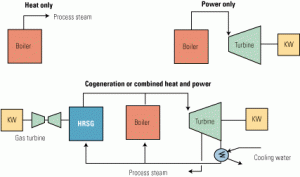
The 2005 amendment to the 1978 Public Utility Regulatory Policies Act created some unique challenges for the design of cogeneration plants in general and combined-cycle cogeneration plants in particular. Because utilities are no longer obligated to buy electricity at "avoided cost" from qualifying facilities, plant owners must simultaneously balance power and thermal demand efficiently and economically. Here’s a prescription for your next plant design.
-
 Business
ELECTRIC POWER Conference set for record year
ELECTRIC POWER 2007, sponsored by POWER magazine, will be presented at the Donald E. Stephens Convention Center in Rosemont, Ill., May 1 through May 3, 2007. A full agenda of preconference workshops and tutorials is scheduled for Monday, April 30.
-
 News
NewsThis month in POWER …
March 1886 POWER reported on the latest development of a new and improved engine: "The chief feature of the Corliss engine [from Kendall & Roberts, Cambridgeport, Mass.] is the valve gear, which consists of four cylindrical valves, two each for admission and exhaust, operated from a central swing or stud plate; the steam valves being […]
-
 O&M
O&MTo optimize performance, begin at the pulverizers
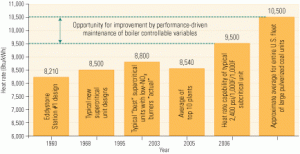
A systematic, performance-driven maintenance program for optimizing combustion can achieve great results. The challenge for an O&M staff is deciding which proven strategy and tactics for reducing NOx and improving plant reliability to adapt and implement. The structured approach presented here has proven its worth at several plants that have wrestled with problems similar to yours.
-
 O&M
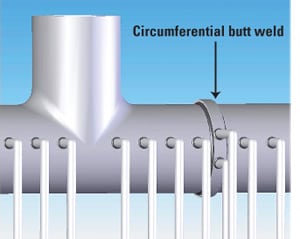
O&MFinding and fixing cracks in high-temperature headers
The welds on superheater and reheater headers are arguably the most stressed parts of a modern steam plant. For that reason, it’s surprising that they also may be the most under-inspected. Cracks are rare, but they can be repaired if found early. One plant avoided a long forced outage to replace a reheater outlet header by using the correct condition assessments and welding techniques.
-
 O&M
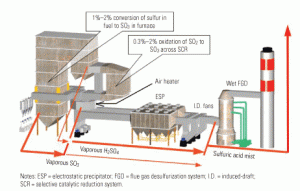
O&MSO3’s impacts on plant O&M: Part II
Part I of this three-part series (POWER, October 2006) explored the negative impacts of sulfur trioxide (SO3) on the operation and maintenance of back-end plant equipment. In this issue, we list and quantify the likely and potential benefits of limiting the concentration of SO3 in flue gas to 3 ppm at the entrance to the air heater. Part III—to appear in the April 2007 issue—will describe the characteristics of an optimal SO3 removal technology and present the technical details and operating experience of one patented process that has worked successfully at a half-dozen plants for up to three years.
-
 Coal
CoalSealing abandoned mines with treated flyash kills two birds with one stone
Environmentally benign disposal of coal combustion products/by-products (CCPs) such as flyash and bottom ash has been a problem since the first coal-fired power plant went on-line. In recent years, ways have been developed to recycle CCPs into useful commercial products like bricks and roadbase. This article describes an innovative State of Maryland program that is putting CCPs to yet another use: stabilizing abandoned mines to permanently sequester acids and harmful metals.
-
 Coal
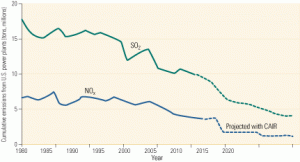
CoalNOx, SO3 in the spotlight at NETL’s 2006 Environmental Controls Conference
As emissions caps drop, technological solutions must become increasingly effective and efficient. Researchers, equipment vendors, and plant operators are exploring alternatives to SCR and SNCR, with a view to reducing the overall costs of NOx reduction. They’ve also achieved 95% to 99% removal of SO3, with no visible plume opacity.
-
 News
NewsThis month in POWER . . .
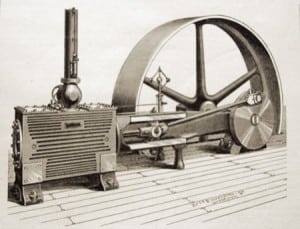
February 1885 The cover story examined the latest in reciprocating engine technology: the Greene automatic cut-off engine (Figure 1). Here is how the editors described it: "The engine has a girder frame; guides case separate and dowelled and bolted to the bed plate; four-part main boxes; Porter governor. There are two steam and two exhaust […]
-
 Commentary
Will FERC’s transmission siting rule create more jurisdictional conflict?
Federal Energy Regulatory Commission (FERC) Order No. 689, issued on Nov. 16, 2006, established requirements and procedures for granting permits to build transmission facilities within "national interest electric transmission corridors" designated by the U.S. Department of Energy (DOE). After summarizing the statutory and regulatory background, this opinion piece addresses jurisdictional conflict between FERC and states, […]
-
 Environmental
Birds in the hand for CO2
The January call for a national policy on greenhouse gas (GHG) emissions by a coalition that includes some of America’s largest companies and electric utilities—GE, Alcoa, Dupont, Duke, FPL, and PG&E—makes clear that carbon management is now as much of a raison d’être for CEOs as it has been for environmentalists. The momentum to reduce […]
-
 Gas
GasGlobal Monitor (February 2007)
China to buy four AP1000 reactors / Midwest Gen, Blagojevich reach pollution deal / Behold, the carpet gasifier / AREVA casks green-lighted by NRC / Brookfield Power upgrades Oswego Falls / Korea fires up 50-MW landfill gas project / Alstom lands big Russian deal / POWER digest / Correction
-
 O&M
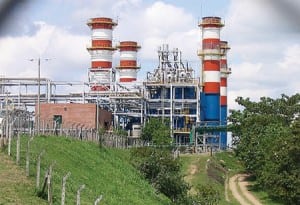
O&MFocus on O&M (February 2007)
The compliance clock is ticking / First-class maintenance in a developing country / Bypass losses squander big bucks / Revised operating procedures
-
 Legal & Regulatory
The tyranny of the final, nonappealable condition
The financing of power generation projects increasingly depends on the execution of a long-term power-purchase agreement (PPA). A common prerequisite for considering a PPA to be "effective" is a "final and nonappealable" regulatory order approving it. Purchasing utilities justifiably insist on such certainty to immunize their PPAs from after-the-fact regulatory scrutiny and possible penalty. Unfortunately, […]
-
 Nuclear
Arc flash protection should be job No. 1
Arc flash is arguably the most deadly and least understood hazard faced daily by plant personnel. Research indicates that even the best safety plan, training regimen, and protective equipment may be no match for the heat and blast effects of an arc flash. Consider this article a wakeup call to retrofit every switchgear cubicle in your plant with a properly designed remote racking system. Forewarned is forearmed.
-
 Instrumentation & Controls
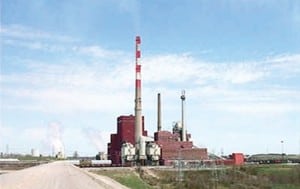
Innovative boiler master design improves system response
A quick and nimble boiler distributed control system can end up moving at the speed of molasses in winter after a low-NOx retrofit. In one utility fleet, several units—despite being equipped with a modern DCS—were experiencing firing system time lags and degraded dynamic loading capability. Swinging steam pressures and opacity excursions were forcing operators to constantly remove the unit from the load dispatch. Read how a new boiler master design read the riot act to those unruly steam generators.
-
 Gas
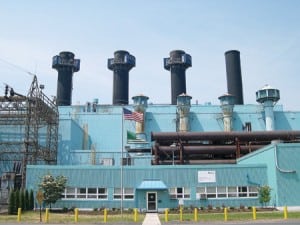
GasBurning landfill gas has environmental and economic benefits
The conflicting challenges of operating a plant beyond its prime and Exelon’s commitment to manage carbon emissions from its power system are pushing the company’s plant engineers to innovate. An example: Fairless Hills Generating Station was given a complete overhaul and now burns landfill gas that otherwise would be treated as waste.
-
 O&M
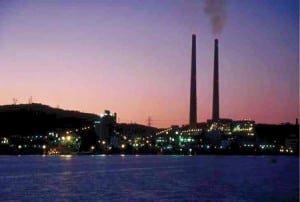
O&MVacuum-driven "hypo" chlorination is safer and cheaper
Safety issues related to the use of gaseous chlorine for disinfecting cooling water are pushing plant operators to examine other alternatives. Two units of Cardinal Generating Station recently switched to a liquid chlorination system, with pumpless vacuum injection, that was easy to install and has proven reliable. That switch has resulted in one less safety headache for the operations staff and one less invitation to regulatory scrutiny.
-
 News
NewsThis month in POWER . . .
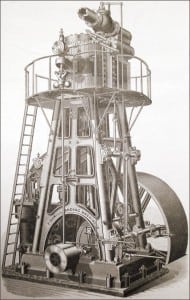
January 1885 The cover story of this issue reviewed the latest power generation technology then entering the market. "The Fishkill vertical direct acting condensing engine . . . has a heavy bed-plate of box form, with pillow-block for main journal cast on. The upright frames are A-shaped, with hollow cylindrical legs, which rest on the […]
-
 Commentary
A new day in power generation
The recently published Long-Term Reliability Assessment from the North American Electric Reliability Council (NERC) found that several areas of the U.S. and Canada risk falling below minimum capacity target levels within three years, as demand continues to outpace new supply. This risk of supply shortages requires action. In addition to the usual solutions of more […]
-
 Power
PowerHere’s to you
TIME magazine’s selection of a Person of the Year often is unusual enough to be covered in other publications. In most years, the pick has been fairly predictable: a high-profile foreign or domestic politico playing high-stakes poker with our collective futures. In others, TIME has stretched the definition of "person"—such as in 1982 (the computer), […]
-
 Coal
CoalGlobal Monitor (January 2007)
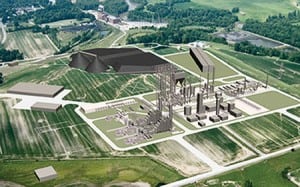
DOE walks the clean coal talk / For Swedish nuke, a case of mistaken identity / Siemens completes big CHP plant / E.ON bets big on coal / BP Solar expands Maryland plant / GE scores big turbine deals / PSNH switches from coal to wood / EPRI tests solid-state current limiter / POWER digest
-
 O&M
O&MFocus on O&M (January 2007)
Mandatory standards advance / To drain or not to drain / Practical aspects of burning landfill gas / Time management
-
 Legal & Regulatory
Barriers continue to crimp natural gas supplies
U.S. demand for natural gas is projected to increase by more than 50% by 2020. Companies are building—and the public is opposing—receiving terminals on three coasts that would increase imports of liquefied natural gas. The pros and cons of "opening up" Alaska, coastal waters, and federal lands to drilling are still being debated. These politically […]
-
 Coal
CoalInvestment in generation is heavy, but important needs remain
Forecasting the direction of the U.S. electric power industry for 2007, much less the distant future, is like defining a velocity vector; doing so requires a direction and speed to delineate progress. In this special report, POWER’s first stab at prognostication, the editors look at current industry indicators and draw conclusions based on their more than 100 years of experience. To borrow verbatim the title of basketball legend Charles Barkley’s book: I May Be Wrong but I Doubt It.
-
Coal
Near-term capital spending in the North American power industry
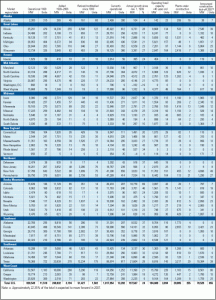
Following the money invested in projects is a viable way to compare growth trends for power projects using the four major generation types: coal, natural gas, nuclear, and renewable.