
POWER
-
 Instrumentation & Controls
Controlling shaft voltages
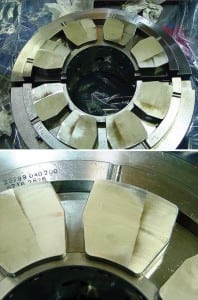
Contrary to public belief, the most common electrical phenomenon produced by a power plant’s steam turbines, turbine-driven compressors, and pumps isn’t sparks or lightning bolts. It’s static electricity. The physical effects of static electricity—greater vibration and higher temperatures—can damage bearings, shaft journals, couplings, and gears enough to cause a forced outage. A few inexpensive instruments in the hands of a well-trained technician can prevent "frosting" and "worm tracks" in your babbitt bearings. We’ll start the training right now.
-
 Business
Could SuperCables deliver both hydrogen and electricity via a SuperGrid?
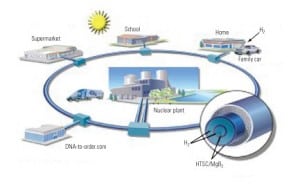
Transporting large quantities of electric power over long distances via superconducting DC cables was first considered more than 40 years ago by two IBM scientists. With the recent advent of long-length commercial high-temperature superconductors (HTSCs) and the desire to move the U.S. to a hydrogen-based economy, SuperCables could revolutionize the marketing of electricity. Using HTSCs cooled by hydrogen, a SuperCable could simultaneously deliver electricity and hydrogen to end users for domestic and industrial consumption and to power fuel cell cars.
-
 Marmaduke
Marmy’s Egyptian nightmare
Steve Elonka began chronicling the exploits of Marmaduke Surfaceblow—a six-foot-four marine engineer with a steel-brush mustache and a foghorn voice—in POWER in 1948, when he raised the wooden mast of the SS Asia Sun with the help of two cobras and a case of Sandpaper Gin. Marmy’s simple solutions to seemingly intractable plant problems remain timeless. This story originally appeared in 1950. Two years later, one of its key characters, King Farouk, abdicated the Egyptian throne to his infant son following a military coup.
-
 Business
This month in POWER…
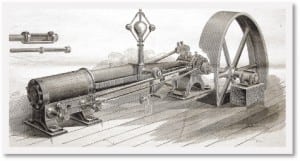
May 1885 POWER reported on the latest Twist Automatic Engine (Figure 1) in its cover story for the May 1885 issue. The editor explained that "each end of the cylinder has one main valve, for admission and exhaust, and one cut-off valve; all being plugs with partial rotary movement; and the cut-off valves being within […]
-
 Commentary
Keep grid modernization a national priority
As the possibility of national climate change legislation increases on Capitol Hill and captures the attention of the electric power community, I am concerned that regulators, legislators, and utility executives will forget the urgency of modernizing the U.S. electricity delivery infrastructure. On the surface, the issues of reducing greenhouse gas emissions and upgrading and […]
-
 News
NewsNot your grandfather’s power industry
In 1882, Americans talked of John L. Sullivan, the bare-knuckles boxing heavyweight champion of the world, as horse-drawn carriages jingled along city streets. The spidery cables of the Brooklyn Bridge spanned the East River and hundreds of workmen scrambled to complete the great project. Railroads crossed the continent, but sporadic Indian warfare still plagued […]
-
 Business
A rearview mirror and bright headlights
This month’s issue of POWER commemorates 125 years of continuous publishing for the power generation business. The anniversary gives us all a chance to assess where we’ve been and where we’re going as a publication and as an industry. As power industry professionals, we all know the value of a rearview mirror—of remembering lessons […]
-
 Coal
CoalGlobal Monitor (May 2007)
World’s largest PV plant now in Portugal; latan 2 construction may resume; Allegheny to scrub Fort Martin plant; TVA will clean up big Dutch CC plant; Connecticut blesses six fuel cell projects; DOE approves IGCC plant in Florida; FERC relicenses Osage hydro plant; A nanotech perpetual motion machine?; POWER digest
-
 Nuclear
Charlie Brown, nukes, and the football
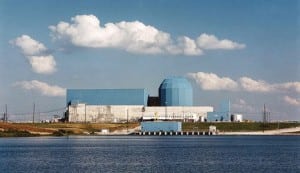
The term "nuclear renaissance" is on the lips of many in the nuclear power industry today, for good reason. The federal executive branch is friendly to nukes; a nationwide shortage of baseload generation looms; the nuclear industry has vastly improved its performance in running its 20th-century plants; and a new generation of plant designs is ready for the road.
-
 Coal
CoalExploring the many carbon capture options
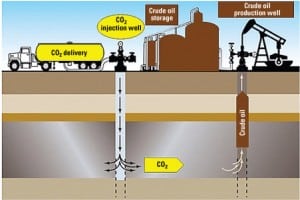
Carbon capture and sequestration have many technical hurdles to leap in coming years. The capture and reuse of CO2 to enhance oil recovery preceded the current clamor over climate change, and that experience is often used as an example that the process is a viable way to handle this greenhouse gas. This article explores options for the first part of the process: CO2 separation and capture.
-
 O&M
O&MAdding cathodic protection to a hyperbolic tower
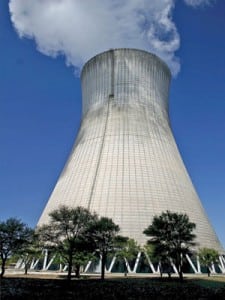
Hyperbolic cooling towers have a distinctive shape, but that form is subordinate to function—natural-draft cooling is cheaper than mechanical-draft cooling. The lower operating costs are offset to some degree by the higher cost of protecting internal tower surfaces from swings in humidity that foster corrosion damage. Learn how one utility added cathodic protection when it repaired its corroded hyperbolic tower, giving it a new lease on life.
-
 O&M
O&MGetting to the root of lube oil degradation problems
Doctors and engineers realize that solving a health problem is better done by identifying and eliminating its cause than by treating its symptoms. For machinery, the class of multidisciplinary methods known as root cause analysis (RCA) is an important tool for addressing chronic reliability problems. But RCA often is improperly applied to lubrication-related problems. Read on to learn how to use the technique correctly.
-
 O&M
O&MUtilities surpass other industries in asset maintenance practices
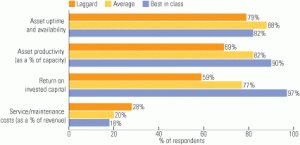
Want some good news about your predictive maintenance program for a change? A recent research report by the Aberdeen Group found the electric utility industry benchmarks exceptionally well against other industries in its PDM practices. In fact, the research found that best-in-class companies outperformed industry peers in improving asset availability by up to a three-to-one margin. In a web exclusive, the Aberdeen Group has provided its report for download from powermag.com as a service to our readers.
-
 O&M
O&MSO3’s impacts on plant O&M: Part III
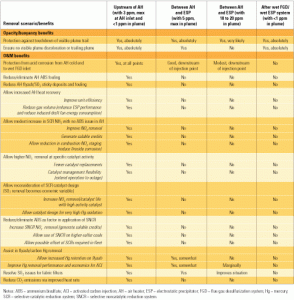
Part I of this three-part series (POWER, October 2006) explored the negative impacts of sulfur trioxide (SO3) on the operations and maintenance of back-end plant equipment. Part II (February 2007) listed and quantified the likely and potential benefits of limiting the concentration of SO3 in flue gas to 3 ppm at the entrance to the air heater. This final part describes the characteristics of an optimal SO3 removal technology and details the operating experience of a patented process that has worked successfully at a half-dozen plants for up to three years.
-
 O&M
O&MBlades, better than new
The challenge for suppliers of aftermarket turbine blades is that their starting point is an existing blade and nothing else. There are no CAD models, drawings, measurements, tolerances, or inspection data associated with it. However, thanks to the latest in computer tools, a blade now can be digitally recreated to exact specifications and built using the latest design and manufacturing practices. Here’s an inside look at how turbine blades are captured, reconstructed, inspected, and remade to be better than the originals.
-
 Coal
CoalAt CERA Week 2007, most life was carbon-based
For the past 25 years, Cambridge Energy Research Associates has hosted an annual conference that has drawn the captains of the worldwide oil and gas and electricity industries. The 120 distinguished speakers at this year’s summit attracted more than 2,000 delegates from 55 countries, making it the largest and most diverse ever. Naturally, one of POWER’s contributing editors was there, too; here’s his take on what transpired.
-
Nuclear ambitions
Ten years ago, any self-respecting U.S. utility executive might have been drawn and quartered for publicly promoting a nuclear power revival. How times have changed. Today, more than half of America’s nuclear plants have outsourced their operations to specialty firms, and the prospect of a nuclear renaissance in the U.S. (see Cover Story) is brighter […]
-
 Coal
CoalGlobal Monitor (April 2007)
Npower plans big coal plant in UK / Berkeley boffins make thermoelectric discovery / Rinspeed’s roadster: Fast, fun, and green / Dead chickens, the weirdest renewable / Siemens celebrating three big deals / Nevada Power picks P&W, CH2M Hill / Scuderi’s air-hybrid engine / Ovation for huge new Chinese coal plant / PG&E dips toe into wave power / POWER digest
-
 News
NewsThis month in POWER…
April 1884 POWER reported on the latest offering from Philadelphia-based Southwark Foundry and Machine Co. (Figure 1) as its lead story. "This is a self-contained, high speed automatic cut-off engine. It has been designed with special reference to simplicity, and solidity of parts, and to heavy and continuous work. 1. The Southwark engine was the […]
-
 Commentary
Full-service utilities prove their value
During the past year, the debate over the structure of the nation’s electricity systems has continued at a steady clip. It seems that almost every month a new study or report is issued that proclaims the advantages or disadvantages of one market structure over another. Although a report or study may have value, the Community […]
-
 O&M
O&MFocus on O&M (April 2007)
Control pollution and slagging on a shoestring / Keeping HRSGs young, cool, and clean / Natural air conditioning
-
 Legal & Regulatory
How direct access would improve electricity supply
The debate over retail choice has resurfaced, triggering in the minds of many consumer advocates California’s failed deregulation attempt and its fallout—rolling blackouts, bankrupt utilities, and government bailouts with crippling long-term consequences. Before allowing a chorus of "oh no, not again" to cloud the debate, state policy makers should realize that allowing generators to […]
-
 O&M
O&MFocus on O&M (March 2007)
The critical subset / Aging workforce challenges / Tighter tolerances in retrofits / Writing sensible start-up and shutdown procedures
-
 Legal & Regulatory
Why raising renewable portfolio standards won’t work
Almost half of U.S. states now insist that their investor-owned electric utilities serve a specified percentage of their load with electricity from renewable resources by a date certain. Utilities struggling to comply with their mandate increasingly warn that they will be unable to achieve the required level on time. Yet even as utilities express these […]
-
 Water
WaterReclaimed cooling water’s impact on surface condensers and heat exchangers
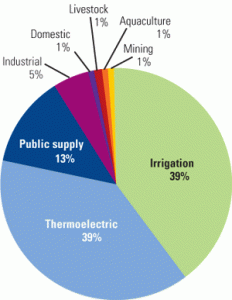
Because water is more precious than power in many regions of the U.S., plant designers are more frequently specifying the use of treated wastewater for plant cooling. Using "gray water" poses its own challenges for critical service equipment like condensers and heat exchangers. Some problems—like corrosion—are familiar, whereas others are rare. But so far, none has been a match for the ingenuity of multidisciplinary design experts.
-
 Business
Mapping technology chaos
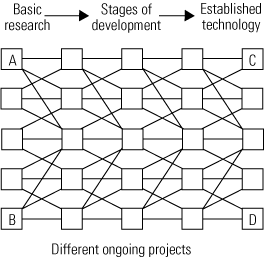
Power engineers are in a predicament: Technology is advancing at a dizzying pace, but we are unsure how to mine information from disparate sources or predict the next big thing. Becoming expert at finding technology hones your competitive edge in both the workplace and the marketplace. Bring your pick and shovel, and we’ll show you where to start digging.
-
 Business
U.S. Commercial Service helps suppliers go global
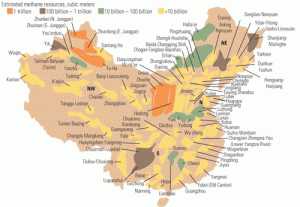
Successful exporting of goods and services is essential for U.S. companies seeking to exploit the increasingly open world economy. In the export business, the challenge is learning the ropes without getting hung out to dry when entering a potentially lucrative but unfamiliar market. Take advantage of the significant experience of the U.S. Commercial Service—its people really are here to help.
-
 Water
WaterFish and cooling water intakes: Debunking the myths
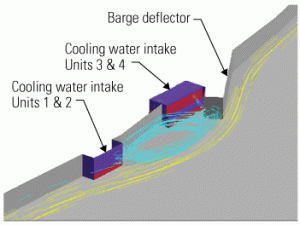
Thermal power plants are required to use fish protection technologies or make changes in plant operation to protect aquatic organisms. We intuitively understand that some organisms in the water drawn in to cool a power plant can be injured or killed when they hit a screen or enter the circulating water system. You have options for compliance with EPA rules; some are extremely expensive and burdensome, whereas others are brilliant in their simplicity. This article debunks several fish impingement myths and gives practical advice for successful compliance.
-
 O&M
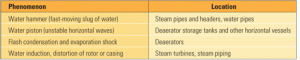
O&MWater hammer and other hydraulic phenomena
The term "water hammer" encompasses a handful of hydraulic and thermohydraulic mechanisms. They include water hammer in steam and water piping, water piston, water induction, flash condensation and evaporation, and shock waves generated by transonic flow. All can lead to failures of steam and water cycle components and put plant operators and workers at risk. Proper design and O&M practices can keep water hammer and similar phenomena under control.
-
 Gas
GasWill turbines require expensive retrofits to handle imported LNG?
With domestic reserves of natural gas declining and demand for gas rising, imported liquefied natural gas will increasingly fill the shortfall in U.S. pipeline supply. More than 40 LNG receiving/regasification terminals on three coasts are in various stages of development. Yet many questions about the operational and emissions impacts of the "hotter" LNG imports on today’s cleaner-burning gas turbines remain unanswered.